Barrel Gear Coupling Helps Upgrade For Transmission Innovation Of Continuous Sandwich Panel Production Line
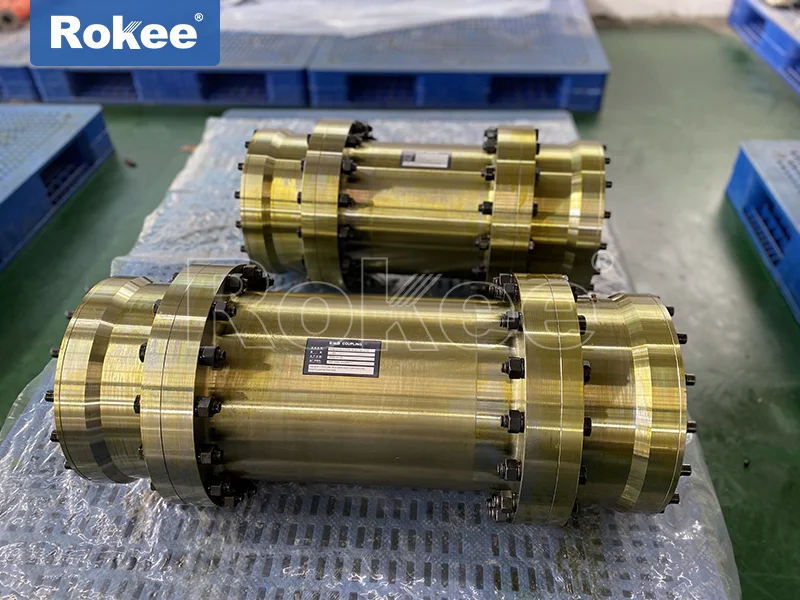
In the modern industrial manufacturing landscape, the continuous sandwich panel production line stands as a critical equipment system that supports the efficient production of composite panels widely used in construction, transportation, and industrial insulation fields. The core performance of this production line directly determines the quality, efficiency, and stability of sandwich panel products, while the transmission system, as the "heart" of the entire production line, undertakes the important task of transferring power from the prime mover to each functional unit. With the increasing market demand for high-quality, high-efficiency, and stable production of sandwich panels, the traditional transmission components have gradually exposed limitations such as insufficient load-bearing capacity, poor misalignment compensation, and high maintenance frequency, which have become bottlenecks restricting the innovation and upgrading of continuous sandwich panel production lines.
To understand the role of barrel gear couplings in the transmission innovation of continuous sandwich panel production lines, it is first necessary to clarify the working characteristics and transmission requirements of the production line itself. A continuous sandwich panel production line is a complex integrated system that integrates multiple functional links, including uncoiling of surface materials, roll forming, core material injection, composite pressing, cooling and curing, and precision cutting. Each link is closely connected, and the coordinated operation of all components relies on a stable and efficient transmission system. From the uncoiling of metal surface coils to the precise roll forming of profiles, from the uniform injection of core materials to the stable operation of the composite pressing mechanism, every step requires the transmission system to provide continuous, stable, and precise power support. Any failure or instability in the transmission process will lead to interruptions in the production line, affecting product quality—such as uneven thickness of sandwich panels, poor bonding between layers, and inaccurate cutting sizes—and even increasing production costs and reducing market competitiveness. Therefore, the transmission system of the continuous sandwich panel production line must have the characteristics of high load-bearing capacity, strong misalignment compensation, low wear, long service life, and easy maintenance to meet the requirements of long-term continuous operation and high-precision production.
Traditional transmission components used in continuous sandwich panel production line, such as ordinary rigid couplings and elastic couplings, have obvious defects in practical application. Ordinary rigid couplings have no ability to compensate for shaft misalignment, and even a small amount of radial, angular, or axial deviation between the connected shafts will cause additional stress on the shafts, bearings, and other components, leading to premature wear and failure, and requiring extremely high installation accuracy, which increases the difficulty of on-site installation and debugging. Elastic couplings, while having a certain degree of misalignment compensation and shock absorption capacity, have limited load-bearing capacity and poor high-temperature resistance, making them difficult to adapt to the heavy-load, high-speed, and high-temperature working environment of continuous sandwich panel production lines—especially in the composite pressing and cooling and curing links, where the transmission components need to bear large torque and withstand certain temperature changes, and elastic couplings are prone to aging, deformation, and even fracture, resulting in frequent production interruptions. In addition, traditional transmission components have high wear rates during long-term operation, requiring regular maintenance and replacement, which not only increases maintenance costs but also reduces the overall operation efficiency of the production line. These problems have long plagued the development of the continuous sandwich panel production industry, making it urgent to find a more advanced and reliable transmission solution to promote the innovation and upgrading of the transmission system.
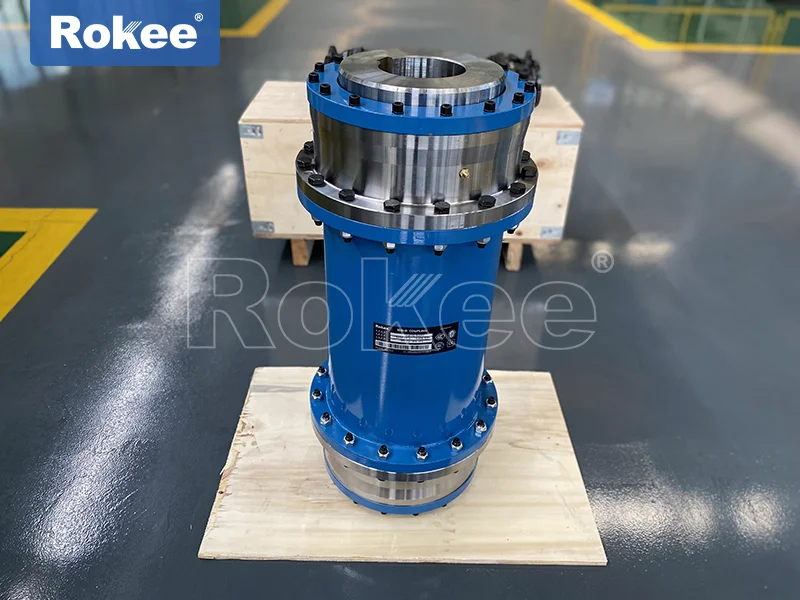
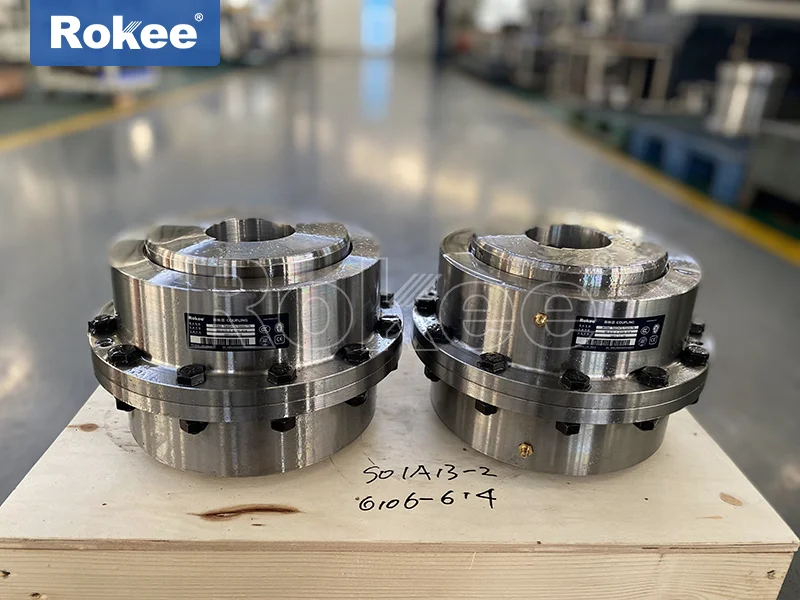
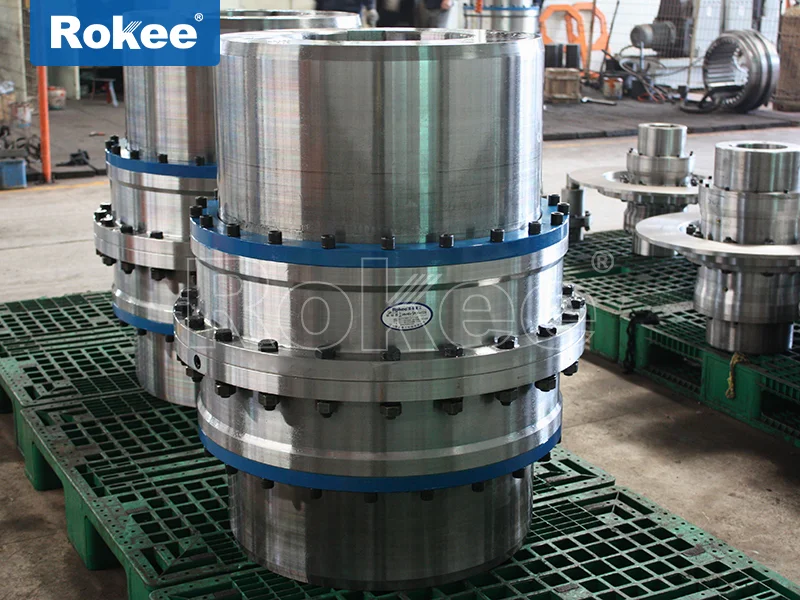
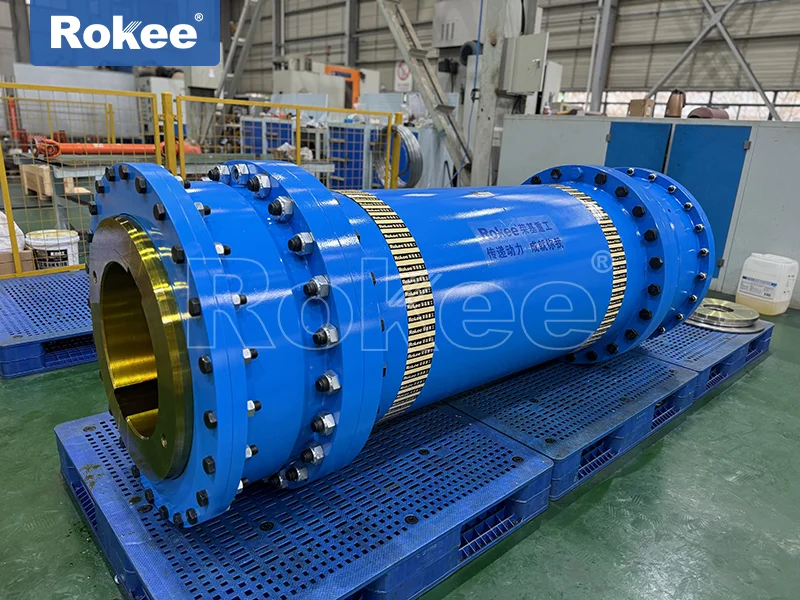
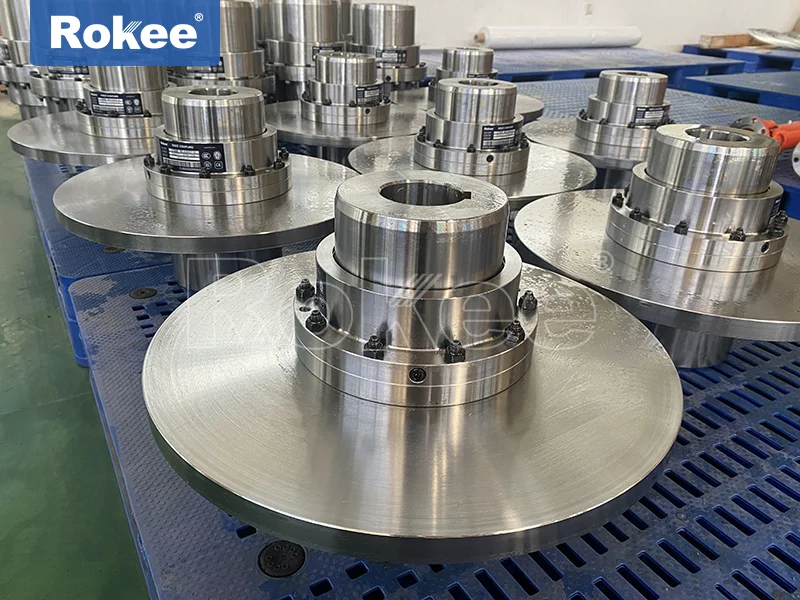
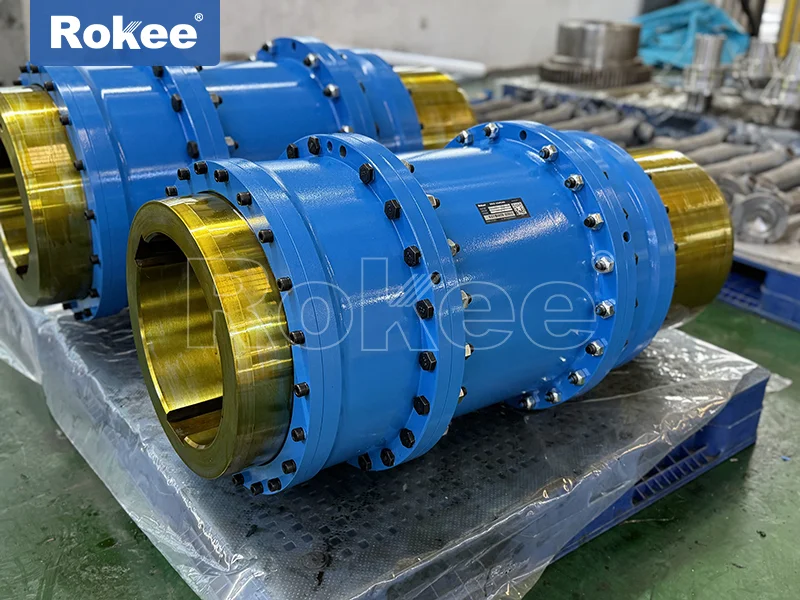
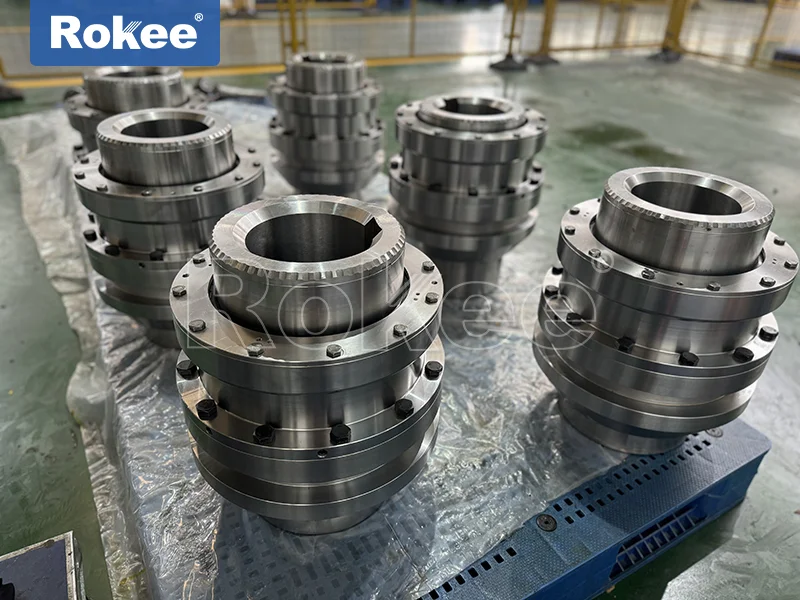
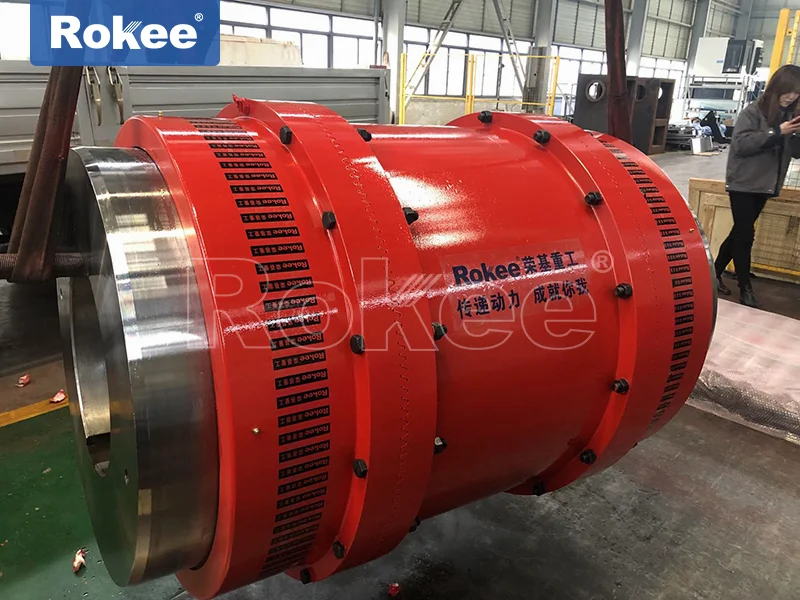
The barrel gear coupling, as a high-performance transmission component specially designed for heavy-duty, high-precision, and complex working conditions, has inherent structural advantages that can perfectly solve the pain points of traditional transmission components in continuous sandwich panel production lines. Its core structural feature is the unique design of the gear teeth: the external teeth of the coupling are made into a barrel-shaped (convex) structure, and the center of the sphere of the barrel-shaped teeth is on the axis of the gear, while the internal teeth are processed into a matching curved surface. This special tooth profile design enables the barrel gear coupling to have excellent misalignment compensation capacity, which is one of the key factors for its application in continuous sandwich panel production lines. Specifically, the barrel gear coupling can effectively compensate for radial deviation, angular deviation, and axial displacement between the connected shafts. The radial deviation compensation capacity can usually reach ±1.5% of the outer diameter of the coupling, the maximum angular deviation can reach 1.5°~3°, and it can also adapt to a certain degree of axial movement, which effectively solves the problem of shaft misalignment caused by installation errors, equipment vibration, and thermal deformation during the operation of the continuous sandwich panel production line. This misalignment compensation capacity not only reduces the additional stress on the shafts, bearings, and other components, prolonging their service life but also reduces the requirements for on-site installation accuracy, simplifying the installation and debugging process and improving the efficiency of equipment commissioning.
In addition to excellent misalignment compensation capacity, the barrel gear coupling also has outstanding load-bearing capacity and impact resistance, which are crucial for the continuous sandwich panel production line that requires long-term heavy-load operation. The barrel-shaped tooth profile design of the coupling makes the contact between the internal and external teeth a surface contact, which is very different from the line contact or point contact of traditional straight-tooth couplings. The larger contact area enables the load to be evenly distributed over the entire tooth surface, significantly reducing the unit area stress, thus greatly improving the load-bearing capacity of the coupling. In practical applications, the load-bearing capacity of the barrel gear coupling can be increased by 2 to 5 times compared with traditional straight-tooth couplings, depending on the diameter and curvature of the barrel-shaped teeth. This enables the barrel gear coupling to easily bear the large torque generated during the operation of the continuous sandwich panel production line, such as the torque required for roll forming of surface materials and composite pressing of sandwich panels, ensuring stable power transmission without deformation or damage. At the same time, the surface contact structure and high-strength material selection make the barrel gear coupling have strong impact resistance, which can effectively absorb the impact load, reverse load, and starting inertia impact generated during the start-up, shutdown, and operation of the production line, avoiding the damage of transmission components caused by sudden load changes and ensuring the stable operation of the entire production line.
The wear resistance and long service life of the barrel gear coupling further enhance its application value in continuous sandwich panel production lines. Unlike traditional couplings that rely on pure sliding friction between components, the relative motion between the internal and external teeth of the barrel gear coupling is a composite friction mode of "rolling + micro-sliding". This unique friction mode significantly reduces the friction coefficient between the components, reduces frictional heat generation, and avoids the problems of material annealing or hardness reduction caused by excessive frictional heat. At the same time, the micro-sliding between the teeth can form a stable wear track, further improving the contact adaptability between the teeth and reducing the wear rate. In practical use, the service life of the barrel gear coupling is 30% to 300% longer than that of traditional transmission components, which greatly reduces the frequency of maintenance and replacement of transmission components. For continuous sandwich panel production lines that require 24-hour continuous operation, this advantage is particularly obvious—it can effectively reduce production interruptions caused by maintenance, improve the overall operation efficiency of the production line, and reduce maintenance costs and labor input. In addition, the barrel gear coupling is usually equipped with a reliable sealing system, which can prevent foreign matters such as dust, debris, and lubricating oil from escaping, ensuring the cleanliness of the internal transmission structure and further prolonging its service life.
The application of barrel gear couplings in continuous sandwich panel production lines not only solves the problems of traditional transmission systems but also promotes the innovation and upgrading of the entire transmission system, bringing multiple positive impacts on the production line. In terms of production efficiency, the stable and efficient power transmission of the barrel gear coupling ensures the coordinated operation of each functional link of the production line, avoiding production interruptions caused by transmission failures, and thus improving the continuous operation capacity of the production line. At the same time, the high load-bearing capacity and high transmission efficiency of the barrel gear coupling enable the production line to increase the production speed appropriately under the premise of ensuring product quality, further improving production efficiency. For example, in the roll forming link, the stable power transmission of the barrel gear coupling ensures that the metal sheet can be accurately and smoothly formed into the required profile, avoiding the problems of profile deformation and uneven thickness caused by unstable transmission, thus reducing the scrap rate and improving production efficiency.
In terms of product quality, the precise power transmission and stable operation performance of the barrel gear coupling play a key role in ensuring the quality of sandwich panels. The continuous sandwich panel production line has high requirements for the precision of each link—for example, the thickness of the core material needs to be uniform, the bonding between the surface material and the core material needs to be firm, and the cutting size needs to be accurate. The barrel gear coupling ensures that each functional component of the production line operates at a stable speed and accurate position, avoiding the quality defects caused by unstable transmission. For example, in the core material injection link, the stable operation of the transmission system driven by the barrel gear coupling ensures that the injection speed and injection amount of the core material are uniform, avoiding the problems of uneven core material distribution and insufficient bonding caused by unstable injection, thus improving the structural strength and thermal insulation performance of the sandwich panel. In the precision cutting link, the precise power transmission of the barrel gear coupling ensures that the cutting machine operates stably and accurately, ensuring that the cutting size of the sandwich panel meets the design requirements, reducing the size deviation and improving product qualification rate.
In terms of energy conservation and environmental protection, the application of barrel gear couplings also brings positive effects. The high transmission efficiency of the barrel gear coupling reduces the energy loss during power transmission, making the power output of the prime mover more fully utilized, thus reducing energy consumption. Compared with traditional transmission components, the barrel gear coupling has lower friction loss and less energy waste, which is in line with the development trend of energy conservation and environmental protection in the modern manufacturing industry. At the same time, the long service life of the barrel gear coupling reduces the generation of waste transmission components, reducing environmental pollution caused by the disposal of waste parts. In addition, the barrel gear coupling requires less lubricating oil during operation, and the reliable sealing system prevents lubricating oil leakage, avoiding environmental pollution caused by oil leakage, further improving the environmental protection performance of the production line.
The application of barrel gear couplings in continuous sandwich panel production lines is not only limited to the improvement of the existing transmission system but also provides technical support for the intelligent and modular development of the production line. With the continuous development of industrial automation technology, the continuous sandwich panel production line is moving towards intelligence, with higher requirements for the stability, accuracy, and controllability of the transmission system. The barrel gear coupling, with its excellent performance and reliable operation, can be well integrated with the intelligent control system of the production line. Through the matching with sensors and control modules, the operation status of the coupling can be monitored in real time, such as temperature, vibration, and wear, so as to realize predictive maintenance and timely find and solve potential faults, further improving the intelligence level of the production line. In addition, the modular design of the barrel gear coupling makes it easy to install, disassemble, and replace, which is conducive to the modular transformation of the continuous sandwich panel production line. Enterprises can adjust and upgrade the transmission system according to their own production needs, improving the flexibility and adaptability of the production line, and meeting the market demand for diversified sandwich panel products.
In practical application, the barrel gear coupling has been widely used in various types of continuous sandwich panel production lines, including PU sandwich panel production lines, rock wool sandwich panel production lines, and EPS sandwich panel production lines, and has achieved remarkable application effects. For example, in a large-scale continuous PU sandwich panel production line, after replacing the traditional elastic coupling with a barrel gear coupling, the production line's continuous operation time has been increased by more than 30%, the maintenance frequency has been reduced by 50%, the product qualification rate has been improved by 8%, and the energy consumption has been reduced by about 10%. These data fully show that the barrel gear coupling can effectively promote the transmission innovation of the continuous sandwich panel production line, improve the production efficiency and product quality, and reduce production costs, bringing significant economic benefits to enterprises. At the same time, the application of barrel gear couplings also promotes the technological progress of the entire sandwich panel production industry, promotes the upgrading of the industry, and enhances the market competitiveness of enterprises.
It should be noted that to give full play to the role of barrel gear couplings in the transmission innovation of continuous sandwich panel production lines, reasonable selection, correct installation, and scientific maintenance are required. In terms of selection, enterprises should comprehensively consider the working parameters of the production line, such as transmission torque, rotating speed, shaft diameter, and misalignment amount, and select the appropriate model and specification of the barrel gear coupling to ensure that its performance matches the working requirements of the production line. In terms of installation, it is necessary to strictly follow the installation procedures, ensure the accurate alignment of the connected shafts as much as possible, and avoid excessive misalignment beyond the compensation range of the coupling, which will affect its service life and transmission performance. In terms of maintenance, regular inspection of the operation status of the coupling is required, including checking the wear of the teeth, the sealing performance, and the lubrication status, and timely adding or replacing lubricating oil to ensure the normal operation of the coupling. In addition, regular disassembly and inspection of the coupling are required to find and solve potential faults in time, avoiding serious failures that affect the operation of the production line.
With the continuous development of the sandwich panel production industry, the requirements for the transmission system of the continuous production line will become higher and higher. The barrel gear coupling, with its unique structural advantages and excellent performance characteristics, will play a more important role in the transmission innovation of the continuous sandwich panel production line. In the future, with the continuous progress of material technology and processing technology, the barrel gear coupling will be further optimized and upgraded, such as the use of new high-strength and wear-resistant materials to further improve its load-bearing capacity and service life, and the integration of intelligent monitoring technology to realize more accurate and efficient fault diagnosis and maintenance. At the same time, the application scope of barrel gear couplings will be further expanded, not only in the continuous sandwich panel production line but also in other related industrial fields, promoting the innovation and development of the entire industrial transmission system.
In conclusion, the barrel gear coupling, as a high-performance transmission component, has effectively solved the pain points of traditional transmission systems in continuous sandwich panel production lines through its excellent misalignment compensation capacity, high load-bearing capacity, wear resistance, and long service life. It has promoted the innovation and upgrading of the transmission system of the production line, improved production efficiency, product quality, and energy conservation and environmental protection performance, and brought significant economic and social benefits to enterprises and the industry. In the context of the continuous development of industrial automation and intelligent manufacturing, the barrel gear coupling will continue to play an important role in the transmission innovation of the continuous sandwich panel production line, helping the sandwich panel production industry to move towards a more efficient, high-quality, and sustainable development direction.