Curved Jaw Couplings
In the realm of mechanical power transmission, flexible couplings serve as indispensable components that bridge rotating shafts, mitigate operational stresses, and sustain the efficiency of diverse machinery systems. Among these, the curved jaw coupling stands out as a widely adopted solution, revered for its balanced blend of flexibility, durability, and functional versatility. Unlike rigid couplings that demand perfect shaft alignment and offer no tolerance for misalignment or vibration, curved jaw couplings integrate elastic elements to address common mechanical challenges, making them a staple in light, medium, and heavy-duty industrial setups alike.
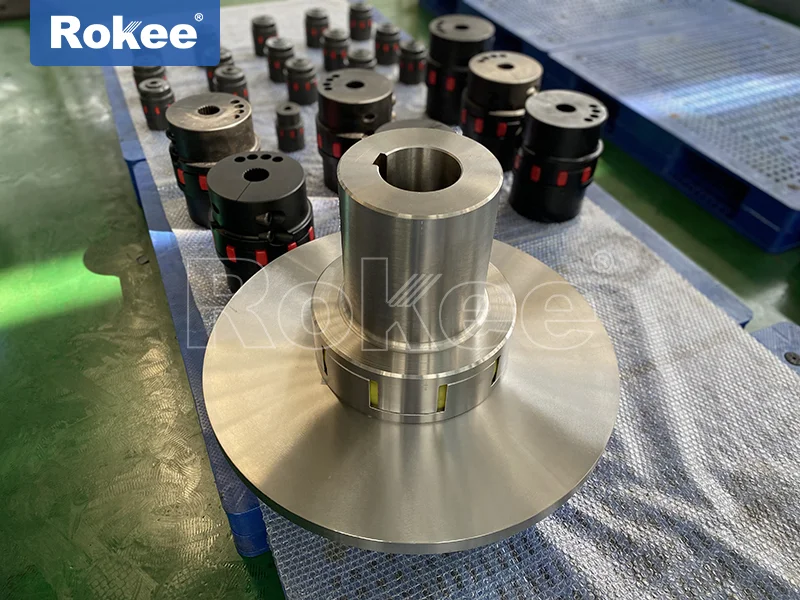
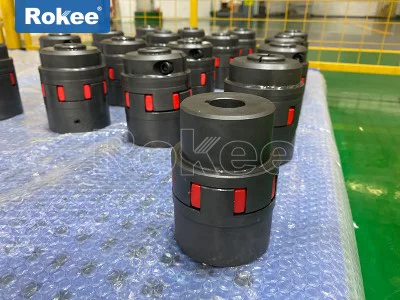
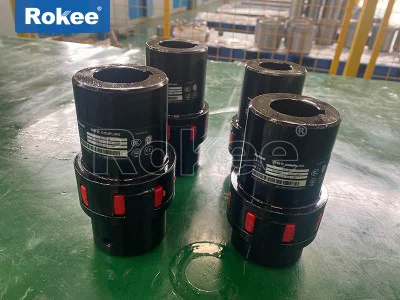
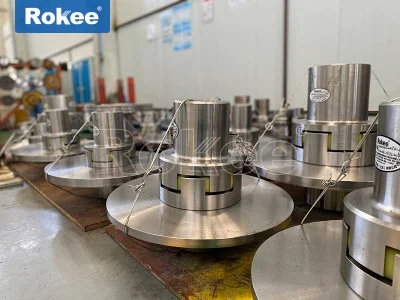
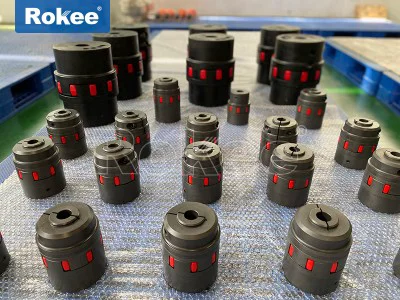
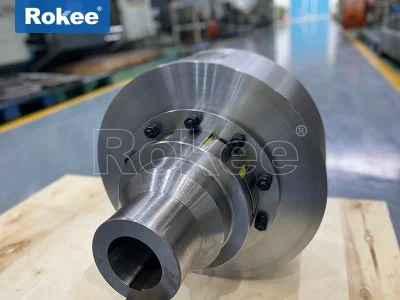
At its core, the curved jaw coupling features a streamlined, three-piece structural configuration that prioritizes simplicity and functional efficiency, a design that has stood the test of time across countless industrial scenarios. The assembly consists of two metallic hubs—commonly referred to as jaw hubs—and a central elastic insert, often called a spider due to its star-shaped profile. Each jaw hub is precision-engineered with multiple curved protrusions, or jaws, arranged radially around the hub’s inner bore, which is designed to fit securely onto the shafts of driving and driven components such as motors, gearboxes, pumps, and conveyors. The curved contour of these jaws is a defining structural feature, distinguishing it from straight-jaw couplings; this curvature creates a larger, more uniform contact surface between the jaws and the elastic spider, distributing stress evenly and eliminating concentrated edge pressure that can lead to premature wear or component failure. The elastic spider, positioned snugly between the two interlocking jaw hubs, fills the gaps between adjacent curved jaws, acting as the primary medium for torque transmission and vibration absorption. This basic structural layout eliminates the need for complex internal components, lubrication systems, or frequent adjustments, laying the groundwork for low-maintenance operation and long service life in varied working conditions.
The material composition of each structural element plays a pivotal role in shaping the overall performance of the curved jaw coupling, with manufacturers selecting materials tailored to specific operational demands, load capacities, and environmental factors. The jaw hubs are typically fabricated from robust metallic materials, with common options including aluminum alloy, carbon steel, stainless steel, and cast iron. Aluminum alloy hubs are favored for lightweight, high-speed applications where reduced rotational inertia is critical, as they minimize energy loss during acceleration and deceleration and resist corrosion in mildly abrasive environments. Carbon steel hubs offer exceptional tensile strength and torque-bearing capacity, making them ideal for heavy-duty industrial setups that handle high loads, shock impacts, and continuous operation. Stainless steel hubs are reserved for specialized environments, such as those with high humidity, chemical exposure, or strict hygiene requirements, as they deliver superior corrosion resistance and structural integrity even in harsh conditions. The central elastic spider, meanwhile, is crafted from elastomeric materials, primarily polyurethane, rubber, or thermoplastic polymers, each offering unique mechanical properties. Polyurethane spiders are the most prevalent, balancing excellent wear resistance, elasticity, and temperature tolerance; they effectively dampen vibrations, absorb shock loads, and maintain flexibility across a moderate temperature range. Rubber spiders provide enhanced vibration damping capabilities, suited for applications with high levels of torsional vibration, while thermoplastic spiders offer improved chemical resistance and dimensional stability for specialized industrial environments. The hardness of the elastomeric spider can also be adjusted to fine-tune performance, with softer spiders prioritizing vibration absorption and stiffer variants enhancing torque transmission precision and backlash control.
The structural design and material selection of curved jaw couplings directly translate into a set of distinctive performance characteristics that set them apart from other flexible coupling types, addressing key pain points in power transmission systems. One of the most prominent performance traits is their ability to compensate for shaft misalignment, a common issue in real-world machinery installations where perfect alignment is rarely achievable. Curved jaw couplings effectively accommodate three primary types of misalignment: angular misalignment, parallel misalignment, and axial misalignment. The curved jaw design, paired with the elastic spider, allows for moderate angular deflection between the driving and driven shafts, preventing excessive bearing stress and premature component fatigue. Parallel misalignment, which occurs when shafts are offset horizontally or vertically, is managed by the elastic deformation of the spider, which flexes to absorb the offset without compromising torque transmission. Axial misalignment, resulting from thermal expansion or shaft movement during operation, is also tolerated, as the coupling allows for limited axial shaft movement without disassembly or damage. This misalignment compensation capability not only simplifies installation and alignment procedures but also extends the service life of connected equipment by reducing unnecessary wear on bearings, gears, and shafts.
Another core performance advantage is superior vibration damping and shock absorption, which is critical for protecting sensitive mechanical components and ensuring smooth, stable operation. In power transmission systems, sudden load fluctuations, startup shocks, and torsional vibrations generated by rotating machinery can cause significant damage, noise pollution, and reduced operational precision. The elastomeric spider in the curved jaw coupling acts as a natural shock absorber, compressing and rebounding to dissipate vibrational energy and cushion sudden impact loads. This damping effect minimizes torsional resonance, reduces operational noise, and prevents the transfer of harmful vibrations from the driving component to the driven component, safeguarding delicate parts such as sensors, gears, and motor windings. Additionally, high-quality curved jaw couplings offer reliable electrical insulation between the two connected shafts, thanks to the non-conductive elastomeric spider; this insulation prevents the flow of stray electrical currents through the coupling, protecting equipment from electrical damage and ensuring safe operation in applications where electrical interference is a concern.
Curved jaw couplings also exhibit exceptional torque transmission efficiency and fail-safe operational capabilities, making them a reliable choice for critical industrial applications. Torque is transmitted through the compressive force exerted on the elastic spider by the interlocking curved jaws, ensuring smooth, consistent power transfer without slippage or energy loss, even under variable load conditions. When paired with a stiff elastomeric spider, curved jaw couplings can achieve near-zero backlash, a vital performance feature for precision motion control applications where positional accuracy is non-negotiable. The fail-safe design is a standout attribute: in the event that the elastomeric spider wears out, degrades, or fractures due to prolonged use or extreme loading, the curved metallic jaws interlock directly, creating a rigid connection that continues to transmit torque temporarily. This prevents sudden system shutdowns and catastrophic equipment failure, providing operators with time to perform maintenance and replace the damaged spider without incurring extensive downtime or collateral damage. Furthermore, the lubrication-free design of curved jaw couplings eliminates the need for regular lubrication maintenance, reducing operational costs and minimizing the risk of contamination in sensitive environments such as food processing or pharmaceutical production.
Despite their robust performance, curved jaw couplings do have inherent performance limitations that must be considered for optimal application. The misalignment compensation capacity is moderate, meaning they are not suitable for systems with extreme shaft misalignment; excessive misalignment will accelerate spider wear, increase operational noise, and compromise torque transmission efficiency. The elastomeric spider is a wear component, subject to aging, hardening, or degradation over time, especially when exposed to high temperatures, harsh chemicals, or prolonged heavy loading; this requires routine inspection and periodic replacement to maintain peak performance. High-temperature environments can also soften or degrade the elastomeric material, reducing its elasticity and load-bearing capacity, while extremely low temperatures may cause brittleness, increasing the risk of spider fracture. Additionally, while the fail-safe feature is beneficial in emergency situations, prolonged operation with a damaged spider can lead to accelerated wear on the metallic jaws and connected equipment, so timely maintenance remains essential.
Curved jaw couplings are categorized into distinct types based on structural variations, load-bearing capacities, application-specific designs, and hub configurations, each tailored to meet the unique requirements of different mechanical systems. The most fundamental classification is based on operational duty and size, encompassing standard curved jaw couplings, heavy-duty curved jaw couplings, and miniature curved jaw couplings. Standard curved jaw couplings are the most widely used variant, designed for general-purpose industrial applications with moderate torque loads, standard shaft sizes, and routine operating conditions; they strike a balance between performance, size, and cost-effectiveness, making them suitable for pumps, fans, compressors, and general conveyor systems. Heavy-duty curved jaw couplings feature reinforced jaw hubs, thicker cross-sections, and larger elastomeric spiders, engineered to handle high torque loads, extreme shock impacts, and continuous heavy operation in industrial sectors such as mining, construction, and material handling. Miniature curved jaw couplings, characterized by compact dimensions, small shaft bores, and lightweight hubs, are designed for precision equipment and small-scale machinery, including laboratory instruments, medical devices, small automation modules, and consumer mechanical products, where space is limited and precision is paramount.
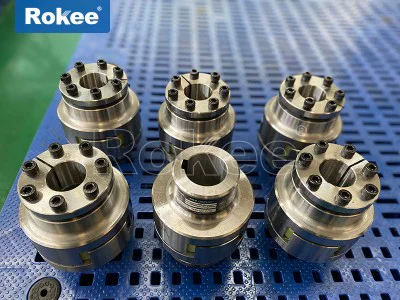
Classification based on hub design and mounting style further expands the versatility of curved jaw couplings, adapting to diverse shaft connection requirements. Common hub variants include set screw hubs, clamp hubs, and keyless hubs. Set screw hubs feature set screws that secure the coupling to the shaft via radial pressure, a simple and cost-effective design suitable for low-to-medium torque applications with minimal vibration. Clamp hubs utilize a clamping mechanism to grip the shaft evenly around its circumference, distributing pressure uniformly and preventing shaft damage; this design offers superior holding power, making it ideal for high-torque, high-vibration applications. Keyless hubs eliminate the need for keyways and keys, relying on friction or interference fit to connect to the shaft, reducing rotational inertia and enabling precise, backlash-free motion control, perfect for servo motor systems and precision automation equipment. Additionally, curved jaw couplings can be classified by spider design and material hardness, with standard spiders for general use, high-damping spiders for vibration-prone systems, and high-temperature resistant spiders for harsh thermal environments, allowing engineers to select the optimal configuration for specific operational needs.
Another specialized classification is based on application-specific adaptations, including corrosion-resistant curved jaw couplings, zero-backlash curved jaw couplings, and electrically insulated curved jaw couplings. Corrosion-resistant variants, typically with stainless steel hubs and chemical-resistant elastomeric spiders, are engineered for harsh environments such as marine applications, chemical processing plants, and wastewater treatment facilities, where moisture, chemicals, or salt exposure would degrade standard couplings. Zero-backlash curved jaw couplings, fitted with stiff, high-precision elastomeric spiders, are designed for motion control systems, CNC machinery, robotic arms, and machine vision equipment, where positional accuracy and rapid stop-start operations are critical. Electrically insulated curved jaw couplings feature enhanced insulation properties in the spider and hub coatings, making them suitable for applications where electrical current transfer must be prevented, such as generator sets, electric motor drives, and electronic equipment.
The unique combination of structural simplicity, reliable performance, and adaptable design makes curved jaw couplings one of the most versatile components in industrial power transmission, with applications spanning nearly every sector of mechanical engineering. In general industrial machinery, they are the go-to choice for connecting motors to pumps, fans, blowers, compressors, and gearboxes, providing consistent torque transmission, vibration damping, and misalignment compensation in everyday manufacturing and processing operations. Their ability to handle moderate loads and variable speeds makes them indispensable in assembly lines, material handling systems, and packaging machinery, where reliable, low-maintenance operation is essential for maintaining production efficiency.
In the automation and precision manufacturing sector, curved jaw couplings play a pivotal role in high-precision equipment, including CNC machine tools, robotic assembly systems, servo motor drives, and linear motion modules. Zero-backlash variants ensure precise positional control, minimal settling time, and accurate repeatability, supporting tasks such as cutting, milling, engraving, and high-resolution imaging in machine vision systems. The lightweight design of aluminum-hub curved jaw couplings also enhances the responsiveness of automated machinery, reducing inertia and improving dynamic performance in rapid motion sequences.
Specialized industrial sectors also rely heavily on curved jaw couplings, leveraging their tailored designs to meet unique operational demands. In food and beverage processing, pharmaceutical manufacturing, and cosmetic production, stainless steel and hygienic design curved jaw couplings are used to comply with strict cleanliness standards, resisting corrosion from cleaning agents and preventing contamination of finished products. In agricultural machinery, heavy-duty curved jaw couplings connect engines to tractors, harvesters, and irrigation systems, withstanding the shock loads and harsh outdoor conditions inherent to farming operations. In power generation and renewable energy systems, curved jaw couplings link turbines, generators, and drive shafts, providing reliable power transmission while dampening vibrations generated by rotational components. They are also widely used in transportation equipment, including automotive manufacturing machinery, marine propulsion systems, and aerospace ground support equipment, where durability, flexibility, and consistent performance are critical.
Beyond these core sectors, curved jaw couplings find utility in a vast array of smaller-scale and specialized applications, from medical diagnostic equipment and laboratory instrumentation to HVAC systems, printing machinery, and textile manufacturing equipment. Their adaptability stems from the ability to customize material selection, size, and design to match specific load requirements, environmental conditions, and spatial constraints, making them a versatile solution for nearly any power transmission challenge that demands flexibility, reliability, and cost-effective operation. When selecting a curved jaw coupling for a specific application, engineers must evaluate key factors including torque capacity, rotational speed, shaft size, misalignment potential, operating temperature, and environmental exposure to ensure optimal performance and longevity. Proper installation, routine inspection of the elastomeric spider, and timely replacement of worn components further enhance the coupling’s service life and maintain the efficiency of the entire mechanical system.
In summary, the curved jaw coupling represents a pinnacle of practical mechanical design, merging simple structural engineering with high-performance functionality to address the core needs of power transmission systems. Its well-crafted structure, encompassing curved metallic jaws and a resilient elastomeric spider, delivers exceptional misalignment compensation, vibration damping, and torque transmission, while its diverse classifications cater to a broad spectrum of industrial, commercial, and precision applications. Though subject to typical wear-related limitations of elastomeric components, its fail-safe design and low-maintenance requirements solidify its status as a reliable, cost-efficient coupling solution. As mechanical engineering continues to evolve and machinery systems demand higher precision, durability, and adaptability, the curved jaw coupling will remain a fundamental component, continuously adapted and refined to meet the ever-changing needs of modern industry, supporting efficient, stable, and safe power transmission across countless applications worldwide.