Curved Tooth Couplings
In the realm of mechanical power transmission, curved tooth couplings stand out as a versatile and high-performance category of flexible gear couplings, widely adopted across diverse industrial sectors for their exceptional ability to balance torque transmission efficiency and misalignment compensation. Unlike rigid couplings that demand flawless shaft alignment and offer no tolerance for positional deviations, curved tooth couplings integrate a specialized tooth profile design that merges the robustness of gear-driven power transfer with the flexibility to accommodate minor to moderate shaft misalignments, making them indispensable in heavy-duty, high-torque, and harsh operating environments.
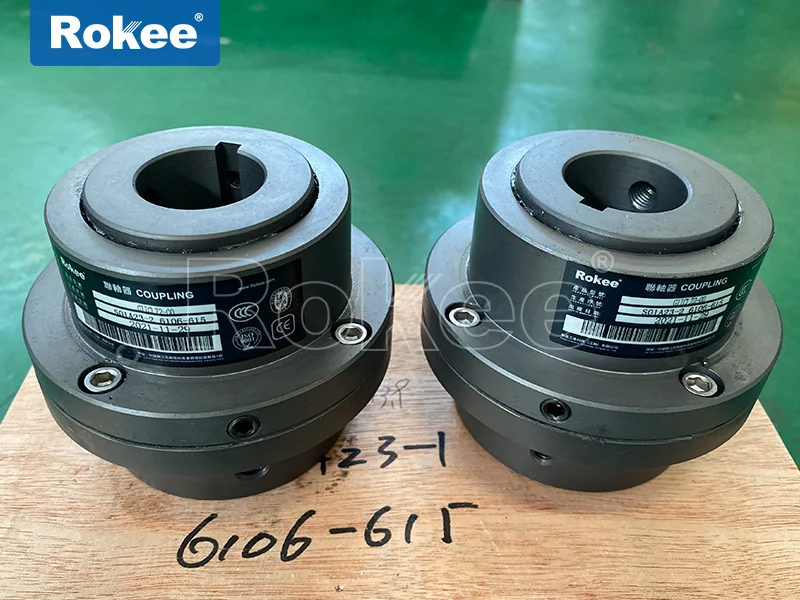
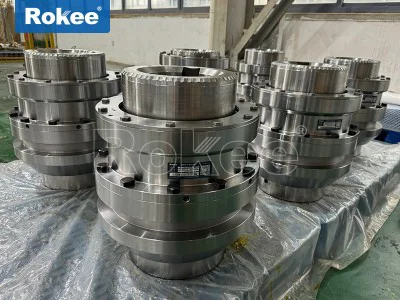
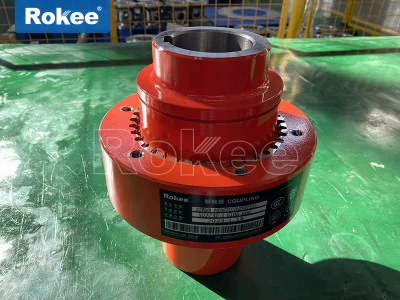
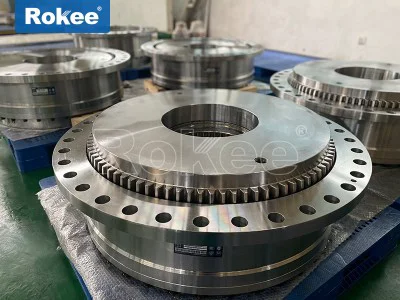
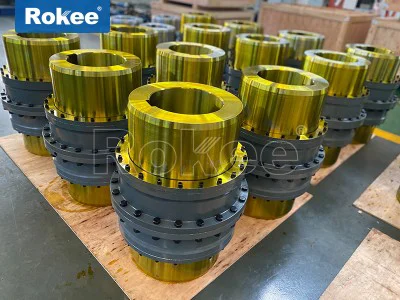
At its core, the structure of a curved tooth coupling is engineered around precision-machined toothed components that enable seamless meshing and adaptive movement, with a streamlined assembly that prioritizes durability and functional efficiency. A standard curved tooth coupling primarily consists of two key subassemblies: outer toothed hubs and inner toothed sleeves, often complemented by fastening components such as high-strength bolts and lock washers to ensure secure shaft connection. The defining structural feature lies in the curved, crowned profile of the outer teeth, which are crafted with a spherical curvature centered on the coupling’s axis, a design that sets them apart from conventional straight-tooth gear couplings. This curved tooth geometry eliminates the sharp edge contact that plagues straight-tooth designs, distributing contact stresses evenly across the entire tooth surface during meshing. The inner toothed sleeves, paired with the outer hubs, feature matching internal tooth profiles that facilitate smooth engagement and disengagement, while maintaining a precise, controlled backlash that supports misalignment compensation without compromising torque transmission integrity.
Beyond the basic toothed components, the structural design of curved tooth couplings incorporates thoughtful engineering details to enhance adaptability and longevity. The outer hubs are typically mounted onto the driving and driven shafts via keyway connections or interference fits, creating a rigid linkage that prevents slippage under high torque loads. The inner sleeves, which encase the outer toothed hubs, are often designed with a compact, cylindrical profile to minimize the overall radial footprint of the coupling, making it suitable for installations with limited spatial constraints. Many curved tooth couplings also feature integrated lubrication channels or recesses, designed to retain lubricating media and reduce friction between meshing teeth, a critical element for sustaining performance in continuous operation. Unlike complex coupling designs with multiple elastic or damping elements, the curved tooth coupling maintains a relatively simple, robust structure, with minimal moving parts that reduce the risk of mechanical failure and simplify installation, disassembly, and routine maintenance. This structural simplicity does not compromise functionality; instead, it amplifies the coupling’s ability to withstand heavy loads, shock vibrations, and thermal fluctuations that are common in industrial settings.
The performance of curved tooth couplings is defined by a unique set of advantages that stem directly from their specialized structural design, positioning them as a superior choice for demanding power transmission tasks. Foremost among these performance traits is exceptional torque transmission capacity, enabled by the large contact area between curved teeth and the even distribution of operational stresses. The curved tooth profile allows for multiple teeth to engage simultaneously during rotation, maximizing the transfer of rotational force and enabling the coupling to handle extremely high torque loads, far exceeding the capabilities of many elastic or flexible couplings with similar dimensional specifications. This high torque density makes curved tooth couplings ideal for heavy machinery where power transfer efficiency is non-negotiable.
Another pivotal performance attribute is the coupling’s superior misalignment compensation capability, a feature that addresses one of the most common challenges in shaft-driven systems. Curved tooth couplings can effectively accommodate three primary types of shaft misalignment: angular misalignment, radial misalignment, and axial misalignment. Angular misalignment, where the axes of the driving and driven shafts intersect at a small angle, is mitigated by the spherical curvature of the outer teeth, which maintains smooth meshing even as the shaft angle shifts slightly. Radial misalignment, involving parallel offset between the two shafts, is compensated by the controlled radial clearance within the toothed assembly, preventing binding or excessive wear. Axial misalignment, caused by thermal expansion or mechanical settling of shafts, is absorbed by the axial flexibility of the tooth meshing interface, eliminating axial thrust loads that could damage connected equipment. Unlike straight-tooth couplings, which suffer from severe edge wear and stress concentration under misalignment, curved tooth couplings preserve consistent performance and extend service life by minimizing wear and tear in misaligned conditions.
Additional performance benefits of curved tooth couplings include high operational efficiency, excellent shock and vibration damping, and broad environmental adaptability. The direct gear meshing mechanism ensures minimal power loss during transmission, with efficiency rates approaching nearly 100% under optimal operating conditions, making them highly energy-efficient for continuous, long-hour operation. The curved tooth design also acts as a natural damper, absorbing sudden shock loads and reducing torsional vibrations that can propagate through the drive system, protecting sensitive components such as motors, gearboxes, and pumps from damage. Constructed from high-strength alloy steels or carbon steels with precise heat treatment, curved tooth couplings exhibit excellent resistance to wear, fatigue, and corrosion, allowing them to operate reliably in extreme environments—including high-temperature industrial zones, dusty manufacturing facilities, and damp or mildly corrosive workspaces. Furthermore, these couplings offer consistent performance across a wide range of rotational speeds, from low-speed, high-torque heavy machinery to moderate-speed general industrial equipment, enhancing their versatility across different operational scenarios.
Curved tooth couplings are classified into distinct types based on structural variations, functional adaptations, and application-specific requirements, each tailored to address unique operational needs and installation constraints. The most fundamental classification is based on the overall structural configuration, distinguishing between standard single-stage curved tooth couplings and extended intermediate shaft curved tooth couplings. Standard single-stage models feature a compact design with no additional shaft extension, ideal for direct shaft-to-shaft connections where the distance between driving and driven components is minimal. These couplings offer maximum torque density and are the go-to choice for most general industrial applications, balancing performance and space efficiency effectively.
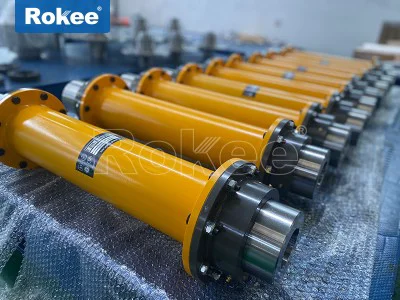
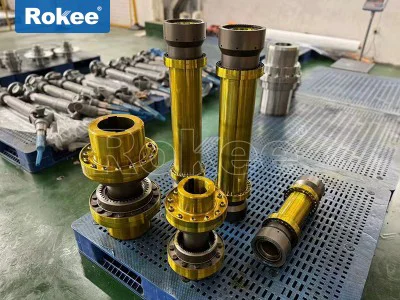
Extended intermediate shaft curved tooth couplings, by contrast, incorporate a rigid or floating intermediate shaft between two sets of curved tooth assemblies, designed to bridge larger gaps between driving and driven shafts. This variant is engineered for scenarios where shaft separation distances exceed the capabilities of standard couplings, such as in long-distance power transmission lines for conveyor systems, large-scale processing machinery, or remote drive units. The intermediate shaft is precision-machined to maintain rotational balance and alignment, ensuring that torque is transferred smoothly across the extended distance without compromising misalignment compensation or operational stability. This type retains all the core performance benefits of standard curved tooth couplings while addressing spatial limitations in complex mechanical layouts.
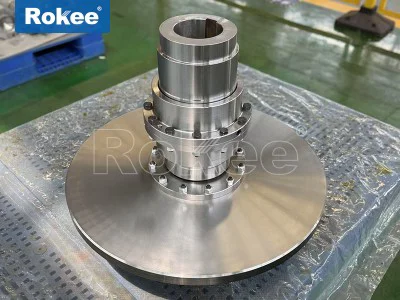
Another common classification framework is based on functional modifications, resulting in specialized curved tooth coupling variants tailored for specific operational demands. One prominent subtype is the brake wheel integrated curved tooth coupling, which features a built-in brake wheel or brake disc on one of the outer hubs. This design eliminates the need for separate braking components, streamlining the drive system assembly and providing a reliable braking interface for equipment that requires frequent starting, stopping, or speed regulation, such as cranes, hoists, and material handling machinery. The integrated brake wheel maintains the coupling’s torque transmission and misalignment capabilities while adding critical braking functionality, optimizing both space utilization and operational safety.
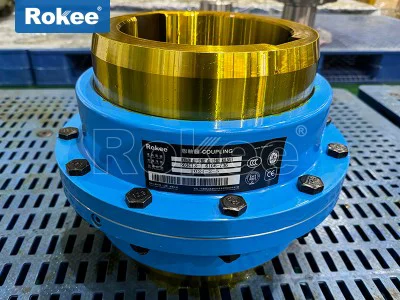
Vertical installation curved tooth couplings represent another specialized subtype, engineered to withstand the unique axial loads and gravitational forces associated with vertical shaft systems. Unlike horizontal couplings, these variants feature reinforced tooth profiles and enhanced fastening mechanisms to prevent axial displacement and ensure stable meshing under vertical operating conditions. They are specifically designed for vertical drive systems, such as vertical pumps, agitators, and elevators, where standard horizontal couplings would suffer from uneven wear or reduced performance. Additionally, there are narrow-width and wide-width curved tooth couplings, differentiated by the width of the inner toothed sleeves. Narrow-width models offer a more compact radial and axial profile, suitable for high-speed applications with limited installation space, while wide-width models provide increased tooth contact area and enhanced axial misalignment compensation, ideal for heavy-duty, low-speed equipment with greater thermal expansion or mechanical settling.
Curved tooth couplings also vary based on tooth profile precision and material specifications, with precision-ground tooth couplings offering tighter tolerances, smoother meshing, and higher speed capabilities, suitable for precision industrial machinery, while rough-machined variants provide cost-effective performance for heavy-load, low-speed applications. Material-specific classifications include standard carbon steel couplings for general industrial use, alloy steel couplings for enhanced strength and fatigue resistance in heavy-duty scenarios, and corrosion-resistant alloy couplings for harsh environments with moisture, chemicals, or abrasive particles. Each material variant is engineered to balance durability, performance, and practicality, ensuring compatibility with the unique operating conditions of different industries.
The combination of robust structure, exceptional performance, and diverse typology makes curved tooth couplings one of the most widely used power transmission components across global industrial sectors, with applications spanning heavy industry, manufacturing, energy production, mining, construction, and general machinery. In the mining and mineral processing industry, curved tooth couplings are integral to the operation of heavy equipment such as crushers, ball mills, conveyors, and feeders, where they endure extreme torque loads, continuous vibration, and dusty, abrasive conditions. Their ability to compensate for shaft misalignment caused by heavy material impact and machine settling ensures uninterrupted operation, reducing downtime and maintenance costs in high-intensity mining operations.
In the energy production sector, including thermal power, hydropower, and wind power facilities, curved tooth couplings play a vital role in connecting turbines, generators, and drive motors. These couplings handle the high torque generated by power generation equipment, absorb misalignment caused by thermal expansion of turbine shafts and foundation settling, and dampen torsional vibrations that could disrupt power output or damage critical components. Their high efficiency and reliable performance contribute to the stable, energy-efficient operation of power generation systems, supporting consistent electricity production.
The metallurgical and steel manufacturing industry relies heavily on curved tooth couplings for equipment such as rolling mills, blast furnace auxiliaries, and continuous casting machines. These applications demand couplings that can withstand extreme temperatures, heavy shock loads, and continuous operation, and curved tooth couplings deliver exceptional durability and torque transmission capacity, ensuring the smooth functioning of steel production lines. In construction machinery, including excavators, loaders, and concrete mixers, curved tooth couplings connect engine power systems to hydraulic drives and working components, adapting to the frequent movement and misalignment inherent in construction equipment, while absorbing shock loads from heavy-duty digging and lifting operations.
Beyond heavy industry, curved tooth couplings find extensive use in general manufacturing and processing sectors, including petrochemical, textile, paper making, and food processing machinery. In petrochemical plants, they drive pumps, compressors, and mixers, operating reliably in mildly corrosive environments and compensating for misalignment in complex pipeline-driven systems. In textile and paper manufacturing, they ensure smooth power transmission for high-speed rotating machinery, minimizing vibration to maintain product quality and production efficiency. Even in marine and port machinery, such as shipboard drive systems and port cranes, curved tooth couplings perform reliably under harsh marine conditions, resisting salt spray corrosion and handling the heavy loads associated with marine operations.
The widespread adoption of curved tooth couplings is further reinforced by their adaptability to both low-speed, high-torque applications and moderate-speed, continuous-operation scenarios, making them a universal solution for diverse power transmission challenges. Unlike specialized couplings that are limited to narrow operational ranges, curved tooth couplings offer a balanced blend of strength, flexibility, and efficiency, catering to the evolving needs of modern industrial systems. Their long service life, low maintenance requirements, and ability to reduce wear on connected equipment also translate to significant cost savings for industrial operators, enhancing their economic viability alongside their technical superiority.
In summary, curved tooth couplings represent a pinnacle of flexible gear coupling engineering, merging a thoughtfully designed curved tooth structure with outstanding torque transmission, misalignment compensation, and environmental adaptability. Their diverse classifications address a broad spectrum of installation and functional requirements, while their extensive industrial applications underscore their irreplaceable role in global mechanical power transmission. As industrial technology continues to advance and operational demands grow more stringent, curved tooth couplings will remain a cornerstone component, evolving alongside industry needs to deliver reliable, efficient, and durable power transmission solutions across every sector that relies on rotational mechanical motion. Their enduring popularity stems not from complex design or specialized features, but from a perfect harmony of structural simplicity, performance excellence, and practical versatility that meets the most demanding challenges of modern industrial operations.
Coupling Categories
Links:
Related Articles
- Oct 8, 2026Giant Curved Tooth Coupling
- Aug 10, 2026Flexible Curved Tooth Coupling
- Aug 10, 2026Flanged Curved Tooth Coupling
- Aug 10, 2026Cylindrical Curved Tooth Coupling
- Aug 4, 2026Light Weight Curved Tooth Coupling
- Jul 30, 2026Custom Curved Tooth Coupling
- Jul 22, 2026Easy Installation Curved Tooth Coupling
- Jul 22, 2026Compact Curved Tooth Coupling
- Jul 22, 2026Durable Curved Tooth Coupling
- Jul 22, 2026Heavy Weight Curved Tooth Coupling
- Jul 7, 2026Efficient Transmission Curved Tooth Coupling Adaptation Scheme For PU Sandwich Panel Line
- Jul 7, 2026Practical Application Of Curved Tooth Coupling In Automatic PU Sandwich Panel Line
- Jul 7, 2026Optimization Of Curved Tooth Coupling Application In Polyurethane Sandwich Panel Production Line
- Apr 27, 2026Curved Tooth Coupling Is Indispensable For Efficient Transmission Scheme Of Sandwich Panel Manufacturing Line
- Apr 27, 2026Curved Tooth Coupling Cooperates With Sandwich Panel Making Line To Achieve Production Capacity Breakthrough
- Apr 27, 2026Sandwich Panel Line Is Equipped With Curved Tooth Coupling Suitable For Equipment Of Different Specifications
- Apr 27, 2026Curved Tooth Coupling Improves Transmission Stability And Reliability Of PU Sandwich Panel Production Line
- Apr 27, 2026Precise And Efficient Transmission Of PU Sandwich Panel Manufacturing Line Assisted By Curved Tooth Coupling
- Apr 27, 2026Curved Tooth Coupling is A Good Helper For Reducing Cost And Increasing Efficiency Of PU Sandwich Panel Making Line
- Apr 22, 2026Transmission Innovation Of Sandwich Panel Production Machine With Core Support From Curved Tooth Coupling