Tooth Couplings
Tooth couplings stand as one of the most widely utilized mechanical transmission components in industrial shaft connection systems, renowned for their exceptional load-bearing capacity, reliable displacement compensation performance and durable operational stability. As a type of flexible rigid coupling, they bridge the gap between rigid couplings that lack displacement adaptability and highly flexible couplings with limited torque transmission capabilities, striking a balanced performance profile that caters to a vast array of mechanical transmission scenarios. Unlike simple rigid connectors that rely solely on fixed clamping to transfer rotational force, tooth couplings operate on the fundamental principle of meshing between internal and external gear teeth, enabling efficient torque transmission while accommodating minor axial, radial and angular misalignments between connected shafts. This unique working mechanism underpins their widespread adoption across heavy machinery, precision equipment, high-speed transmission systems and general industrial equipment, making them an indispensable part of modern mechanical engineering.
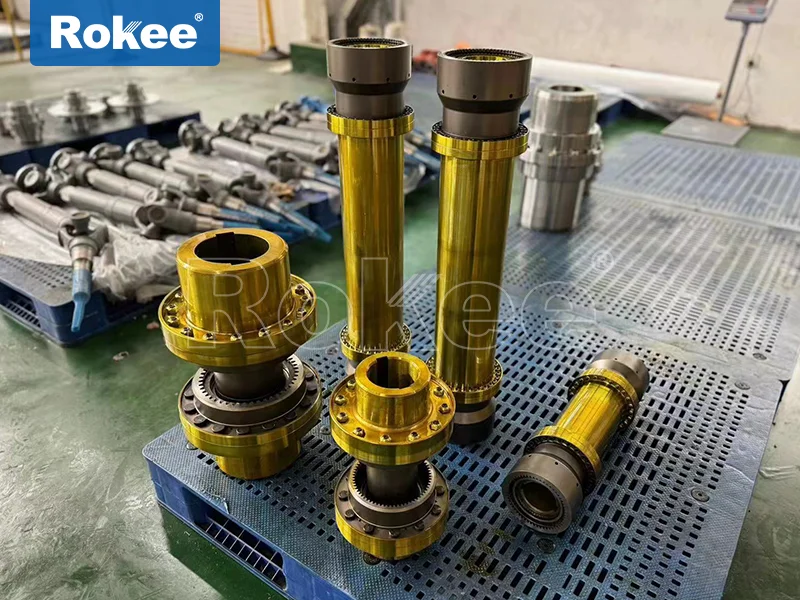
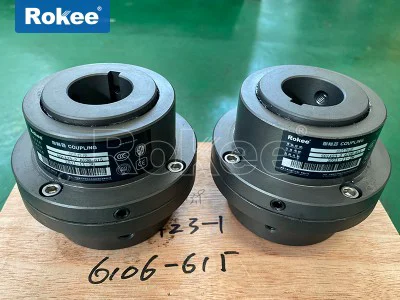
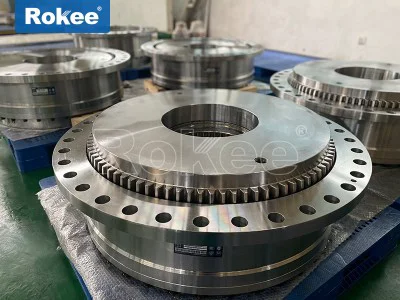
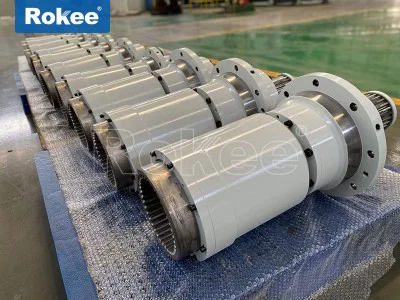
At its core, the structural design of a standard tooth coupling is engineered for simplicity, robustness and functional efficiency, consisting of several key integrated components that work in tandem to deliver consistent performance. The primary structural elements include two flange half-couplings with external gear teeth, two inner gear sleeves that mesh with the external teeth, and a sealing assembly designed to retain lubricant and prevent contamination from external dust, moisture or debris. The external gear teeth on the half-couplings are precision-machined to match the tooth profile and pitch of the inner gear sleeves, ensuring tight and stable meshing without excessive backlash that could compromise transmission accuracy. The flange sections of the half-couplings are equipped with evenly distributed bolt holes, facilitating secure connection to the driving and driven shafts via keyways or interference fits, creating a rigid yet flexible linkage between the two shafts. A defining structural feature is the controlled clearance between the internal and external teeth, which is not only critical for smooth assembly and disassembly but also serves as the primary mechanism for accommodating shaft misalignments during operation. This targeted clearance design eliminates the risk of excessive stress concentration on the teeth or shaft journals caused by manufacturing tolerances, installation errors or thermal expansion during continuous operation, a common pain point in rigid shaft connection systems.
The structural integrity of tooth couplings is further enhanced by material selection and precision machining processes, which directly shape their overall performance and service life. Most standard tooth couplings are forged from high-quality alloy steel or high-strength carbon steel, materials chosen for their excellent tensile strength, wear resistance and fatigue resistance under heavy cyclic loads. The gear teeth undergo specialized heat treatment processes, such as carburizing and quenching or high-frequency induction hardening, to boost surface hardness while maintaining a tough core structure, effectively reducing tooth surface wear, pitting and fracture risks during prolonged operation. For applications demanding enhanced corrosion resistance or reduced weight, specialized alloy materials or surface coating treatments are employed, without compromising the core mechanical properties required for reliable torque transmission. The precision of tooth profile machining is equally vital; tight tolerances ensure uniform load distribution across all meshing teeth, preventing localized overloading that could lead to premature failure. This meticulous structural design and manufacturing precision allow tooth couplings to operate efficiently even in harsh working conditions, from high-temperature industrial environments to high-vibration heavy-duty machinery setups.
Performance characteristics are the cornerstone of tooth couplings’ industrial value, setting them apart from other coupling types and defining their suitability for diverse operational scenarios. The most prominent performance advantage is their exceptional high torque-bearing capacity, which far exceeds that of elastic couplings of similar dimensions. The gear meshing design distributes transmitted torque across multiple tooth surfaces simultaneously, maximizing load-sharing efficiency and enabling the coupling to handle heavy instantaneous impact loads without deformation or damage. This makes tooth couplings the preferred choice for high-power, heavy-load transmission systems where torque density and load resilience are non-negotiable. Another key performance trait is their comprehensive misalignment compensation capability, addressing the common engineering challenge of shaft misalignment. While rigid couplings fail to accommodate even minor deviations, leading to increased vibration, noise and component wear, tooth couplings can effectively compensate for axial displacement, radial deviation and angular misalignment within specified ranges. The degree of compensation varies by tooth profile design, with advanced profiles offering greater flexibility without sacrificing transmission stability.
Tooth couplings also deliver outstanding transmission efficiency, typically achieving efficiency ratings above 99% under normal operating conditions, minimizing energy loss during power transmission. This high efficiency stems from the smooth gear meshing mechanism, which reduces frictional losses compared to couplings with sliding friction or elastic deformation-driven power transfer. Additionally, they exhibit strong operational stability and adaptability, maintaining consistent performance across a wide range of rotational speeds, from low-speed heavy-duty operation to high-speed transmission systems. Their rigid yet flexible nature dampens minor vibrations and shocks generated during operation, protecting connected motors, gearboxes, pumps and other precision components from excessive dynamic stress. However, it is important to note that optimal performance relies on proper lubrication and maintenance; the relative sliding between meshing teeth during misalignment compensation generates frictional heat, so adequate lubrication is essential to reduce wear, lower operating temperatures and extend service life. Regular inspection of sealing components and lubricant condition ensures long-term stable operation and prevents premature performance degradation.
Tooth couplings are categorized into distinct types based on tooth profile design, structural configuration and functional characteristics, each tailored to specific operational requirements and application scenarios. The most fundamental classification is based on external tooth shape, dividing tooth couplings into straight tooth couplings and drum tooth couplings, the two most prevalent variants in industrial practice. Straight tooth couplings feature external teeth with a linear axial profile, with standard pitch circles and root circles forming straight lines; this design is simple to machine and cost-effective, making it suitable for basic transmission scenarios with minimal shaft misalignment and moderate load requirements. However, straight teeth have limited angular misalignment compensation capacity and are prone to edge stress concentration under heavy loads or significant misalignment, leading to accelerated wear and reduced service life, leading to their gradual phasing out in high-performance industrial applications.
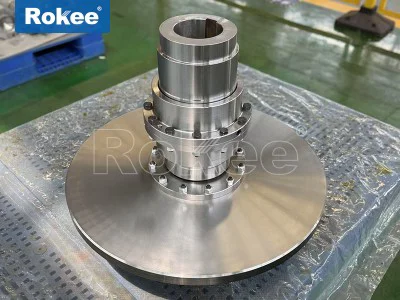
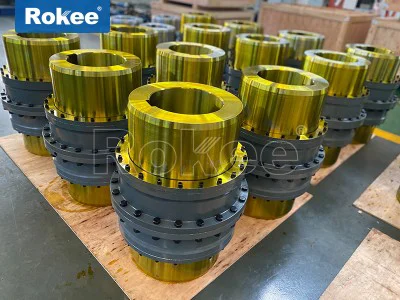
Drum tooth couplings represent the advanced iteration of tooth coupling design, featuring external teeth machined into a spherical drum profile with the spherical center aligned with the gear axis. This innovative profile eliminates edge contact between internal and external teeth during misalignment, ensuring uniform surface contact and load distribution across the entire tooth flank. Drum tooth couplings offer 50% greater angular misalignment compensation than straight tooth variants, alongside a 15-30% higher load-bearing capacity within the same dimensional envelope, drastically reducing tooth wear and extending service life by multiple times in heavy-duty conditions. They also feature optimized tooth end design for easier assembly and disassembly, making them the dominant choice for modern industrial applications requiring high performance, durability and flexibility. Beyond tooth profile, tooth couplings are further classified by structural configuration: basic integral drum tooth couplings for standard short-distance shaft connections, intermediate shaft-type drum tooth couplings for long-distance transmission needs, vertical shaft tooth couplings for vertical transmission systems, and brake disc-integrated tooth couplings for equipment requiring integrated braking functionality. Each structural variant retains core performance advantages while adapting to unique spatial layout and functional demands.
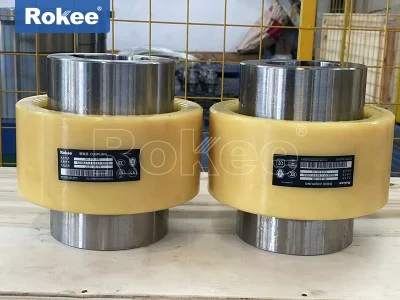
Specialized tooth coupling variants cater to niche industrial needs, expanding their application reach further. Non-lubricated tooth couplings utilize wear-resistant composite materials or self-lubricating coatings on tooth surfaces, eliminating routine lubrication maintenance and ideal for hard-to-access equipment or environments where lubricant leakage is prohibited. Elastic tooth couplings integrate elastic elements into the gear meshing structure, enhancing vibration damping and noise reduction performance while preserving high torque capacity, suitable for systems with frequent start-stop cycles or significant impact loads. Miniature precision tooth couplings, designed with compact dimensions and fine tooth profiles, serve precision instruments and small-scale precision transmission equipment, balancing miniaturization with reliable transmission accuracy. These specialized types ensure tooth couplings remain adaptable across the full spectrum of industrial transmission needs, from heavy machinery to precision devices.
The versatility of tooth couplings is reflected in their extensive cross-industry applications, where they solve critical transmission challenges across diverse sectors. In heavy industrial machinery, including metallurgical rolling mills, mining equipment, lifting and transportation machinery and large-scale crusher systems, drum tooth couplings are the default choice due to their high torque capacity and misalignment resilience. They withstand extreme heavy loads, continuous vibration and harsh operating conditions, ensuring stable power transmission in metal smelting, mineral extraction and material handling processes, reducing downtime and maintenance costs. In the energy and power industry, tooth couplings are widely deployed in water turbines, steam turbines, generator sets and wind turbine transmission systems, where high-speed, high-power transmission and operational reliability are paramount. Their high efficiency and stability minimize energy loss and protect critical power generation components from dynamic stress damage, supporting consistent energy output.
In general industrial machinery, including pumps, fans, compressors, gearboxes and conveyor systems, standard drum tooth couplings strike an ideal balance between performance and cost, adapting to daily operational demands and ensuring long service life. They accommodate minor installation errors and thermal expansion, reducing vibration and noise for smoother equipment operation and lower maintenance needs. For precision mechanical transmission, high-precision balanced tooth couplings serve high-speed rotating machinery such as centrifuges, textile machinery and printing equipment, where transmission accuracy and dynamic stability are critical. Precision machining and dynamic balancing eliminate high-speed vibration, ensuring operational precision and product quality in manufacturing processes. In marine and shipboard machinery, corrosion-resistant tooth couplings handle propulsion systems, deck machinery and auxiliary equipment, enduring marine humidity, salt spray and variable loads while maintaining reliable transmission performance in harsh marine environments.
In automotive and engineering machinery transmission systems, specialized compact tooth couplings are integrated into vehicle powertrains, construction machinery and agricultural equipment, delivering reliable torque transfer in confined spaces while absorbing road and operational vibrations. Their compact design and high load resistance make them ideal for mobile machinery demanding durability and space efficiency. Across every application, the core value of tooth couplings remains consistent: delivering reliable, efficient torque transmission while mitigating the impact of shaft misalignment, vibration and shock loads, enhancing overall equipment stability and service life. As industrial technology advances, tooth coupling design continues to evolve, with optimized materials, refined tooth profiles and intelligent structural upgrades boosting performance, reducing maintenance needs and expanding their applicability. From heavy industry to precision manufacturing, energy production to mobile machinery, tooth couplings remain a foundational, irreplaceable component in global mechanical transmission systems, supporting the efficient and stable operation of critical industrial equipment worldwide.
Coupling Categories
Links:
Related Articles
- Oct 8, 2026Giant Curved Tooth Coupling
- Aug 10, 2026Flexible Curved Tooth Coupling
- Aug 10, 2026Flanged Curved Tooth Coupling
- Aug 10, 2026Cylindrical Curved Tooth Coupling
- Aug 4, 2026Light Weight Curved Tooth Coupling
- Jul 30, 2026Custom Curved Tooth Coupling
- Jul 22, 2026Easy Installation Curved Tooth Coupling
- Jul 22, 2026Compact Curved Tooth Coupling
- Jul 22, 2026Durable Curved Tooth Coupling
- Jul 22, 2026Heavy Weight Curved Tooth Coupling
- Jul 7, 2026Efficient Transmission Curved Tooth Coupling Adaptation Scheme For PU Sandwich Panel Line
- Jul 7, 2026Practical Application Of Curved Tooth Coupling In Automatic PU Sandwich Panel Line
- Jul 7, 2026Optimization Of Curved Tooth Coupling Application In Polyurethane Sandwich Panel Production Line
- Apr 27, 2026Curved Tooth Coupling Is Indispensable For Efficient Transmission Scheme Of Sandwich Panel Manufacturing Line
- Apr 27, 2026Curved Tooth Coupling Cooperates With Sandwich Panel Making Line To Achieve Production Capacity Breakthrough
- Apr 27, 2026Sandwich Panel Line Is Equipped With Curved Tooth Coupling Suitable For Equipment Of Different Specifications
- Apr 27, 2026Curved Tooth Coupling Improves Transmission Stability And Reliability Of PU Sandwich Panel Production Line
- Apr 27, 2026Precise And Efficient Transmission Of PU Sandwich Panel Manufacturing Line Assisted By Curved Tooth Coupling
- Apr 27, 2026Curved Tooth Coupling is A Good Helper For Reducing Cost And Increasing Efficiency Of PU Sandwich Panel Making Line
- Apr 22, 2026Transmission Innovation Of Sandwich Panel Production Machine With Core Support From Curved Tooth Coupling