Gear Type Couplings
In the intricate landscape of mechanical power transmission, gear type couplings stand as one of the most robust and versatile components, serving as a critical bridge between driving and driven shafts across countless industrial systems. These mechanical connectors are engineered to transfer torque efficiently while accommodating a spectrum of shaft misalignments, a dual functionality that has cemented their status as indispensable elements in heavy-duty and precision-driven machinery alike. Unlike rigid couplings that demand flawless shaft alignment and offer no tolerance for positional shifts, gear type couplings blend structural rigidity for torque transmission with controlled flexibility for misalignment compensation, striking a balance that few alternative coupling designs can match. Their widespread adoption stems from a unique combination of high torque density, durable construction, and adaptive performance, making them suitable for applications ranging from heavy industrial machinery to high-speed rotating equipment, where reliability and efficiency are non-negotiable. Every aspect of a gear type coupling, from its tooth profile geometry to its material composition and assembly design, is meticulously crafted to withstand the stresses of continuous operation, resist wear, and maintain consistent performance even in challenging operating environments.
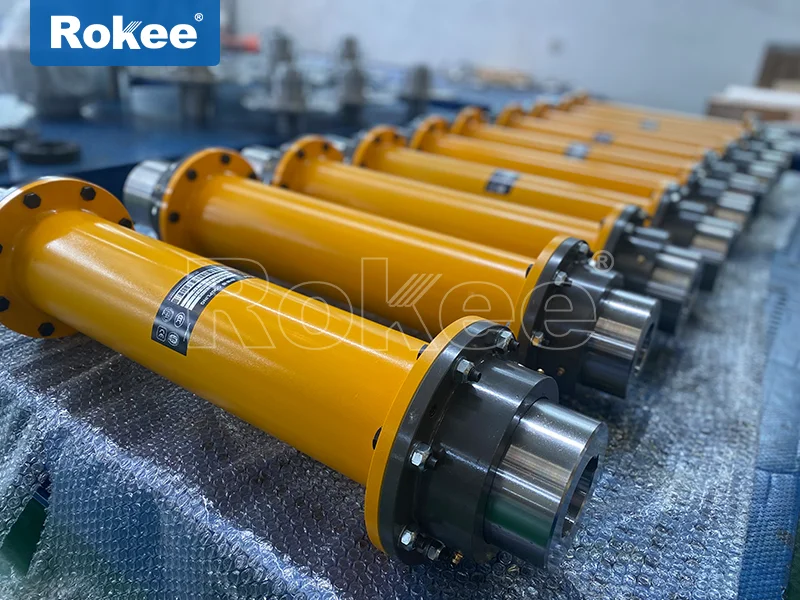
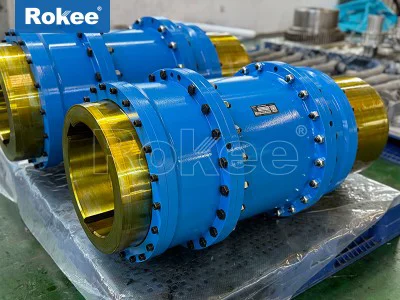
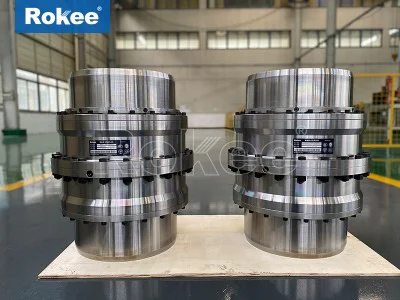
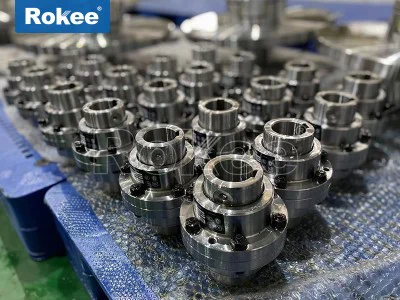
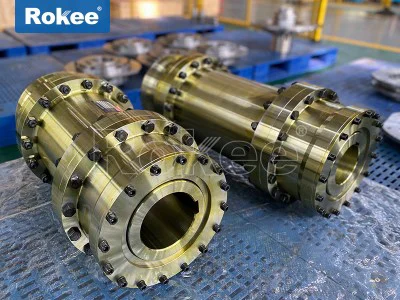
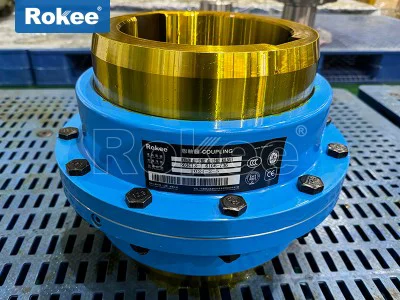
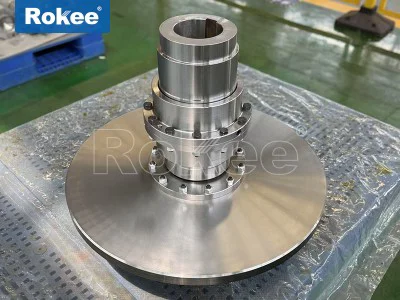
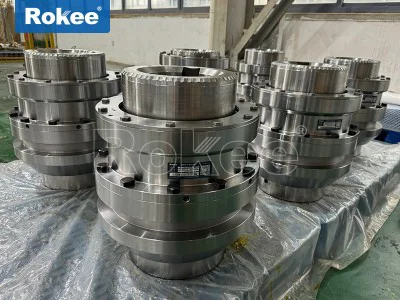
At its core, the operational principle of a gear type coupling revolves around the meshing of precision-machined gear teeth, a mechanism that enables seamless torque transfer while accommodating misalignment. The fundamental structure consists of two hub components, each fitted with external gear teeth, and one or two sleeve components with matching internal gear teeth that encase the hubs. The hubs are securely mounted to the respective driving and driven shafts, typically via keyways or interference fits, creating a stable connection that prevents slippage during torque transmission. When the driving shaft rotates, the torque is channeled through the external teeth of the driving hub, which mesh with the internal teeth of the sleeve; the sleeve then transfers this rotational force to the external teeth of the driven hub, ultimately propelling the driven shaft into motion. What sets this design apart is the intentional interplay between tooth geometry and fit tolerances, which allows for limited relative movement between the hubs and sleeves. This movement is not arbitrary but precisely calibrated to compensate for three primary types of shaft misalignment: angular misalignment, where the shafts intersect at a slight angle; radial misalignment, where the shafts run parallel but are offset from one another; and axial misalignment, where the shafts shift along their longitudinal axis. This adaptive capability eliminates the risk of excessive stress, vibration, and premature component failure that would inevitably occur with rigid connections, even when minor alignment errors are present during installation or develop over time due to operational wear, thermal expansion, or mechanical settling.
The misalignment compensation feature of gear type couplings is further enhanced by specialized tooth profiling and fit design, with crowned teeth standing as a hallmark refinement of this component. Unlike standard spur gear teeth with flat, straight flanks, crowned teeth feature a subtle, controlled curvature along their surface, a modification that drastically improves the coupling’s performance and longevity. This curved profile ensures that the contact area between the internal and external teeth remains uniform even when the shafts are misaligned, preventing edge loading and concentrated stress that would accelerate wear, pitting, or tooth fracture. The crowning also reduces friction between meshing teeth during relative movement, minimizing heat generation and power loss during operation. Additionally, controlled backlash—the small gap between meshing gear teeth—plays a vital role in the coupling’s functionality, providing clearance for lubricant circulation and further facilitating misalignment accommodation without binding or jamming. The sleeve design of gear type couplings also varies to suit different operational needs: continuous sleeve designs feature a single, unbroken tubular sleeve that encloses both hubs, offering enhanced protection against contaminants, reduced noise, and improved structural integrity; flanged sleeve designs, by contrast, consist of two separate sleeve halves connected by fasteners, simplifying installation, removal, and maintenance without requiring disassembly of the entire shaft system. This flexibility in sleeve configuration allows gear type couplings to be tailored to diverse spatial constraints and maintenance protocols, adding to their practicality across industrial settings.
Material selection is a cornerstone of the performance and durability of gear type couplings, with manufacturers prioritizing alloys that deliver exceptional strength, wear resistance, and fatigue life to withstand the rigors of continuous torque transmission. Most high-performance gear type couplings are forged from alloy steels, chosen for their superior tensile strength, toughness, and ability to resist deformation under heavy loads. These steels undergo precision heat treatment processes, such as quenching and tempering, to refine their microstructure, boost surface hardness, and enhance their resistance to abrasion, impact, and cyclic loading. The heat treatment also ensures that the core of the coupling components remains tough enough to absorb shock loads, while the hardened surface withstands the repetitive contact of meshing teeth. For applications involving corrosive environments, such as marine operations, chemical processing facilities, or offshore installations, specialized corrosion-resistant coatings or stainless steel alloys are employed to prevent rust, oxidation, and material degradation, preserving the coupling’s structural integrity and dimensional accuracy over extended service life. The precision machining of gear teeth is equally critical, with tight tolerances maintained throughout the manufacturing process to ensure perfect meshing, consistent torque distribution, and minimal backlash. Every tooth is machined to exact specifications, with uniform pitch, profile, and depth, ensuring that load is evenly distributed across all meshing teeth rather than concentrated on a few, which significantly extends the coupling’s service life and reduces the risk of catastrophic failure.
One of the most compelling advantages of gear type couplings is their exceptional torque transmission capacity relative to their physical size, a trait known as high power density. Unlike many flexible coupling alternatives that sacrifice torque capacity for misalignment tolerance, gear type couplings deliver robust torque transfer capabilities without compromising their ability to accommodate shaft offsets. This compact yet powerful design makes them ideal for applications where space is limited, such as in compact industrial machinery, vehicle powertrains, or integrated mechanical systems, where larger coupling assemblies would be impractical. Their durable construction also enables them to handle shock loads and sudden torque fluctuations with remarkable resilience, a critical attribute in heavy industrial settings where machinery often operates under variable load conditions, such as mining equipment, rolling mills, and material handling systems. Furthermore, gear type couplings exhibit high mechanical efficiency, with minimal power loss during operation, as the direct meshing of gear teeth ensures that nearly all input torque is transferred to the driven shaft. This efficiency not only reduces energy consumption but also minimizes heat buildup, supporting consistent performance and reducing the strain on adjacent components such as bearings and shafts.
While gear type couplings are renowned for their durability, proper maintenance is essential to preserve their performance, extend their service life, and prevent unexpected downtime. The most critical maintenance requirement is consistent and adequate lubrication, as the meshing gear teeth rely on a thin, protective lubricant film to reduce friction, prevent metal-to-metal contact, and dissipate heat. The lubricant also acts as a barrier against contaminants, such as dust, debris, and moisture, which can cause abrasive wear and corrosion if allowed to penetrate the coupling’s internal components. The type of lubricant and the frequency of re-lubrication vary based on operating conditions, including rotational speed, load magnitude, ambient temperature, and environmental exposure; high-speed, heavy-load applications typically demand more frequent lubrication intervals to maintain optimal performance. Sealing systems are integrated into most gear type couplings to retain lubricant and exclude contaminants, with durable elastomeric seals or labyrinth designs used to create a reliable barrier. Regular inspections are also vital, involving visual checks for signs of wear, such as tooth pitting, scoring, or discoloration, as well as monitoring for excessive vibration, noise, or heat during operation. Misalignment beyond the coupling’s rated capacity is a common cause of premature wear, so periodic alignment checks and adjustments are recommended to ensure that shaft positions remain within the designed tolerance range. By adhering to a structured maintenance regimen, gear type couplings can operate reliably for years, even in the most demanding industrial environments, delivering consistent torque transmission and misalignment compensation without compromising performance.
Gear type couplings find extensive application across a vast array of industries, adapting seamlessly to the unique demands of each sector thanks to their versatile design and robust performance. In heavy industry, including steel manufacturing, mining, and cement production, they are the go-to choice for connecting large motors, turbines, and gearboxes to heavy machinery such as rolling mills, crushers, conveyors, and kilns, where high torque transmission and resistance to shock loads are paramount. In the power generation sector, they play a critical role in turbine-generator assemblies, pump systems, and fan drives, where reliable power transmission and misalignment tolerance are essential for uninterrupted energy production. Marine and offshore applications rely on gear type couplings for propulsion systems, deck machinery, and pump drives, leveraging their corrosion resistance and ability to withstand the harsh, humid conditions of marine environments. In manufacturing and material handling, they are used in conveyor systems, packaging machinery, and assembly lines, where compact size, efficient torque transfer, and adaptability to minor alignment errors support smooth, continuous production. They are also widely employed in pumping and compression systems across oil and gas, water treatment, and chemical processing facilities, where they connect motors to pumps and compressors, ensuring consistent fluid flow and reliable operation. Even in precision engineering and high-speed machinery, such as centrifugal equipment and industrial fans, gear type couplings are favored for their balanced performance, offering the rigidity needed for precise power transfer while accommodating the small misalignments that can occur in high-speed rotating systems.
When compared to other types of flexible couplings, gear type couplings carve out a distinct niche by excelling in high-torque, heavy-duty applications, though they do have specific considerations that set them apart from alternative designs. Unlike elastomeric couplings, which rely on flexible rubber or plastic elements for misalignment compensation and typically require no lubrication, gear type couplings offer far greater torque capacity and durability, making them suitable for heavy-load scenarios where elastomeric components would quickly degrade or fail. Disc couplings, while suitable for high-speed applications and offering maintenance-free operation, have more limited misalignment tolerance and lower torque density than gear type couplings, making them less practical for heavy industrial use. Grid couplings provide excellent shock absorption but are bulkier and less efficient in terms of torque transmission per unit size. The primary tradeoff for gear type couplings is their lubrication requirement and slightly higher noise output at extremely high speeds compared to some precision couplings; however, these drawbacks are easily mitigated with proper maintenance and sealing, and are far outweighed by their superior torque capacity, misalignment compensation, and durability in heavy-duty settings. This balance of performance attributes makes gear type couplings the optimal choice for applications where strength, reliability, and adaptability are the top priorities.
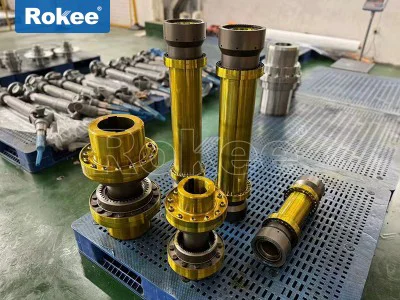
The design evolution of gear type couplings has been driven by the evolving needs of modern industry, with continuous refinements aimed at enhancing performance, reducing maintenance demands, and expanding their application scope. Engineers have focused on optimizing tooth profiles to further reduce friction and wear, improving sealing technology to extend lubrication intervals and enhance contaminant resistance, and refining material formulations to boost strength and corrosion resistance without adding excessive weight. Modern gear type couplings also feature more compact, streamlined designs to fit the increasingly space-constrained machinery of contemporary industrial systems, while maintaining or even increasing their torque transmission capabilities. Some variants are engineered for specialized use cases, such as floating shaft gear couplings designed to bridge large distances between shafts, or vertical shaft gear couplings tailored for upright machinery configurations. These specialized designs retain the core benefits of standard gear type couplings—high torque capacity and misalignment tolerance—while addressing the unique challenges of specific applications, further solidifying their versatility. As industrial machinery continues to advance, with demands for higher efficiency, greater durability, and more compact designs, gear type couplings are poised to remain a vital component, adapting alongside technological progress to meet the ever-changing needs of power transmission systems.
In summary, gear type couplings represent a pinnacle of mechanical engineering in the power transmission sector, merging robust torque transmission, adaptive misalignment compensation, and long-lasting durability into a single, versatile component. Their precision-engineered gear tooth design, high-quality material construction, and flexible configuration options make them suitable for an unparalleled range of industrial applications, from heavy-duty mining and steel production to precision manufacturing and power generation. While they require regular lubrication and maintenance to uphold peak performance, these simple upkeep tasks are a small investment for the reliability, efficiency, and longevity they deliver. Unlike many specialized coupling solutions that are limited to narrow use cases, gear type couplings offer a universal solution for connecting shafts in demanding environments, providing consistent performance even when faced with operational challenges such as misalignment, shock loads, and variable torque. As a cornerstone of mechanical power transmission, gear type couplings continue to play an irreplaceable role in keeping industrial machinery operating smoothly, efficiently, and reliably, underscoring their enduring value in the global industrial landscape.