Face Gear Couplings
In the realm of mechanical power transmission, face gear couplings stand as robust and versatile components that bridge rotating shafts, facilitating efficient torque transfer while accommodating operational misalignments and mechanical stresses. Unlike basic rigid couplings that offer no flexibility or misalignment tolerance, face gear couplings blend the strength of gear-based engagement with controlled flexibility, making them indispensable across heavy-duty and precision-driven industrial systems.
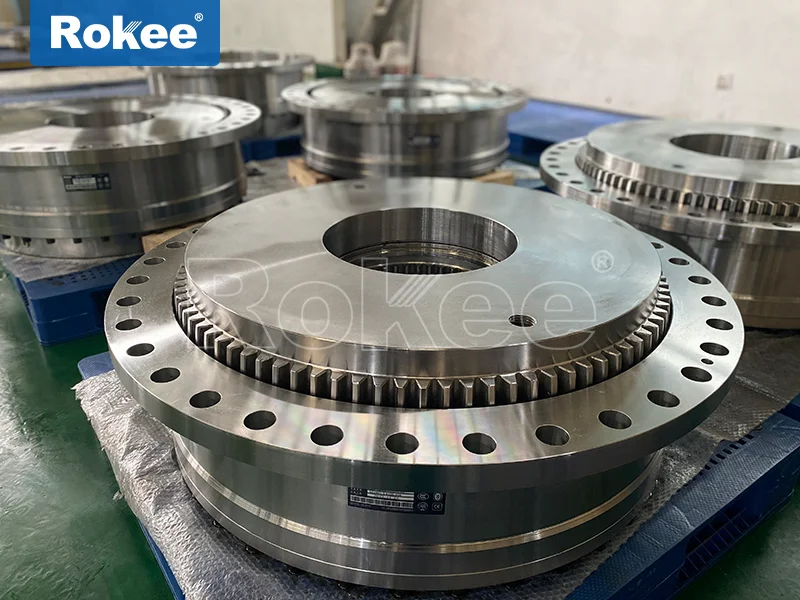
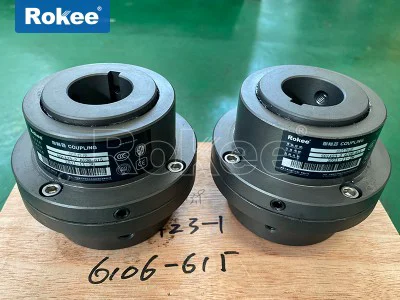
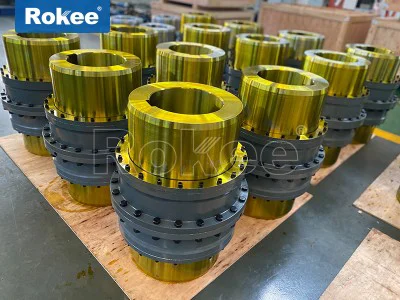
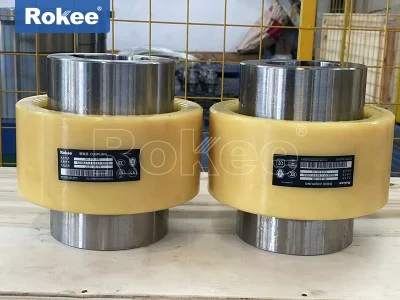
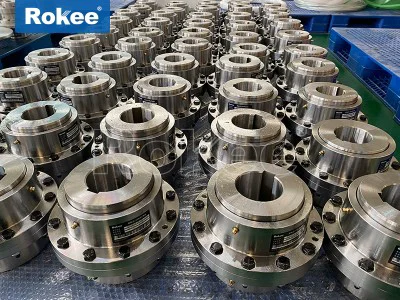
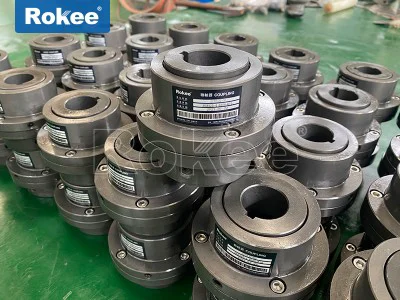
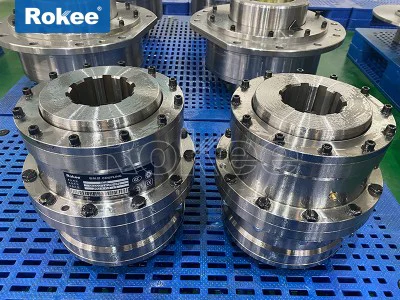
At its core, the face gear coupling is a precision-engineered assembly built around a meshed gear system, with a streamlined yet durable structural composition that prioritizes load-bearing capacity and operational stability. The fundamental structure consists of two primary hub assemblies, each fitted with external gear teeth, and a central coupling sleeve equipped with matching internal gear teeth that encase and interlock with the external teeth of the hubs. These hubs are securely mounted onto the driving and driven shafts via mechanical fastening methods such as keyways, interference fits, or clamping mechanisms, ensuring a tight, backlash-free connection that prevents slippage during torque transmission. The central sleeve, often designed with a flanged or continuous profile, serves as the critical interface between the two hubs, distributing applied torque evenly across the gear teeth to minimize localized stress and wear. A defining structural feature of face gear couplings is the geometric profiling of the gear teeth, which is tailored to balance rigidity and flexibility; most designs feature either straight tooth profiles or curved drum-shaped tooth profiles, each engineered to deliver distinct performance benefits. Additionally, many face gear couplings incorporate integrated sealing elements to shield the internal gear meshing surfaces from external contaminants like dust, moisture, and debris, while also retaining lubricants within the assembly to sustain smooth operation and reduce frictional wear. The materials used in constructing these couplings are selected for high tensile strength, wear resistance, and fatigue durability, typically including forged alloy steels, carbon steels, and in some lightweight applications, reinforced engineered polymers, all chosen to withstand the mechanical loads and environmental conditions of targeted operating environments.
The operational performance of face gear couplings is shaped directly by their structural design, yielding a set of defining characteristics that set them apart from other coupling types in power transmission systems. Foremost among these is exceptional torque transmission capacity, as the distributed gear meshing contact area allows these couplings to handle extremely high torque loads, ranging from moderate rotational forces in light industrial machinery to massive torque outputs in heavy-duty processing equipment. This high torque density enables face gear couplings to deliver efficient power transfer even in compact installation spaces, making them ideal for machinery with limited spatial constraints. Beyond raw torque handling, these couplings exhibit notable misalignment compensation capabilities, a critical trait in real-world mechanical systems where perfect shaft alignment is rarely achievable. They can accommodate three primary forms of shaft misalignment: angular misalignment, where the driving and driven shafts intersect at a slight angle; radial misalignment, where the shafts are offset parallel to one another; and axial misalignment, involving slight endwise movement of the shafts during operation. The degree of misalignment tolerance varies based on tooth profiling, with drum-shaped tooth designs offering significantly greater flexibility for angular and radial offsets compared to straight tooth variants, reducing strain on connected shafts, bearings, and gearboxes and extending the service life of entire drive systems.
Further performance advantages include high transmission efficiency, minimal backlash, and reliable operational consistency across varying speed ranges. Face gear couplings typically achieve transmission efficiencies exceeding 99% under optimal operating conditions, as the precise gear meshing minimizes energy loss due to friction or slippage. The tight interlocking of gear teeth also reduces backlash, ensuring precise rotational synchronization between driving and driven components, a vital attribute for precision machinery requiring accurate motion control. These couplings also demonstrate strong resistance to shock loads and vibrational stresses, absorbing sudden torque spikes and mechanical vibrations that would damage less robust coupling designs, thus stabilizing overall system operation. While they require regular lubrication to maintain peak performance and prevent premature wear, their robust construction means they can operate reliably in harsh industrial environments with extreme temperatures, heavy mechanical loads, and moderate exposure to contaminants, provided basic maintenance protocols are followed. It is important to note that performance limitations do exist; face gear couplings are not designed for extreme high-speed applications without precision dynamic balancing, and excessive misalignment beyond their designed tolerance can lead to accelerated tooth wear, increased noise, and eventual component failure, highlighting the need for proper installation and alignment during setup.
Face gear couplings are categorized into distinct types based on key design variations, tooth profiles, and structural configurations, each tailored to suit specific operational requirements and mechanical system setups. The most fundamental classification is based on gear tooth geometry, dividing couplings into straight tooth face gear couplings and drum tooth face gear couplings. Straight tooth face gear couplings feature simple, linear external and internal gear teeth, with a straightforward manufacturing process that results in a cost-effective, rigid design ideal for applications with minimal shaft misalignment and consistent, steady torque loads. These couplings offer high torsional rigidity and are well-suited for machinery where precise shaft alignment is maintained, such as stationary industrial pumps and fixed conveyor systems. In contrast, drum tooth face gear couplings feature curved, spherical tooth profiles with the center of curvature aligned with the coupling axis, a design that significantly enhances misalignment tolerance and load distribution. The curved tooth surface increases the contact area between meshing teeth, boosting load-bearing capacity by a substantial margin compared to straight tooth designs and reducing contact stress, making them the preferred choice for heavy-duty applications with significant shaft offsets and variable torque loads.
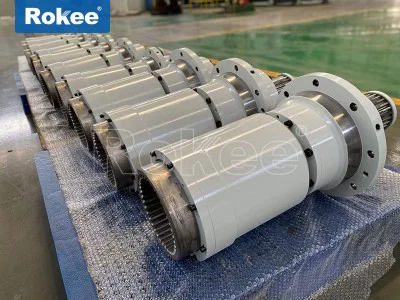
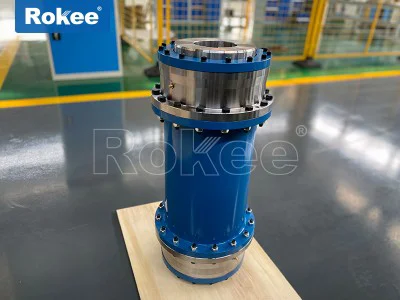
Another critical classification system is based on sleeve and assembly design, distinguishing between flanged face gear couplings and continuous sleeve face gear couplings. Flanged face gear couplings feature a two-piece central sleeve with bolted flanged connections, allowing for easy installation, inspection, and maintenance without requiring full disassembly of connected shafts. This modular design simplifies replacement of worn components and is widely used in machinery where routine maintenance access is essential. Continuous sleeve face gear couplings, by contrast, utilize a single, unbroken sleeve that fully encases both gear hubs, providing enhanced protection against contaminants and improved structural rigidity. This sealed design is ideal for applications in dirty, humid, or corrosive environments where external debris could compromise internal gear performance, such as mining equipment, marine propulsion systems, and outdoor processing machinery. Additionally, face gear couplings can be classified by shaft connection type, including fixed hub couplings and floating shaft couplings; floating shaft designs incorporate an extended intermediate shaft section to bridge larger gaps between driving and driven machinery, making them suitable for systems with significant shaft separation distances, such as long-distance conveyor drives and remote power transmission setups. There are also half-gear face couplings, which feature one geared hub and one rigid hub, designed for applications where only one side of the coupling requires misalignment compensation, offering a more compact and cost-effective solution for specialized drive systems.
The unique combination of structural durability, high torque capacity, and misalignment tolerance makes face gear couplings applicable across a vast spectrum of industrial sectors, powering critical machinery in both heavy industry and precision engineering. In heavy industrial manufacturing, particularly steel and metal processing, these couplings are extensively used in rolling mills, crushing equipment, extruders, and heavy conveyors, where they transmit extreme torque loads while accommodating the substantial shaft misalignment common in large-scale processing machinery. The mining industry relies heavily on face gear couplings for ore crushing machines, grinding mills, and material handling systems, as their rugged construction withstands the harsh operating conditions, heavy shock loads, and continuous operation demands of mining operations. In the energy production sector, face gear couplings play a vital role in power generation equipment, including turbine drives, generator shaft systems, and conveyor systems for fuel handling, where reliable torque transfer and resistance to vibrational stress are paramount for uninterrupted power output.
Marine and offshore engineering is another key application area, with face gear couplings integrated into ship propulsion systems, offshore drilling equipment, and marine material handling machinery. Their ability to resist moisture, saltwater exposure, and mechanical shock makes them well-suited for the demanding marine environment, where equipment reliability and durability are critical to operational safety and efficiency. In the oil and gas industry, these couplings are used in pumps, compressors, and rotary drilling equipment, handling high torque loads and operating reliably in remote, harsh environments with limited maintenance access. General manufacturing and machinery sectors utilize face gear couplings in a wide range of equipment, including industrial mixers, crushers, machine tool drives, and heavy-duty fans, balancing precision performance and robust operation. For high-precision mechanical systems, such as aerospace test equipment, specialized manufacturing machinery, and rotary power tools, precision-engineered face gear couplings deliver accurate torque transmission and minimal backlash, ensuring consistent operational precision.
Beyond these core sectors, face gear couplings also find utility in agricultural machinery, construction equipment, and material handling systems, adapting to diverse operational demands with their versatile design. Their widespread use stems from their ability to address common mechanical challenges: maintaining efficient power transfer, compensating for unavoidable shaft misalignment, absorbing mechanical shock, and enduring prolonged operation in challenging conditions. When selecting a face gear coupling for a specific application, engineers prioritize factors such as peak torque requirements, operating speed, type and degree of shaft misalignment, environmental conditions, and installation space constraints, ensuring the chosen coupling aligns with the unique demands of the mechanical system. Proper installation, routine lubrication, and periodic inspection of gear wear and alignment further enhance the performance and service life of these couplings, ensuring they deliver consistent, reliable operation throughout their operational lifespan.
In summary, face gear couplings represent a pinnacle of practical mechanical engineering in power transmission, merging robust structural design, exceptional torque handling, and controlled flexibility to meet the diverse needs of modern industrial machinery. Their distinct classifications offer tailored solutions for every operational scenario, from light-duty precision equipment to heavy-duty industrial processing systems, while their broad industrial applications underscore their versatility and reliability. As mechanical systems continue to evolve toward higher loads, greater efficiency, and more compact designs, face gear couplings will remain a foundational component in power transmission, thanks to their timeless engineering principles and ability to adapt to emerging industrial demands. By understanding their structural nuances, performance capabilities, classification differences, and practical uses, engineers and equipment designers can leverage these couplings to optimize drive system performance, enhance machinery durability, and ensure seamless operation across countless industrial applications.