Flexible Claw Couplings
In the realm of mechanical power transmission, flexible claw couplings stand as one of the most widely utilized and dependable connecting components, bridging the gap between driving and driven shafts while addressing the inherent challenges of misalignment, vibration, and shock loads that plague rotating machinery systems. Unlike rigid couplings that offer no tolerance for shaft displacement or damping capabilities, flexible claw couplings strike a delicate balance between robust torque transmission and adaptive flexibility, making them indispensable across countless industrial and mechanical engineering scenarios.
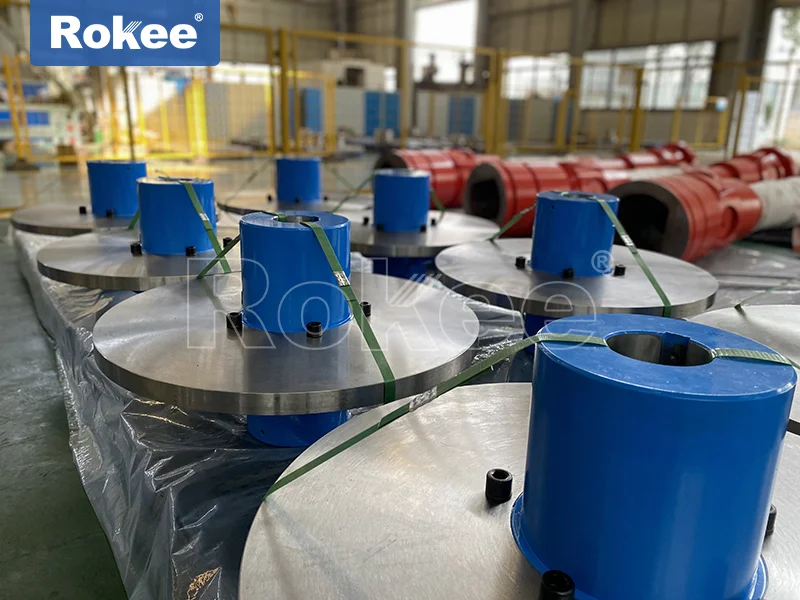
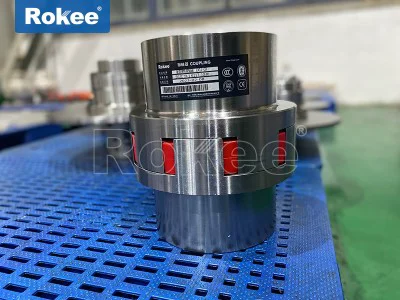
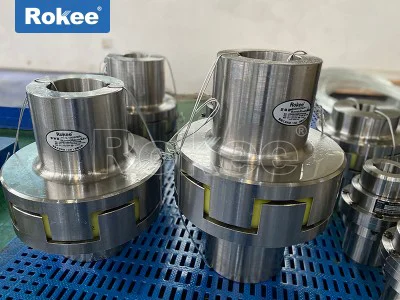
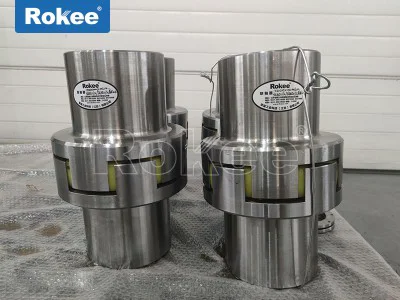
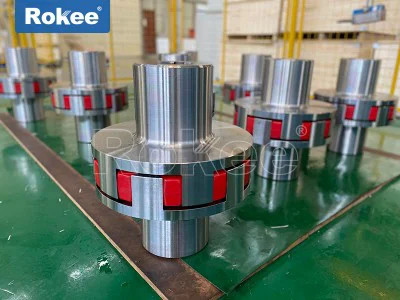
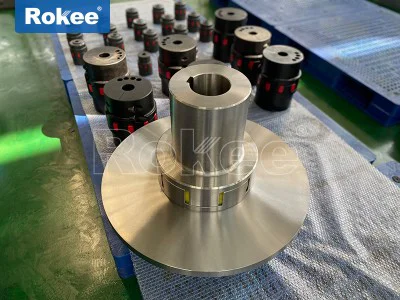
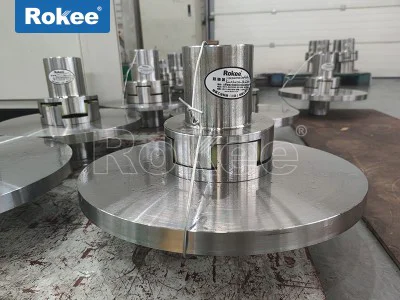
At its core, the fundamental structure of a flexible claw coupling is elegantly simple yet mechanically efficient, consisting of three primary integral parts: two metallic claw hubs and a central elastic insert element. The claw hubs, typically forged or machined from high-strength metallic materials such as carbon steel, alloy steel, cast iron, or lightweight aluminum alloy, feature precision-formed protruding claw teeth arranged symmetrically around the inner circumference of each hub. These claw teeth are engineered to interlock seamlessly with the lobes of the central elastic component, creating a secure mechanical linkage that facilitates torque transfer without excessive backlash or slippage. The geometric design of the claw teeth varies across different coupling variants, with profiles ranging from straight, angular claws to curved, radiused claws, each tailored to optimize contact pressure, load distribution, and misalignment accommodation during operation. The central elastic insert, often referred to as a spider or cushion element, is the heart of the coupling’s flexibility, crafted from resilient non-metallic materials such as polyurethane, natural rubber, synthetic rubber, or high-performance engineering plastics. This elastic component features a multi-lobed structure that fits snugly between the interlocking claws of the two metal hubs, acting as a buffer and shock absorber while enabling controlled relative movement between the connected shafts. Notably, the assembly of a flexible claw coupling is straightforward: the elastic spider is positioned between the two claw hubs, which are then mounted onto the driving and driven shafts respectively, with no complex fasteners or lubrication systems required for basic installation, a design trait that enhances ease of maintenance and operational practicality.
The operational principle of flexible claw couplings revolves around the synergistic interaction between the rigid metallic claws and the deformable elastic insert, enabling dual functionality of torque transmission and misalignment compensation. During normal rotational operation, torque generated by the driving shaft is transferred through the claw hub to the elastic insert, which then conveys the rotational force to the driven shaft’s claw hub via compressive and shear forces acting on its lobes. Unlike gear or chain drives that rely on rigid mechanical meshing, the elastic insert deforms slightly under load, absorbing sudden torque spikes, torsional vibrations, and intermittent shocks that would otherwise propagate through the transmission system and damage sensitive components. This elastic deformation also allows the coupling to compensate for three primary types of shaft misalignment that commonly occur in practical machinery setups: angular misalignment, radial misalignment, and axial displacement. Angular misalignment refers to the slight tilt between the central axes of the driving and driven shafts, a common issue caused by manufacturing tolerances, foundation settling, or thermal expansion; flexible claw couplings can typically accommodate angular offsets within a defined range without compromising performance. Radial misalignment involves the lateral offset of the two shaft axes, while axial displacement refers to the endwise movement of shafts along their central lines, both of which are effectively mitigated by the elastic compliance of the central insert. Crucially, this misalignment compensation does not come at the cost of torque transmission efficiency; the rigid claw structure ensures that the majority of rotational power is transferred reliably, with minimal energy loss due to friction or elastic hysteresis, making the coupling highly efficient for continuous duty cycles.
The performance characteristics of flexible claw couplings are defined by a unique set of mechanical and operational traits that set them apart from other flexible coupling types, such as bellows couplings, Oldham couplings, or chain couplings. Foremost among these is exceptional vibration damping and noise reduction capability: the elastic insert acts as a natural vibration isolator, attenuating torsional oscillations and reducing mechanical noise generated by shaft misalignment and rotational imbalance, thereby extending the service life of bearings, gears, motors, and other adjacent transmission components. This damping effect is particularly valuable in machinery operating under variable load conditions, where sudden load changes can induce damaging resonant vibrations. Another key performance attribute is fail-safe operational design; in the event of excessive overload or catastrophic failure of the elastic insert, the interlocking metallic claws come into direct contact, maintaining a rigid mechanical connection between the shafts to prevent complete system shutdown and minimize collateral damage to expensive machinery. This fail-safe feature is critical in industrial applications where unplanned downtime can result in significant operational disruptions. Flexible claw couplings also exhibit excellent durability and wear resistance, with the metallic claw hubs resistant to deformation, abrasion, and fatigue under cyclic loading, while the elastic inserts are engineered to withstand repeated deformation, oil exposure, and moderate temperature fluctuations without premature degradation. Additionally, these couplings offer maintenance-free operation for extended periods, as they require no lubrication, seal replacements, or routine adjustments, reducing long-term operational costs and labor requirements for equipment upkeep. Their compact, lightweight design further enhances performance versatility, allowing installation in space-constrained mechanical assemblies without sacrificing torque capacity or misalignment tolerance.
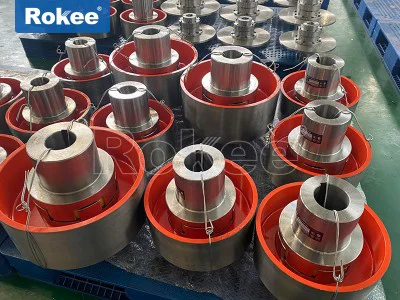
Flexible claw couplings are categorized into distinct varieties based on multiple criteria, including structural design, elastic insert material, claw profile, application-specific modifications, and performance specifications, each tailored to meet the unique demands of different operating environments and machinery requirements. The most fundamental classification is based on the type of elastic insert material, which directly dictates the coupling’s damping capacity, temperature resistance, load-bearing capability, and chemical compatibility. Standard polyurethane insert couplings are the most prevalent variant, offering a balanced blend of moderate elasticity, high wear resistance, good oil resistance, and suitability for general-purpose industrial applications across a wide temperature range. Rubber insert couplings, crafted from natural or synthetic rubber compounds, provide superior vibration damping and shock absorption, making them ideal for machinery with high vibration levels or frequent start-stop cycles, though they typically have lower temperature and load limits compared to polyurethane variants. High-performance engineering plastic insert couplings offer enhanced chemical resistance and dimensional stability, suited for applications involving exposure to corrosive fluids, extreme temperatures, or sterile operating environments. Structurally, flexible claw couplings are also divided based on claw profile and hub design: straight claw couplings feature simple, linear claw teeth, offering cost-effective manufacturing and reliable performance for low-to-medium torque applications; curved or spiral claw couplings feature contoured claw profiles that ensure gradual, smooth contact with the elastic insert, reducing stress concentrations and enabling higher torque transmission and improved misalignment accommodation. Another structural classification distinguishes between standard single-piece couplings and split-hub or flange-mounted couplings; split-hub designs allow for easy installation and replacement without disassembling adjacent machinery components, while flange-mounted variants offer enhanced rigidity and torque capacity for heavy-duty industrial use. Additionally, specialized variants include compact miniature claw couplings for precision small-scale machinery, high-temperature resistant claw couplings with heat-stabilized elastic inserts for extreme thermal environments, and torsionally stiff claw couplings for applications requiring precise rotational positioning and minimal backlash.
The adaptability and reliable performance of flexible claw couplings have led to their widespread adoption across an extensive spectrum of industries and mechanical applications, spanning light-duty precision equipment to heavy-duty industrial machinery. In the general manufacturing and mechanical engineering sector, these couplings are extensively used in motor-driven systems, connecting electric motors to pumps, fans, blowers, conveyors, and mixers, where they compensate for shaft misalignment caused by assembly errors or operational wear while damping motor vibrations. In pump systems, including centrifugal pumps, reciprocating pumps, and vacuum pumps, flexible claw couplings maintain consistent power transmission while absorbing hydraulic shocks and reducing noise, ensuring stable fluid delivery in water treatment, chemical processing, and HVAC systems. For compressor equipment, including screw compressors, piston compressors, and air blowers, the couplings handle the cyclic load fluctuations and torsional vibrations inherent in compression operations, protecting motor and compressor components from premature failure. In the machine tool industry, flexible claw couplings are integrated into CNC machine tools, lathes, milling machines, and drilling equipment, where their precise torque transmission and moderate misalignment tolerance support high-precision machining operations without compromising positional accuracy. The automotive and transportation sector also relies on these couplings for various auxiliary systems, including engine accessories, hydraulic pumps, and cooling system components, where they endure vibration, temperature variations, and dynamic load changes. In material handling and logistics equipment, such as conveyor belts, elevators, and packaging machinery, flexible claw couplings deliver reliable power transfer while accommodating the mechanical stresses of continuous material movement. Furthermore, specialized miniature and precision flexible claw couplings find application in medical devices, laboratory equipment, optical instruments, and small-scale automation systems, where compact size, low vibration, and precise torque transmission are paramount. Even in heavy industrial sectors such as mining, construction, and agricultural machinery, robust heavy-duty flexible claw couplings are employed to withstand harsh operating conditions, including dust, moisture, heavy shock loads, and continuous high-torque operation.
Beyond their core functional applications, the design evolution of flexible claw couplings continues to align with advancements in materials science and mechanical engineering, further expanding their performance boundaries and application scope. Modern manufacturing techniques, such as precision CNC machining, injection molding for elastic inserts, and heat treatment for metallic hubs, have enhanced the dimensional accuracy, structural integrity, and consistency of these couplings, enabling tighter tolerances and improved performance uniformity. Material innovations have also led to the development of high-performance elastic inserts with enhanced temperature resistance, chemical inertness, and fatigue life, allowing flexible claw couplings to operate reliably in previously unsuitable environments, such as high-temperature industrial furnaces, chemical processing plants, and cryogenic applications. Additionally, customized design modifications, such as extended hub lengths, non-standard claw profiles, and specialized mounting configurations, have made these couplings adaptable to unique machinery layouts and non-standard shaft sizes, further solidifying their status as a versatile power transmission solution. Despite the emergence of advanced coupling technologies, flexible claw couplings remain a preferred choice for engineers and designers worldwide, owing to their unbeatable combination of simplicity, reliability, cost-effectiveness, and functional versatility. Unlike complex coupling systems that require specialized installation and maintenance, flexible claw couplings offer a pragmatic, low-complexity solution that delivers consistent performance across diverse operating conditions, making them a staple in both traditional and modern mechanical engineering designs.
In summary, flexible claw couplings represent a masterclass in mechanical engineering simplicity and functionality, integrating robust torque transmission, effective misalignment compensation, and superior vibration damping into a compact, easy-to-maintain package. Their well-engineered structural design, balanced performance attributes, diverse classification options, and broad application versatility have cemented their role as a cornerstone component in global mechanical power transmission systems. From small-scale precision instruments to heavy industrial machinery, these couplings address the universal challenges of shaft misalignment, vibration, and shock loads, ensuring the smooth, reliable, and durable operation of rotating equipment across countless industries. As manufacturing and engineering technologies continue to advance, the flexible claw coupling will undoubtedly evolve alongside them, retaining its relevance and adaptability to meet the ever-changing demands of modern mechanical systems, proving that even the most straightforward mechanical components can deliver enduring value and performance in the face of technological progress.