Telescoping Driveshafts
In the realm of mechanical power transmission, the telescoping driveshaft stands as a pivotal and versatile component, engineered to address the inherent challenges of variable shaft distances, angular misalignment, and dynamic operational shifts across countless industrial and mobile machinery systems. Unlike fixed-length driveshafts that rely on rigid connections and struggle to adapt to positional changes, telescoping driveshafts integrate a unique sliding mechanism that enables axial length adjustment while maintaining consistent torque delivery, making them indispensable in applications where static alignment is unachievable or operational movements alter the spacing between driving and driven components. This adaptive design not only enhances the flexibility of power transmission systems but also boosts durability, reduces wear on connected parts, and ensures stable performance under fluctuating operating conditions.

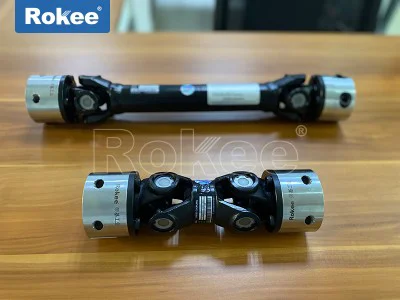
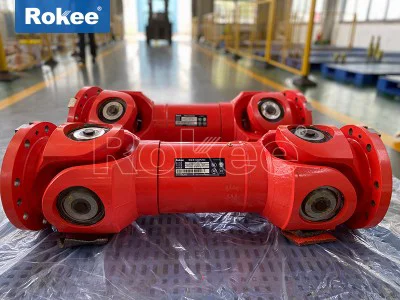
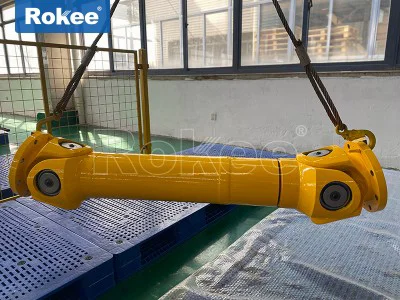
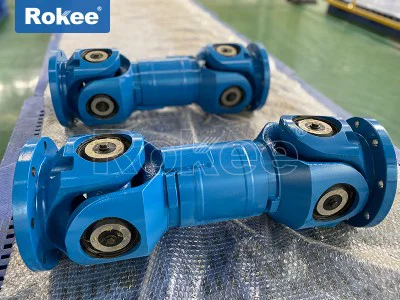
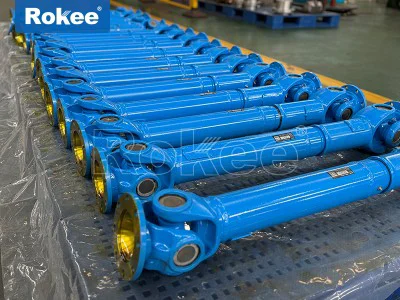
At its core, the telescoping driveshaft features a streamlined yet robust structural layout, crafted to balance telescopic mobility, torque transmission efficiency, and mechanical strength. The primary structural elements work in tandem to deliver reliable power transfer while accommodating axial displacement and minor angular deviations, with each component engineered to withstand repetitive sliding, rotational stress, and environmental wear. The central feature enabling telescopic action is the splined shaft and sleeve assembly, which forms the adjustable core of the driveshaft. This assembly typically consists of an external splined male shaft and an internal splined female sleeve, with precision-machined spline teeth that interlock tightly to transfer torque without slippage during rotation, while allowing smooth axial sliding to adjust overall shaft length. The spline profile is meticulously designed, with variations in tooth shape, pitch, and depth tailored to specific load capacities and sliding requirements; common profiles include involute splines for heavy-duty torque transmission and straight-sided splines for simpler, low-friction adjustment, both ensuring optimal contact and minimal stress concentration during movement.
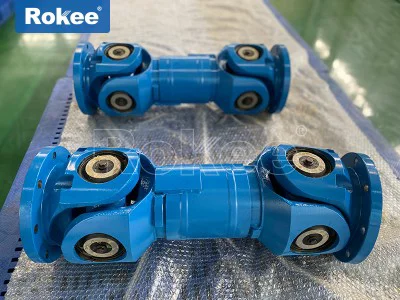
Surrounding the splined core, additional critical components reinforce structural integrity and expand functional capabilities. Universal joints or constant velocity (CV) joints are integrated at one or both ends of the telescoping assembly, serving to compensate for angular misalignment between the driving and driven shafts, a common occurrence in mobile equipment and unevenly mounted machinery. These joints enable the driveshaft to transmit power efficiently even when the connected shafts are not perfectly collinear, eliminating binding and reducing vibration that could compromise performance or damage components. Bearing assemblies are strategically positioned to support rotational movement, reduce friction between sliding and stationary parts, and absorb radial and axial loads generated during operation; high-precision needle bearings or roller bearings are often employed for their compact size, high load-bearing capacity, and ability to handle both rotational and sliding motion. Sealing systems are another vital structural element, enclosing the splined interface and bearing components to prevent contamination from dust, moisture, debris, and lubricant leakage, which are major causes of premature wear and failure in harsh operating environments. Durable elastomeric seals or metal shieldings are used, designed to maintain effective protection even during continuous telescopic movement and exposure to extreme temperatures or abrasive conditions. Finally, end connectors such as flanges, yokes, or coupling hubs provide secure attachment to adjacent machinery components, ensuring a rigid, backlash-free connection that preserves torque transmission accuracy.
The performance characteristics of telescoping driveshafts are defined by their ability to merge adaptability, strength, and efficiency, setting them apart from conventional fixed driveshafts and non-adjustable transmission components. One of the most prominent performance traits is axial adjustability, which allows the driveshaft to extend or retract within a predefined range to accommodate changes in shaft spacing caused by suspension travel, frame flex, equipment articulation, or installation tolerances. This adjustability eliminates the need for custom-length driveshafts for each specific application, simplifies installation and maintenance, and extends the service life of the entire transmission system by reducing stress on connected components. Torque transmission capacity is another key performance metric, with telescoping driveshafts engineered to handle varying levels of torque, from light-duty rotational forces in small auxiliary equipment to heavy-duty, high-torque loads in large industrial machinery and heavy vehicles. The structural design, particularly the spline material, tooth profile, and joint construction, dictates torque capacity, with reinforced splines and heavy-duty joints used for high-load scenarios to prevent deformation, shearing, or failure under stress.
Operational smoothness and efficiency are equally vital performance attributes, as excessive friction, vibration, or noise can hinder machinery performance and accelerate wear. High-quality telescoping driveshafts are designed for minimal frictional resistance during sliding and rotation, achieved through precision machining of spline surfaces, proper lubrication protocols, and low-friction bearing materials. This low-friction design maximizes power transmission efficiency, minimizing energy loss and reducing heat buildup during prolonged operation. Vibration damping capabilities further enhance performance, with the joint and spline design working to absorb minor shocks and vibrations generated by uneven load distribution or rough operating conditions, preventing resonant vibration that could damage sensitive components or compromise operator comfort. Durability and fatigue resistance round out core performance features, as telescoping driveshafts are subjected to repetitive telescopic movement, rotational stress, and external environmental factors. Premium alloy steels or reinforced composite materials are commonly used in their construction, paired with heat treatment and surface hardening processes to boost wear resistance, corrosion resistance, and fatigue strength, ensuring consistent performance over extended service intervals even in demanding operating environments. Additionally, these driveshafts offer wide operational compatibility, functioning reliably across a broad range of rotational speeds, from low-speed, high-torque industrial machinery to higher-speed mobile equipment, without sacrificing stability or efficiency.
Telescoping driveshafts are classified into distinct categories based on multiple criteria, including structural design, joint type, telescopic mechanism, and intended application, with each variant tailored to meet specific operational demands and environmental conditions. One primary classification is based on the type of joint integrated into the assembly, distinguishing between universal joint telescoping driveshafts and constant velocity (CV) joint telescoping driveshafts. Universal joint variants, also known as cardan joint driveshafts, feature cross-type universal joints that accommodate moderate angular misalignment and are well-suited for applications with lower rotational speeds and moderate torque loads, such as agricultural machinery and light industrial equipment. These driveshafts are valued for their simple construction, cost-effective manufacturing, and ease of maintenance, making them a popular choice for general-purpose power transmission. CV joint telescoping driveshafts, by contrast, utilize constant velocity joints that maintain consistent rotational speed and torque delivery even at sharper angles, eliminating the speed fluctuations inherent in universal joints at high misalignment angles. This makes them ideal for high-speed mobile machinery, precision industrial equipment, and applications where smooth, vibration-free operation is critical, such as automotive drivetrains and specialized manufacturing machinery.
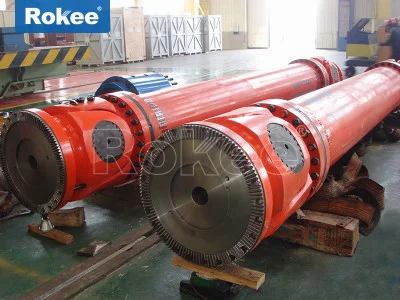
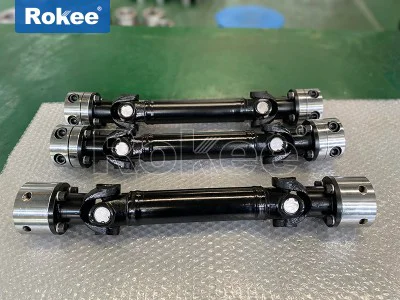
Another key classification is based on the telescopic mechanism design, separating single-telescoping driveshafts and multi-telescoping driveshafts. Single-telescoping driveshafts feature a single splined sliding interface, providing a moderate range of axial adjustment suitable for most standard applications where shaft spacing changes are minimal to moderate. This design is compact, lightweight, and mechanically efficient, making it suitable for equipment with limited installation space and straightforward operational movements. Multi-telescoping driveshafts, also referred to as double or triple telescoping driveshafts, incorporate two or more nested splined assemblies, offering an extended range of axial adjustability to accommodate large variations in shaft spacing. These are engineered for heavy-duty, highly dynamic applications such as large construction equipment, articulated vehicles, and industrial machinery with extensive frame articulation, where significant length changes are unavoidable. Beyond joint and mechanism-based classifications, telescoping driveshafts can also be categorized by load capacity, with light-duty, medium-duty, and heavy-duty variants designed to handle incremental levels of torque and operational stress. Light-duty models are used in small auxiliary equipment, portable machinery, and low-power systems, while heavy-duty models feature reinforced construction, larger spline profiles, and heavy-duty joints for use in high-load industrial machinery, mining equipment, and large commercial vehicles.
The adaptability and reliable performance of telescoping driveshafts make them a corner component across a vast array of industries, with applications spanning mobile machinery, industrial manufacturing, agricultural equipment, marine systems, and specialized industrial machinery. In the automotive and transportation sector, telescoping driveshafts are integral to the drivetrains of various vehicles, including passenger vehicles, commercial trucks, buses, and off-road vehicles. They compensate for suspension travel and frame flex, maintaining consistent power delivery from the transmission to the drive wheels even as the vehicle navigates uneven terrain, ensuring smooth acceleration, stable handling, and reduced drivetrain wear. For off-road vehicles and heavy-duty trucks, in particular, the extended telescopic range and robust construction enable operation in rugged, uneven environments where fixed driveshafts would bind or fail.
Agricultural machinery represents another major application area, where telescoping driveshafts are essential for powering a wide range of farm implements and tractors. Tractors rely on these driveshafts to connect power take-off (PTO) systems to attached equipment such as mowers, balers, tillers, harvesters, and seeders. The telescopic design accommodates the variable spacing between the tractor and implement as it moves across fields, navigates obstacles, and adjusts position, while the joint components compensate for uneven ground angles. This adaptability ensures uninterrupted power transfer, allowing agricultural machinery to operate efficiently across diverse field conditions and reducing downtime associated with drivetrain adjustments. In construction and heavy machinery, telescoping driveshafts are deployed in excavators, loaders, bulldozers, cranes, and articulated haul trucks, where they handle extreme loads, frequent articulation, and harsh operating conditions. These driveshafts withstand the heavy torque, vibration, and debris exposure common on construction sites, providing reliable power transmission to hydraulic systems, wheel assemblies, and auxiliary equipment, and enabling the precise movement and operation critical for construction tasks.
Industrial manufacturing and machinery also rely heavily on telescoping driveshafts for diverse applications, including conveyor systems, manufacturing lines, material handling equipment, and heavy industrial machinery such as rolling mills, pumps, compressors, and machine tools. In these settings, they compensate for thermal expansion of rotating shafts, minor installation misalignments, and dynamic positional changes during operation, ensuring consistent power delivery and reducing wear on precision industrial components. Their ability to maintain efficient torque transmission in fixed industrial setups enhances production line stability and minimizes maintenance needs, supporting uninterrupted manufacturing operations. Marine and offshore applications utilize telescoping driveshafts in boat propulsion systems, marine generators, and auxiliary marine equipment, where they adapt to hull flexing, shaft movement, and the unique mechanical demands of marine environments. The sealed, corrosion-resistant designs prevent water intrusion and saltwater damage, ensuring reliable performance in marine conditions where conventional driveshafts would quickly deteriorate.
Beyond these core sectors, telescoping driveshafts find specialized uses in aerospace support equipment, mining machinery, forestry equipment, and renewable energy systems such as wind turbine pitch and yaw mechanisms. In each of these applications, their core advantages—axial adjustability, angular misalignment compensation, high torque capacity, and durable construction—address unique operational challenges, highlighting their versatility and indispensability in modern mechanical engineering. As industrial and mobile machinery continues to evolve toward greater flexibility, efficiency, and durability, the role of telescoping driveshafts becomes even more critical, driving ongoing advancements in spline design, material science, sealing technology, and joint engineering to enhance their performance further. Whether in heavy-duty industrial settings, rugged off-road environments, or precision manufacturing systems, telescoping driveshafts remain a foundational solution for reliable, adaptive power transmission, embodying the perfect balance of mobility, strength, and efficiency in mechanical design.