Curved Tooth Gear Couplings
In the realm of industrial mechanical transmission, the curved tooth gear coupling stands as a pivotal and widely applied flexible rigid coupling, renowned for its exceptional load-bearing capacity, reliable misalignment compensation, and durable operational performance. Unlike conventional straight tooth gear couplings that suffer from uneven stress distribution and limited displacement adaptability, the curved tooth gear coupling features a meticulously engineered tooth profile design, which revolutionizes torque transmission efficiency and operational stability across diverse heavy-duty and precision-driven working conditions.
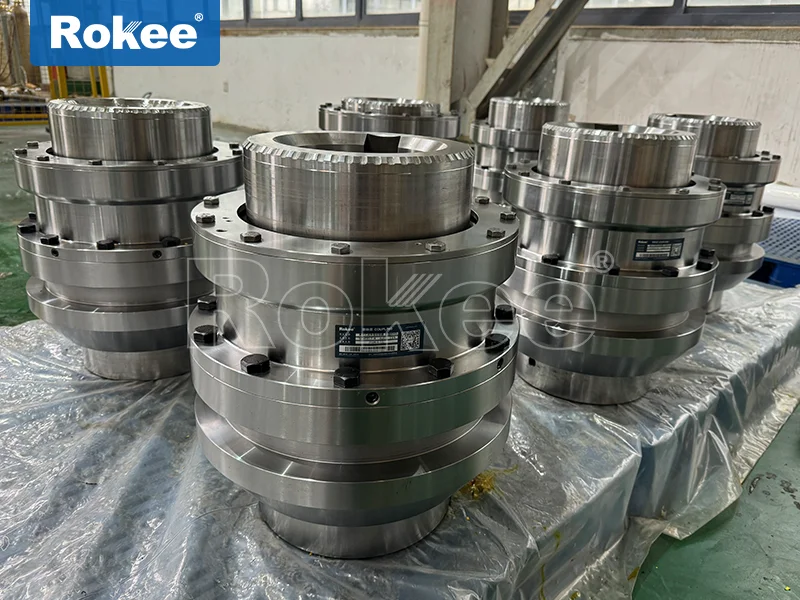
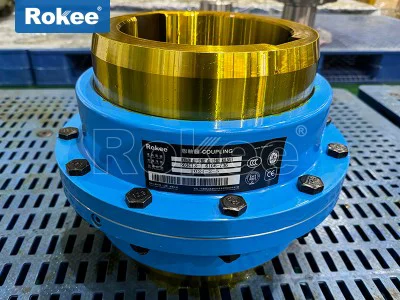
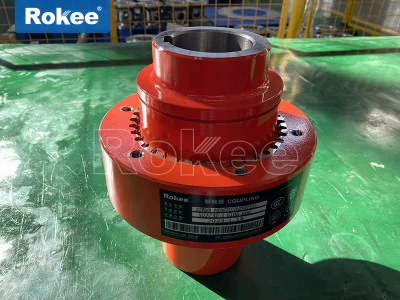
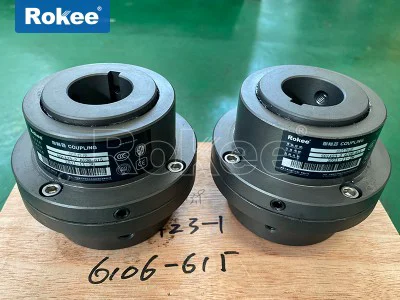
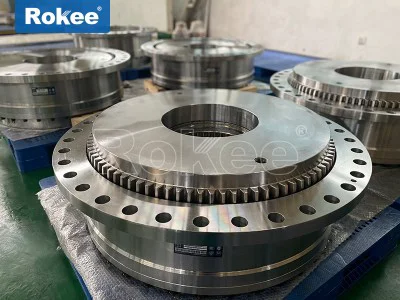
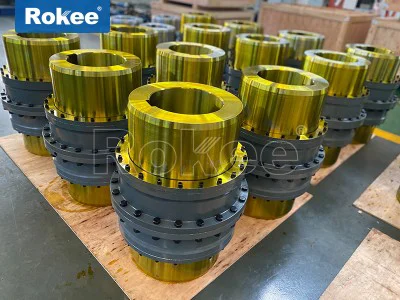
At its core, the structural framework of a curved tooth gear coupling is compact yet scientifically refined, composed of several key integrated components that work in synergy to fulfill torque transmission and displacement compensation tasks. The primary constituents include two external gear hubs with curved tooth profiles, an internal gear sleeve that meshes seamlessly with the external curved teeth, sealing components to preserve lubrication integrity, and fasteners for secure assembly and shaft connection. The defining structural characteristic lies in the curved (drum-shaped) design of the external gear teeth, where the tooth surface and tooth tip are crafted into spherical arcs with the sphere center positioned on the gear axis. This distinctive geometry deviates sharply from the linear tooth profile of standard gear couplings, creating a larger contact area between meshing teeth and enabling uniform load distribution across the tooth surface. The internal gear sleeve, typically manufactured with high-precision straight internal teeth, matches the tooth count of the external gear hubs, ensuring tight and stable meshing without compromising the coupling’s ability to adapt to shaft deviations. Sealing elements, usually positioned at both ends of the internal gear sleeve, prevent the leakage of lubricating medium and the intrusion of external contaminants such as dust, moisture, and abrasive particles, which is critical for sustaining smooth tooth meshing and prolonging the service life of friction-prone components. The connection between the external gear hubs and the driving and driven shafts is commonly achieved via keyways or interference fits, ensuring rigid torque transmission without slippage even under extreme load fluctuations, while some customized configurations adopt spline connections for enhanced torque-carrying capacity in ultra-heavy-duty scenarios.
The material selection for curved tooth gear couplings is tailored to withstand high mechanical stress, wear, and varying operational temperatures, directly shaping the coupling’s overall performance and durability. Most high-performance curved tooth gear couplings are fabricated from high-quality alloy steels, such as medium carbon alloy steel and low-carbon alloy steel with excellent hardenability, which undergo specialized heat treatment processes including carburizing, quenching, and tempering. These treatments significantly boost the surface hardness, wear resistance, and fatigue strength of the gear teeth, enabling the coupling to endure heavy impact loads and prolonged continuous operation without premature tooth surface damage or fracture. The heat-treated tooth surface achieves optimal hardness and toughness balance, resisting abrasive wear and pitting corrosion that commonly occur during high-speed meshing and misalignment compensation. For applications in harsh environments with corrosive media, such as chemical processing or marine engineering, the coupling components may be coated with anti-corrosive layers or manufactured from corrosion-resistant alloy materials, maintaining structural integrity and operational stability without sacrificing core mechanical properties. The precision machining of gear teeth is equally vital, with advanced grinding techniques ensuring tight dimensional accuracy and smooth tooth surfaces, minimizing friction loss during meshing and reducing noise and vibration generated during operation.
The performance advantages of curved tooth gear couplings are multifaceted, making them a preferred choice for demanding industrial transmission systems compared to other coupling types. Foremost is their exceptional torque transmission capacity, as the curved tooth design optimizes load distribution across the entire tooth surface, eliminating stress concentration at the tooth ends that plagues straight tooth couplings. Under identical dimensional constraints, curved tooth gear couplings deliver a notably higher torque-carrying capability, enabling them to handle heavy-duty loads efficiently while maintaining a compact and lightweight structure. This high load-bearing ratio is particularly advantageous in space-restricted industrial setups where large, bulky transmission components are impractical. Secondly, the coupling exhibits superior misalignment compensation performance, adept at accommodating three primary forms of shaft deviation: angular misalignment, radial misalignment, and axial misalignment. The spherical curved teeth allow for relative sliding and angular deflection between meshing teeth, effectively offsetting shaft misalignment caused by installation errors, thermal expansion, mechanical vibration, or operational deformation. This compensation capability reduces additional radial and axial loads on adjacent bearings and shafts, preventing premature component failure and extending the service life of the entire transmission system. Unlike purely flexible couplings that rely on elastic elements for displacement compensation, curved tooth gear couplings maintain high torsional rigidity while offering flexibility, ensuring precise torque transmission without significant angular backlash, a critical trait for precision machinery and high-speed transmission equipment.
Additional performance merits include high transmission efficiency, low operational noise, and extended service life. The smooth meshing of curved teeth minimizes sliding friction and energy loss during torque transfer, resulting in transmission efficiency that approaches near-optimal levels, far exceeding that of many elastic couplings and conventional straight tooth gear couplings. Reduced friction also generates less operational heat, lowering the risk of thermal deformation and lubricant degradation under continuous high-load operation. The uniform load distribution and optimized tooth contact pattern dampen vibration and noise during rotation, creating a quieter operational environment and reducing wear induced by excessive mechanical oscillation. With proper lubrication and routine maintenance, the wear rate of curved tooth gear couplings is drastically reduced, delivering a significantly longer service life than traditional gear coupling designs. Furthermore, these couplings feature strong adaptability to diverse operating conditions, functioning reliably across a wide range of rotational speeds, temperatures, and load types, from low-speed heavy-haul scenarios to high-speed precision transmission systems, and from normal ambient environments to extreme conditions with high temperatures, dust, or light corrosive media.
Curved tooth gear couplings are categorized into distinct types based on structural modifications, functional configurations, and application-specific requirements, each tailored to address unique operational needs and installation constraints. The most fundamental classification is the standard basic type curved tooth gear coupling, which features a simplified structure with two external gear hubs and a single internal gear sleeve, devoid of additional auxiliary components. This type is the most widely utilized variant, suitable for general industrial transmission scenarios with moderate shaft misalignment and conventional load requirements, offering ease of installation, disassembly, and maintenance. It serves as a versatile solution for common mechanical equipment where reliable torque transmission and basic displacement compensation are the primary demands, balancing cost-effectiveness and functional adequacy for mainstream industrial applications.
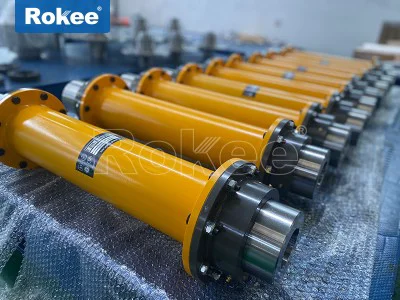
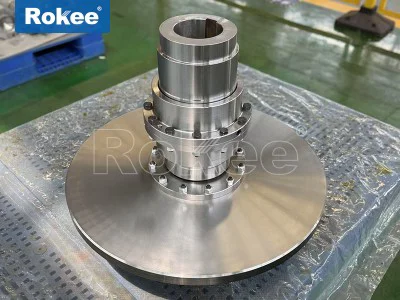
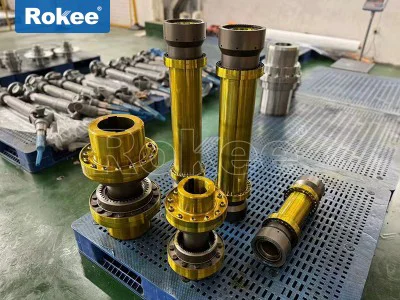
For long-distance shaft transmission systems where the standard basic type is insufficient, the intermediate shaft type curved tooth gear coupling is employed. This variant incorporates an extended intermediate shaft between two sets of curved tooth gear meshing assemblies, effectively bridging large gaps between driving and driven shafts while retaining full misalignment compensation and torque transmission capabilities. It is specifically engineered for equipment layouts with significant shaft spacing, such as large-scale conveyor systems, long-distance transmission lines in mining and metallurgy, and remote mechanical drive units, ensuring stable power transfer over extended distances without compromising transmission performance. Another specialized variant is the brake wheel or brake disc integrated curved tooth gear coupling, which features a built-in brake wheel or brake disc on one or both external gear hubs. This design consolidates the coupling and braking functions into a single component, eliminating the need for separate braking devices and optimizing the spatial layout of the transmission system. It is ideal for equipment requiring frequent starting, stopping, or emergency braking, such as hoisting machinery, lifting equipment, and material handling systems, where rapid and reliable braking is critical for operational safety and efficiency.
Additional specialized types include the narrow tooth width type and wide tooth width type curved tooth gear couplings, differentiated by the width of the internal gear sleeve and external gear teeth. Narrow tooth width variants feature a more compact axial dimension, suitable for installation spaces with strict axial length limitations, while wide tooth width variants offer enhanced axial displacement compensation and higher torque capacity, catering to heavy-duty applications with larger axial shaft movement. Vertical installation curved tooth gear couplings are engineered with reinforced sealing and structural stability to adapt to vertical shaft layouts, commonly used in vertical pumps, vertical mixers, and other vertically oriented mechanical equipment, preventing lubricant leakage and ensuring stable meshing under vertical operational conditions. There are also buffer-enhanced curved tooth gear couplings, integrated with subtle elastic buffering structures to absorb minor impact loads and vibration, suitable for transmission systems with frequent load fluctuations and intermittent impact forces, further expanding the coupling’s application scope in dynamic operational environments.
The versatility and robust performance of curved tooth gear couplings drive their extensive adoption across nearly all heavy-duty and precision industrial sectors, serving as an indispensable component in modern mechanical transmission systems. In the metallurgical and mining industry, these couplings are widely applied in rolling mills, crushers, conveyors, ball mills, and other heavy machinery, where they endure extreme heavy loads, severe vibration, and harsh dust-laden environments. Their high torque capacity and exceptional misalignment compensation ensure uninterrupted operation in these strenuous conditions, addressing shaft misalignment caused by equipment deformation and heavy impact loads, and maintaining stable power transmission for continuous production processes.
In the power generation industry, curved tooth gear couplings play a critical role in connecting turbines, generators, water pumps, fans, and other core equipment, facilitating efficient power transmission in thermal power plants, hydropower stations, wind power facilities, and other power generation units. Their adaptability to high-speed rotation and reliable performance under variable loads ensure stable energy conversion and transmission, supporting the safe and efficient operation of power generation systems. In the petroleum and chemical industry, these couplings are utilized in pumps, compressors, agitators, centrifuges, and other processing machinery, operating reliably in environments with corrosive gases, high temperatures, and flammable media. Their sealed structure and corrosion-resistant material options prevent lubricant contamination and component corrosion, meeting the stringent operational requirements of chemical and petroleum processing equipment.
Beyond heavy industry, curved tooth gear couplings are extensively employed in general machinery manufacturing, including machine tools, textile machinery, printing machinery, and packaging equipment, where they deliver precise torque transmission and minimal backlash for high-precision mechanical operations. In the transportation machinery sector, they are integrated into large-scale engineering vehicles, shipboard mechanical systems, and railway machinery, providing reliable transmission support for mobile equipment with complex operational conditions and frequent load changes. Additionally, they find application in lifting and handling machinery, cement production equipment, paper-making machinery, and various other industrial fields, proving their adaptability to almost every scenario requiring efficient, stable, and durable shaft torque transmission.
In summary, the curved tooth gear coupling represents a sophisticated evolution of gear coupling technology, with its scientifically optimized curved tooth structure, exceptional mechanical performance, diverse classified variants, and extensive industrial applicability establishing it as a cornerstone component in modern mechanical transmission systems. Its ability to balance high torsional rigidity, flexible misalignment compensation, heavy load capacity, and long service life addresses the core challenges of industrial transmission, enhancing equipment operational stability, reducing maintenance frequency, and boosting overall production efficiency. As industrial technology continues to advance and mechanical transmission systems demand higher performance, the design and manufacturing of curved tooth gear couplings will undergo further refinement, with optimized materials, precision machining, and structural innovations enhancing their performance and expanding their application boundaries. Regardless of the industrial sector or operational scenario, the curved tooth gear coupling remains a reliable and efficient transmission solution, embodying the ingenuity of mechanical engineering design and continuing to drive the progress of global industrial manufacturing and mechanical transmission technology.