Flexible Diaphragm Couplings
In the realm of industrial power transmission and shaft connection systems, flexible diaphragm couplings stand out as high-performance mechanical components that integrate torque transmission, misalignment compensation and operational stability, playing an irreplaceable role in connecting driving and driven shafts across diverse industrial scenarios. Unlike traditional coupling types that rely on elastomeric materials or gear meshing for flexibility, these couplings utilize thin, high-strength metal diaphragms as the core elastic elements, achieving power transmission and displacement compensation through controllable elastic deformation of the metal sheets, which endows them with unique structural advantages and performance characteristics.

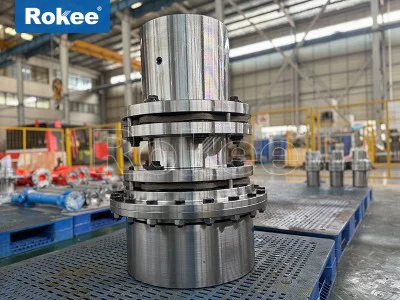
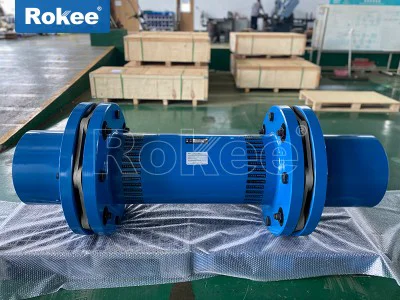
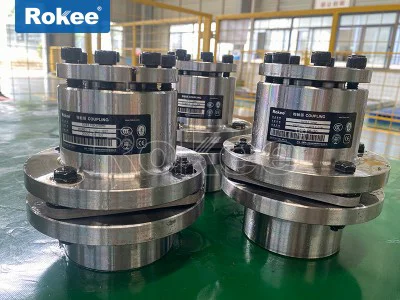
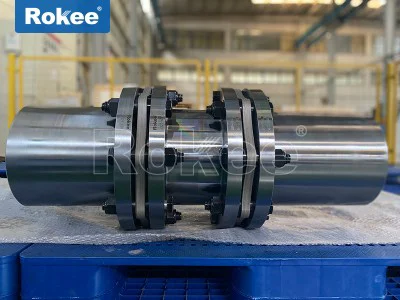
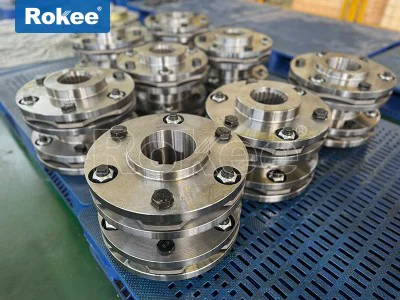
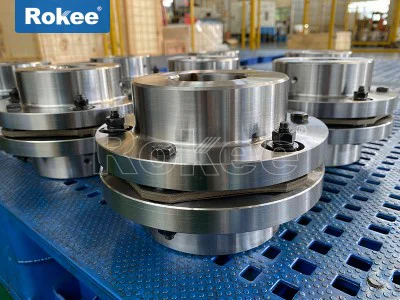
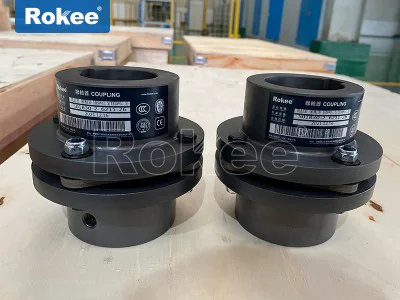
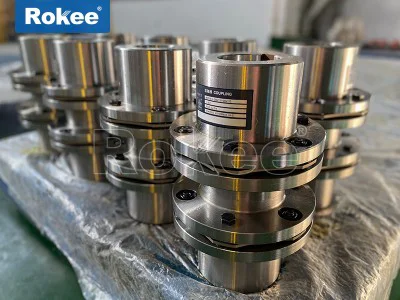
At the core of a flexible diaphragm coupling lies a meticulously designed structural system, which is mainly composed of shaft hubs, diaphragm groups, connecting fasteners and optional intermediate spacers, with each component performing a specific function to ensure the overall operational reliability of the coupling. The shaft hubs are the connecting carriers between the coupling and the rotating shafts of mechanical equipment, usually processed from high-strength alloy steel or stainless steel to match the torsional strength and rigidity requirements of different torque levels. The inner bores of the shaft hubs are machined with high precision, adopting forms such as keyway connection, interference fit or clamping connection to achieve a tight and non-slip fit with the equipment shafts, eliminating rotational clearance and ensuring synchronous torque transmission. The diaphragm group is the soul of the flexible diaphragm coupling, generally formed by stacking multiple layers of thin stainless steel sheets or high-temperature alloy sheets, with each sheet thickness controlled at a micron to millimeter level to balance flexibility and load-bearing capacity. These thin metal sheets are processed through precision stamping, laser cutting and stress relief treatment, with rounded edges and optimized contour designs to minimize stress concentration during cyclic deformation, effectively extending the fatigue life of the diaphragm. The connecting fasteners, mainly high-strength bolts and nuts, fix the diaphragm group between the two shaft hubs or between the shaft hubs and the intermediate spacer in a staggered arrangement, ensuring uniform force distribution on each layer of the diaphragm while allowing free elastic deformation within a certain range. For applications requiring longer shaft spacing or greater misalignment compensation, an intermediate spacer is added between the two diaphragm groups, which not only increases the axial distance between the driving and driven shafts but also enhances the coupling's ability to adapt to radial, angular and axial misalignment simultaneously.
The working principle of flexible diaphragm couplings is rooted in the elastic mechanical properties of metal materials, and its operational process is both efficient and stable. When the coupling is in operation, torque is transmitted from the driving shaft hub to the diaphragm group, and then transferred to the driven shaft hub through the shear deformation and tensile deformation of the metal diaphragms, realizing the synchronous rotation of the two shafts. In actual industrial operation, the connected shafts are often affected by factors such as manufacturing errors, installation deviations, thermal expansion and contraction during operation, and dynamic loads, resulting in axial displacement, radial offset and angular deflection between the shafts. At this time, the thin metal diaphragms in the coupling undergo adaptive elastic bending and torsion deformation, absorbing and compensating for these misalignments without generating excessive additional stress on the shafts, bearings and other adjacent components. Unlike gear couplings that require continuous lubrication to reduce friction between meshing teeth, or elastomeric couplings that face material aging and fatigue failure risks, flexible diaphragm couplings have no relative sliding parts and do not need any lubrication during operation, which fundamentally avoids oil leakage, pollution and wear problems caused by lubrication, and realizes maintenance-free or low-maintenance operation. This non-lubrication feature also makes them highly adaptable to closed, high-cleanliness or harsh working environments, expanding their application boundaries in special industrial fields.
The performance advantages of flexible diaphragm couplings are comprehensive and prominent, covering multiple dimensions such as transmission efficiency, precision, environmental adaptability and service life, making them superior to many traditional couplings in high-end and demanding working conditions. In terms of transmission efficiency, due to the rigid-flexible integrated design of the metal diaphragm group, the energy loss during torque transmission is extremely low, with the transmission efficiency stably maintained at over 99.8% even under high-speed and high-torque operating conditions, which greatly reduces energy consumption and improves the overall energy utilization rate of mechanical equipment. In terms of transmission precision, the zero-backlash structural design of flexible diaphragm couplings ensures that there is no gap or hysteresis during torque transmission, enabling real-time and accurate transmission of rotational speed and position, which is critical for precision mechanical equipment requiring high positioning accuracy and motion responsiveness. This precision performance makes them the preferred choice for high-precision transmission systems such as numerical control machine tools, servo drive systems and robotic arms. In terms of environmental adaptability, the metal diaphragm material has excellent resistance to temperature extremes, corrosion and vibration, with an operating temperature range covering from ultra-low temperature to high temperature, and can maintain stable mechanical properties in harsh environments such as high humidity, chemical corrosion and strong vibration. Unlike elastomeric materials that are prone to hardening, cracking or softening under extreme temperatures or chemical erosion, the metal diaphragms retain their elastic deformation ability and structural integrity for a long time, ensuring continuous and stable operation of the coupling. In terms of service life and reliability, the fatigue resistance of the precision-processed metal diaphragm group is extremely high, and under normal operating conditions and correct installation, it can operate continuously for tens of thousands of hours without failure. The coupling also has strong overload resistance, with the ability to withstand instantaneous impact torque far exceeding the rated torque, effectively protecting the driving and driven equipment from damage under sudden load fluctuations, greatly reducing equipment downtime and maintenance costs.
Flexible diaphragm couplings can be classified into multiple categories according to different structural design criteria, and each type has targeted performance characteristics to adapt to different working condition requirements, which is the key to their wide application in diversified industrial scenarios. The most common classification basis is the number of diaphragm groups and structural layout, mainly divided into single diaphragm couplings, double diaphragm couplings and multi-diaphragm couplings. Single diaphragm couplings are the most basic and compact type, consisting of a single group of diaphragms connecting two shaft hubs, with a short axial size and simple structure. They are suitable for applications with small shaft misalignment, short shaft spacing and medium to small torque transmission, such as small precision instruments, light-duty pumps and fans. Although their misalignment compensation capacity is relatively limited, they have the advantages of light weight, small moment of inertia and convenient installation, making them ideal for high-speed and light-load transmission scenarios. Double diaphragm couplings are equipped with two independent diaphragm groups, with an intermediate spacer between the two diaphragm groups, which greatly enhances the misalignment compensation performance. This structure can simultaneously adapt to axial, radial and angular misalignment, with the angular displacement compensation capacity reaching nearly twice that of single diaphragm couplings, effectively reducing the additional load on equipment bearings. Double diaphragm couplings are suitable for medium to large torque transmission, long shaft spacing and large installation deviation scenarios, such as medium-sized compressors, centrifugal pumps and industrial transmission shafts, and are the most widely used type in the industrial field. Multi-diaphragm couplings adopt three or more groups of diaphragm structures, with a more complex layout and stronger load-bearing capacity and misalignment compensation ability, designed for ultra-high torque, large displacement and heavy-duty working conditions, such as large generator sets, ship propulsion systems and heavy industrial machinery. In addition to the classification based on the number of diaphragms, flexible diaphragm couplings can also be divided into standard type, damping type and high-temperature resistant type according to functional characteristics and application scenarios. The damping type adds a specific damping structure inside the coupling to absorb vibration and reduce noise during operation, suitable for equipment with obvious vibration and impact; the high-temperature resistant type adopts special high-temperature alloy diaphragms and heat-resistant fasteners, which can maintain stable performance in ultra-high temperature environments, meeting the needs of high-temperature industrial processes such as metallurgy and thermal power generation.
The excellent comprehensive performance of flexible diaphragm couplings makes them widely used in almost all fields of modern industry, covering energy and power, aerospace, precision manufacturing, petrochemical industry, food and pharmaceutical, transportation and other industries, solving the key problems of torque transmission and misalignment compensation for various mechanical equipment. In the energy and power industry, flexible diaphragm couplings are widely used in gas turbines, steam turbines, generators and water pumps, where they compensate for shaft displacement caused by thermal expansion during equipment operation, transmit high torque efficiently and stably, and ensure the safe and reliable operation of power generation and energy transmission systems. Their maintenance-free and high-temperature resistance characteristics are particularly suitable for the continuous operation requirements of power equipment, reducing the frequency of shutdown maintenance and improving power generation efficiency. In the aerospace field, the lightweight, high-precision and high-reliability characteristics of flexible diaphragm couplings meet the strict requirements of aerospace equipment for weight, performance and safety, and are used in aircraft engines, auxiliary power units and transmission systems, adapting to extreme environments such as high altitude, large temperature differences and strong vibration. In the precision manufacturing industry, numerical control machine tools, laser processing equipment, semiconductor processing equipment and other high-precision machinery rely on the zero-backlash and high-precision transmission performance of flexible diaphragm couplings to ensure the machining accuracy of parts and the stability of equipment operation, avoiding product quality defects caused by transmission errors. In the petrochemical and marine industries, the corrosion resistance and non-lubrication characteristics of flexible diaphragm couplings make them ideal for corrosive media and harsh marine environments, applied in chemical pumps, oil pipelines, marine propulsion shafts and other equipment, resisting the erosion of acids, alkalis, salt spray and other corrosive substances, and maintaining long-term stable operation. In the food and pharmaceutical industry, the non-lubrication and pollution-free characteristics of flexible diaphragm couplings meet the high cleanliness requirements of production environments, avoiding product contamination caused by lubricating oil leakage, and are widely used in food processing machinery, pharmaceutical production equipment and packaging machinery. In the transportation industry, they are applied in electric vehicle drive trains, railway traction systems and automotive transmission components, adapting to dynamic loads and misalignment during vehicle operation, improving the stability and service life of transmission systems.
Although flexible diaphragm couplings have outstanding performance and wide applications, their service life and operational stability are closely related to correct selection, installation and routine maintenance. In the selection stage, it is necessary to comprehensively consider factors such as the rated torque, rotational speed, shaft misalignment type and size, operating temperature and environmental medium of the equipment, and select the appropriate type, specification and material of the coupling to avoid performance mismatch or premature failure caused by improper selection. During installation, strict attention should be paid to the coaxiality and parallelism of the driving and driven shafts, and even though the coupling has certain misalignment compensation ability, excessive installation deviation will greatly increase the stress on the diaphragm group and shorten its service life. The connecting fasteners should be tightened according to the specified torque in a staggered and graded manner to ensure uniform clamping force and prevent local stress concentration on the diaphragm. In routine use, regular inspection of the diaphragm group for fatigue cracks, deformation and corrosion is required, especially in harsh working environments, and the inspection frequency should be appropriately increased. If abnormal vibration, noise or performance degradation is found during equipment operation, the coupling should be checked and maintained in a timely manner to avoid small faults escalating into major equipment failures. With the continuous progress of material science, precision manufacturing technology and mechanical design optimization, the performance of flexible diaphragm couplings is constantly improving, with higher torque capacity, stronger misalignment compensation ability and wider environmental adaptability, further expanding their application scenarios in emerging industrial fields such as intelligent manufacturing, new energy equipment and precision automation.
In summary, flexible diaphragm couplings, with their unique metal elastic diaphragm structure, excellent transmission performance, strong environmental adaptability and diverse structural types, have become core components in modern industrial power transmission systems. They effectively balance the dual requirements of efficient torque transmission and shaft misalignment compensation, solve the pain points of high maintenance, low precision and poor durability of traditional couplings in harsh and high-precision scenarios, and provide a reliable technical guarantee for the stable operation, energy saving and efficiency improvement of mechanical equipment. From small precision instruments to large heavy-duty machinery, from conventional industrial environments to extreme special working conditions, flexible diaphragm couplings demonstrate their unique technical advantages and application value, and will continue to play a pivotal role in the development of industrial automation, intelligence and high-end manufacturing, promoting the continuous progress of mechanical transmission technology.