Serpentine Spring Couplings
In the realm of mechanical power transmission, the serpentine spring coupling stands as a pivotal flexible coupling, engineered to bridge two rotating shafts while addressing the inherent challenges of vibration, shock loads, and shaft misalignment that plague industrial drive systems. Unlike rigid couplings that offer no tolerance for positional errors or dynamic fluctuations, this specialized coupling integrates elastic serpentine spring elements as its core functional component, blending the high torque-transmission efficiency of rigid mechanical connections with the damping and compensatory traits of flexible couplings. Since its inception, it has evolved into a cornerstone component across diverse heavy-duty and general industrial sectors, prized for its robust construction, reliable performance, and adaptability to harsh operating environments. Delving into its intricate structure, distinctive performance attributes, varied classifications, and wide-ranging applications reveals why it remains a preferred choice for engineers seeking durable, efficient power transmission solutions.
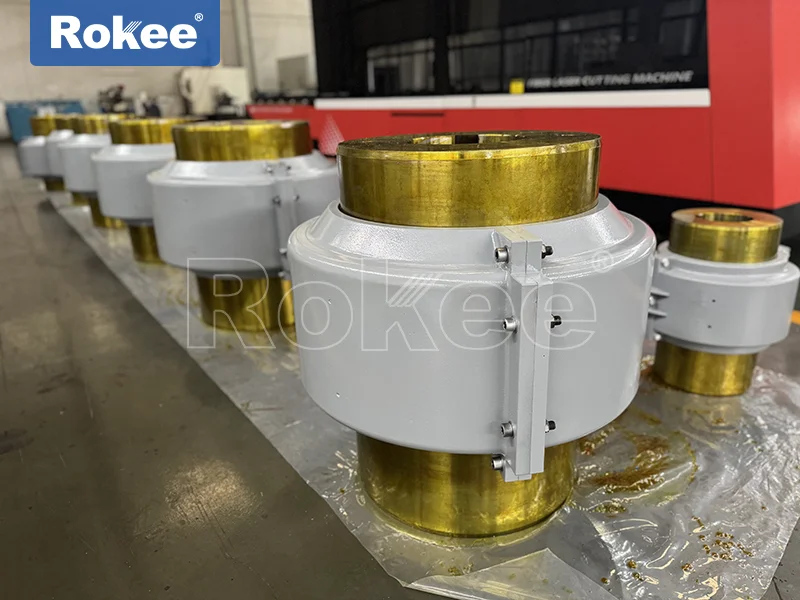
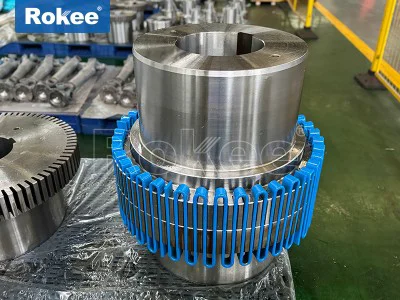
At its core, the serpentine spring coupling features a streamlined yet robust structural design, composed of a few key integrated parts that work in unison to deliver optimal performance. The primary constituents include two precision-machined half couplings, a set of serpentine-shaped elastic springs, a protective outer shell (included in most standard configurations), and sealing components to preserve internal lubrication. The half couplings, typically forged from high-strength cast iron or alloy steel, are mounted onto the driving and driven shafts respectively, with their outer surfaces machined with specialized, evenly spaced tooth grooves tailored to snugly accommodate the serpentine springs. These tooth profiles are meticulously crafted to ensure uniform contact with the spring elements, distributing stress evenly across the contact surface and minimizing wear during prolonged operation. The heart of the coupling lies in the serpentine springs, manufactured from high-grade alloy spring steel subjected to specialized heat treatment processes, endowing them with exceptional elasticity, fatigue resistance, and tensile strength. These springs are formed into a continuous, wavy serpentine profile and inserted into the matching tooth grooves of both half couplings, creating a flexible mechanical link between the two shaft assemblies. The protective shell, usually a split-type metal casing, encloses the spring and half coupling assembly, shielding the internal components from external contaminants such as dust, moisture, and debris, while also preventing lubricant leakage and containing any potential spring failure fragments to enhance operational safety. Sealing elements, such as gaskets or lip seals, are fitted at the junction of the shell and half couplings to maintain a sealed internal environment, preserving the integrity of the lubrication film that reduces friction between the springs and tooth grooves.
The operating principle of the serpentine spring coupling is rooted in the elastic deformation of its spring elements during torque transmission. When the driving shaft rotates, torque is transferred from the driving half coupling’s tooth grooves to the serpentine springs, which undergo controlled elastic deformation to absorb dynamic fluctuations before transmitting the torque to the driven half coupling and, ultimately, the driven shaft. This elastic deformation mechanism is the foundation of the coupling’s standout performance characteristics, setting it apart from conventional coupling types. One of its most notable performance traits is exceptional vibration and shock absorption capacity. The serpentine springs act as a natural damping medium, dissipating vibrational energy generated by uneven torque loads, rotational imbalances, or sudden mechanical shocks, significantly reducing vibration transmission between the driving and driven equipment. This damping effect not only smoothens power delivery but also protects critical components such as motors, gearboxes, and bearings from premature fatigue and damage, extending the overall service life of the entire drive system. Additionally, the coupling exhibits remarkable misalignment compensation capabilities, addressing three primary forms of shaft deviation: axial, radial, and angular misalignment. Even in installations where perfect shaft alignment is unattainable, the flexible spring elements can accommodate moderate axial displacement, radial offset, and angular deflection without compromising torque transmission efficiency or inducing excessive stress on the shafts and connected machinery. This reduces the precision required during installation, cuts down on assembly time and labor costs, and ensures stable operation even as minor positional shifts occur due to thermal expansion, mechanical wear, or foundation settling over time.
Another key performance advantage is its high torque-transmission efficiency and superior overload resistance. The direct surface contact between the serpentine springs and the precision-machined tooth grooves enables nearly lossless torque transfer, with operational efficiency consistently ranking among the highest for flexible coupling variants. Unlike non-metallic elastic couplings that may degrade or fail under heavy loads, the alloy steel serpentine springs boast exceptional load-bearing capacity, capable of withstanding short-term overloads exceeding the rated torque without catastrophic failure. This overload resilience is critical in industrial settings with intermittent heavy loads, frequent start-stop cycles, or sudden torque spikes, as it prevents sudden system downtime and minimizes the risk of damage to connected machinery. Furthermore, the coupling offers excellent durability and low maintenance requirements. The high-quality alloy steel springs resist fatigue, corrosion, and wear under normal operating conditions, while the sealed, lubricated internal design reduces friction-related degradation. Many configurations support long-term lubrication regimes, eliminating the need for frequent maintenance interventions and reducing ongoing operational costs. The modular structural design also simplifies inspection and component replacement; in the event of spring wear or damage, the split shell can be easily removed to access and replace the spring elements without disassembling the entire shaft assembly, further enhancing maintenance convenience and reducing equipment downtime.
Serpentine spring couplings are categorized into distinct types based on structural design, stiffness characteristics, installation mode, and functional adaptations, each tailored to meet specific operational requirements and application scenarios. A primary classification is based on tooth profile design and corresponding stiffness properties, dividing the couplings into constant-stiffness and variable-stiffness variants. Constant-stiffness serpentine spring couplings feature linear tooth profiles on the half couplings, maintaining a fixed contact distance between the springs and tooth grooves under normal load conditions. This results in consistent torsional stiffness throughout the operational load range, making them ideal for applications with steady torque output, minimal load fluctuations, and uniform rotational speeds, such as general-purpose pumps, fans, and conveyor systems. Variable-stiffness couplings, by contrast, utilize curved tooth profiles, where the contact point between the spring and tooth groove shifts as load and torque increase. As torque rises, spring deformation increases, reducing the effective contact distance and gradually increasing torsional stiffness. This progressive stiffness trait delivers enhanced damping and buffering under heavy loads or reverse rotation, making them well-suited for high-demand applications with large torque fluctuations, frequent direction changes, and severe impact loads, including crushers, rolling mills, and heavy-duty mixing equipment.
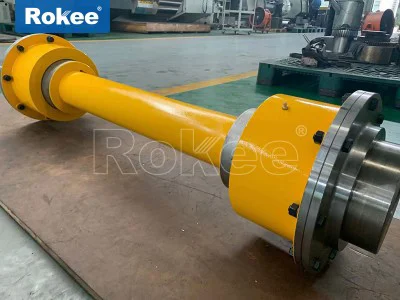
Classifications based on installation structure and functional configuration further expand the coupling’s versatility, with several mainstream types dominating industrial use. Standard radial installation couplings represent the basic, most widely used variant, featuring a split shell mounted radially around the spring and half coupling assembly. This design offers straightforward installation and disassembly, making it suitable for general industrial scenarios with standard shaft spacing and routine operating conditions. Axial installation couplings are engineered for confined installation spaces where radial access is limited, with the shell and spring assembly mounted axially along the shaft, enabling efficient installation in compact equipment layouts. Flange-connected couplings, available in single-flange and double-flange designs, integrate flange plates on the half couplings for secure, rigid connection to flanged shafts or equipment hubs. This configuration boosts connection stability and is widely adopted in heavy machinery requiring robust shaft mounting, such as large-scale pumps and compressors. Intermediate shaft couplings are designed to bridge long distances between driving and driven shafts, incorporating an additional intermediate shaft between the two half couplings. This type addresses applications where shafts are separated by significant gaps, common in long-distance transmission systems such as industrial production lines and large-scale material handling equipment. High-speed adaptations are optimized for elevated rotational speeds, featuring balanced components, refined spring designs, and enhanced dynamic stability to prevent resonance and ensure smooth operation at high RPMs, ideal for turbo machinery, high-speed fans, and compressors. Specialized variants include brake wheel or brake disc-equipped couplings, integrating braking components directly into the assembly for applications requiring emergency stopping or speed regulation, such as lifting machinery and hoisting equipment, and safety-focused couplings designed to disengage or deform predictably under extreme overloads, protecting core machinery from catastrophic damage.
The unique combination of structural resilience, damping performance, misalignment tolerance, and torque efficiency positions serpentine spring couplings across a vast spectrum of industrial applications, spanning heavy industry, manufacturing, energy, marine, and transportation sectors. In heavy industrial settings, they are indispensable in metallurgical equipment, including rolling mills, continuous casting machines, and straightening machines, where they absorb the intense shock loads and torque fluctuations inherent in metal forming and processing. In the mining industry, they are widely deployed in crushing equipment, ball mills, conveyors, and hoists, enduring heavy loads, dust, and harsh operating conditions while maintaining reliable power transmission. The energy sector relies heavily on these couplings for steam turbines, generators, large water pump sets, and wind turbine drive systems, where they ensure stable power transfer, dampen turbine-induced vibrations, and accommodate thermal expansion-related shaft misalignment. In petrochemical and chemical processing, they are used in compressors, centrifugal pumps, mixers, and agitators, with corrosion-resistant material variants suitable for harsh, corrosive process environments.
In general manufacturing and light industry, serpentine spring couplings serve in paper-making machinery, textile equipment, printing presses, and plastic molding machines, delivering smooth power transmission and protecting precision components from vibration-induced wear. The marine industry utilizes them in ship propulsion systems, deck machinery, and auxiliary pump drives, where they withstand salt spray, humidity, and variable load conditions while maintaining operational reliability. Transportation and heavy machinery applications include construction equipment such as excavators, cranes, and concrete mixers, as well as rail transit traction systems, where their shock absorption and overload resistance enhance equipment durability and operational safety. They also find use in specialized fields such as aerospace ground support equipment, military mechanical systems, and automated production lines, where consistent performance, high reliability, and low maintenance are non-negotiable requirements. Across all these applications, the core value of the serpentine spring coupling remains consistent: it enables efficient, reliable power transmission while mitigating the adverse effects of vibration, shock, and misalignment, optimizing equipment performance, extending service life, and reducing operational and maintenance costs for industrial operators.
As industrial technology continues to advance and operational demands grow more stringent, the serpentine spring coupling remains a vital and evolving component in mechanical power transmission. Ongoing refinements in material science, tooth profile engineering, and spring manufacturing processes further enhance its performance, expanding its applicability to even more demanding environments. Its enduring popularity stems from its perfect balance of simplicity, durability, and functionality—offering a cost-effective, reliable solution to the universal challenges of shaft connection and power transmission in modern industry. Whether in heavy-duty mining and metallurgy, precision manufacturing, or large-scale energy production, the serpentine spring coupling continues to play an irreplaceable role, underscoring its status as a timeless, high-performance component in the global industrial landscape. By understanding its structural nuances, performance capabilities, classification nuances, and application versatility, engineers and industrial operators can make informed selection decisions, maximizing the efficiency and reliability of their mechanical drive systems and ensuring seamless, sustainable operation across diverse industrial processes.