Universal Shaft Joints
A universal shaft joint, commonly referred to as a universal joint or U-joint, is a fundamental mechanical coupling component that serves as a critical bridge for transmitting rotational motion and torque between two shafts whose central axes are not collinear. Unlike rigid couplings that demand perfect shaft alignment, universal shaft joints are engineered to accommodate angular misalignment, parallel offset, and even slight axial movement between connected shafts, making them indispensable in nearly all mechanical systems that require flexible power transmission. From small-scale precision equipment to heavy-duty industrial machinery, these joints adapt to diverse operational conditions, balancing durability, efficiency, and flexibility to meet the unique demands of each application.

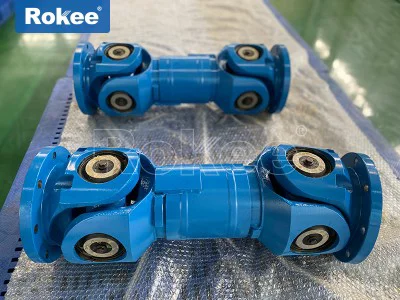
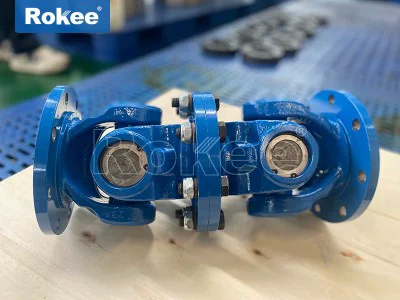
At its core, the structural design of a standard universal shaft joint is elegantly efficient, built around a small number of precision-machined components that work in tandem to enable flexible torque transmission. The most basic configuration consists of two yoke-shaped end fittings, also known as fork ends, and a central cross-shaped spider that connects the two yokes at a 90-degree angle to one another. Each arm of the cross spider is fitted with a bearing assembly, which allows smooth rotational movement between the spider and the yokes, minimizing friction and wear during operation. The yokes are securely attached to the input and output shafts respectively, either via keyways, splines, or clamping mechanisms, ensuring a tight, slip-free connection that prevents power loss during torque transfer. This simple yet robust structure eliminates the need for complex alignment processes during installation, reducing assembly time and operational complexity for end users. For enhanced performance in demanding environments, many universal shaft joints incorporate sealed bearing units to retain lubrication and block out contaminants such as dust, moisture, and debris, which significantly extends the service life of the joint and reduces maintenance frequency. Advanced variants may feature reinforced bearing cages, hardened steel components, or modified yoke designs to handle higher loads, faster rotational speeds, or more extreme angular offsets, but the foundational structural principle of a cross spider and dual yokes remains consistent across most standard models.
The performance of a universal shaft joint is defined by a set of core characteristics that dictate its suitability for specific applications, with no single joint design excelling in all operational scenarios. One of the most critical performance metrics is angular misalignment tolerance, which refers to the maximum angle between the input and output shafts that the joint can accommodate while maintaining smooth, efficient power transmission. Standard universal joints typically handle angular offsets ranging from 15 to 45 degrees, with specialized models engineered to manage even greater angles for unique mechanical layouts. Torque capacity is another vital parameter, representing the maximum rotational force the joint can transmit without deformation, fatigue, or failure; this value is heavily influenced by material strength, component size, and bearing design, with heavy-duty joints built to withstand thousands of Newton-meters of torque in industrial settings. Rotational speed capability is equally important, as high-speed operation can generate excessive vibration, heat, and wear if the joint is not properly designed. Joints optimized for high speeds feature precision-ground components, low-friction needle roller bearings, and balanced assemblies to minimize dynamic imbalance and noise, while low-speed, high-torque joints often use thicker, more durable bearing structures to handle heavy loads without sacrificing stability.
Additional performance attributes include transmission efficiency, durability, and operational resilience. High-quality universal shaft joints boast transmission efficiencies exceeding 95% under optimal alignment conditions, with minimal energy loss due to friction; even at moderate angular offsets, efficiency remains high, ensuring that most of the input power is transferred to the output shaft. Durability is shaped by material selection and manufacturing quality—common materials include high-strength carbon steel, alloy steel, stainless steel, and in some lightweight applications, aluminum alloys. Carbon steel and alloy steel are preferred for heavy-duty use due to their exceptional tensile strength, wear resistance, and ability to withstand thermal hardening processes, while stainless steel is chosen for corrosive environments such as marine or chemical processing settings, where rust and oxidation would compromise standard steel joints. Operational resilience encompasses resistance to shock loads, vibration, and temperature fluctuations; universal joints are designed to absorb sudden impacts and dampen mechanical vibration, reducing stress on connected shafts, gears, and bearings and prolonging the overall lifespan of the entire transmission system. It is important to note that performance can degrade at extreme angular offsets, with some joint types experiencing minor speed fluctuations or increased vibration at maximum deflection angles, a factor that guides proper joint selection for specific operational needs.
Universal shaft joints are categorized into several distinct types based on their structural variations, performance capabilities, and intended use cases, each tailored to address specific mechanical challenges. The most prevalent type is the single universal joint, also known as a Hooke’s joint or Cardan joint, which follows the classic cross spider and dual yoke design described earlier. This type is valued for its simplicity, cost-effectiveness, and versatility, making it the go-to choice for general-purpose applications with moderate angular misalignment requirements. Single universal joints excel in low-to-medium speed operations and can handle substantial torque loads, though they may exhibit slight non-uniform rotational output at high angles, leading to minor vibration in sensitive systems. They are widely used in everyday mechanical setups where perfect shaft alignment is impractical but extreme precision is not mandatory.
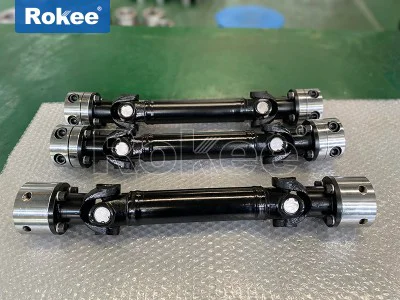
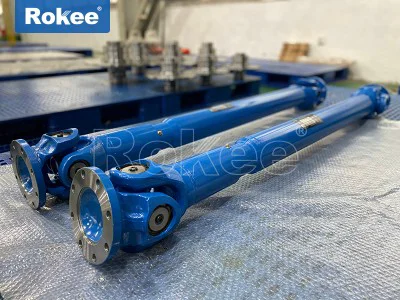
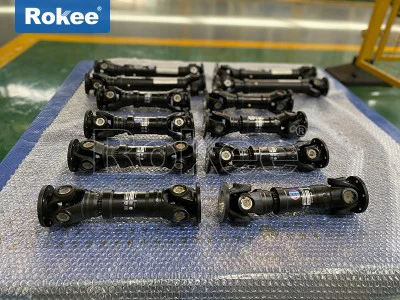
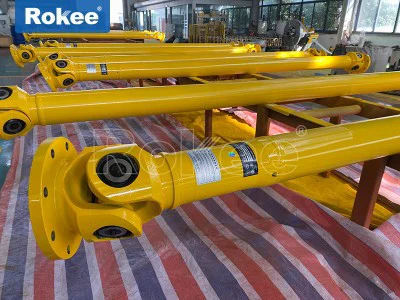
A second major category is the double universal joint, which consists of two single universal joints linked by an intermediate shaft or sleeve. This design addresses the limitations of single joints by significantly increasing angular misalignment tolerance—some double joints can handle offsets up to 90 degrees—and eliminating the non-uniform rotational speed issues that plague single joints at high angles. Double universal joints deliver smoother, more consistent power transmission, reduced vibration, and improved balance, making them ideal for long shaft assemblies, high-speed machinery, and systems requiring precise rotational output. While slightly more complex and bulkier than single joints, their enhanced performance justifies their use in demanding industrial and automotive applications where operational smoothness is critical. Many double joint designs also feature telescopic intermediate shafts to accommodate axial movement alongside angular misalignment, adding an extra layer of flexibility for dynamic mechanical systems.
Constant velocity (CV) universal joints represent a specialized, high-performance category engineered to maintain uniform rotational speed between input and output shafts regardless of angular offset, eliminating speed fluctuations and vibration entirely. Unlike standard cross-type joints, CV joints feature a ball-and-cage or spherical raceway design, with steel balls acting as the torque-transmitting elements between inner and outer raceways. This unique structure ensures that the rotational speed of the output shaft matches that of the input shaft at all angles, delivering exceptionally smooth, quiet operation even at maximum deflection. CV joints are optimized for high-speed, high-precision applications where vibration and speed variation would compromise performance, such as precision manufacturing equipment, automotive drive systems, and aerospace components. While typically more compact and durable than standard universal joints, CV joints are designed for specific load and speed ranges, focusing on smoothness and precision rather than extreme heavy-duty torque capacity.
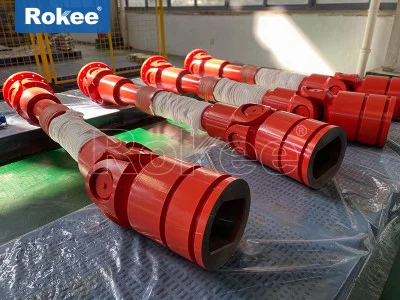
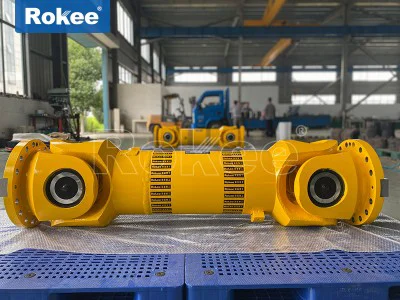
Other specialized types include flexible universal joints with elastic or damping elements, which absorb shock loads and reduce mechanical noise, making them suitable for light-duty, vibration-sensitive equipment; heavy-duty universal joints with reinforced cross spiders and thickened yokes, built to withstand extreme torque and harsh operating conditions in mining, construction, and marine machinery; and miniature universal joints, which are scaled down for small-scale precision devices such as medical instruments, optical equipment, and consumer electronics. Each type is engineered with a clear purpose, balancing trade-offs between torque capacity, angular flexibility, speed capability, and durability to match the unique requirements of its intended application. There is no universal “best” type; instead, the optimal joint is selected based on a thorough assessment of operational parameters including load magnitude, rotational speed, alignment conditions, environmental factors, and precision demands.
The versatility of universal shaft joints is reflected in their extensive applications across nearly every industry that relies on mechanical power transmission, with each sector leveraging the unique strengths of different joint types to solve practical engineering challenges. In the automotive industry, universal joints are integral components of drive shafts, steering columns, and power take-off systems, transmitting power from the engine and transmission to the wheels while accommodating the constant movement of suspension components and steering linkages. Single and double universal joints handle heavy torque loads in passenger vehicles, trucks, and off-road equipment, while CV joints deliver smooth performance in front-wheel-drive and all-wheel-drive vehicles, ensuring stable handling and quiet operation even at high speeds and over uneven terrain.
Industrial machinery relies heavily on universal shaft joints for a wide range of applications, from conveyor systems and material handling equipment to heavy manufacturing machinery such as rolling mills, mixers, and printing presses. In these settings, universal joints compensate for misalignment between motors, gearboxes, and driven components, reducing wear on bearings and gears and minimizing downtime due to mechanical failure. Heavy-duty universal joints are used in construction equipment like excavators, cranes, and bulldozers, where they endure extreme torque, shock loads, and harsh outdoor conditions, while precision universal joints are integrated into automated production lines and robotic arms, enabling flexible, accurate movement in assembly and manufacturing processes.
The agricultural sector depends on universal shaft joints for power transmission in tractors, harvesters, and a variety of farm implements such as plows, mowers, and balers. Agricultural universal joints are built to withstand dusty, muddy, and high-vibration environments, maintaining reliable performance during long hours of field operation. Their ability to accommodate angular misalignment caused by uneven terrain ensures consistent power delivery to attached equipment, boosting farming efficiency and reducing equipment breakdowns during critical planting and harvesting seasons.
Aerospace and marine industries utilize specialized universal shaft joints designed to meet stringent performance and durability standards. In aerospace applications, lightweight, high-strength universal joints are used in flight control systems, engine accessory drives, and landing gear mechanisms, where they must operate reliably at high altitudes, extreme temperatures, and variable loads. Marine universal joints, constructed from corrosion-resistant materials like stainless steel or brass, are integrated into propulsion systems, steering linkages, and deck machinery, withstanding saltwater exposure, moisture, and constant vibration to ensure safe and efficient operation at sea.
Beyond these core industries, universal shaft joints find use in renewable energy systems, medical devices, food processing equipment, and countless other mechanical setups. In wind turbines, they transmit power from rotor blades to generators while accommodating shaft misalignment caused by wind-induced movement; in medical robotics, miniature precision joints enable delicate, accurate movement for surgical and diagnostic equipment; in food processing plants, stainless steel universal joints meet hygiene and corrosion resistance requirements for handling food products safely. This broad applicability stems from the universal joint’s core advantage: the ability to provide reliable, flexible power transmission in scenarios where rigid couplings are ineffective or impossible to implement.
In summary, universal shaft joints are cornerstone components of modern mechanical engineering, blending simple structural design with exceptional functional versatility to solve the universal challenge of flexible torque transmission between misaligned shafts. Their performance characteristics—including angular tolerance, torque capacity, efficiency, and durability—are fine-tuned through material selection, manufacturing precision, and structural innovation, resulting in a diverse range of joint types tailored to every conceivable operational need. From everyday automotive systems to cutting-edge industrial and aerospace technology, universal shaft joints play a silent yet vital role in ensuring the smooth, reliable operation of mechanical equipment across the globe. As engineering technology continues to advance, the design and performance of universal shaft joints will evolve further, with enhanced materials, optimized structures, and improved durability expanding their capabilities and opening new possibilities for flexible power transmission in emerging industries. Regardless of technological progress, the core purpose of the universal shaft joint remains unchanged: to connect misaligned shafts, transmit power efficiently, and keep mechanical systems moving reliably under all operating conditions.