Drum Gear Couplings
In the realm of mechanical power transmission, drum gear couplings stand as one of the most widely utilized rigid-flexible coupling components, bridging the gap between driving and driven shafts while addressing the inherent challenges of shaft misalignment and torque transmission in industrial machinery. Unlike rigid couplings that offer no tolerance for positional deviations, and some flexible couplings that sacrifice load-bearing capacity for misalignment compensation, drum gear couplings strike a delicate balance between rigidity and flexibility, making them indispensable across heavy-duty, high-torque, and precision-demanding engineering scenarios.
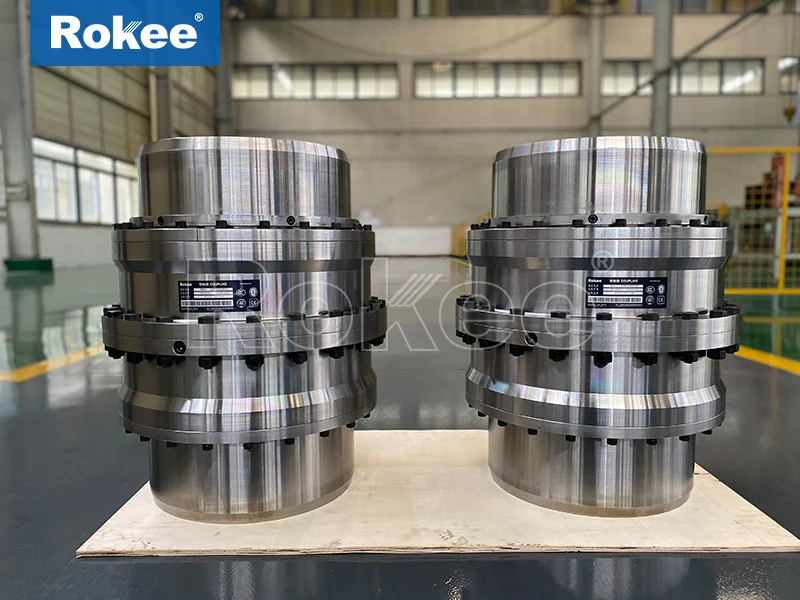
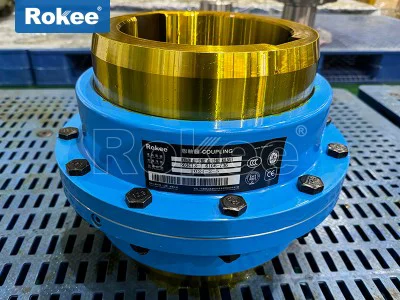
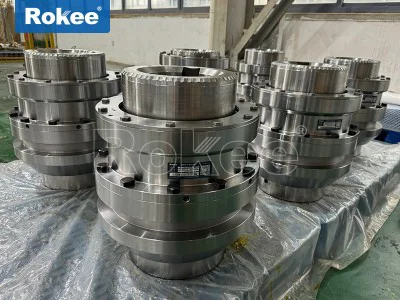
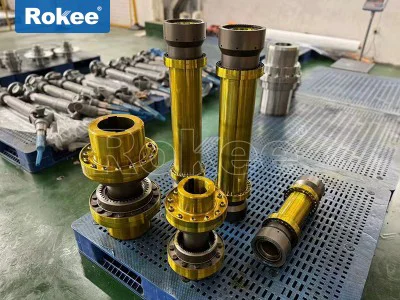
At its core, the drum gear coupling features a streamlined yet robust structural design, composed of two key sets of mating components: inner gear sleeves and outer gear hubs, along with auxiliary parts such as fasteners and sealing elements. The outer gear hubs are typically flanged, designed to connect firmly with the driving and driven shafts via keyways or interference fits, serving as the direct interface for torque input and output. The defining feature of the drum gear coupling lies in the curved, drum-shaped profile of the outer gear teeth, a departure from the straight-tooth design of conventional gear couplings. These drum-shaped teeth are precision-machined with a spherical contour, with the center of the sphere aligned along the gear’s central axis, ensuring uniform contact between the inner and outer gear surfaces during operation. The inner gear sleeves, equipped with matching internal gear teeth, encase the outer gear hubs, creating a meshing mechanism that facilitates torque transfer while accommodating shaft displacements. Auxiliary components play a pivotal supporting role: high-strength fasteners secure the two halves of the coupling and the connected shafts, ensuring structural integrity under dynamic loads, while sealing components prevent the leakage of lubricating medium and the ingress of external contaminants like dust, moisture, and abrasive particles, which is critical for sustaining long-term operational stability. The overall structure is compact, with a small rotational radius, allowing it to fit seamlessly into narrow installation spaces where larger coupling assemblies cannot be accommodated, without compromising on transmission performance.
The structural ingenuity of drum gear couplings directly translates into exceptional performance attributes that set them apart from other coupling types, with misalignment compensation, high load-bearing capacity, efficient power transmission, and prolonged service life being the most prominent. One of the most vital performance advantages is its ability to compensate for multiple forms of shaft misalignment simultaneously, including axial, radial, and angular misalignments. In practical industrial settings, perfect shaft alignment is nearly unattainable due to manufacturing tolerances, installation errors, thermal expansion, mechanical vibration, and operational wear; drum gear couplings mitigate these issues effectively. The drum-shaped tooth profile eliminates the edge stress concentration and tooth tip extrusion that plague straight-tooth gear couplings under angular misalignment, distributing contact pressure evenly across the entire tooth surface. This design allows for a significantly larger allowable angular misalignment compared to straight-tooth variants, with radial and axial displacement compensation capabilities tailored to meet the demands of heavy-duty machinery. Under identical dimensional constraints, the load-bearing capacity of drum gear couplings surpasses that of straight-tooth gear couplings by a substantial margin, enabling them to transmit extremely high torque values even in compact form factors. This high torque density makes them ideal for heavy-load transmission scenarios where space is limited.
In terms of transmission efficiency, drum gear couplings boast near-optimal energy transfer rates, minimizing power loss during operation. The smooth meshing of drum-shaped teeth reduces friction and wear between mating surfaces, lowering heat generation and energy dissipation associated with excessive friction. This efficient operation not only reduces the energy consumption of the entire transmission system but also minimizes noise output, creating a quieter working environment in industrial facilities. The reduced wear on gear surfaces, coupled with effective lubrication retention enabled by reliable sealing, significantly extends the service life of the coupling and reduces maintenance frequency. Unlike some flexible couplings that rely on elastic elements prone to fatigue and degradation, drum gear couplings utilize durable metallic gear components, enhancing resistance to fatigue failure under repeated cyclic loads. They also exhibit strong adaptability to extreme operating conditions, including high-temperature environments, heavy vibration, and intermittent shock loads, maintaining stable performance without compromising structural integrity. Additionally, the trumpet-shaped design of the outer gear tooth ends simplifies assembly and disassembly processes, reducing downtime during installation, maintenance, or equipment overhauls, further boosting overall operational efficiency for industrial enterprises.
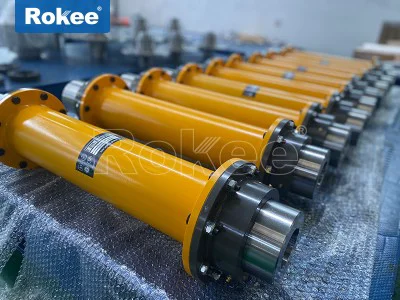
Drum gear couplings are categorized into various types based on structural modifications, functional adaptations, and installation requirements, each engineered to address specific operational needs in diverse industrial applications. The most fundamental classification is based on structural configuration, distinguishing between standard basic drum gear couplings and specialized modified variants. Standard basic models feature a symmetrical two-half structure with drum-shaped gear meshing on both sides, designed for general-purpose torque transmission with moderate misalignment compensation, suitable for the majority of conventional mechanical drive systems. Modified variants are tailored to address unique operational constraints, such as extended shaft spacing, braking requirements, vertical installation, or enhanced torque protection. One prevalent specialized type is the drum gear coupling with an intermediate shaft or connecting pipe, designed to bridge large distances between driving and driven shafts, a common requirement in long-distance transmission systems such as conveyor lines, large-scale milling equipment, and marine propulsion systems. These extended variants retain the core drum gear meshing design while incorporating a rigid intermediate component to maintain torque transmission efficiency across longer spans, without sacrificing misalignment compensation capabilities.
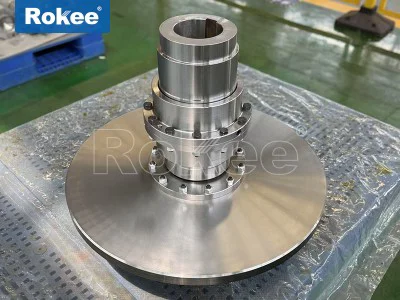
Another widely used category is drum gear couplings integrated with braking components, including brake discs and brake wheels, engineered for machinery that requires rapid deceleration or emergency stopping. These couplings feature a dedicated braking surface integrated into the hub structure, allowing seamless integration with braking systems without additional auxiliary components, optimizing space utilization and simplifying the overall transmission system layout. Vertical installation drum gear couplings are specifically designed for vertical shaft transmission systems, such as vertical pumps, vertical mills, and elevators, with structural adjustments to ensure stable torque transmission and lubrication retention in vertical orientations, preventing lubricant migration and ensuring consistent gear meshing. Torsion protection drum gear couplings are equipped with torque-limiting mechanisms, designed to safeguard critical transmission components by disengaging or slipping when torque exceeds a preset threshold, preventing damage to motors, gearboxes, or working parts due to overloads, shock loads, or mechanical jams. Additionally, drum gear couplings are classified by tooth width, with wide-tooth models offering enhanced axial displacement compensation and narrow-tooth variants prioritizing compactness and low moment of inertia, ideal for high-speed rotational applications. Some variants feature split-type structures for easier installation and maintenance in confined spaces, while others adopt integrated sealing designs for improved dustproof and waterproof performance in harsh outdoor or industrial environments.
The versatile performance and diverse classifications of drum gear couplings make them a cornerstone component across nearly all heavy industry and mechanical engineering sectors, with applications spanning metallurgy, mining, lifting and transportation, petrochemicals, power generation, marine engineering, and general manufacturing. In the metallurgical industry, where equipment operates under extreme heavy loads, high impact, and harsh conditions, drum gear couplings are extensively used in rolling mills, blast furnace equipment, continuous casting machines, and metal processing machinery. These couplings withstand the high torque and severe vibration inherent in metal smelting and rolling processes, compensating for shaft misalignment caused by thermal expansion and mechanical wear, ensuring uninterrupted operation of critical production line equipment. In the mining industry, they serve as vital transmission components in ore crushers, grinding mills, conveyors, and excavators, enduring heavy shock loads, dust-laden environments, and prolonged continuous operation, delivering reliable torque transmission and reducing maintenance needs in remote and rugged mining sites.
Lifting and transportation machinery, including cranes, hoists, conveyors, and port handling equipment, relies heavily on drum gear couplings for their high load-bearing capacity and misalignment compensation. Cranes and port machinery require couplings that can handle dynamic loads during lifting and traversing, and drum gear couplings excel in stabilizing transmission, preventing equipment failure due to sudden load changes or shaft misalignment. In the petrochemical industry, where equipment often operates in flammable, explosive, or corrosive environments, drum gear couplings’ sealed, robust design prevents lubricant leakage and contaminant ingress, meeting stringent safety and operational requirements for pumps, compressors, mixers, and refining equipment. Power generation facilities, including thermal power plants, hydropower stations, and wind power systems, utilize drum gear couplings in turbine drives, generator sets, and auxiliary power equipment, where high transmission efficiency, fatigue resistance, and long service life are critical for sustained power production. Marine engineering applications, such as ship propulsion systems, deck machinery, and offshore drilling equipment, benefit from the coupling’s ability to withstand marine vibrations, shaft misalignment caused by hull deformation, and salt-spray environments, ensuring reliable operation in demanding maritime conditions.
In general manufacturing and mechanical engineering, drum gear couplings are integrated into gearboxes, machine tools, packaging machinery, and various industrial drive units, offering a cost-effective and reliable solution for precision torque transmission. For high-speed rotational equipment, low-moment-of-inertia drum gear coupling variants ensure smooth operation with minimal vibration, while heavy-duty models support the high-torque demands of large-scale processing machinery. Their adaptability to both low-speed, high-torque and moderate-speed, continuous-operation scenarios further expands their industrial reach, making them a universal choice for engineers seeking a balance of performance, durability, and versatility. Unlike specialized couplings designed for narrow applications, drum gear couplings’ ability to adapt to diverse operational conditions cements their status as a staple in mechanical power transmission, with ongoing design optimizations focusing on enhanced wear resistance, improved misalignment compensation, and reduced maintenance requirements to meet the evolving demands of modern industrial automation and heavy machinery development.
In summary, drum gear couplings represent a pinnacle of mechanical transmission component design, merging robust structural integrity, exceptional performance versatility, and targeted functional adaptations to address the complex challenges of industrial power transmission. Their unique drum-shaped tooth design resolves the longstanding trade-off between load-bearing capacity and misalignment compensation, delivering efficient, reliable, and durable torque transmission across a spectrum of harsh and demanding operating environments. The diverse range of drum gear coupling variants ensures a tailored solution for nearly every mechanical drive application, from basic general-purpose machinery to specialized heavy-duty industrial equipment. As industrial technology continues to advance and machinery design evolves toward higher loads, greater precision, and extended service life, drum gear couplings will remain an essential and irreplaceable component in global mechanical engineering, continuously adapting to meet the ever-growing demands of modern industry through iterative design improvements and material innovations.
Coupling Categories
Links:
Related Articles
- Oct 8, 2026Drum Gear Coupling For Mining
- Aug 19, 2026Drum Gear Coupling For Pump
- Aug 19, 2026High Speed Drum Gear Coupling
- Aug 19, 2026Drum Gear Coupling For Conveyor
- Aug 19, 2026Drum Gear Coupling For Rolling Mill
- Aug 10, 2026Drum Gear Coupling For Crane
- Aug 10, 2026Industrial Drum Gear Coupling
- Aug 10, 2026Drum Gear Coupling For Sale
- Aug 10, 2026Drum Gear Coupling For Steel Plant
- Aug 4, 2026Drum Gear Coupling Supplier
- Aug 4, 2026Heavy Duty Drum Gear Coupling
- Jul 30, 2026High Torque Drum Gear Coupling
- Jul 30, 2026Drum Gear Coupling Manufacturer
- Jul 7, 2026Application Advantages Of Drum Gear Coupling Dedicated To Polyurethane Sandwich Panel Production Line
- Jul 7, 2026Drum Gear Coupling Guide For Heavy Load Working Conditions Of PIR Sandwich Panel Production Line
- Apr 27, 2026Drum Gear Coupling Optimizes The Transmission Process Of Sandwich Panel Production Line To Improve Efficiency
- Apr 20, 2026Preferred Drum Gear Coupling Solution For Transmission Upgrade Of PU Sandwich Panel Machine
- Apr 20, 2026Drum Gear Coupling Extends The Service Life Of PU Sandwich Panel Line
- Oct 23, 2025Brake Drum Gear Couplings