Gear Type Safety Couplings
In the realm of mechanical power transmission, gear type safety couplings stand as indispensable components that bridge drive sources and working machinery, merging the high torque transmission capability of traditional gear couplings with dedicated overload protection functionality. Unlike standard rigid or flexible couplings that solely transmit rotational force and accommodate minor shaft misalignments, these specialized assemblies are engineered to intervene proactively when operational loads exceed predefined thresholds, safeguarding entire drive systems from catastrophic failure, costly downtime, and potential safety hazards. Designed with precision-machined gear interfaces and integrated safety mechanisms, they strike a delicate balance between robust power delivery and reliable protective performance, making them a staple in heavy-duty and precision-driven industrial settings where operational stability and equipment longevity are non-negotiable. This comprehensive exploration delves into the intrinsic structural design, core performance attributes, diverse classification criteria, and wide-ranging practical applications of gear type safety couplings, highlighting their pivotal role in modern mechanical engineering and industrial production.
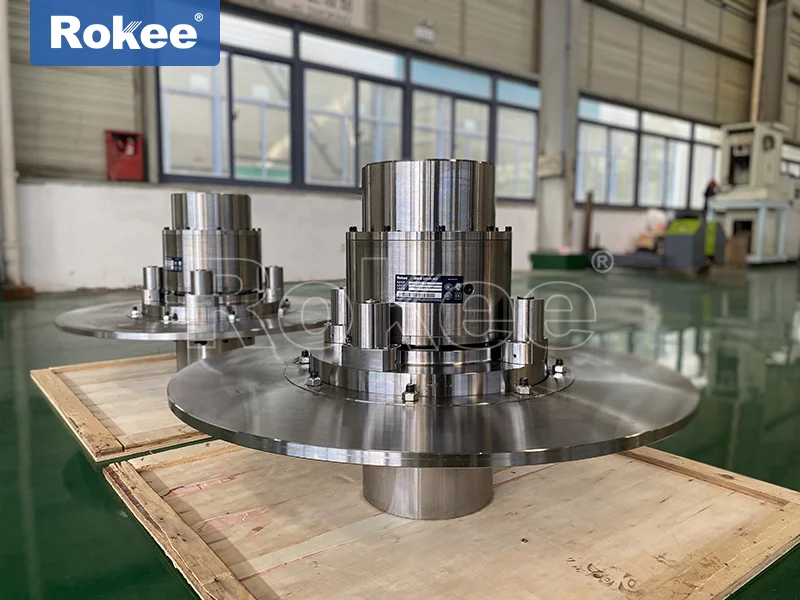
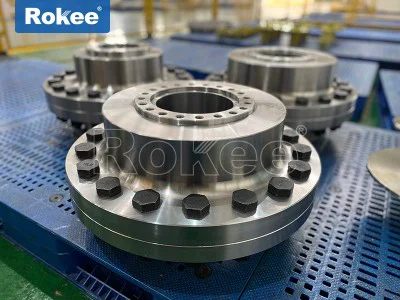
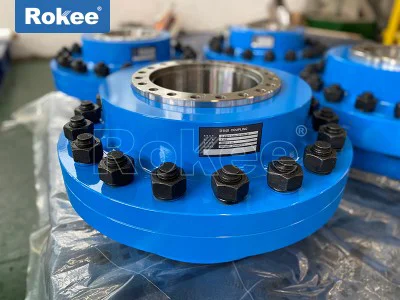
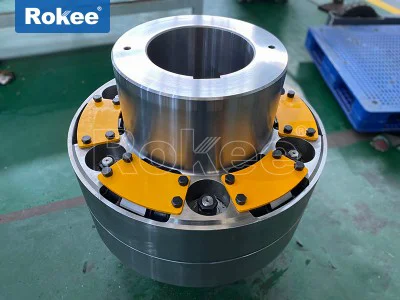
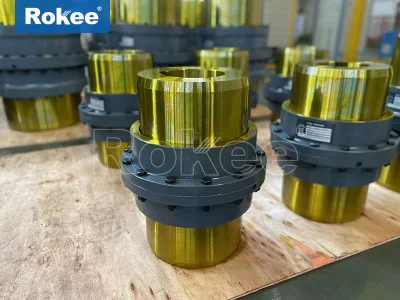
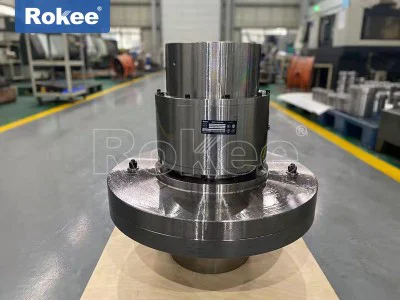
At its core, the structural composition of a gear type safety coupling is a harmonious fusion of gear transmission components and overload protection modules, optimized for durability, precision, and responsive actuation. The fundamental structure typically consists of two key halves—each attached to the driving shaft and driven shaft respectively—featuring external gear teeth that mesh seamlessly with internal gear teeth housed within a central sleeve or coupling body. This gear meshing design is the cornerstone of its power transmission efficiency, with tooth profiles often crafted to handle radial, angular, and axial misalignments between connected shafts, a critical trait for real-world industrial environments where perfect shaft alignment is rarely achievable. The gear surfaces are routinely subjected to specialized heat treatment processes, enhancing surface hardness, wear resistance, and load-bearing capacity to withstand prolonged high-torque operation and repetitive meshing stresses. Beyond the gear transmission framework, the defining structural element is the integrated safety mechanism, which varies by design but operates on the core principle of disengaging or limiting torque transfer when overload occurs. Common safety structures include shear-sensitive components, spring-loaded locking mechanisms, friction-based engagement systems, and ball detent assemblies, all calibrated to trigger protective action at a precise torque threshold without compromising normal operational performance. The overall construction prioritizes compactness and structural rigidity, minimizing overhang moments and residual unbalance to reduce strain on adjacent shaft bearings and prevent excessive vibration during high-speed rotation. Every structural component is engineered to work in tandem: the gear assembly ensures smooth, efficient power transfer under normal conditions, while the safety module acts as a passive guardian, ready to activate instantaneously when abnormal loads threaten the system.
The performance characteristics of gear type safety couplings are tailored to address the dual demands of heavy-duty transmission and reliable overload protection, setting them apart from conventional coupling solutions. Foremost among these is exceptional torque transmission capacity, a direct benefit of the gear meshing design that distributes load across multiple tooth surfaces, enabling the coupling to handle high nominal torque levels and transient load spikes without deformation or slippage under standard operating conditions. This high torque density makes it suitable for applications where space is limited but heavy power delivery is required, optimizing the overall footprint of drive systems. Complementary to its torque capability is superior misalignment compensation; the curved or modified gear tooth profiles allow for controlled axial, angular, and radial displacement between shafts, reducing reactive forces on bearings and extending the service life of both the coupling and connected equipment. A defining performance trait is its precise overload response, with the safety mechanism calibrated to actuate within a narrow torque range, ensuring consistent and predictable protection—whether through instantaneous disengagement, controlled slipping, or shear of dedicated safety elements—without false triggers during routine operational fluctuations. This precision is vital for maintaining production continuity and preventing unnecessary interruptions. Durability and wear resistance further bolster its performance profile; high-grade alloy steel construction, hardened gear surfaces, and corrosion-resistant finishes enable the coupling to operate reliably in harsh industrial environments, including those with high dust levels, temperature extremes, and moderate moisture exposure. Additionally, gear type safety couplings exhibit low maintenance requirements under proper usage, with minimal lubrication needs for gear interfaces and long service intervals for safety mechanism components, reducing long-term operational costs and labor input. Unlike fragile protective components that degrade rapidly under cyclic loads, these couplings retain their performance consistency over extended operational lifecycles, retaining calibrated torque thresholds and gear meshing precision through thousands of operational cycles.
Gear type safety couplings are categorized into distinct variants based on structural design, overload protection mechanism, reset functionality, and application-specific requirements, each engineered to excel in unique operational scenarios. One primary classification is based on the overload disengagement mechanism, which divides these couplings into shear-type, friction-type, ball detent-type, and spring-loaded rigid variants. Shear-type gear safety couplings feature precision-engineered shear pins or shear segments integrated into the gear assembly, designed to fracture cleanly when overload torque is encountered, instantly severing the power transmission link; this type offers absolute disengagement and high protective reliability, ideal for systems where even momentary overload can cause severe damage. Friction-type variants utilize compressed friction plates paired with gear teeth, relying on pre-set frictional force to transmit torque normally, with controlled slipping occurring between friction surfaces during overload to limit torque transfer without complete disengagement; this design is reusable without component replacement, making it suitable for applications with frequent, mild overloads. Ball detent-type couplings employ spring-loaded steel balls seated in precision-machined grooves within the gear housing, locking the gear halves together under normal loads and ejecting the balls from their grooves when overload strikes, creating a freewheeling state between drive and driven shafts; this variant offers rapid reset capabilities and crisp disengagement, favored for high-cycle operational environments. Spring-loaded rigid gear safety couplings maintain a rigid gear connection during normal operation, with compression springs calibrated to yield under overload, allowing temporary gear disengagement and re-engagement once loads normalize, blending rigid transmission with automatic reset functionality. Another key classification centers on reset functionality, distinguishing between manual-reset and automatic-reset models. Manual-reset variants require physical intervention to re-engage the gear assembly and safety mechanism after overload resolution, offering enhanced control and preventing unintended restarts in high-risk settings. Automatic-reset designs re-engage seamlessly once the overload condition is eliminated, minimizing downtime and supporting uninterrupted production in continuous processing lines. Additional classifications include single-engagement and double-engagement gear designs, with single-engagement models featuring one gear meshing interface for compact installations and double-engagement models boasting two meshing points for enhanced misalignment tolerance and higher torque capacity, catering to heavy industrial machinery.
The versatility of gear type safety couplings, rooted in their robust structure and adaptive performance, drives their widespread adoption across a vast spectrum of industrial sectors, each leveraging their unique protective and transmission capabilities to optimize operations. In heavy machinery and manufacturing equipment, these couplings are integral to large conveyor systems, crushers, mixers, and extruders, where they transmit high torque while shielding motors, gearboxes, and drive shafts from damage caused by material jams, sudden load surges, or operational errors. The gear-based design withstands the heavy cyclic loads inherent to these machines, while the safety mechanism prevents costly breakdowns that can halt entire production lines for extended periods. In the machine tool industry, precision gear type safety couplings are deployed in CNC machining centers, lathes, milling machines, and grinding equipment, where they protect delicate spindle assemblies and precision drive components from overload during cutting, drilling, or milling operations. Their precise torque control and minimal backlash ensure the accuracy of machining processes, while rapid overload response prevents tool breakage and workpiece damage, preserving production quality and reducing scrap rates. The mining and construction sector relies heavily on heavy-duty gear safety couplings for equipment such as excavators, bulldozers, conveyor belts, and pumping systems, where harsh operating conditions, heavy loads, and frequent load fluctuations demand rugged, reliable protection. These couplings endure exposure to dust, debris, and extreme mechanical stress, maintaining operational integrity and preventing catastrophic failures in remote, high-stakes work environments. In the marine and offshore engineering industry, gear type safety couplings are utilized in shipboard propulsion systems, winches, hoists, and pumping equipment, where they accommodate shaft misalignment caused by vessel movement and protect drive systems from overload during heavy lifting or turbulent sea conditions. Their corrosion-resistant construction and durable gear design make them well-suited for the challenging marine environment, ensuring consistent performance in salt-laden air and humid conditions. Additionally, these couplings find critical applications in power generation equipment, including water pumps, fans, turbine drive systems, and generator sets, where they safeguard rotating machinery from overload damage and ensure the stable transmission of power across diverse operational loads. They also play a vital role in packaging and printing machinery, textile manufacturing equipment, and material handling systems, where precise torque transmission and reliable overload protection support high-speed, continuous production workflows.
Beyond these core industrial sectors, gear type safety couplings continue to expand their reach into emerging engineering fields, adapting to evolving technological demands and operational challenges. Their modular design allows for customization to meet specific torque requirements, space constraints, and environmental conditions, making them a flexible solution for both standard and bespoke mechanical systems. As industrial automation and smart manufacturing advance, the demand for reliable, high-performance protective transmission components like gear type safety couplings continues to rise, as they form a critical line of defense between automated machinery and potential operational disruptions. The ongoing refinement of gear tooth profiles, safety mechanism materials, and calibration techniques further enhances their performance, improving torque accuracy, response speed, and service life to meet the stringent requirements of modern industrial applications. While often overlooked as a minor component in complex drive systems, gear type safety couplings play an irreplaceable role in maintaining operational safety, equipment reliability, and production efficiency. Their ability to merge the strength of gear transmission with proactive overload protection addresses a fundamental challenge in mechanical engineering: balancing power and performance with safety and durability. As industrial processes grow more automated, heavy-duty, and precision-focused, the value of gear type safety couplings will only intensify, solidifying their status as a foundational component in the global landscape of mechanical power transmission.
In summary, gear type safety couplings represent a pinnacle of functional integration in mechanical transmission technology, combining the robust torque delivery of gear-based assemblies with precise, reliable overload protection. Their meticulously engineered structure, encompassing precision gear meshing and tailored safety mechanisms, delivers exceptional performance in terms of load capacity, misalignment tolerance, durability, and responsive protection. Diverse classifications cater to a multitude of operational needs, from shear-type absolute protection to friction-type reusability and automatic-reset convenience, ensuring adaptability across countless industrial scenarios. From heavy manufacturing and machine tools to mining, marine engineering, and power generation, these couplings serve as silent guardians, preserving equipment integrity, minimizing downtime, and upholding operational safety across critical industrial workflows. As mechanical engineering progresses and industrial demands evolve, gear type safety couplings will remain a cornerstone of efficient, secure power transmission, continuously evolving to meet the needs of modern industry and underscoring their enduring significance in the world of mechanical components.