Steel Laminae Couplings
In the realm of mechanical power transmission, the steel laminae coupling stands as a pivotal flexible coupling solution, engineered to bridge rotating shafts while accommodating misalignment, transmitting torque efficiently, and safeguarding connected machinery from excessive stress and premature wear. Unlike rigid couplings that demand flawless shaft alignment and offer no tolerance for operational deviations, steel laminae couplings leverage the elastic deformation of precision-engineered steel laminar packs to deliver a unique blend of torsional rigidity and flexible compensation, making them indispensable across a vast spectrum of industrial applications.
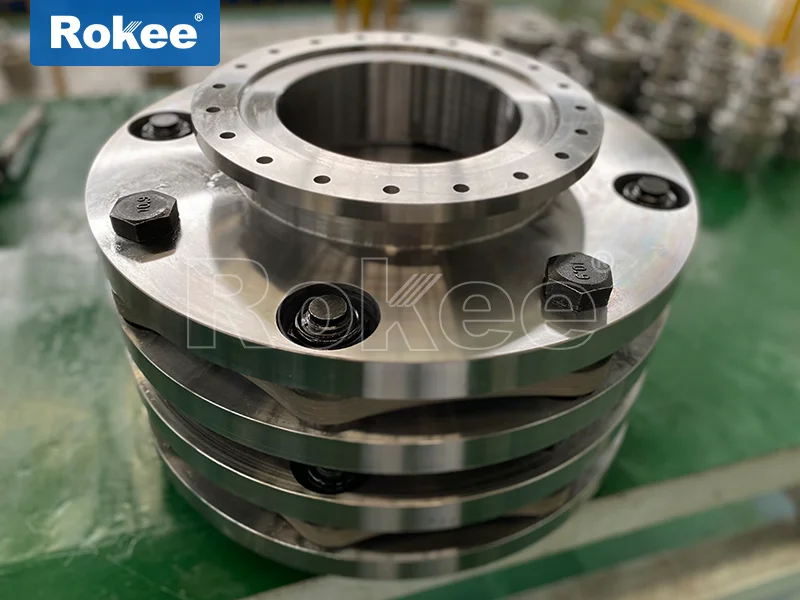
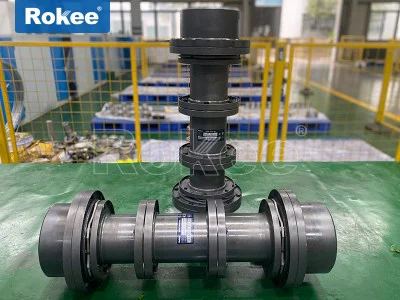
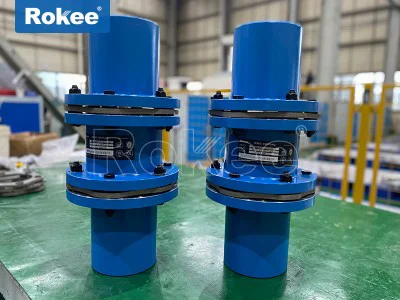
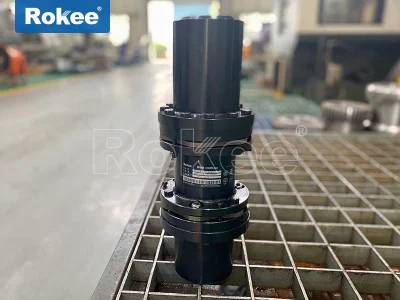
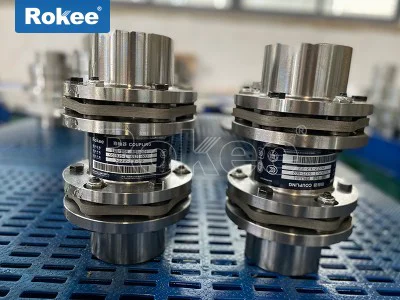
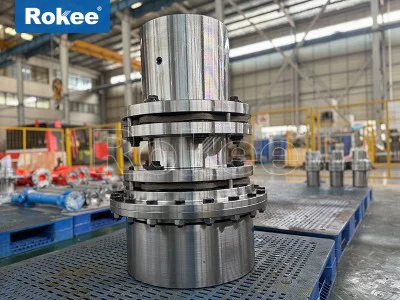
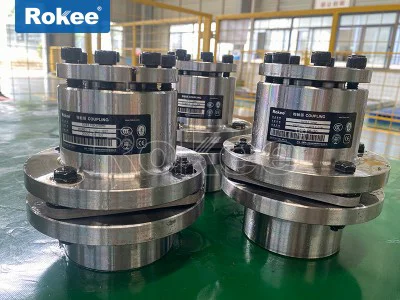
At its core, the steel laminae coupling is constructed around three fundamental components: high-strength steel laminar packs, rigid hubs, and precision fasteners, with some variants incorporating intermediate spacers or shafts to suit specific installation requirements. The laminar packs, the heart of the coupling, are assembled from multiple thin layers of high-grade alloy steel or stainless steel sheets, each meticulously processed to ensure uniform thickness, smooth surfaces, and consistent mechanical properties. These laminations are stacked in a precise, staggered configuration and secured to the coupling hubs via high-tensile fasteners, creating a flexible yet durable transmission medium. The thickness of individual laminations typically ranges from 0.1mm to 1mm, and the number of layers is calibrated based on target torque capacity and misalignment compensation needs; thicker or more laminations boost torque-bearing capabilities, while thinner or fewer laminations enhance flexibility and displacement tolerance. The hubs, forged from high-strength carbon steel or alloy steel and subjected to precision machining and heat treatment, serve as the connection point between the coupling and the drive/driven shafts, with bore designs tailored to fit standard shaft diameters and mounting preferences. Unlike gear couplings or elastomeric couplings, steel laminae couplings feature no sliding parts, frictional interfaces, or elastomeric elements, eliminating the need for lubrication, sealing, or routine maintenance, and resisting degradation from oil, chemicals, and extreme temperatures.
The performance of steel laminae couplings is defined by a set of distinctive mechanical and operational traits that set them apart from conventional coupling types. Foremost is their exceptional torque transmission efficiency, which often exceeds 99.8%, nearly matching the efficiency of rigid couplings. This is attributed to the absence of energy loss from friction, slippage, or elastomeric hysteresis, as torque is transferred directly through the rigid laminar packs and hub assemblies. Despite this high torsional stiffness, the couplings exhibit remarkable misalignment compensation capacity, accommodating axial, radial, angular, and composite misalignments simultaneously. Axial displacement compensation typically spans several millimeters to tens of millimeters, radial displacement ranges from 0.1mm to 1.3mm, and angular displacement can reach up to ±3°, varying with structural design and lamination specifications. This flexibility mitigates stress on shaft bearings, gears, and other critical components caused by manufacturing tolerances, installation errors, thermal expansion, or operational vibration, significantly extending the service life of the entire drive system.
Another key performance advantage is their superior environmental adaptability, enabling stable operation in harsh conditions that would incapacitate many other coupling designs. Constructed entirely from high-grade steel alloys, these couplings withstand extreme temperature fluctuations, operating reliably in environments ranging from -50°C to 300°C, with specialized material variants capable of enduring even more severe thermal conditions. They exhibit excellent resistance to corrosion, oxidation, and chemical exposure, making them suitable for use in marine, offshore, chemical processing, and mining environments where moisture, salt spray, acids, alkalis, and oily contaminants are prevalent. Additionally, steel laminae couplings offer zero backlash operation, ensuring precise synchronization of rotational speed and position between drive and driven shafts—a critical feature for high-precision machinery requiring accurate motion control. They also deliver effective vibration damping and noise reduction, as the elastic laminar packs absorb and dissipate vibrational energy generated during operation, minimizing noise pollution and enhancing the stability of the transmission system. With no wearable components, these couplings boast an extended service life, often exceeding a decade under normal operating conditions, reducing downtime and long-term operational costs for industrial facilities.
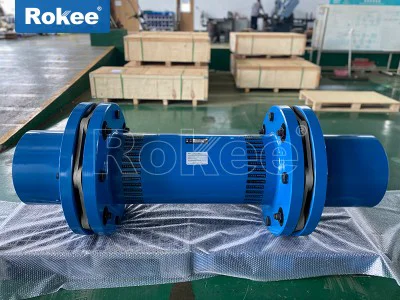
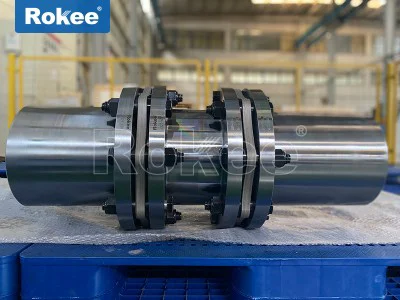
Steel laminae couplings are categorized into distinct varieties based on structural configuration, shaft connection methods, and application-specific design modifications, each tailored to optimize performance for unique operational demands. The most primary classification is based on the number of laminar pack assemblies, dividing the couplings into single-lamina and double-lamina types. Single-lamina steel laminae couplings feature a single set of laminar packs connecting two rigid hubs, resulting in a compact, lightweight design with high torsional rigidity and straightforward installation. However, their misalignment compensation capacity is relatively limited, particularly for angular and radial misalignment, making them ideal for short-distance shaft transmissions with minimal eccentricity, such as small-scale pumps, fans, electric motors, and precision instrumentation. Double-lamina steel laminae couplings, by contrast, integrate two separate laminar pack assemblies linked by an intermediate spacer or shaft, enabling coordinated deformation of both laminar sets to deliver enhanced multi-directional misalignment compensation. Their angular displacement capacity is roughly double that of single-lamina models, and they excel at handling larger radial and axial deviations, making them the preferred choice for long-wheelbase transmissions, high-speed rotating machinery, and systems with significant operational misalignment, such as large industrial fans, compressors, turbines, and generator sets.
Beyond the single and double-lamina classification, these couplings are further differentiated by the shaft-hub connection mechanism, with three dominant variants: keyway-type, interference-fit, and expansion-sleeve couplings. Keyway-type steel laminae couplings feature standard keyway slots on the hub bores, paired with parallel keys to secure the coupling to the shaft. This design is simple to install and disassemble, cost-effective to manufacture, and compatible with most standard shaft configurations, making it the most widely used type for general industrial applications, including conventional pumps, conveyors, and gearboxes. Interference-fit couplings rely on a tight press-fit between the hub bore and the shaft, eliminating keyways and achieving exceptional concentricity and zero rotational slippage. This design offers enhanced torque transmission capacity and high-speed stability, making it suitable for precision machinery, high-speed spindles, and aerospace equipment where dimensional accuracy and dynamic balance are paramount. Expansion-sleeve couplings utilize keyless expansion locking devices to clamp the hub onto the shaft, avoiding shaft damage from keyway machining and providing excellent centering accuracy and easy disassembly. This variant is engineered for heavy-duty machinery, metallurgical equipment, and mining machinery where shaft integrity is critical and frequent maintenance access is required.
Specialized steel laminae coupling variants have also been developed to meet niche industrial requirements, each featuring customized structural tweaks to enhance specific performance metrics. Step-type laminae couplings incorporate stepped laminar pack designs that boost torsional rigidity and torque-bearing capacity, catering to high-power, heavy-torque transmission scenarios such as large-scale generator sets and heavy-duty reducers. Lightweight composite laminae couplings replace traditional metal intermediate spacers with carbon fiber composite materials, reducing overall weight and rotational inertia to minimize load on drive shafts and bearings, ideal for high-speed, lightweight applications like aerospace components and precision centrifuges. High-speed specialized laminae couplings feature optimized aerodynamic profiles and balanced laminar packs, enabling stable operation at extremely high rotational speeds with minimal vibration, perfect for turbomachinery and high-speed motor drives. Each specialized variant retains the core advantages of standard steel laminae couplings—zero backlash, maintenance-free operation, and environmental resistance—while refining performance to address the unique challenges of specialized industrial processes.
The exceptional combination of structural durability, performance versatility, and operational reliability has cemented steel laminae couplings as a cornerstone component across nearly every major industrial sector, with applications spanning energy production, chemical processing, metallurgy, machinery manufacturing, aerospace, marine engineering, and beyond. In the energy sector, these couplings are integral to power generation systems, including wind turbines, thermal power plants, hydropower facilities, and nuclear power equipment. In wind turbines, they connect the rotor hub to the gearbox and the gearbox to the generator, transmitting high torque while compensating for misalignment caused by wind loads and thermal expansion, ensuring stable power output in variable operating conditions. In thermal power plants, they operate within steam turbine and generator drive systems, withstanding high temperatures and high speeds while maintaining efficient torque transmission. In hydropower facilities, they accommodate shaft misalignment from foundation deformation and water flow-induced vibration, protecting critical turbine and generator components.
In the chemical and petrochemical industry, steel laminae couplings are widely deployed in pumps, compressors, mixers, and reactor drives, where their corrosion resistance and maintenance-free design are invaluable. They resist degradation from corrosive chemicals, acids, and alkalis, eliminate the risk of lubricant contamination of process media, and operate reliably in high-pressure, high-temperature processing environments, ensuring uninterrupted production and compliance with strict quality standards. In the metallurgical industry, these couplings power heavy machinery such as rolling mills, crushers, and continuous casting equipment, enduring heavy loads, extreme vibration, and harsh dust-filled conditions. Their high torque capacity and vibration damping properties stabilize the drive system, preventing equipment failure and ensuring consistent production quality in steel and metal processing operations.
In general machinery manufacturing, steel laminae couplings are ubiquitous in CNC machine tools, machining centers, reducers, small pumps, and fans, leveraging their zero backlash and high precision to enhance machining accuracy and equipment stability. In precision machine tools, they ensure precise rotational transmission between motors and spindles, critical for achieving tight dimensional tolerances in machined parts. In the aerospace and marine sectors, their lightweight design, corrosion resistance, and high reliability meet the stringent performance requirements of aircraft engine drives, marine propulsion systems, offshore pumping equipment, and shipboard machinery. They withstand saltwater corrosion, humidity, and extreme temperature changes in marine environments, and meet strict weight and precision standards for aerospace applications, ensuring safe and efficient operation in mission-critical scenarios. Additionally, these couplings find use in medical equipment, food processing machinery, and new energy systems, where clean, low-vibration, maintenance-free operation is essential, further demonstrating their universal adaptability.
As industrial technology continues to advance toward higher efficiency, precision, and sustainability, the demand for high-performance power transmission components like steel laminae couplings is set to grow. Their ability to balance rigidity and flexibility, resist harsh environments, and operate without ongoing maintenance addresses key pain points in modern mechanical systems, reducing operational costs and improving system reliability. While each variant is engineered for specific applications, the core design principles of steel laminae couplings remain consistent: utilizing the unique properties of high-strength steel laminations to deliver efficient, reliable, and durable power transmission. Whether in small-scale precision equipment or large heavy-duty industrial machinery, steel laminae couplings play a vital role in ensuring the smooth, efficient operation of rotating drive systems, solidifying their status as an essential and irreplaceable component in the global industrial landscape.