Snake Spring Couplings
In the complex landscape of industrial power transmission systems, flexible couplings serve as critical intermediary components that bridge driving and driven shafts, balancing efficient torque delivery, vibration damping, and misalignment compensation. Among these versatile devices, the snake spring coupling stands out as a high-performance mechanical solution, renowned for its robust construction, exceptional load-bearing capacity, and adaptive operational traits. Unlike rigid couplings that offer no flexibility or elastomeric couplings that rely on non-metallic elastic elements prone to wear and degradation, the snake spring coupling leverages precision-engineered metallic serpentine springs to deliver a unique blend of rigidity and flexibility, making it a staple in heavy-duty and high-demand industrial settings.
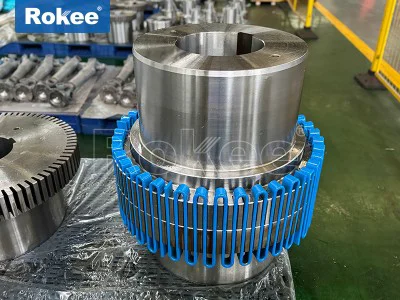
At its core, the snake spring coupling features a streamlined yet durable structural composition, centered around three primary functional modules: two precision-machined half couplings, a set of contoured serpentine spring elements, and a protective housing assembly with sealing components. Each half coupling is crafted from high-strength alloy steel or ductile cast iron, materials selected for their exceptional tensile strength, fatigue resistance, and ability to withstand prolonged mechanical stress. The inner bore of each half coupling is precisely machined to match the diameter of the connected shafts, ensuring a tight, secure fit that prevents slippage during torque transmission, while the outer periphery is carved with specialized, evenly spaced tooth grooves designed to cradle and engage the serpentine springs. These tooth profiles are meticulously engineered to distribute contact pressure evenly across the spring surface, minimizing stress concentrations that could lead to premature material fatigue or component failure. The heart of the coupling lies in the serpentine spring set, formed from high-grade spring steel subjected to specialized heat treatment processes to enhance elasticity, toughness, and wear resistance. The springs are bent into a continuous, wave-like serpentine contour, allowing them to flex and deform dynamically under load while maintaining structural integrity. Completing the structure is the protective housing, typically a split-type metal casing that encloses the spring and half coupling assembly, shielding internal components from external contaminants such as dust, moisture, oil, and debris. Integrated sealing elements, crafted from durable elastomeric materials, are fitted at the junction of the housing and shaft surfaces, creating a tight seal that retains lubricating grease within the assembly, reduces friction between moving parts, and prevents lubricant leakage during operation. This cohesive structural design ensures that the coupling operates smoothly even in harsh industrial environments, with each component working in tandem to facilitate reliable power transmission.
The operational performance of snake spring couplings is defined by a suite of distinctive advantages that set them apart from conventional coupling types, making them ideal for challenging industrial applications. Foremost among these is their exceptional torque transmission capability, characterized by high efficiency and robust overload tolerance. The metallic serpentine springs enable direct, efficient power transfer between the two half couplings, with transmission efficiencies reaching nearly 99% under optimal operating conditions, minimizing energy loss that plagues less efficient coupling designs. Unlike elastomeric couplings that struggle with heavy loads, snake spring couplings can withstand short-term overloads up to two to three times their rated torque capacity, a critical feature for machinery subjected to sudden load spikes or intermittent heavy operation. Equally impressive is their superior vibration and shock absorption performance, a key benefit for equipment prone to torsional vibrations or impact loads. The flexible serpentine springs act as a natural damping mechanism, absorbing and dissipating vibrational energy generated by engine rotation, gear meshing, or sudden load changes, reducing the transmission of harmful vibrations to connected shafts, bearings, and gearboxes. This damping effect not only smoothens operational performance but also extends the service life of adjacent machinery components by reducing wear and tear from constant vibration.
Another pivotal performance trait is the coupling’s ability to compensate for multi-directional shaft misalignments, a common challenge in industrial installation and operation. Manufacturing tolerances, thermal expansion, foundation settling, and mechanical wear often result in slight deviations between driving and driven shafts, and rigid couplings can exacerbate these misalignments, causing excessive stress, noise, and premature failure. Snake spring couplings address this issue effectively, accommodating axial, radial, and angular misalignments within specified ranges without compromising performance. Axial misalignment compensation allows for slight shaft movement along the longitudinal axis, while radial misalignment tolerance handles off-center shaft positioning, and angular compensation accommodates minor shaft angle deviations. This flexibility reduces the precision required for initial shaft alignment, simplifying installation processes, cutting down on setup time, and lowering maintenance costs over the component’s lifespan. Additionally, these couplings exhibit excellent durability and low maintenance requirements, thanks to their all-metal construction (excluding sealing elements) that resists aging, deformation, and chemical degradation better than non-metallic alternatives. With proper lubrication and periodic inspection, snake spring couplings can deliver consistent performance over extended operational hours, making them a cost-effective long-term solution for industrial power transmission systems.
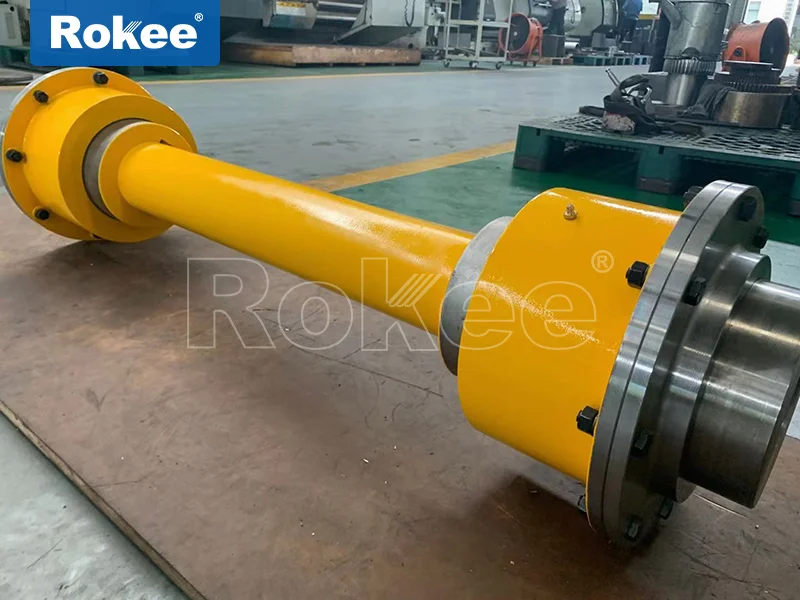
Snake spring couplings are categorized into multiple distinct types, each tailored to specific operational requirements, installation scenarios, and equipment configurations, with classifications primarily based on housing design, connection style, functional add-ons, and operational speed. The most common classification revolves around housing installation and structural configuration, encompassing several core variants that dominate industrial usage. The standard radial installation type represents the basic, widely utilized variant, featuring a horizontally split housing that is installed radially around the spring and half coupling assembly. This design offers straightforward assembly and disassembly, making it suitable for general-purpose industrial applications where routine maintenance access is a priority. Complementing this is the axial installation type, which features a solid, non-split housing installed axially along the shaft; this variant provides enhanced structural rigidity and sealing performance, ideal for applications with limited radial space or higher environmental contamination risks. For scenarios requiring extended shaft connections or bridging larger gaps between driving and driven equipment, the intermediate shaft type is employed, integrating a dedicated intermediate shaft between the two half couplings to accommodate longer transmission distances without sacrificing performance.
Further classification is based on functional integration and connection mechanisms, catering to specialized industrial equipment needs. Flanged variants, including single-flange and double-flange types, feature integrated flange plates on the half couplings, enabling direct, secure bolted connection to flanged shafts or equipment hubs, enhancing installation stability and load distribution for heavy machinery. For applications involving braking systems, specialized variants with integrated brake wheels or brake discs are available, merging the coupling’s power transmission function with reliable braking capabilities to streamline equipment design and reduce component clutter. High-speed operational variants are engineered to meet the demands of high-rotational-speed machinery, featuring balanced components, optimized spring profiles, and precision machining to minimize centrifugal force effects, reduce noise, and maintain stable performance at elevated speeds. Safety-focused variants incorporate built-in overload protection mechanisms, designed to disengage or slip momentarily under extreme overload conditions, preventing catastrophic damage to the coupling and connected equipment during sudden load surges or mechanical jams. Beyond these structural classifications, snake spring couplings can also be differentiated by material specifications, with standard alloy steel variants for general industrial use and corrosion-resistant materials for harsh environments involving moisture, chemicals, or salt exposure, ensuring adaptability to diverse operational conditions.
The versatility of snake spring couplings, stemming from their robust structure and exceptional performance, translates to extensive adoption across nearly every heavy industrial sector, where reliable, high-efficiency power transmission is non-negotiable. In the mining and quarrying industry, these couplings are integral to the drivetrains of crushing equipment, grinding mills, conveyors, and hoisting machinery, where they withstand heavy impact loads, continuous vibration, and abrasive operating conditions, ensuring uninterrupted material processing and handling. The metallurgical and steelmaking sector relies heavily on snake spring couplings for rolling mills, continuous casting machines, forging equipment, and metal processing machinery, where they endure extreme thermal fluctuations, high torque demands, and constant heavy loads, maintaining stable power delivery for precision metal forming and processing operations. In the power generation industry, both conventional thermal power plants and renewable energy facilities utilize these couplings to connect turbines, generators, large water pumps, and auxiliary equipment, leveraging their vibration damping and misalignment compensation features to protect critical power generation components and enhance operational reliability.
Heavy construction machinery, including excavators, cranes, bulldozers, and concrete mixing equipment, also depends on snake spring couplings for durable power transmission, as these components can withstand the rugged, off-road operating conditions, sudden load changes, and mechanical shocks inherent to construction sites. The petrochemical and chemical processing industries employ specialized corrosion-resistant snake spring variants for pumps, compressors, mixers, and conveyor systems, where they resist chemical degradation and maintain performance in environments with corrosive gases, liquids, or particulate matter. Marine and shipbuilding applications utilize these couplings for propulsion systems, deck machinery, and auxiliary shipboard equipment, capitalizing on their ability to compensate for shaft misalignments caused by hull flexing and withstand the humid, saline marine environment. Additional industrial applications span paper manufacturing, textile machinery, cement production, and transportation equipment, where snake spring couplings deliver consistent performance in both continuous and intermittent operation modes. Whether used in low-speed, high-torque heavy machinery or high-speed rotating equipment, these couplings adapt seamlessly to diverse operational demands, proving their value as a versatile, reliable solution for modern industrial power transmission.
Beyond their core industrial applications, snake spring couplings also play a vital role in optimizing overall system efficiency and reducing operational costs for businesses. By minimizing vibration transmission, they reduce wear on bearings, gears, and shafts, lowering the frequency of component replacements and unplanned downtime, a critical factor in maintaining production continuity and profitability. Their misalignment compensation capability eliminates the need for ultra-precise shaft alignment during installation, reducing labor costs and setup time, while their durable, low-maintenance design cuts down on routine servicing expenses. As industrial technology continues to advance and machinery designs become more complex, the demand for high-performance, adaptable power transmission components like snake spring couplings is poised to grow. Manufacturers continue to refine structural designs, material formulations, and manufacturing processes to enhance performance further, expanding operational ranges, and improving compatibility with next-generation industrial equipment. In an era where industrial efficiency, reliability, and longevity are paramount, the snake spring coupling remains a cornerstone component, embodying the perfect synergy of structural robustness, flexible performance, and practical adaptability to meet the evolving needs of global industrial operations.
In summary, the snake spring coupling represents a pinnacle of flexible power transmission design, merging sturdy metallic construction with dynamic elastic performance to address the most pressing challenges of industrial shaft connection. Its well-engineered structural components work in harmony to deliver exceptional torque transmission, vibration damping, and misalignment compensation, while its diverse classifications ensure a tailored solution for every operational scenario. From heavy mining and metallurgical equipment to precision power generation and marine machinery, its widespread industrial applications underscore its versatility and reliability. As a critical enabler of efficient, durable power transmission, the snake spring coupling continues to be an indispensable asset in modern industrial systems, supporting seamless operations, protecting valuable machinery, and driving productivity across countless manufacturing and processing sectors worldwide.