Metal Diaphragm Couplings
In the intricate landscape of mechanical power transmission systems, couplings stand as indispensable connecting components that bridge driving and driven shafts, facilitating seamless torque transfer while addressing the inevitable misalignments arising from manufacturing tolerances, installation deviations, thermal expansion, and operational load deflection. Among the diverse spectrum of flexible coupling variants, the metal diaphragm coupling emerges as a high-performance, versatile solution, distinguished by its reliance on thin, resilient metallic diaphragms as the core flexible elements. Unlike conventional coupling designs that depend on lubricated friction pairs, elastomeric materials prone to aging, or gear meshing structures with inherent backlash, metal diaphragm couplings integrate rigid torque transmission and flexible misalignment compensation into a single, compact assembly, delivering exceptional reliability, precision, and durability across demanding operational scenarios.
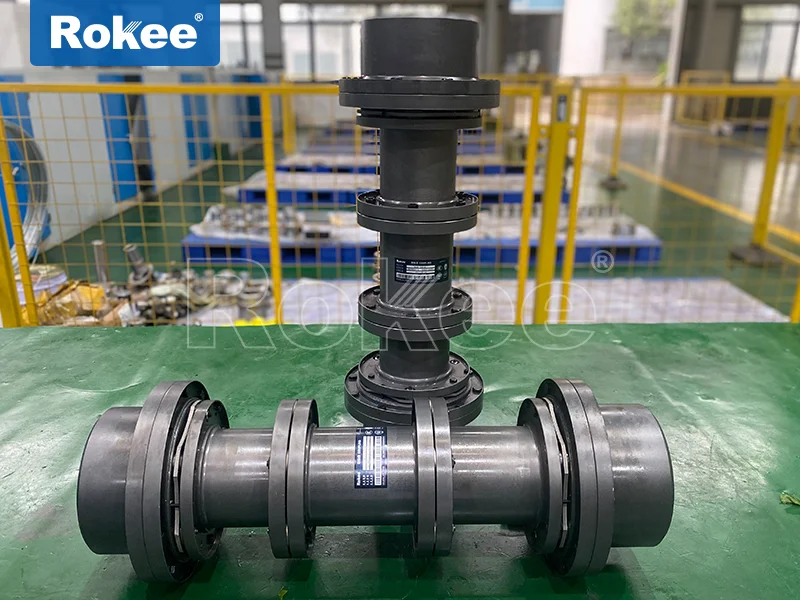
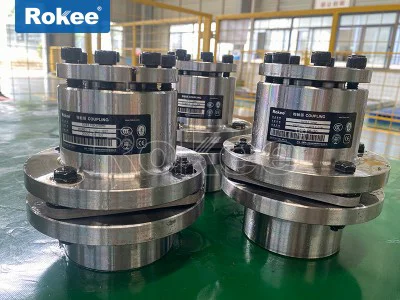
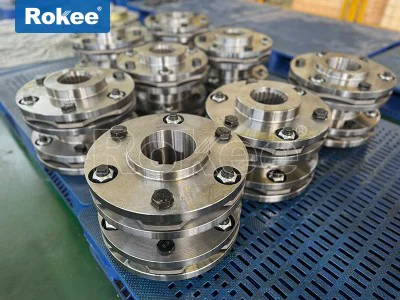
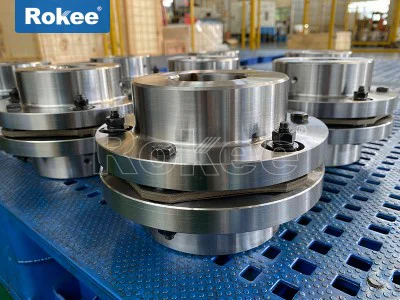
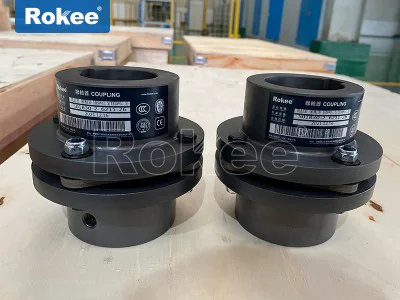
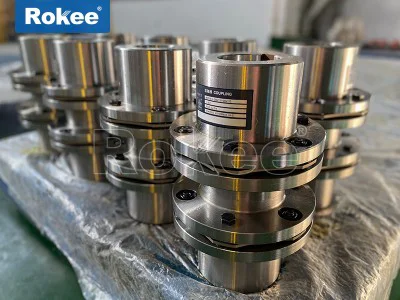
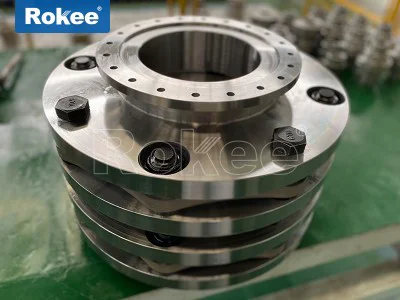
At its core, the metal diaphragm coupling features a streamlined yet meticulously engineered structural framework, centered on three fundamental components: the diaphragm assembly, shaft hubs, and connecting fasteners. The diaphragm assembly, the heart of the coupling, is typically fabricated from high-strength, ductile metallic sheets—most commonly stainless steel, with specialized superalloys employed for extreme high-temperature or corrosive environments. These thin diaphragms are often stacked in multiple layers to enhance fatigue resistance and load-bearing capacity, with precision-machined contours that enable controlled elastic deformation under torsional and misalignment loads. The shaft hubs, crafted from carbon steel, alloy steel, or lightweight aluminum alloy, serve as the interface between the coupling and the rotating shafts, featuring precision bore diameters and keyway or clamping structures to ensure secure, backlash-free shaft fixation. Connecting fasteners, including high-strength bolts and washers, securely clamp the diaphragm assembly between the two hubs, creating a rigid torque transmission path while allowing the diaphragms to flex elastically to accommodate shaft misalignments. Unlike gear couplings or elastomeric couplings, metal diaphragm couplings eliminate sliding or rolling contact surfaces, eradicating friction wear, lubrication requirements, and the risk of fluid contamination, a design trait that underpins their long service life and low maintenance demands.
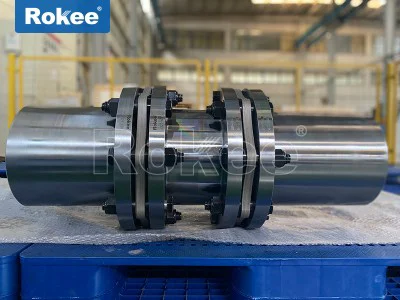
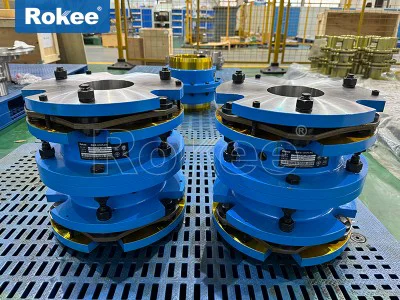
The structural integrity of metal diaphragm couplings is further refined by two primary layout configurations: single-diaphragm and double-diaphragm structures, each tailored to distinct operational needs. Single-diaphragm couplings feature a single set of diaphragms directly linking the two shaft hubs, boasting a compact footprint, minimal rotational inertia, and simplified assembly. This design excels in applications with limited installation space and mild misalignment conditions, primarily compensating for angular and axial displacements with moderate efficiency. Double-diaphragm couplings, by contrast, incorporate two separate diaphragm assemblies separated by an intermediate spacer or spool piece, a modification that drastically elevates misalignment compensation capabilities. The dual-diaphragm setup effectively isolates radial, angular, and axial misalignments, reducing reaction forces exerted on adjacent shaft bearings and minimizing stress concentration on the diaphragms. The intermediate spacer can be customized in length to adapt to varying shaft-to-shaft distances, enhancing design flexibility for long-distance power transmission setups. Advanced iterations may feature multi-diaphragm configurations with reinforced rigid segments, further optimizing torque transmission efficiency and misalignment tolerance for heavy-duty, high-speed applications.
The performance characteristics of metal diaphragm couplings are shaped by their unique structural design and material selection, positioning them as a premium choice for precision and heavy-duty power transmission. Foremost among these traits is exceptional torsional stiffness, which ensures minimal torsional deflection under rated loads, enabling precise speed and motion transmission without rotational lag—critical for high-precision machinery such as CNC machine tools, servo drive systems, and robotic assemblies where positional accuracy is paramount. Paired with zero-backlash operation, this stiffness eliminates motion delays and positioning errors, a stark contrast to gear couplings with tooth clearances and elastomeric couplings with inherent compliance. This precision makes metal diaphragm couplings ideal for closed-loop control systems, where consistent, responsive torque transfer is essential for operational stability.
Metal diaphragm couplings also exhibit outstanding misalignment compensation capacity, adept at accommodating three primary types of shaft displacement: angular misalignment (shaft axis inclination), radial misalignment (parallel shaft offset), and axial misalignment (shaft end play). The elastic deformation of the metallic diaphragms absorbs these displacements without compromising torque transmission efficiency, reducing stress on shafts and bearings and extending the service life of the entire transmission system. Compared to traditional flexible couplings, they offer higher angular misalignment tolerance and lower radial reaction forces, minimizing vibration and noise during operation. Additionally, their metallic construction delivers robust environmental adaptability: they operate reliably across a broad temperature range, resist corrosion from chemicals, moisture, and dust, and withstand cyclic loading and minor shock impacts without fatigue failure. The absence of lubrication needs eliminates routine maintenance tasks such as greasing or oil replacement, cutting operational downtime and maintenance costs, while the wear-free design ensures consistent performance over extended service periods.
Another pivotal performance advantage is their high torque-to-weight ratio, enabling efficient torque transmission in a compact, lightweight package. This is particularly valuable for high-speed rotating systems, where excessive rotational inertia can hinder dynamic responsiveness and increase energy consumption. Metal diaphragm couplings maintain stable performance at elevated rotational speeds, with balanced designs that minimize centrifugal force-induced vibration, making them suitable for medium-to-high speed power transmission applications. Their fatigue resistance, enhanced by multi-layer diaphragm stacking and precision machining, ensures prolonged service life even under continuous cyclic loading, a key benefit for 24/7 industrial operations where unplanned downtime incurs significant losses. While they exhibit limited vibration damping compared to elastomeric couplings, their rigid transmission path makes them preferable for applications prioritizing precision over vibration isolation, with supplementary damping measures easily integrated if required.
Metal diaphragm couplings are categorized based on multiple practical criteria, including structural configuration, diaphragm design, installation mode, and application scope, allowing engineers to select the optimal variant for specific operational conditions. The most fundamental classification is based on diaphragm quantity: single-diaphragm, double-diaphragm, and multi-diaphragm couplings, as previously outlined. Single-diaphragm models are cost-effective and compact, suited for light-load, low-misalignment scenarios such as small pumps and precision instruments. Double-diaphragm models dominate general industrial and high-precision applications, balancing misalignment tolerance and torque capacity for versatile use. Multi-diaphragm couplings are engineered for heavy-duty, high-torque scenarios like large-scale compressors and turbine systems, offering superior load-bearing and fatigue resistance.
Classification by installation and connection mode yields two primary types: clamp-type and keyway-type couplings. Clamp-type metal diaphragm couplings use locking screws or hydraulic clamping to fix hubs to shafts, eliminating keyway stress concentration and backlash, enabling quick installation and disassembly without shaft movement—ideal for high-precision, high-speed equipment. Keyway-type couplings rely on traditional key and keyway connections, delivering stable torque transmission for heavy-load, low-to-medium speed applications with high torque impact resistance. Additional classifications include short-span couplings for compact shaft distances and long-span couplings with extended intermediate spacers for distant shaft connections, as well as standard general-purpose couplings and custom-engineered variants tailored to unique operational parameters such as extreme temperatures, corrosive media, or ultra-high speeds.
The versatile performance and structural adaptability of metal diaphragm couplings drive their widespread adoption across nearly all mechanical engineering sectors, addressing diverse transmission challenges with tailored solutions. In general industrial machinery, they are extensively deployed in pumps, fans, compressors, and hydraulic systems, where their corrosion resistance, maintenance-free design, and misalignment compensation ensure stable operation in chemical, metallurgical, and mining environments. For chemical processing equipment, their resistance to corrosive fluids and gases prevents material degradation, while zero leakage eliminates contamination risks, preserving production purity and safety.
In high-precision manufacturing equipment, including CNC machining centers, laser cutting machines, and automated assembly lines, metal diaphragm couplings are irreplaceable. Their zero-backlash, high-torsional stiffness design guarantees micron-level positional accuracy, supporting precise machining and assembly operations that underpin product quality. In aerospace and marine engineering, their lightweight, high-strength construction, high-temperature resistance, and fatigue durability meet stringent reliability standards for aircraft accessory drives, ship propulsion systems, and turbine assemblies, operating flawlessly in extreme vibration, temperature fluctuations, and corrosive marine conditions.
The renewable energy sector increasingly relies on metal diaphragm couplings, particularly in wind turbines and solar power systems. In wind turbines, they connect gearboxes and generators, compensating for misalignments caused by wind-induced vibration and thermal expansion, while their maintenance-free design suits remote offshore and onshore installations where routine upkeep is challenging. In solar thermal systems, they power fluid circulation pumps and tracking mechanisms, withstanding high temperatures and UV exposure for consistent energy conversion efficiency. They also feature prominently in automotive and rail transit applications, integrated into electric vehicle powertrains, diesel locomotive transmission systems, and high-speed rail auxiliary drives, delivering efficient torque transfer, vibration reduction, and long-term durability under dynamic loading.
Beyond these sectors, metal diaphragm couplings serve in textile machinery, printing equipment, food processing machinery, and medical devices, adapting to niche requirements such as clean operation, high-speed rotation, and precision motion control. Their universal applicability stems from a unique blend of precision, reliability, and adaptability, addressing core pain points in power transmission: backlash, wear, maintenance burdens, and misalignment-induced failures. While they may not be the most economical choice for low-load, low-precision, low-speed applications where cost is the sole priority, their long-term value—via extended service life, reduced downtime, and consistent performance—makes them a strategic investment for critical, high-demand systems.
In summary, metal diaphragm couplings represent a pinnacle of flexible coupling engineering, merging robust structural design, premium material properties, and targeted performance optimization to redefine power transmission standards. Their well-crafted structure enables seamless torque transmission and effective misalignment compensation, while their diverse classifications cater to a vast array of operational scenarios, from precision micro-machinery to heavy industrial turbines. As industrial technology advances toward higher precision, efficiency, and automation, the demand for metal diaphragm couplings will continue to surge, with ongoing innovations in materials and manufacturing further enhancing their performance. For mechanical engineers and system designers, a deep understanding of metal diaphragm couplings’ structure, performance, classification, and applications is essential for optimizing transmission system design, elevating equipment reliability, and driving operational efficiency across diverse industrial landscapes.