Jaw Couplings
In the realm of mechanical power transmission, jaw couplings stand as one of the most widely adopted and versatile flexible coupling solutions, serving as a critical bridge between driving and driven shafts across countless industrial and mechanical systems. Unlike rigid couplings that demand perfect shaft alignment and offer no tolerance for operational deviations, jaw couplings strike a balanced blend of torque transmission efficiency, misalignment accommodation, vibration damping, and operational reliability, making them indispensable in scenarios where smooth power delivery and equipment protection are paramount. At their core, jaw couplings are defined by a straightforward yet robust structural design, with performance attributes tailored to diverse operating conditions, and a range of specialized variants that expand their applicability across light-duty, heavy-duty, precision, and high-demand industrial environments.

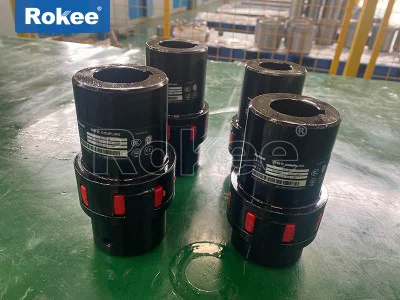
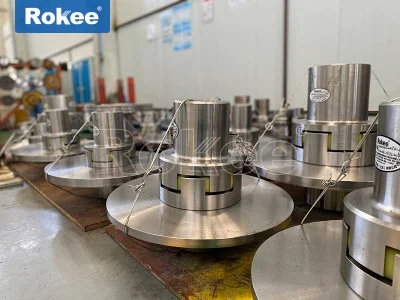
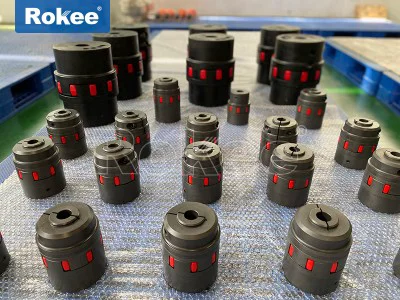
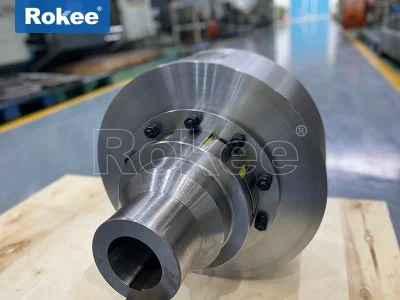
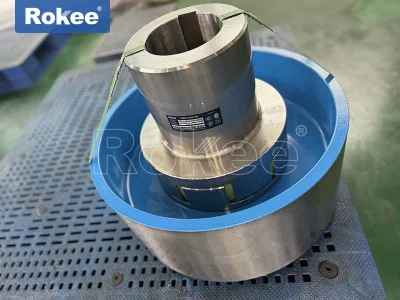
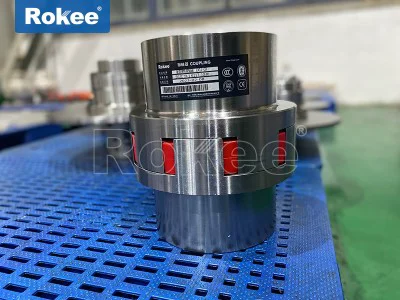
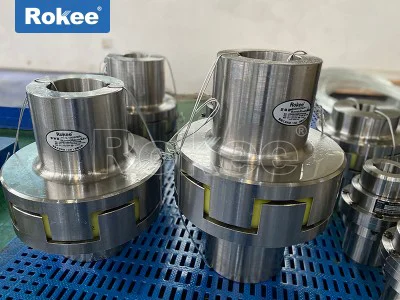
The foundational structure of a standard jaw coupling is elegantly simple, consisting of three primary components that work in tandem to facilitate reliable power transfer: two metallic hubs and an elastomeric insert commonly referred to as a spider. Each metallic hub features a series of evenly spaced, protruding jaws machined to precise tolerances, with the jaws of one hub positioned to interlock with the gaps between the jaws of the opposing hub, creating a secure, intermeshed configuration. The elastomeric spider sits snugly between these interlocking jaws, acting as a flexible buffer that separates the metallic components and bears the compressive forces generated during torque transmission. The hubs are typically crafted from high-strength materials selected based on operational requirements, including carbon steel, stainless steel, cast iron, and aluminum alloy; steel hubs offer exceptional durability and torque capacity for heavy-duty use, aluminum hubs deliver lightweight construction and corrosion resistance for low-inertia or precision systems, cast iron hubs provide cost-effective strength for general industrial applications, and stainless steel hubs excel in corrosive or hygienic operating environments. The elastomeric spider, meanwhile, is manufactured from a variety of polymer materials with varying hardness levels and mechanical properties, such as nitrile rubber, polyurethane, and thermoplastic elastomers, each engineered to deliver specific damping, flexibility, and environmental resistance characteristics. This three-piece modular design not only simplifies manufacturing and assembly but also enables quick replacement of worn elastomeric components without disassembling entire drive systems, reducing maintenance downtime and operational costs significantly.
Beyond their basic structural composition, jaw couplings boast a suite of performance features that set them apart from other flexible coupling types, solidifying their status as a go-to choice for diverse power transmission needs. Foremost among these is their exceptional ability to accommodate multiple forms of shaft misalignment, a common challenge in real-world mechanical systems caused by manufacturing tolerances, installation errors, thermal expansion, foundation settling, or operational wear. Jaw couplings can effectively compensate for angular misalignment, parallel misalignment, and limited axial misalignment, preventing excessive stress on shaft bearings, seals, and connected equipment that would otherwise lead to premature failure. This misalignment tolerance is further enhanced by the flexible elastomeric spider, which deforms slightly under load to absorb positional deviations without compromising torque transmission integrity. Another key performance attribute is superior vibration and shock absorption; the elastomeric insert acts as a natural damper, absorbing sudden load spikes, torsional vibrations, and mechanical shocks generated by start-stop cycles, variable speed operation, or uneven load conditions. This damping effect not only reduces noise levels during operation but also minimizes fatigue stress on drive components, extending the service life of motors, gearboxes, pumps, and other connected machinery.
Jaw couplings also exhibit notable torsional stiffness paired with controlled flexibility, striking an ideal balance between precise power transmission and operational adaptability. Unlike highly flexible couplings that may introduce excessive torsional wind-up under heavy loads, jaw couplings maintain consistent torque delivery with minimal backlash in most standard configurations, ensuring efficient power transfer even under fluctuating load conditions. A particularly valuable performance trait is their fail-safe operational design; in the event that the elastomeric spider wears out, degrades, or fractures under extreme load, the interlocking metallic jaws of the hubs will engage directly, continuing to transmit torque and preventing sudden system shutdown. This fail-safe feature is critical in mission-critical applications where unexpected downtime can lead to significant production losses or safety hazards, though it is important to note that prolonged operation with a failed spider will result in increased vibration, noise, and wear on metallic components, requiring prompt replacement to avoid long-term damage. Additionally, standard jaw couplings operate without the need for lubrication, eliminating the risk of lubricant leakage, reducing routine maintenance tasks, and making them suitable for clean, dry, or sealed environments where lubrication is impractical or undesirable. Their performance is also highly customizable, as varying the material and hardness of the elastomeric spider allows engineers to fine-tune damping capacity, misalignment tolerance, and temperature resistance to match specific operational parameters, from low-speed, high-torque heavy machinery to high-speed precision motion control systems.
While all jaw couplings share the core hub-and-spider design, they are categorized into distinct types based on jaw profile, structural modifications, and specialized performance features, each engineered to address unique operational challenges and application requirements. The most prevalent classification is based on jaw geometry, distinguishing between straight jaw couplings and curved jaw couplings, two variants with divergent performance profiles. Straight jaw couplings feature flat, linear jaw surfaces and are the most common general-purpose design, offering high torque capacity, broad misalignment tolerance, and cost-effective performance for a wide range of standard industrial applications. Their straightforward design allows for easy radial installation and removal of the elastomeric spider, simplifying maintenance, and they excel in systems with moderate speeds, consistent loads, and standard misalignment conditions. Curved jaw couplings, by contrast, feature contoured, curved jaw surfaces that mate with precision-machined lobes on the elastomeric spider, creating a zero-backlash or near-zero-backlash configuration. This design eliminates play between the hubs and spider, making them ideal for precision motion control applications, servo systems, and equipment requiring accurate positioning, such as automated machinery, CNC equipment, and machine vision systems. The curved profile also enhances load distribution across the spider, improving fatigue resistance and enabling operation at higher speeds with reduced vibration, though they typically offer slightly lower absolute torque capacity compared to straight jaw designs of similar size.
Beyond jaw profile variations, jaw couplings are further divided into specialized types tailored to specific operational needs, including standard flexible jaw couplings, high-temperature jaw couplings, corrosion-resistant jaw couplings, split-hub jaw couplings, and shear-style jaw couplings. Standard flexible jaw couplings represent the baseline design, optimized for general industrial use with balanced performance across torque transmission, misalignment accommodation, and vibration damping, suitable for the vast majority of light to medium-duty applications. High-temperature jaw couplings feature heat-resistant elastomeric spiders and thermally stable hub materials, engineered to maintain structural integrity and performance in extreme temperature environments, from high-heat manufacturing processes to low-temperature refrigeration systems, resisting hardening, softening, or degradation that would compromise functionality. Corrosion-resistant jaw couplings utilize stainless steel or coated hub materials paired with chemical-resistant elastomers, designed to withstand exposure to moisture, chemicals, oils, and harsh environmental contaminants, making them suitable for marine, wastewater treatment, chemical processing, and food and beverage production environments. Split-hub jaw couplings feature a two-piece hub design that allows for installation, removal, and maintenance without displacing connected equipment or disturbing shaft alignment, a critical advantage in confined spaces or large-scale systems where full disassembly is impractical or time-consuming. Shear-style jaw couplings represent a non-fail-safe variant, where the elastomeric spider is designed to shear cleanly under excessive overload or shock loads, acting as a mechanical fuse to protect expensive drive components such as motors and gearboxes from damage; while they sacrifice the fail-safe feature, they provide superior overload protection for sensitive equipment in high-risk operational scenarios.
The combination of robust structure, adaptable performance, and diverse type variations enables jaw couplings to serve an extensive array of industrial, commercial, and mechanical applications, spanning nearly every sector that relies on rotational power transmission. In general manufacturing and industrial processing, they are ubiquitous in connecting electric motors to pumps, fans, blowers, compressors, conveyors, mixers, and agitators, handling the moderate to high torque loads and variable operational conditions common in production facilities. Their vibration damping properties make them particularly well-suited for centrifugal pumps, gear pumps, and axial fans, where reducing mechanical stress and noise enhances operational efficiency and equipment lifespan. In the realm of automation and precision machinery, curved jaw zero-backlash variants are extensively used in servo motor drives, CNC machine tools, robotic arms, packaging machinery, printing presses, and textile equipment, where precise motion control, minimal backlash, and smooth power delivery are essential for maintaining product quality and production accuracy. The lightweight, low-inertia design of aluminum alloy jaw couplings further enhances their performance in high-speed automation systems, enabling rapid acceleration and deceleration without compromising responsiveness.
Jaw couplings also play a vital role in heavy-duty industrial sectors, including mining, construction, material handling, and aggregate processing, where robust straight jaw designs with high-torque capacity withstand extreme loads, shock impacts, and harsh operating conditions. Their fail-safe design ensures continuous operation in these rugged environments, preventing costly downtime during critical production cycles. In specialized industries such as food and beverage processing, pharmaceuticals, and cosmetics, corrosion-resistant stainless steel jaw couplings are preferred due to their hygienic properties, resistance to washdown chemicals, and ability to maintain cleanliness in strict sanitary environments. Marine and offshore applications rely on salt-resistant jaw couplings to transmit power in shipboard equipment, including winches, pumps, and ventilation systems, enduring the corrosive effects of seawater and humid marine air. Additionally, jaw couplings find use in HVAC systems, agricultural machinery, power generation equipment, and automotive auxiliary systems, adapting to the unique operational demands of each sector with customizable material and design configurations.
Despite their widespread adoption and robust performance, the effectiveness of jaw couplings is heavily dependent on proper selection, installation, and routine maintenance to maximize service life and operational reliability. Selecting the appropriate type of jaw coupling requires careful evaluation of key operational parameters, including torque requirements, rotational speed, shaft diameter, type and degree of misalignment, operating temperature, environmental conditions, and load characteristics; choosing a coupling with insufficient torque capacity or unsuitable material properties will lead to premature wear, reduced performance, and potential failure. Proper installation involves ensuring precise initial shaft alignment, secure hub mounting to prevent slippage, and correct seating of the elastomeric spider to avoid uneven loading; even minor installation errors can amplify misalignment stress and accelerate component degradation over time. Routine maintenance typically involves regular visual inspections of the elastomeric spider for signs of wear, cracking, hardening, or chemical degradation, as well as checks for loose fasteners, excessive vibration, or abnormal noise during operation. Replacing worn spiders at recommended intervals, before complete failure occurs, preserves the fail-safe functionality and protects metallic hub components from excessive wear. While jaw couplings are inherently low-maintenance, adhering to these basic upkeep practices ensures consistent performance, minimizes unplanned downtime, and maximizes the return on investment for power transmission systems.
In summary, jaw couplings represent a pinnacle of functional simplicity and engineering versatility in mechanical power transmission, combining a straightforward structural design with adaptable performance characteristics to meet the diverse needs of modern mechanical systems. Their core hub-and-spider construction delivers reliable torque transmission, effective misalignment accommodation, and superior vibration damping, while specialized variants address niche requirements ranging from precision motion control to heavy-duty industrial operation and corrosive environment resistance. From small-scale automated machinery to large industrial processing plants, jaw couplings continue to be a preferred solution due to their cost-effectiveness, ease of maintenance, fail-safe reliability, and broad applicability across countless sectors. As industrial technology advances and operational demands become more stringent, the inherent adaptability of jaw couplings ensures they will remain a critical component in power transmission systems, evolving alongside new materials and design innovations to maintain their status as a foundational and indispensable mechanical coupling solution.