Claw Couplings
In the realm of mechanical power transmission, claw couplings stand as one of the most versatile and widely adopted coupling solutions, bridging the gap between rigid torque transmission and flexible misalignment compensation. These components serve as critical intermediaries between driving and driven shafts, facilitating the transfer of rotational force while addressing common operational challenges such as vibration, shaft misalignment, and sudden load shocks. Unlike complex coupling designs that rely on intricate gear systems or hydraulic mechanisms, claw couplings feature a straightforward structural layout that balances durability, ease of use, and functional efficiency, making them a staple in countless industrial and mechanical setups across diverse sectors.
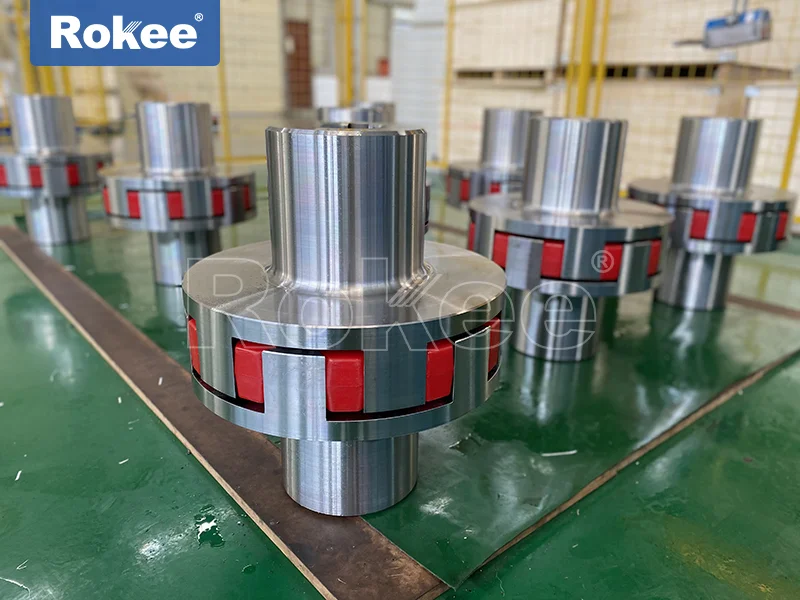
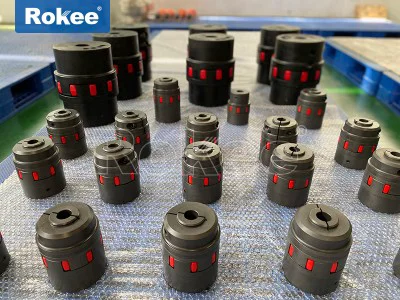
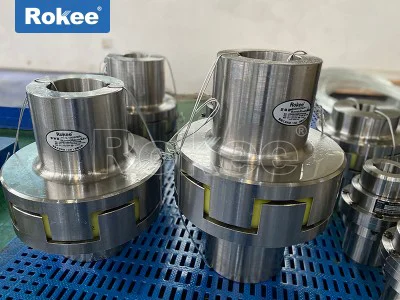
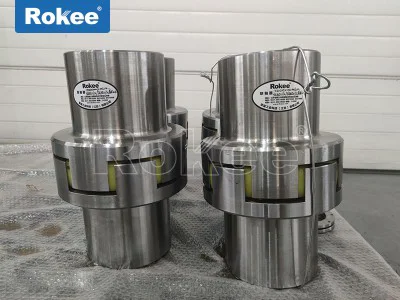
At its core, the standard claw coupling is constructed from two primary rigid hubs and a central elastic or rigid insert, forming a compact, modular assembly that is engineered for seamless shaft integration. Each hub is precision-machined with evenly spaced, interlocking claw-like protrusions around its inner face, designed to mesh with corresponding recesses on the opposing hub without direct metal-to-metal contact in flexible variants. The hubs are typically forged or cast from high-strength metallic materials, with common options including carbon steel, alloy steel, cast iron, and lightweight aluminum alloys, each selected based on the intended load capacity, operating environment, and weight constraints of the application. Carbon steel and alloy steel hubs dominate heavy-duty scenarios, offering exceptional tensile strength and resistance to torsional stress, while aluminum alloy hubs are preferred for lightweight, high-speed applications where reduced inertia and corrosion resistance are prioritized. Cast iron hubs, meanwhile, provide a cost-effective balance of strength and rigidity for moderate-load, low-speed operations, catering to general industrial needs without compromising core functionality.
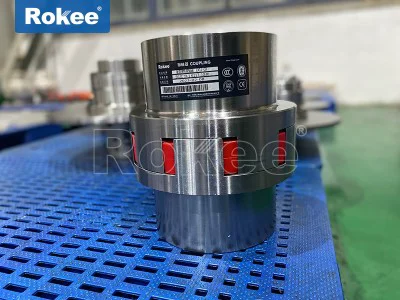
The central element of the claw coupling is the insert, which dictates the coupling’s flexibility, damping capacity, and misalignment compensation abilities. In flexible claw couplings, this insert is crafted from elastomeric materials such as polyurethane, natural rubber, synthetic rubber, or nylon, each engineered to deliver specific performance traits. Polyurethane inserts are the most prevalent, prized for their exceptional wear resistance, tear strength, and ability to withstand moderate temperatures and chemical exposure; they offer reliable vibration damping and moderate flexibility, making them suitable for a wide range of general industrial uses. Rubber inserts, both natural and synthetic, excel in shock absorption and vibration reduction, providing superior compliance for applications with frequent load fluctuations or high vibrational output, though they are more susceptible to degradation from oil, grease, and extreme temperatures. Nylon inserts offer a stiffer flexible option, with high mechanical strength and resistance to abrasion, ideal for applications that require precise torque transmission alongside limited misalignment compensation. In rigid claw couplings, the central insert is omitted entirely, with the claws of the two hubs directly interlocking to create a solid, backlash-free connection optimized for pure torque transfer without flexibility, catering to high-precision machinery where shaft alignment is strictly maintained.
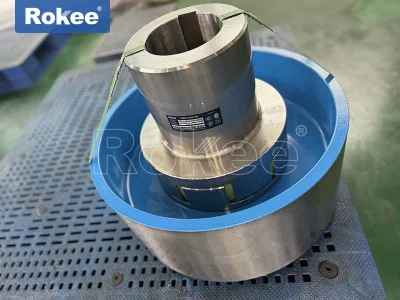
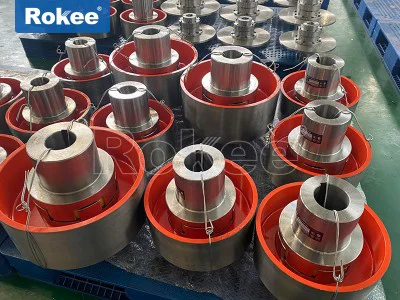
Beyond the hubs and insert, additional secondary components enhance the coupling’s structural integrity and operational safety, though they remain non-intrusive to the core design. Locking mechanisms such as set screws, taper locks, or keyways secure the hubs firmly to the driving and driven shafts, preventing slippage under torsional load and ensuring consistent power transfer. Some variants feature protective outer covers, typically made from durable plastic or sheet metal, that shield the internal claw and insert assembly from dust, debris, moisture, and mechanical damage, prolonging the service life of the coupling in harsh working environments. These covers also enhance operational safety by containing any potential wear debris or failed insert material, preventing contact with moving parts or surrounding equipment. Despite these additional features, the overall structure of a claw coupling remains compact and lightweight, minimizing rotational inertia and reducing stress on connected shafts and bearings, a key advantage that supports efficient power transmission and extended equipment lifespan.
The performance characteristics of claw couplings are shaped directly by their structural design and material selection, setting them apart from other coupling types and defining their suitability for specific applications. One of the most prominent performance traits is their exceptional torsional rigidity paired with tailored flexibility, a rare balance that allows them to transmit high levels of torque efficiently while accommodating minor to moderate shaft misalignments. Flexible claw couplings can compensate for three primary types of shaft misalignment: angular misalignment, radial misalignment, and axial misalignment. Angular misalignment occurs when the two shafts are not perfectly parallel, with their centerlines intersecting at a small angle; radial misalignment refers to the parallel offset of shaft centerlines; and axial misalignment involves slight endwise movement of the shafts along their centerlines. The elastomeric insert in flexible variants deforms elastically to accommodate these misalignments without transmitting excessive stress to the shafts or connected machinery, preventing premature wear on bearings, gears, and other critical components. Rigid claw couplings, by contrast, offer zero misalignment compensation but deliver maximum torsional stiffness and zero backlash, making them indispensable for high-precision motion control applications where positional accuracy is paramount.
Vibration and shock absorption are another cornerstone of claw coupling performance, particularly in flexible models. Industrial machinery and power transmission systems often generate significant vibration and sudden load shocks during operation, which can lead to equipment fatigue, noise pollution, and reduced service life. The elastomeric insert in flexible claw couplings acts as a natural damping medium, absorbing vibrational energy and cushioning sudden torque spikes, effectively isolating the driving and driven components from harmful dynamic forces. This damping capability not only reduces noise levels but also minimizes torsional stress on the entire drive train, enhancing overall system reliability and reducing maintenance requirements. Additionally, claw couplings exhibit excellent fatigue resistance, withstanding repeated cyclic loading without compromising structural integrity; the metallic hubs resist deformation under sustained torsional stress, while high-quality elastomeric inserts maintain their elastic properties over extended periods, even under continuous operation.
Operational versatility is a key performance advantage of claw couplings, as they can adapt to a wide range of operating conditions with minimal adjustment. They are compatible with varying rotational speeds, from low-speed, high-torque heavy machinery to high-speed precision equipment, with performance optimized by selecting the appropriate hub material and insert type. Temperature resistance is another critical factor, with metallic hubs able to withstand extreme high and low temperatures, while elastomeric inserts are formulated to perform reliably within specific temperature ranges tailored to the application. Most claw couplings also exhibit good resistance to common industrial contaminants such as dust, moisture, and mild chemicals, though exposure to harsh chemicals or extreme temperatures may require specialized insert materials to maintain performance. Furthermore, claw couplings are designed for easy installation, maintenance, and replacement; their modular construction allows for quick assembly and disassembly without specialized tools, and worn elastomeric inserts can be replaced independently without removing the entire coupling from the shafts, minimizing downtime and reducing long-term operational costs.
Claw couplings are categorized into distinct types based on multiple criteria, including structural design, flexibility, insert configuration, and intended application, each variant engineered to address specific operational needs. The most fundamental classification distinguishes between flexible claw couplings and rigid claw couplings, as outlined previously, with flexible models being the most widely used due to their multifunctional capabilities. Within the flexible claw coupling category, further differentiation is based on the shape and design of the claw protrusions and the corresponding insert, with straight claw couplings and curved claw couplings being the two primary subtypes. Straight claw couplings feature uniform, rectangular claw protrusions and matching straight-edged inserts, offering a simple, cost-effective design with moderate misalignment compensation and torque transmission capacity; they are ideal for general-purpose applications where operational demands are moderate and cost efficiency is a priority. Curved claw couplings, by contrast, feature contoured, rounded claw protrusions and curved inserts, which distribute torsional load more evenly across the contact surface, reducing stress concentrations and enhancing both torque capacity and misalignment compensation. This design also ensures smoother engagement and disengagement, minimizing wear on the insert and extending service life, making curved claw couplings suitable for more demanding applications with higher loads or greater misalignment.
Another common classification system for flexible claw couplings is based on the structure of the elastomeric insert, with plum-shaped inserts (also known as spider inserts) being the most prevalent. Plum-shaped insert claw couplings, often referred to as jaw-plum couplings, feature a multi-lobed insert that fits snugly between the interlocking claws, providing uniform flexibility and damping across the entire coupling circumference. These are further subdivided by the number of lobes on the insert, such as four-lobed, six-lobed, and eight-lobed variants, each offering unique performance attributes. Four-lobed insert couplings are compact and lightweight, ideal for small-scale, high-speed applications with limited installation space; six-lobed variants strike a balance between torque capacity, flexibility, and size, making them the standard choice for general industrial use; eight-lobed insert couplings offer enhanced load distribution and higher torque transmission, suited for heavy-duty applications with larger shaft diameters and higher operational loads. Additionally, flexible claw couplings can be classified by their mounting configuration, including standard flange-mounted couplings, clamp-style couplings, and keyless locking couplings, each designed to accommodate different shaft connection methods and installation constraints.
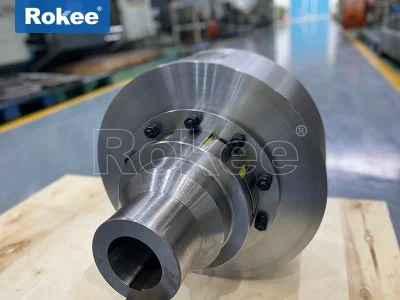
Rigid claw couplings, while less common than flexible variants, have a dedicated category of their own, characterized by their solid, interlocking claw design with no elastic insert. These are further divided into tapered claw couplings and straight claw rigid couplings, with tapered claw models offering self-centering capabilities that ensure precise alignment between the two hubs, enhancing positional accuracy for high-precision machinery. Rigid claw couplings are also classified by their torque capacity and shaft size compatibility, ranging from small-scale precision couplings for instrumentation to heavy-duty rigid couplings for large industrial drive systems. Beyond these primary classifications, specialized claw coupling variants have emerged to meet niche operational needs, including fail-safe claw couplings, which maintain torque transmission even if the elastomeric insert fails, and high-temperature claw couplings, equipped with heat-resistant inserts and hubs for extreme thermal environments. Each type is engineered to refine the core claw coupling design, tailoring its performance to specific industry requirements and operational challenges.
The unique combination of structural simplicity, reliable performance, and adaptable design makes claw couplings indispensable across a vast array of industrial, commercial, and mechanical applications, spanning nearly every sector that relies on rotational power transmission. In the general machinery and manufacturing sector, flexible claw couplings are the go-to choice for connecting motors to pumps, compressors, conveyors, mixers, and fans, where they absorb vibration, compensate for minor shaft misalignment, and protect drive train components from load shocks. Water treatment plants, chemical processing facilities, and agricultural operations rely heavily on these couplings for pump and compressor systems, as their durable construction and resistance to mild contaminants ensure consistent performance in demanding operational environments. In material handling and logistics, claw couplings power conveyor belts, elevators, and packaging machinery, delivering reliable torque transfer while accommodating the slight misalignments that often occur in long-distance drive systems, reducing downtime and maintenance needs.
The automotive and transportation industries also leverage the benefits of claw couplings, particularly in auxiliary systems such as water pumps, fuel pumps, and cooling fans, where compact size, lightweight design, and vibration damping are critical. In heavy-duty automotive and construction equipment, including excavators, loaders, and bulldozers, heavy-duty flexible claw couplings transmit high torque between engines and hydraulic systems, absorbing the extreme vibration and shock generated by off-road operation. The machine tool and precision engineering sector relies on both flexible and rigid claw couplings: flexible variants are used in general machining equipment to reduce vibration and improve surface finish quality, while rigid claw couplings are integrated into high-precision CNC machines, robotic arms, and positioning systems, where zero backlash and maximum torsional rigidity are essential for maintaining positional accuracy and repeatability.
In the power generation and energy sector, claw couplings play a vital role in both conventional and renewable energy systems, connecting turbines, generators, and drive motors in power plants, wind turbines, and hydroelectric facilities. Their ability to withstand high loads, absorb torsional vibrations, and operate reliably in harsh environmental conditions makes them ideal for these critical applications, where equipment failure can have widespread consequences. Small-scale power generation setups, such as portable generators and backup power systems, also utilize compact claw couplings for their ease of installation and reliable performance. Additionally, claw couplings find extensive use in the marine and aerospace industries, where corrosion resistance, lightweight design, and operational reliability are paramount; marine-grade claw couplings, constructed with corrosion-resistant materials, are used in shipboard propulsion systems, winches, and pumping equipment, while aerospace-grade variants power auxiliary systems in aircraft and spacecraft, meeting strict performance and durability standards.
Beyond these core industrial sectors, claw couplings are integrated into a wide range of smaller-scale and specialized applications, including medical equipment, food processing machinery, printing presses, and textile manufacturing equipment. In medical devices, precision claw couplings ensure smooth, vibration-free operation of diagnostic and therapeutic equipment, while in food processing, food-grade compliant variants maintain hygiene standards while delivering reliable power transmission. The adaptability of claw couplings extends to both low-power, precision applications and high-power, heavy-duty operations, a versatility that solidifies their status as a foundational component in mechanical engineering. As industrial technology continues to evolve, the design and material science behind claw couplings are also advancing, with new elastomeric formulations and high-strength metallic alloys enhancing their performance, durability, and environmental resistance. This ongoing innovation ensures that claw couplings will remain a preferred choice for power transmission solutions, offering a cost-effective, reliable, and adaptable option for addressing the ever-changing needs of modern mechanical systems.
In summary, claw couplings represent a masterclass in mechanical design simplicity and functional efficiency, with their well-engineered structure, diverse performance attributes, and wide-ranging types enabling them to meet the unique demands of countless applications. From the basic two-hub and insert assembly to specialized variants tailored for extreme conditions, each claw coupling is designed to deliver consistent torque transmission while addressing key operational challenges such as misalignment, vibration, and shock. Their widespread adoption across industries is a testament to their reliability, versatility, and cost-effectiveness, making them an irreplaceable component in the global landscape of mechanical power transmission. Whether in heavy industrial machinery, high-precision equipment, or small-scale auxiliary systems, claw couplings continue to provide a dependable bridge between driving and driven shafts, ensuring the smooth, efficient, and durable operation of mechanical systems around the world.