Rigid Couplings
In the realm of mechanical power transmission, rigid couplings stand as fundamental and irreplaceable components that serve to connect two rotating shafts firmly, enabling the seamless transfer of torque and rotational motion without any relative movement between the connected parts. Unlike flexible couplings, which are engineered to accommodate shaft misalignment, absorb vibration, and dampen shock loads, rigid couplings prioritize absolute rigidity, zero backlash, and uncompromised torque transmission efficiency, making them indispensable for applications where precision alignment and consistent motion delivery are non-negotiable. These couplings are constructed entirely from rigid materials, typically high-strength metals, with no elastic or movable elements integrated into their design, a feature that defines their core structural performance and dictates their suitable operating environments.
The structural performance of rigid couplings is defined by a set of inherent characteristics that distinguish them from other coupling variants, shaping their functionality and operational limits. Foremost among these is exceptional torsional stiffness, which ensures that the coupling resists twisting deformation even under heavy, sustained torque loads, preserving the precise angular relationship between the driving and driven shafts. This stiffness eliminates any torsional windup, a critical advantage in high-precision machinery where even minor angular displacement can compromise operational accuracy. Additionally, rigid couplings offer zero backlash, meaning there is no clearance or play between the mating components of the coupling and the shafts it connects. This zero-backlash design guarantees instantaneous and synchronous rotation between the two shafts, making rigid couplings ideal for applications requiring precise positioning, repeatable motion, and reverse operation without lag or error. Another key performance trait is high load-bearing capacity, as the solid, one-piece or tightly assembled multi-piece structure distributes torque evenly across the connection point, enabling the coupling to handle substantial static and dynamic torque loads without failure. Furthermore, rigid couplings boast high dimensional stability, maintaining their shape and fit under varying operating temperatures, pressures, and mechanical stresses, which contributes to long-term reliability and consistent performance over extended service life. However, this rigid construction comes with a notable limitation: rigid couplings cannot compensate for any form of shaft misalignment, including radial, angular, or axial misalignment. Even minor deviations in shaft alignment can induce excessive stress on the coupling, shafts, and adjacent bearings, leading to premature wear, noise, vibration, and catastrophic component failure, making precise installation and alignment mandatory for all rigid coupling applications.
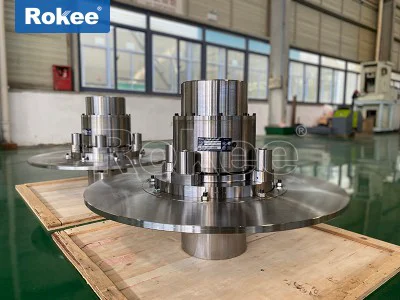
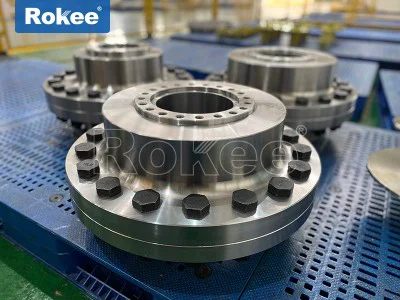
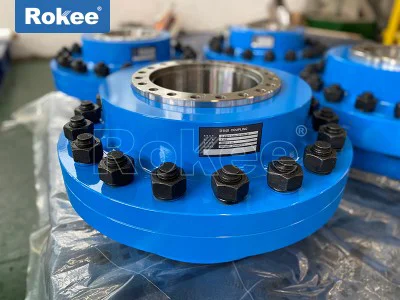
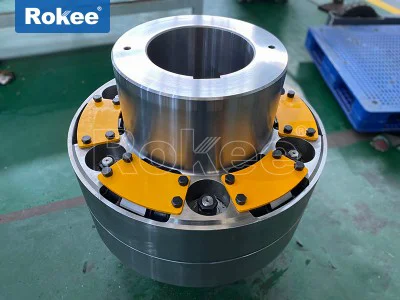
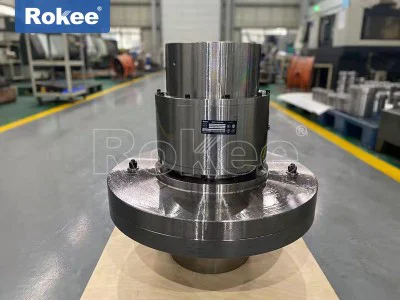
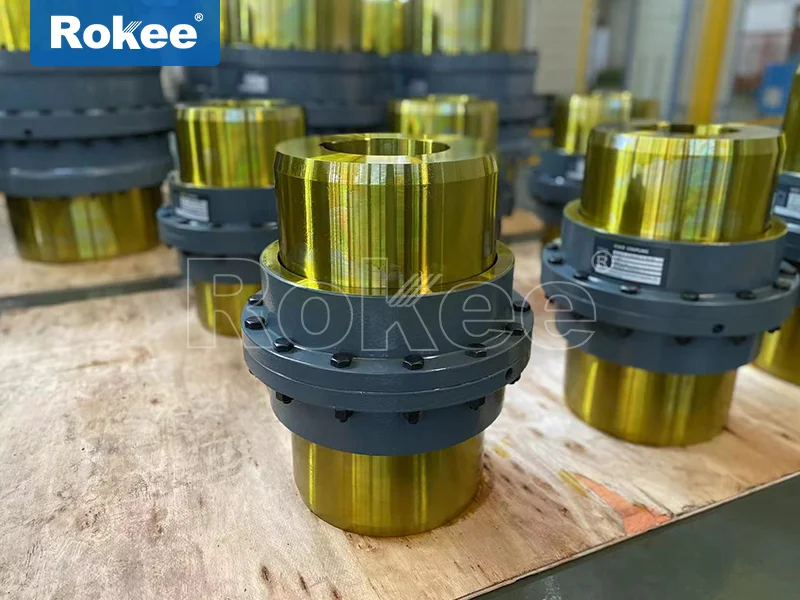
Rigid couplings are categorized into several distinct types based on their structural design, assembly method, and connection mechanism, each tailored to specific operational requirements, space constraints, installation scenarios, and torque transmission demands. One of the most prevalent and widely used types is the flange rigid coupling, which consists of two separate flanged hubs that are mounted onto the ends of the two shafts to be connected, then secured together using high-strength fasteners. The flanged hubs feature precision-machined contact surfaces and alignment features, such as spigot-and-socket joints or machined pilot bores, that ensure perfect concentricity between the two shafts during assembly. Flange couplings are renowned for their robust construction, exceptional torque transmission capability, and ability to handle heavy-duty operating conditions, making them suitable for large-scale industrial machinery and high-load power transmission systems. The solid, rigid connection created by flange couplings minimizes stress concentrations and maximizes load distribution, though they require careful alignment during installation and are relatively bulky compared to other rigid coupling types, limiting their use in compact or space-restricted setups.
A second common type is the sleeve or muff rigid coupling, the simplest and most compact variant of rigid couplings, characterized by a single hollow cylindrical sleeve that fits over the adjacent ends of the two shafts. The sleeve is secured to the shafts via keys, set screws, or taper pins, creating a fixed, rigid connection that transmits torque through frictional and mechanical engagement. Sleeve couplings feature a minimal radial footprint, making them perfect for applications with limited radial installation space, such as small-scale machinery, precision instruments, and light-duty transmission systems. Their straightforward design also translates to straightforward manufacturing and lower material complexity, though they lack the heavy-duty load capacity of flange couplings and are best suited for low-to-moderate torque applications. A notable drawback of sleeve couplings is their assembly and disassembly process, which typically requires axial movement of the shafts or adjacent equipment, making them less practical for systems where frequent maintenance or component replacement is necessary.
Clamp or split rigid couplings represent a third major category, designed to address the installation and maintenance limitations of solid sleeve couplings while retaining core rigid coupling performance. These couplings are constructed with two or more split halves that clamp tightly around the shaft ends when fastened together, eliminating the need for axial shaft movement during installation or removal. The split design allows technicians to mount or dismount the coupling without disturbing the shaft positioning or adjacent components, a significant advantage in complex machinery, confined workspaces, and systems requiring routine upkeep. Clamp couplings utilize clamping forces to create a frictional grip on the shafts, often supplemented with keyways for enhanced torque transmission, balancing ease of installation with reliable rigidity and zero backlash. Available in one-piece split, two-piece, and three-piece configurations, these couplings offer versatility to suit different shaft sizes, alignment needs, and maintenance frequencies. Two-piece clamp couplings are the most widely adopted in this category, striking a balance between structural rigidity and installation convenience, while three-piece variants provide added flexibility for systems where partial disassembly of the transmission line is required without disrupting shaft alignment.
Beyond these primary types, there are specialized rigid coupling designs engineered for niche applications, including tapered rigid couplings, which feature tapered bores that create a tight interference fit with tapered shaft ends for enhanced torque transfer and resistance to axial movement; square and hex bore rigid couplings, designed to connect non-circular shafts and deliver slip-free torque transmission; and compact precision rigid couplings, manufactured to extremely tight tolerances for use in high-precision motion control systems. Each specialized variant retains the core performance traits of rigid couplings—rigidity, zero backlash, and efficient torque transfer—while adapting to unique shaft geometries, space limitations, or precision requirements, expanding the versatility of rigid couplings across diverse industrial and mechanical applications.
The selection of a specific rigid coupling type is dictated by a combination of operational factors, including torque load magnitude, shaft size and geometry, installation space, alignment feasibility, maintenance frequency, and environmental operating conditions. Rigid couplings, in general, are exclusively deployed in systems where shaft alignment can be consistently maintained at a high level of precision, with no significant misalignment caused by thermal expansion, mechanical settling, or operational stress. Their unique performance attributes make them the preferred choice for a vast array of applications across multiple industries, where precision, efficiency, and reliability are paramount. In the precision manufacturing and machining industry, rigid couplings are extensively used in machine tool spindles, ball screw drives, and CNC machine coordinate axis transmissions, where zero backlash and precise rotational synchronization are critical for achieving tight tolerances, smooth surface finishes, and accurate part positioning. The high torsional stiffness of rigid couplings ensures that machining operations remain consistent, even under heavy cutting loads, eliminating motion lag and ensuring repeatable performance.
In the automation and robotics sector, rigid couplings play a vital role in servo motor and stepper motor assemblies, connecting motor shafts to gearboxes, lead screws, and robotic arm joints. The zero-backlash design of these couplings enables precise motion control and positional accuracy, essential for automated assembly lines, pick-and-place systems, and robotic manipulation tasks that demand flawless repeatability and rapid direction changes. Additionally, rigid couplings are widely utilized in material handling equipment, such as conveyor systems and packaging machinery, where steady torque transmission and reliable shaft connection are necessary to maintain continuous, uninterrupted operation with minimal downtime.
Heavy industrial applications also rely heavily on rigid couplings, particularly in power generation equipment, large pumps, compressors, and generator sets, where high torque loads and robust performance are required. Flange rigid couplings, with their exceptional load-bearing capacity, are the go-to choice for these heavy-duty systems, providing a durable and secure shaft connection that can withstand the harsh operating conditions of industrial plants, including high temperatures, heavy vibrations, and continuous operation. Rigid couplings are also employed in precision test stands, laboratory instrumentation, and medical devices, where dimensional stability, zero backlash, and consistent performance are critical for accurate data collection, diagnostic testing, and delicate operational procedures. Furthermore, they find use in food and beverage processing equipment, pharmaceutical manufacturing machinery, and other hygienic industrial applications, where their smooth, non-porous metal construction and low-maintenance design align with strict cleanliness and operational reliability standards.
Proper installation, alignment, and routine maintenance are essential to maximize the performance and service life of rigid couplings, mitigating the risks associated with their inability to compensate for misalignment. Before installation, technicians must thoroughly inspect the coupling and shaft surfaces for defects, burrs, or contaminants, ensuring a clean, precise fit between the coupling and shafts. Alignment checks using precision tools, such as dial indicators or laser alignment devices, are mandatory to verify that radial, angular, and axial deviations are kept within the minimal allowable limits, typically a fraction of a millimeter. During assembly, fasteners must be tightened to the specified torque values in a sequential, cross-pattern manner to ensure even clamping force and avoid distortion of the coupling or uneven stress distribution on the shafts. Post-installation, a manual rotation check should be performed to confirm smooth, unobstructed rotation with no binding or resistance.
While rigid couplings are inherently low-maintenance due to their lack of wearable or elastic components, regular inspections are necessary to sustain optimal performance. Scheduled checks should include monitoring for loose fasteners, signs of wear or corrosion on the coupling and shaft surfaces, abnormal vibration, or excessive noise during operation. Any detected issues, such as minor alignment shifts or fastener loosening, should be addressed promptly to prevent progressive damage to the transmission system. In environments with high humidity, abrasive contaminants, or corrosive substances, protective coatings or corrosion-resistant materials for the rigid coupling can extend its service life and preserve structural integrity.
In summary, rigid couplings are foundational components in mechanical power transmission, valued for their unparalleled rigidity, zero-backlash operation, high torque capacity, and exceptional reliability. Their diverse structural types—from robust flange couplings and compact sleeve couplings to versatile clamp couplings—offer tailored solutions to meet the unique demands of various applications, spanning precision machining, industrial automation, heavy machinery, and specialized high-precision equipment. While their strict alignment requirements limit their use to systems with stable shaft positioning, their performance benefits make them indispensable for applications where precision, efficiency, and consistent motion transfer are non-negotiable. As industrial technology continues to advance toward higher precision, greater automation, and heavier operational loads, the role of rigid couplings remains critical, with ongoing refinements in materials, manufacturing tolerances, and design further enhancing their performance and expanding their applicability across modern mechanical engineering and power transmission systems. Selecting the appropriate rigid coupling type, adhering to strict installation and alignment protocols, and implementing routine maintenance practices are key to harnessing the full potential of these components and ensuring the long-term efficiency, reliability, and safety of mechanical transmission systems.