Brake Drum Gear Couplings
In the realm of mechanical power transmission, the brake drum gear coupling stands as a highly versatile and robust component that merges the core functions of torque transmission and braking control into a single integrated unit, eliminating the need for separate braking attachments and streamlining the overall shaft assembly design. Unlike standard gear couplings that solely focus on transferring rotational force between driving and driven shafts, this specialized coupling integrates a precision-engineered brake drum into its structural framework, making it indispensable for machinery systems that demand reliable power delivery alongside efficient, responsive stopping mechanisms. Crafted from high-strength forged alloy steel or durable carbon steel to withstand heavy operational loads, the brake drum gear coupling is engineered to balance rigidity for torque transfer and flexibility for misalignment compensation, addressing common challenges in industrial drive systems such as shaft misalignment, shock loads, and the need for rapid deceleration. Its design philosophy centers on durability, efficiency, and multifunctionality, positioning it as a staple in heavy-duty and precision mechanical applications across diverse industrial sectors.
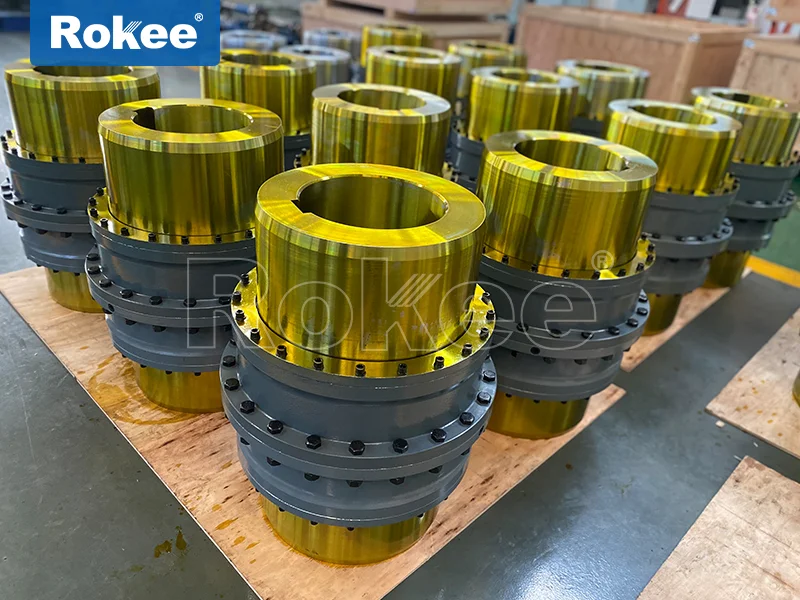
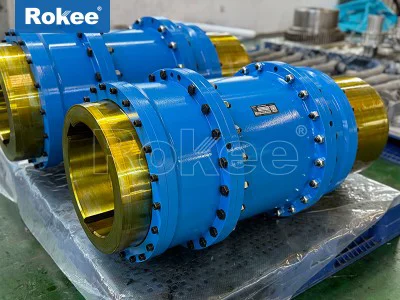
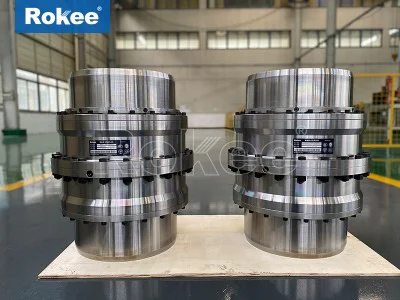
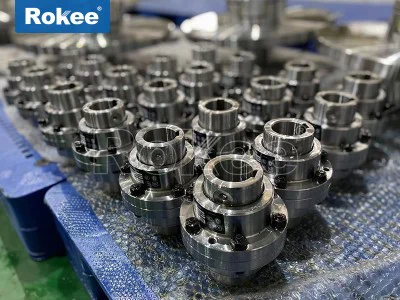
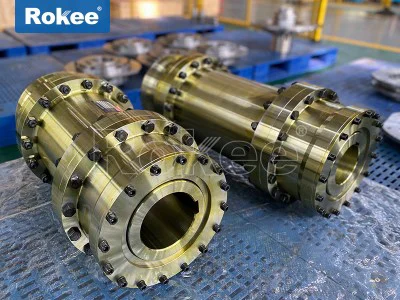
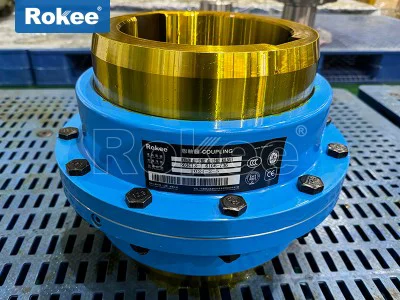
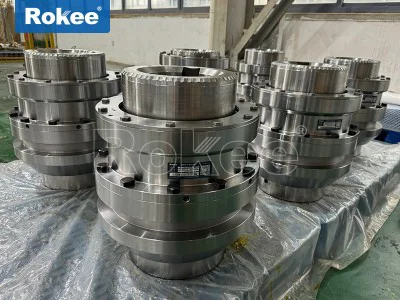
At its core, the structural composition of the brake drum gear coupling is a meticulously designed assembly of interlocking components, each serving a critical role in ensuring seamless operation and long service life. The primary structural elements include two gear hubs, an outer drum assembly that doubles as the braking surface, meshing curved gear teeth, and sealing components to protect internal mechanisms from contaminants. The gear hubs are the foundational connection points, designed with precision-machined bores and keyways to securely mount onto the input and output shafts of driving and driven equipment; these hubs are fitted with external curved gear teeth, often referred to as crown gear teeth, which feature a spherical profile to enhance misalignment tolerance and reduce edge stress during meshing. The outer drum, a cylindrical and rigid component, encases the meshing gear teeth and features a smooth, hardened outer surface optimized for frictional braking interaction with brake shoes or pads. This dual-purpose drum not only facilitates braking operations but also shields the internal gear teeth from dust, moisture, debris, and other environmental contaminants that could accelerate wear and compromise performance. The internal meshing mechanism consists of internal gear teeth integrated into the inner circumference of the outer drum, which mate precisely with the external crown teeth on the gear hubs; this curved tooth design is a defining feature, as it distributes contact stress evenly across the tooth surfaces, unlike straight-cut gear teeth that are prone to concentrated stress and premature failure. Complementing these core parts are sealing elements, typically high-quality gaskets or labyrinth seals, positioned at the junction between the gear hubs and outer drum to retain lubrication within the gear mesh and prevent external particulates from entering, preserving the integrity of the lubricating film and reducing friction-induced wear. Additionally, fastening components such as high-tensile bolts secure the drum assembly and gear hubs together, ensuring structural stability even under extreme torsional loads and cyclic operating conditions.
The performance attributes of the brake drum gear coupling are tailored to meet the rigorous demands of industrial drive systems, combining the strengths of traditional gear couplings with enhanced braking functionality to deliver a comprehensive power transmission solution. One of its most prominent performance features is exceptional torque transmission capacity, enabled by the large contact area of the curved gear teeth and high-strength material construction, allowing it to handle heavy radial, axial, and torsional loads without deformation or failure. This high torque density makes it suitable for low-speed, heavy-duty applications where substantial power transfer is required, a trait that sets it apart from lighter, elastomer-based couplings that lack the same load-bearing capabilities. Equally important is its superior misalignment compensation ability, a critical performance metric in real-world mechanical setups where perfect shaft alignment is rarely achievable. The curved crown tooth design permits controlled angular, radial, and axial misalignment between connected shafts without generating excessive reactive forces, reducing stress on adjacent bearings, shafts, and gearboxes and minimizing premature component failure. This flexibility also dampens transient shock loads and vibration that occur during startup, shutdown, or sudden load changes, protecting sensitive drive components and extending the operational lifespan of the entire machinery system.
In terms of braking performance, the integrated brake drum provides a stable, high-friction surface that ensures consistent, controlled deceleration and stopping, even under full operational loads. The drum’s hardened surface resists wear, heat buildup, and warping during repeated braking cycles, maintaining reliable braking efficiency over extended periods and eliminating the need for frequent resurfacing or replacement. The coupling also exhibits excellent rotational balance, minimizing vibration and noise during high-speed operation, a key advantage for systems that require smooth, quiet running. Furthermore, it boasts low maintenance requirements, thanks to its sealed construction and wear-resistant materials; periodic lubrication of the gear mesh is the primary upkeep task, with no need for complex adjustments or component replacements under normal operating conditions. Its robust build also grants it strong resistance to harsh operating environments, including exposure to dust, moisture, oil, and moderate temperature fluctuations, making it suitable for both indoor industrial facilities and outdoor work sites. Unlike fragile transmission components that degrade quickly in challenging conditions, the brake drum gear coupling retains its structural integrity and performance characteristics, ensuring consistent operation with minimal downtime.
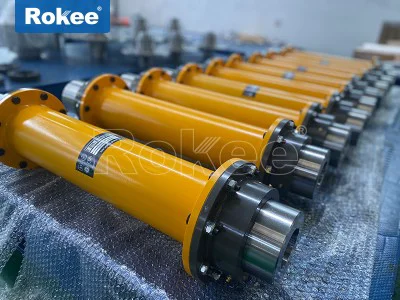
Brake drum gear couplings are available in several distinct types, each engineered to cater to specific operational requirements, installation constraints, and braking system configurations, with classifications primarily based on structural design, braking interface, and application-specific features. The most common variant is the standard single brake drum gear coupling, featuring a single integrated brake drum positioned centrally between the two gear hubs; this is the most widely used type, ideal for general-purpose applications with standard shaft spacing and basic braking needs, offering a compact footprint and straightforward installation. It is designed for compatibility with conventional shoe brakes, making it a versatile choice for a broad range of general industrial machinery. A second prominent type is the extended shaft brake drum gear coupling, equipped with an intermediate shaft or connecting pipe between the gear hubs and brake drum to accommodate larger distances between driving and driven shafts. This variant is engineered for systems where shaft separation exceeds standard limits, eliminating the need for additional coupling components and maintaining consistent torque transmission and braking performance across extended distances, commonly used in conveyor systems, long drive shafts, and overhead material handling equipment.
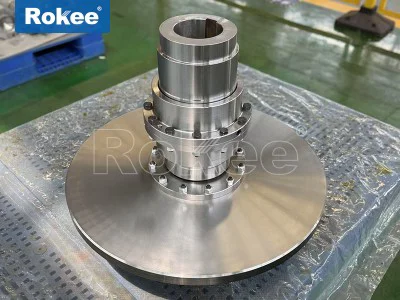
Another specialized classification is the split brake drum gear coupling, featuring a two-piece or segmented brake drum design that simplifies installation, removal, and maintenance without requiring disassembly of entire shaft assemblies or adjacent equipment. This type is particularly valuable in confined spaces or complex machinery setups where full coupling access is limited, reducing maintenance time and labor costs significantly. Additionally, there are brake drum gear couplings optimized for disc brake integration, featuring a modified drum or integrated brake disc interface to work seamlessly with disc braking systems instead of traditional shoe brakes; this variant delivers faster, more precise braking response, making it suitable for high-speed machinery or applications requiring immediate stopping. There are also heavy-duty reinforced variants, constructed with thicker drum walls, larger gear teeth modules, and higher-grade alloy materials to handle extreme torsional loads and heavy shock conditions, typically deployed in mining, construction, and heavy manufacturing equipment where standard couplings would fail under excessive stress. Each type retains the core performance benefits of the brake drum gear coupling—high torque capacity, misalignment compensation, and reliable braking—while adapting to unique operational scenarios, ensuring there is a suitable variant for nearly every industrial drive system requirement.
The unique combination of torque transmission, misalignment compensation, and integrated braking functionality makes the brake drum gear coupling a vital component across a wide spectrum of industrial applications, spanning heavy machinery, material handling, manufacturing, and specialized mechanical systems. One of the primary application areas is material handling equipment, including overhead cranes, gantry cranes, hoists, and conveyor systems; in these setups, the coupling connects motor shafts to gearboxes or drive rollers, providing reliable power transfer for lifting, moving, and transporting heavy loads while enabling quick, safe braking to prevent load slippage or equipment runaway. The ability to handle shock loads during startup and sudden stops is especially critical here, as it protects both the machinery and the materials being handled from damage.
In the mining and quarrying industry, brake drum gear couplings are extensively used in crushers, mills, conveyors, and drilling equipment, where they endure extreme heavy loads, continuous operation, and harsh environmental conditions. Their robust construction and high torque capacity make them capable of withstanding the abrasive dust, heavy shock loads, and repetitive braking cycles inherent to mining operations, ensuring uninterrupted performance in demanding work environments. Similarly, in the construction sector, they are employed in concrete mixers, asphalt pavers, compactors, and lifting machinery, providing the necessary power transmission and braking control for on-site construction equipment that operates under variable loads and frequent stops and starts.
Manufacturing and industrial production machinery also rely heavily on these couplings, including metalworking equipment, rolling mills, machine tools, and packaging lines. In metal rolling mills, for example, the coupling handles the high torque required for shaping metal sheets while enabling precise braking to control material feed rates, ensuring production accuracy and efficiency. In machine tools, it delivers smooth power transmission and responsive braking to maintain machining precision, reducing vibration and enhancing the quality of finished parts. Additionally, they are used in marine and port equipment, such as winches, capstans, and dockside cranes, where reliable braking and torque transfer are essential for safe marine operations, as well as in agricultural machinery, including harvesters, threshers, and large irrigation systems, where they power heavy agricultural equipment and provide reliable stopping control in field operations.
Beyond these core sectors, brake drum gear couplings find utility in pump and compressor systems, fan drives, and various other industrial drive assemblies where integrated braking and robust power transmission are required. Their adaptability to different shaft sizes, load capacities, and braking systems further expands their applicability, making them a go-to choice for mechanical engineers designing reliable, efficient drive systems. Unlike specialized components that serve only a single purpose, the multifunctional design of the brake drum gear coupling optimizes machinery layout, reduces component count, and lowers overall operational costs, all while enhancing system safety and performance.
In summary, the brake drum gear coupling represents a pinnacle of functional mechanical design, seamlessly merging torque transmission, misalignment compensation, and braking control into a single, durable unit. Its well-engineered structural components, including curved crown gear teeth, hardened dual-purpose brake drum, and sealed protective housing, deliver exceptional performance characteristics such as high torque capacity, shock absorption, low wear, and reliable braking. With a diverse range of types tailored to specific operational needs—from standard compact designs to extended shaft, split, and heavy-duty variants—it caters to a vast array of industrial applications, from material handling and mining to manufacturing and construction. As industrial machinery continues to evolve toward greater efficiency, compactness, and reliability, the brake drum gear coupling remains an essential and irreplaceable component, offering a practical, high-performance solution for critical power transmission and braking requirements across global industrial operations. Its enduring popularity stems not only from its functional versatility but also from its ability to withstand the rigors of heavy industrial use, providing consistent performance, minimal maintenance, and long-term value for machinery operators and manufacturers alike.