Double Diaphragm Couplings
In the realm of modern mechanical power transmission, the double diaphragm coupling stands out as a high-performance flexible coupling that integrates structural rationality, operational stability and environmental adaptability, serving as a critical component for connecting two rotating shafts and transmitting torque while accommodating various forms of shaft misalignment. Unlike rigid couplings that lack flexibility and many elastomeric couplings that rely on wear-prone non-metallic components, the double diaphragm coupling utilizes thin, high-strength metal diaphragms as its core elastic elements, delivering a unique combination of zero backlash, high torque capacity, maintenance-free operation and long service life. This coupling has gradually replaced traditional coupling types in numerous industrial sectors, becoming an indispensable part of precision transmission systems, high-speed power units and heavy-duty mechanical equipment.

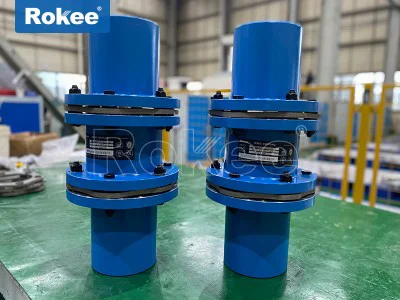
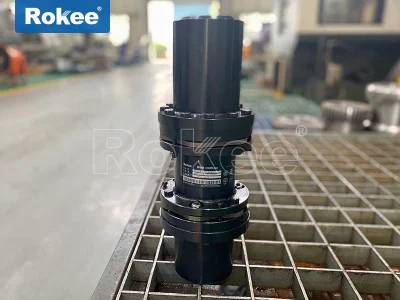
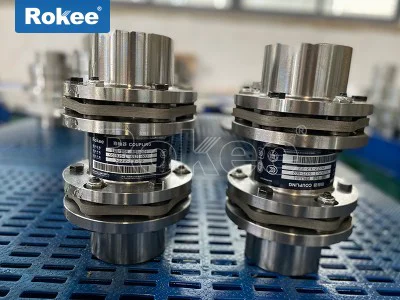
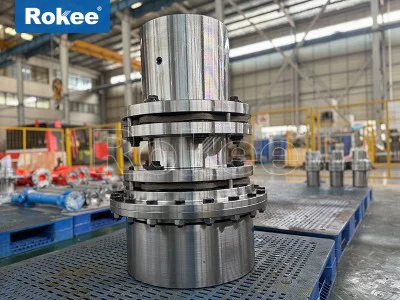
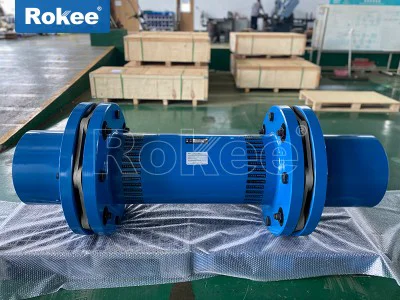
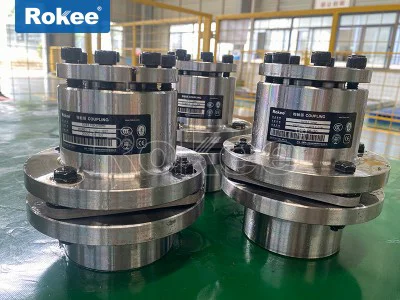
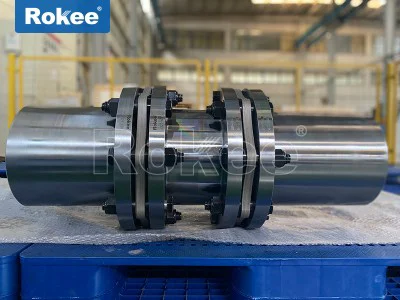
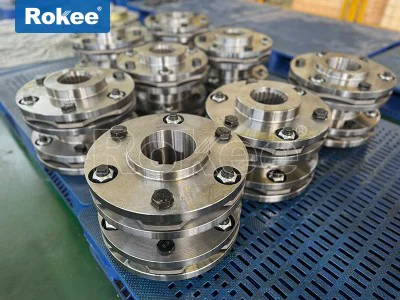
At its core, the double diaphragm coupling features a streamlined yet robust structural design, composed of a limited number of precision-engineered components that work in synergy to achieve efficient torque transmission and misalignment compensation. The primary constituents include two sets of metal diaphragm groups, two hubs (or shaft sleeves) for connecting with the driving and driven shafts, a central spacer (in most standard configurations) and a set of high-precision connecting bolts. The metal diaphragm groups are the heart of the coupling, typically fabricated from multiple layers of thin, high-quality stainless steel sheets stacked together; this multi-layer design enhances the overall elasticity and fatigue resistance of the diaphragm, enabling it to withstand repeated bending and torsional stresses without premature failure. Each diaphragm group is securely fastened to the corresponding hub and the central spacer via precision bolts, with a staggered bolt arrangement often employed to distribute stress evenly across the diaphragm surface, minimizing stress concentration at bolt holes and extending the service life of the elastic elements. The hubs, designed to interface with the shaft ends of mechanical equipment, come in various connection configurations to suit different shaft types and installation requirements, such as keyway connections, clamping connections, taper sleeve connections and expansion sleeve connections, ensuring a tight, backlash-free fit between the coupling and the shafts. The central spacer, positioned between the two diaphragm groups, serves to separate the two sets of diaphragms, allowing each diaphragm to deform independently and thereby significantly boosting the coupling’s ability to compensate for combined shaft misalignments, including angular, radial and axial displacements. This distinct dual-diaphragm structure sets it apart from single diaphragm couplings, as the latter can only accommodate limited misalignment and struggles with complex, multi-directional shaft deviations that are common in real-world industrial installations.
The working principle of the double diaphragm coupling is rooted in the elastic deformation properties of the metal diaphragms, which enable it to fulfill two core functions simultaneously: reliable torque transmission and effective misalignment compensation. When the driving shaft rotates, torque is transferred from the driving hub to the first diaphragm group via the connecting bolts, then passes through the central spacer to the second diaphragm group, and finally reaches the driven hub and the driven shaft to complete power transmission. During this process, if there is any misalignment between the driving and driven shafts—whether it is angular misalignment caused by installation errors, radial misalignment due to shaft deflection or thermal expansion, or axial misalignment resulting from mechanical vibration or temperature changes—the thin metal diaphragms undergo controlled elastic bending and stretching. This controlled deformation absorbs the relative displacement between the two shafts without generating excessive additional loads on the shaft bearings, which is crucial for protecting adjacent mechanical components and ensuring the stable operation of the entire transmission system. Notably, the deformation of the diaphragms is purely elastic and reversible, meaning the coupling can resume its original shape once the misalignment is adjusted, and it can withstand cyclic misalignment loads over extended periods without permanent damage or performance degradation. This operational mechanism eliminates the need for relative sliding between components, a common source of wear and energy loss in gear couplings and elastomeric couplings, laying the foundation for the double diaphragm coupling’s exceptional performance metrics.
The performance advantages of the double diaphragm coupling are multifaceted, making it suitable for a broad spectrum of operating conditions and industrial environments. First and foremost, it boasts zero backlash transmission, a critical attribute for precision-driven applications where positional accuracy and rotational synchrony are paramount. The rigid metal-to-metal connection between the diaphragms, hubs and bolts eliminates any play in the transmission chain, ensuring that rotational motion is transferred instantaneously and accurately from the driving shaft to the driven shaft without lag or deviation. This feature makes it highly sought-after in precision machinery, servo systems and automated production lines that require tight motion control. Secondly, the coupling exhibits exceptional torque transmission efficiency, typically exceeding 99% under normal operating conditions, with minimal energy loss due to friction or deformation. This high efficiency not only reduces energy consumption but also minimizes heat generation during operation, allowing the coupling to perform reliably even under continuous high-load conditions. Thirdly, it offers superior misalignment compensation capability compared to single diaphragm and many other flexible couplings; the dual-diaphragm design with a central spacer can accommodate larger angular, radial and axial displacements simultaneously, reducing the strictness of shaft alignment requirements during installation and lowering the risk of equipment failure caused by installation inaccuracies or operational thermal changes.
Another key performance highlight is its maintenance-free operation, a significant benefit that reduces operational costs and downtime for industrial enterprises. Unlike gear couplings that require regular lubrication and seal replacement to prevent wear and corrosion, or elastomeric couplings that need periodic replacement of worn rubber or plastic components, the double diaphragm coupling has no sliding parts, no lubrication needs and no consumable elements. The stainless steel diaphragms are resistant to wear, corrosion and fatigue, enabling the coupling to operate continuously for years without routine maintenance, provided it is installed correctly and operated within its design parameters. Additionally, the coupling demonstrates excellent environmental adaptability, functioning stably across a wide temperature range, from extreme low temperatures in cryogenic applications to high temperatures in thermal processing equipment. It also exhibits strong resistance to corrosive substances, oil contamination, dust and moisture, making it suitable for harsh industrial environments such as chemical processing plants, offshore drilling platforms, mining operations and marine engineering. Furthermore, the double diaphragm coupling features a compact, lightweight structure with a low moment of inertia, which reduces the load on the driving and driven shafts and allows for higher operating speeds. It also delivers effective vibration and noise reduction, as the elastic diaphragms absorb mechanical vibrations generated during operation, dampening shock loads and minimizing noise emission, creating a smoother and quieter operating environment for the entire transmission system. In terms of safety, the coupling offers a degree of overload protection; in the event of a sudden torque overload or excessive misalignment beyond its design capacity, the diaphragms will deform or fail gradually rather than shattering abruptly, preventing catastrophic damage to the connected equipment and allowing for safe shutdown and maintenance.
Double diaphragm couplings are classified into various types based on structural design, connection methods, application scenarios and performance specifications, each tailored to meet distinct operational requirements and installation conditions. One of the most common classification criteria is based on structural configuration, which divides the couplings into standard double diaphragm couplings and extended spacer double diaphragm couplings. Standard double diaphragm couplings feature a short central spacer, making them compact and ideal for applications with limited installation space and moderate shaft separation distances; they are widely used in small to medium-sized mechanical equipment such as pumps, fans and compressors. Extended spacer double diaphragm couplings, on the other hand, are equipped with a longer central spacer, enabling them to bridge larger gaps between the driving and driven shafts, making them suitable for scenarios where shaft separation is significant, such as large-scale industrial machinery, turbine generator sets and long-distance transmission systems. Another important classification is based on the hub connection type, which directly impacts the ease of installation, disassembly and adaptability to different shaft ends. Keyway-connected double diaphragm couplings are the most conventional type, utilizing keys and keyways to transmit torque, offering a secure and stable connection suitable for heavy-load, low-to-medium speed applications. Clamping-type couplings use clamping screws to fasten the hub to the shaft, eliminating the need for keyways and preventing damage to the shaft surface; they are easy to install and disassemble, making them perfect for precision equipment and applications requiring frequent maintenance. Taper sleeve and expansion sleeve connections provide a high-torque, self-centering connection, distributing pressure evenly across the shaft surface to avoid stress concentration, ideal for high-speed, high-torque transmission systems such as motor-driven machinery and turbine units.
Classifications can also be made based on application-specific design features, including general-purpose double diaphragm couplings, high-speed double diaphragm couplings and heavy-duty double diaphragm couplings. General-purpose models are designed for standard industrial operating conditions, balancing performance and cost to meet the needs of most common mechanical transmission systems, with moderate torque capacity, speed limits and misalignment compensation. High-speed models are engineered with precision dynamic balancing and optimized diaphragm contours to minimize vibration and ensure stable operation at extremely high rotational speeds, making them suitable for high-speed rotating equipment such as centrifugal compressors, turbochargers and high-speed spindles. Heavy-duty models feature thicker, reinforced diaphragm groups and robust hubs and bolts, engineered to transmit extremely high torque values and withstand heavy impact loads, catering to large-scale heavy machinery in sectors like metallurgy, mining and power generation. Additionally, some double diaphragm couplings are designed with specialized features for unique environments, such as corrosion-resistant coatings for chemical applications, high-temperature-resistant materials for thermal processing equipment and sealed structures for dust-prone or wet industrial sites, further expanding their versatility across diverse operating conditions.
The combination of robust structure, exceptional performance and diverse classifications enables the double diaphragm coupling to find extensive applications across nearly all branches of modern industry, addressing the transmission needs of equipment ranging from small precision instruments to large heavy-duty machinery. In the general industrial machinery sector, it is widely used in pump systems, including centrifugal pumps, chemical pumps, boiler feed pumps and sewage pumps, where its corrosion resistance, zero backlash and maintenance-free design ensure reliable fluid delivery in various industrial processes. It is also a staple in fan systems, such as industrial ventilation fans, cooling tower fans and air circulation fans, leveraging its vibration damping and noise reduction capabilities to enhance operational stability and reduce environmental noise. Compressors, including air compressors, refrigeration compressors and gas compressors, also rely on double diaphragm couplings for efficient torque transmission and misalignment compensation, ensuring consistent performance under variable load conditions.
In the energy and power industry, double diaphragm couplings play a pivotal role in power generation equipment, including steam turbines, water turbines, gas turbines and generator sets. These applications demand high-speed, high-torque transmission with minimal energy loss and maximum reliability, and the coupling’s ability to withstand high operating speeds, thermal expansion-induced misalignment and continuous heavy loads makes it the optimal choice for connecting turbine shafts and generator shafts. In the oil and gas sector, it is utilized in drilling equipment, oil pipelines, pumping units and refining machinery, where its resistance to corrosion, oil and harsh outdoor conditions ensures uninterrupted operation in demanding upstream and downstream operations. The metallurgical industry also heavily relies on double diaphragm couplings for rolling mills, continuous casting machines, crushers and other heavy-duty equipment, where the heavy-duty variants deliver exceptional torque capacity and impact resistance to endure the harsh, high-load operating environment of metal processing.
In the realm of precision manufacturing and automation, double diaphragm couplings are indispensable components of high-precision machinery, including CNC machine tools, industrial robots, servo motors, printing machinery and textile machinery. The zero backlash and high positional accuracy of these couplings ensure precise motion control, which is critical for achieving tight tolerances in machining, automated assembly, high-resolution printing and high-speed textile production. In aerospace and marine engineering, lightweight, high-strength double diaphragm couplings are used in aircraft transmission systems, shipboard propulsion units and marine auxiliary machinery, where their compact design, corrosion resistance and high reliability meet the stringent performance requirements of these critical industries. Furthermore, they are employed in various special-purpose equipment, such as food processing machinery, pharmaceutical equipment and environmental protection machinery, where their hygienic, maintenance-free and non-contaminating properties align with the strict operational standards of these sectors.
Despite its numerous advantages, the performance and service life of a double diaphragm coupling are highly dependent on correct selection, proper installation and reasonable operation. Selecting the appropriate type and specification requires a comprehensive assessment of factors such as transmitted torque, operating speed, shaft misalignment magnitude, shaft diameter, installation space and environmental conditions; choosing an undersized coupling can lead to premature failure, while an oversized one increases unnecessary costs and space occupation. During installation, precise shaft alignment is crucial to ensure that misalignment remains within the coupling’s design limits, as excessive misalignment will cause excessive diaphragm stress and accelerated fatigue. Bolts must be tightened to the specified torque in a diagonal, sequential manner to ensure even pressure distribution, and all components should be inspected for damage or defects prior to assembly. During operation, avoiding prolonged overloads, sudden shock loads and exposure to extreme conditions beyond the coupling’s design capabilities is essential to prevent diaphragm damage and maintain long-term reliability. Regular inspections for diaphragm cracks, bolt looseness and abnormal vibration or noise can help identify potential issues early, preventing costly equipment downtime and repairs.
In summary, the double diaphragm coupling represents a pinnacle of flexible coupling design, merging structural simplicity with exceptional functional performance. Its unique dual-diaphragm structure enables efficient torque transmission and superior misalignment compensation, while its metal-based construction delivers zero backlash, maintenance-free operation, environmental resilience and long service life. The diverse classifications of double diaphragm couplings cater to the varied needs of different industrial applications, from small precision automation equipment to large heavy-duty power transmission systems. As industrial technology continues to advance toward higher precision, higher efficiency and greater reliability, the demand for double diaphragm couplings is set to grow further, with ongoing refinements in material science and structural design continuing to enhance their performance and expand their application scope. As a critical link in mechanical power transmission systems, the double diaphragm coupling will remain a key component driving the efficiency and stability of modern industrial machinery, solidifying its position as an indispensable element in the global manufacturing and engineering landscape.