Flexible Gear Couplings
In the realm of mechanical power transmission, flexible gear couplings stand as indispensable components that bridge the gap between driving and driven shafts, addressing the inherent challenges of shaft misalignment, torque transmission, and operational vibration in diverse industrial machinery. Unlike rigid couplings that demand perfect shaft alignment and offer no tolerance for positional deviations, flexible gear couplings are engineered to combine robust torque-carrying capacity with controlled flexibility, making them a cornerstone of reliable and efficient drive systems across countless manufacturing and processing sectors. At their core, these couplings operate on the principle of gear meshing paired with intentional design clearances and geometric modifications, enabling them to transmit rotational power smoothly while accommodating multiple forms of shaft displacement that arise from manufacturing tolerances, thermal expansion, operational wear, and dynamic loading. This unique blend of rigidity and flexibility sets them apart from other flexible coupling variants, positioning them as ideal solutions for heavy-duty, high-torque, and high-speed applications where precision and durability are non-negotiable.
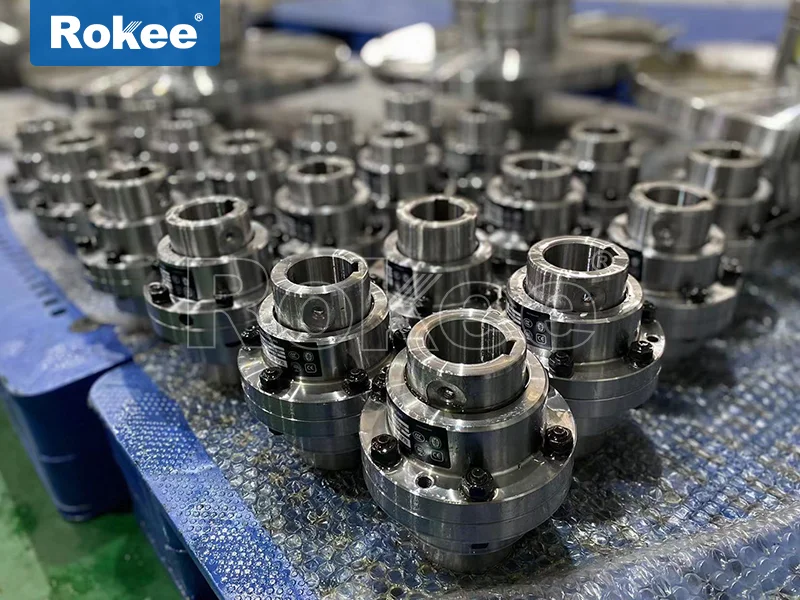
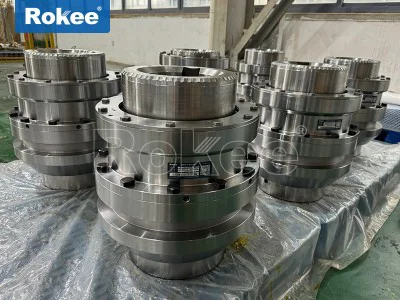
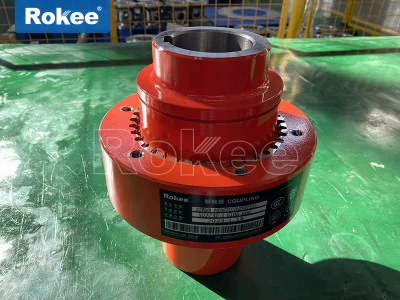
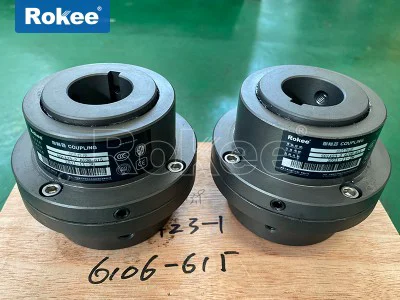
The fundamental structural composition of a flexible gear coupling is relatively straightforward yet meticulously engineered to optimize performance and longevity. Typically, a standard flexible gear coupling consists of two hub assemblies, each fitted with external gear teeth, and two sleeve components with internal gear teeth that mesh with the external teeth on the hubs. The hubs are securely mounted onto the driving and driven shafts via keyways, clamping mechanisms, or interference fits, creating a stable connection that prevents slippage during torque transmission. The critical design feature that grants flexibility lies in the profile of the gear teeth: most high-performance flexible gear couplings feature crowned external teeth on the hubs, with the curvature centered along the axis of the gear, paired with straight internal teeth on the sleeves. This crowned tooth design creates a spherical meshing interface, allowing the hubs to pivot and shift relative to the sleeves within a controlled range, thereby compensating for angular, parallel, and axial misalignment between the two shafts. Additionally, the coupling is often enclosed with sealing elements—such as gaskets, O-rings, or labyrinth seals—to retain lubrication and prevent the ingress of dust, moisture, and abrasive contaminants, which are major contributors to premature tooth wear and component failure. Some advanced designs also incorporate spacer elements or intermediate shafts between the two gear sets, extending the overall length of the coupling to suit applications where shafts are separated by a significant distance, without compromising flexibility or torque transmission efficiency.
Beyond their structural design, the performance attributes of flexible gear couplings are tailored to meet the rigorous demands of industrial operations, with key characteristics that define their suitability for specific applications. Foremost among these is exceptional torque transmission capability: the metal-to-metal gear meshing ensures efficient power transfer with minimal energy loss, boasting transmission efficiencies that often exceed 99% under optimal operating conditions. This high efficiency, combined with the ability to handle both steady and fluctuating torque loads, makes these couplings well-suited for heavy machinery that generates substantial rotational force, from large industrial pumps to heavy-duty conveyors and rolling mills. Another pivotal performance trait is misalignment compensation; unlike rigid couplings that transfer misalignment-induced stress directly to shafts, bearings, and gearboxes, flexible gear couplings absorb these deviations through the relative movement of meshed gear teeth, reducing mechanical stress on connected components and extending the service life of the entire drive system. They can accommodate moderate to high levels of angular misalignment, parallel offset, and axial end float, eliminating the need for ultra-precise shaft alignment during installation and reducing maintenance requirements over time.
Durability and resilience are also hallmarks of flexible gear coupling performance, especially when constructed from high-grade alloy steels or carbon steels that offer excellent tensile strength, wear resistance, and fatigue life. These materials withstand the cyclic loading and repetitive meshing forces that occur during continuous operation, resisting deformation, cracking, and tooth breakage even in harsh working environments. Furthermore, while flexible gear couplings do require periodic lubrication to reduce friction between meshing teeth and prevent overheating, their robust construction means they can operate reliably for extended intervals between maintenance checks, provided the sealing system remains intact. It is important to note that performance can be fine-tuned through design modifications, such as adjusting tooth pitch, crowning radius, and material hardness, to align with specific operational parameters like rotational speed, torque magnitude, and environmental conditions. For instance, couplings designed for high-speed applications feature balanced gear assemblies to minimize vibration and noise, while those intended for extreme heavy-duty use have reinforced tooth profiles and thicker cross-sections to handle peak torque loads without failure.
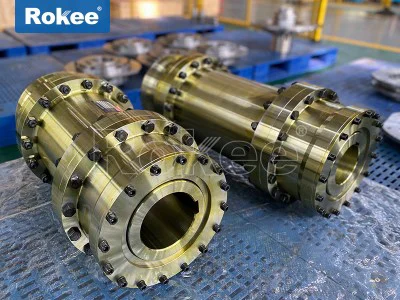
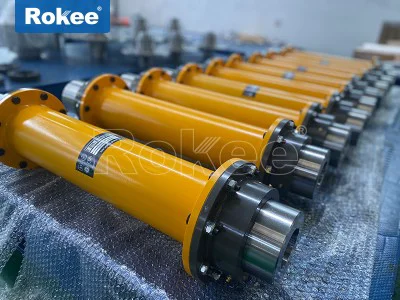
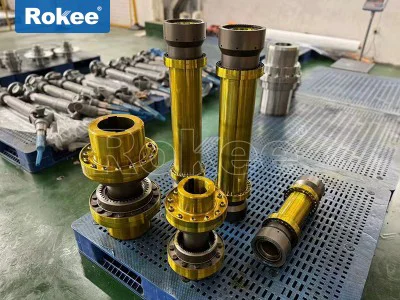
Flexible gear couplings are available in a diverse range of types, each engineered to address unique operational requirements, spatial constraints, and misalignment scenarios, with classifications primarily based on structural configuration, flexibility range, and application-specific features. The most common category is the standard full-flexible gear coupling, which consists of two identical gear sets (hub-sleeve assemblies) and is designed to compensate for combined angular, parallel, and axial misalignment; this is the most versatile variant, widely used in general industrial applications where moderate misalignment is present. A variation of this is the half-flexible gear coupling, which features one flexible gear set and one rigid connection, offering limited flexibility primarily for angular misalignment and suited for applications where shaft alignment is relatively consistent but minor deviations still occur. For applications requiring increased distance between driving and driven shafts, extended-length flexible gear couplings with intermediate shafts or spacer sleeves are available; these maintain the same flexibility and torque capacity as standard models while bridging larger gaps, making them ideal for machinery with spaced shaft arrangements such as long conveyor systems and remote drive units.
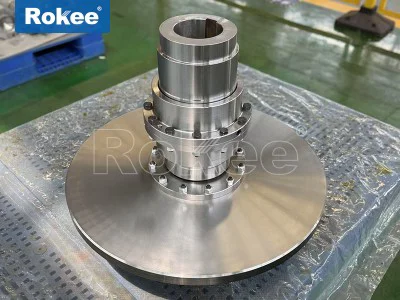
Another distinct type is the high-torque flexible gear coupling, engineered with reinforced gear teeth, larger tooth profiles, and heavy-duty materials to handle extreme torque loads that exceed the capacity of standard couplings. These couplings are commonly used in heavy industrial sectors where machinery operates under immense rotational force, such as mining equipment, metal rolling mills, and large marine propulsion systems. There are also specialized flexible gear couplings designed for vertical shaft applications, featuring modified sealing and mounting configurations to prevent lubricant leakage and ensure stable operation in vertical orientations, commonly found in vertical pumps, compressors, and tower-mounted machinery. Additionally, some variants are designed with integrated brake discs or brake drums, combining the functions of torque transmission and mechanical braking into a single compact unit, eliminating the need for separate braking components and simplifying the overall drive system design. While each type varies in structural details, all retain the core gear-meshing principle that defines flexible gear couplings, ensuring consistent torque transmission and misalignment compensation across different configurations.
The versatility of flexible gear couplings, rooted in their robust structure and adaptable performance, has led to their widespread adoption across nearly every industrial sector that relies on rotary power transmission. In the heavy machinery and manufacturing sector, they are a staple in equipment such as conveyors, crushers, mixers, and extruders, where they handle high torque loads and compensate for misalignment caused by heavy operational stresses and thermal expansion. In the pumping and compression industry, flexible gear couplings connect motors to centrifugal pumps, reciprocating compressors, and blowers, ensuring reliable fluid transfer in water treatment plants, oil and gas refineries, and chemical processing facilities; their ability to absorb vibration also reduces noise and wear in these critical fluid handling systems. The metal and mining industry relies heavily on these couplings for rolling mills, crushers, hoists, and conveyor systems, where durability and high torque capacity are essential to withstand the abrasive and high-load conditions of mineral extraction and metal processing.
In marine and offshore applications, flexible gear couplings are used in propulsion systems, winches, and auxiliary machinery, where they endure saltwater exposure, dynamic loading, and shaft misalignment caused by vessel movement, while maintaining consistent power transmission. The energy sector, including power generation plants, wind turbines, and hydroelectric facilities, utilizes these couplings to connect turbines, generators, and drive motors, where operational reliability is paramount to avoid costly downtime; their high efficiency and misalignment tolerance make them ideal for both conventional and renewable energy infrastructure. Additionally, they find extensive use in transportation-related machinery, such as railway locomotives, heavy-duty trucks, and construction equipment, where they transmit power between engine and drivetrain components, absorbing shock loads and compensating for misalignment caused by rough terrain and variable operating conditions. Even in precision manufacturing and aerospace support equipment, flexible gear couplings are employed in specialized machinery, where they balance precision torque transmission with minor misalignment compensation, ensuring accurate operation without compromising component integrity.
Beyond these core sectors, flexible gear couplings are also integrated into a vast array of auxiliary industrial equipment, including printing machinery, textile looms, food processing equipment, and material handling systems, highlighting their universal applicability. Their widespread use stems not only from their functional advantages but also from their adaptability to diverse operating environments—from cold-temperature warehouses to high-heat manufacturing floors, from dry industrial settings to humid or mildly corrosive processing plants. While proper selection based on torque requirements, shaft speed, misalignment range, and environmental conditions is crucial to maximizing performance and service life, the inherent design strengths of flexible gear couplings make them a reliable choice for nearly any rotary power transmission challenge. As industrial machinery continues to evolve toward higher loads, faster speeds, and greater operational efficiency, flexible gear couplings will remain a vital component, adapting through design refinements to meet the ever-changing demands of modern industry while upholding their core role in enabling smooth, reliable, and durable power transmission.
In summary, flexible gear couplings represent a perfect synergy of mechanical design, material science, and engineering practicality, offering a unique combination of high torque capacity, misalignment compensation, durability, and versatility. Their well-engineered structural design, centered on crowned gear meshing and robust componentry, delivers consistent performance under demanding operational conditions, while the diverse range of types ensures a suitable solution for every application scenario. From heavy industrial manufacturing to critical energy and marine systems, these couplings play an integral role in keeping global industrial operations running efficiently, underscoring their status as one of the most essential and widely used power transmission components in the mechanical engineering field. As industries continue to prioritize reliability, efficiency, and reduced maintenance, the demand for high-performance flexible gear couplings will only continue to grow, driving further innovation in their design and expanding their reach into new and emerging industrial applications.
Coupling Categories
Links:
Related Articles
- Oct 8, 2026Flexible Gear Coupling For Industrial Machinery
- Oct 8, 2026Heavy Duty Flexible Gear Coupling
- Oct 8, 2026Flexible Gear Coupling For Electric Motor