Drive Shafts
A drive shaft stands as one of the most critical mechanical components in power transmission systems across countless industries, serving as a rigid or semi-rigid link that transfers torque and rotational motion between disconnected mechanical parts. Unlike belts, chains, or gears that rely on meshing or friction for power delivery, the drive shaft operates as a direct torque carrier, engineered to bridge gaps between driving and driven assemblies while accommodating minor shifts in alignment, length, and angular positioning. At its core, every drive shaft is built to withstand intense torsional stress, shear force, and cyclic loading during operation, striking a delicate balance between structural strength, weight optimization, and operational efficiency. This fundamental purpose has led to the evolution of diverse drive shaft designs, each tailored to unique performance demands, environmental conditions, and application-specific requirements, with structural variations, material selections, and joint configurations defining their suitability for distinct use cases.
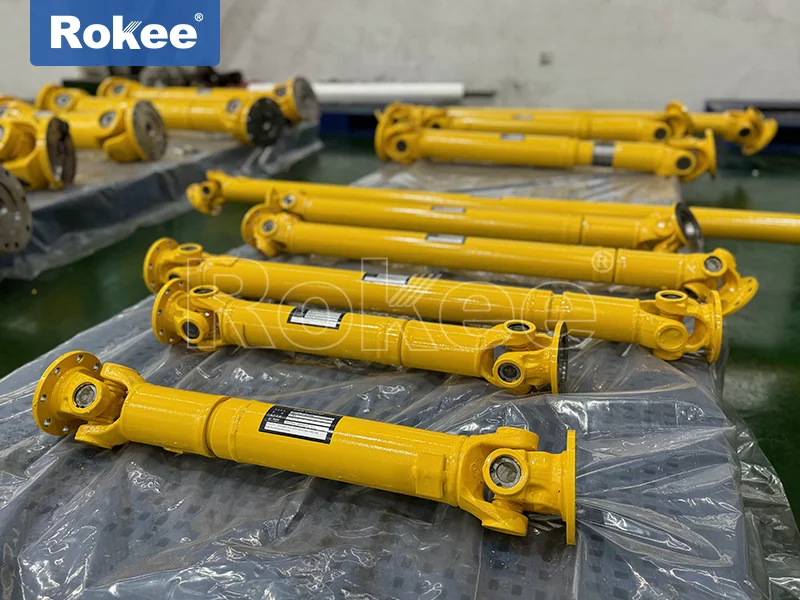
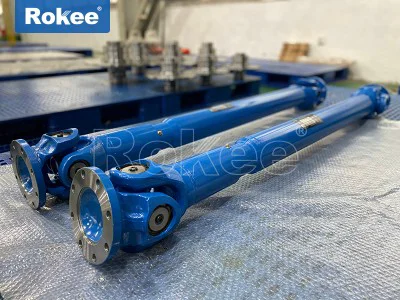
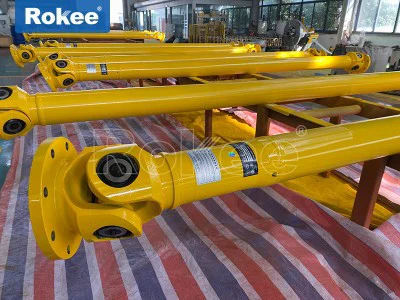
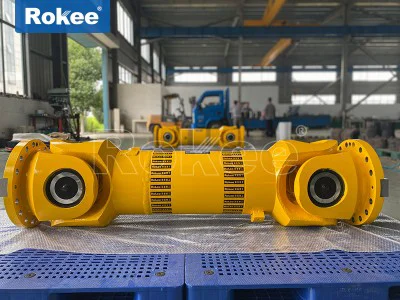
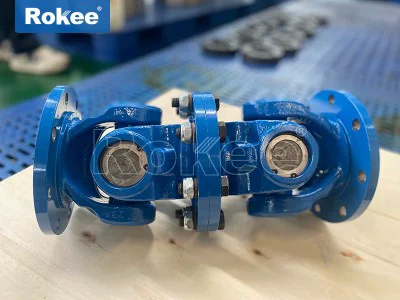
The basic structure of a standard drive shaft is composed of several key integrated elements, each contributing to its overall functionality and durability. The primary shaft body, often referred to as the propeller shaft in certain configurations, forms the central backbone; it is typically a hollow cylindrical tube, though solid shafts are utilized in heavy-duty, high-torque scenarios. Hollow shaft designs dominate mainstream applications due to their superior strength-to-weight ratio, reduced rotational inertia, and ability to minimize vibration compared to solid counterparts of equal external dimensions. The shaft body is paired with coupling mechanisms at either end, most commonly universal joints (U-joints) or constant velocity (CV) joints, which enable the drive shaft to transmit power smoothly even when the driving and driven components are misaligned or experience relative movement during operation. Many drive shafts also feature a splined slip joint, a telescoping section that allows for dynamic length adjustments to compensate for suspension travel, chassis flex, or thermal expansion and contraction, eliminating excessive stress that could lead to structural failure. In longer drive shaft assemblies, a center support bearing is integrated to stabilize the shaft, reduce lateral deflection, and dampen resonant vibrations that occur at high rotational speeds, enhancing overall operational stability and longevity. Additional protective elements, such as dust boots and sealing rings, shield internal joint components from contaminants like dirt, moisture, and debris, preserving lubrication and preventing premature wear of critical moving parts.
Performance is the defining metric for drive shaft functionality, with several core parameters dictating their operational effectiveness and reliability across different operating scenarios. Torsional rigidity stands as the foremost performance attribute, referring to the drive shaft’s resistance to twisting under applied torque; a shaft with high torsional rigidity minimizes power loss during transmission, ensuring that nearly all input torque is transferred to the driven component without deflection. Closely linked to torsional rigidity is torque capacity, the maximum rotational force a drive shaft can handle continuously without permanent deformation or failure, a parameter directly influenced by material strength, shaft diameter, wall thickness, and joint design. Rotational speed capability is another vital performance factor, as drive shafts must operate efficiently across a wide range of speeds without inducing harmful vibrations or losing balance. Critical speed, the rotational velocity at which a drive shaft enters a state of resonant vibration, is a key engineering consideration; exceeding this speed can cause catastrophic failure, so designs are calibrated to keep operating speeds well below this threshold. Weight and rotational inertia also shape performance, particularly in dynamic systems where rapid acceleration and deceleration are required; lighter drive shafts reduce inertial load on the power source, improving responsiveness and reducing energy consumption, while still maintaining the necessary structural integrity. Durability and fatigue resistance round out core performance traits, as drive shafts are subjected to repeated cyclic loading, shock loads, and harsh environmental conditions; materials and construction methods must resist cracking, wear, and corrosion to ensure consistent long-term performance with minimal maintenance needs.
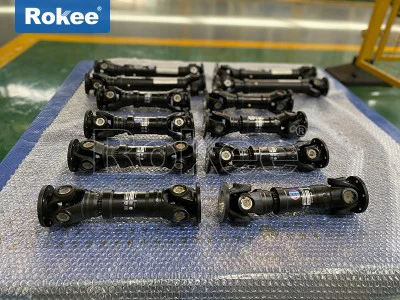
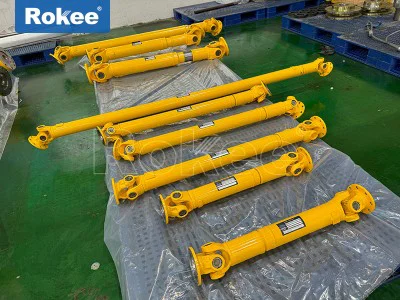
Drive shafts are classified into distinct types based on structural design, joint configuration, and intended operational use, with each category offering unique advantages tailored to specific mechanical setups and performance goals. One of the most common classifications is based on structural assembly, dividing drive shafts into one-piece, two-piece, and multi-piece variants. One-piece drive shafts feature a single, continuous shaft body with joints at both ends, offering a simple, robust design with minimal components, reduced friction, and lower maintenance requirements. These shafts are ideal for compact systems with short transmission distances, such as smaller passenger vehicles and light industrial machinery, where space is limited and alignment remains relatively consistent. Two-piece drive shafts consist of two separate shaft sections connected by a center support bearing, splitting the overall length into shorter segments to reduce bending stress and lower critical speed, making them suitable for longer wheelbase vehicles, medium-duty trucks, and industrial equipment where extended power transmission is necessary. Multi-piece drive shafts, featuring three or more sections and multiple support bearings, are engineered for heavy-duty, long-distance applications such as large commercial trucks, agricultural machinery, and marine vessels, providing exceptional stability and torque handling for extreme operational demands.
Classification by joint type further differentiates drive shafts, with universal joint drive shafts and constant velocity (CV) drive shafts representing the two primary categories. Universal joint drive shafts, equipped with conventional cross-type U-joints, are versatile and cost-effective, capable of accommodating moderate angular misalignment between connected components. They excel in applications where alignment shifts are minor and consistent rotational speed is not the top priority, such as rear-wheel-drive passenger cars, off-road vehicles, and stationary industrial equipment. Constant velocity drive shafts, fitted with CV joints, are designed to maintain a uniform rotational speed and smooth power delivery even at sharp angles, eliminating the speed fluctuations and vibration inherent in U-joint designs at extreme misalignments. This makes CV drive shafts indispensable for front-wheel-drive vehicles, all-wheel-drive systems, and machinery requiring frequent steering or articulation, where consistent torque transfer and smooth operation are non-negotiable. A third specialized type is the telescopic slip drive shaft, which integrates an extended splined slip joint to accommodate significant length variations, commonly used in off-road vehicles, construction machinery, and equipment with extensive suspension travel or chassis movement.
Material selection is a pivotal aspect of drive shaft design that directly impacts performance, and different materials are employed to meet varying strength, weight, and durability needs, further expanding the functional diversity of drive shafts. Mild steel drive shafts are a traditional and widely used option, prized for their high tensile strength, affordability, and ease of manufacturing; they are well-suited for general-purpose applications with moderate torque loads and standard operating conditions, such as everyday passenger vehicles and light industrial machinery. High-strength alloy steel shafts, including chromoly variants, offer enhanced torsional strength and fatigue resistance compared to mild steel, making them ideal for high-torque, heavy-duty applications like commercial trucks, performance vehicles, and industrial heavy machinery where structural integrity under extreme loads is critical. Aluminum drive shafts provide a lightweight alternative to steel, reducing overall weight and rotational inertia to boost system responsiveness and energy efficiency; they are commonly used in performance-focused vehicles, recreational marine craft, and applications where weight savings are a priority, though they have lower torque capacity than steel shafts. Carbon fiber composite drive shafts represent a premium lightweight solution, offering exceptional strength, minimal weight, and superior vibration damping properties; these shafts are utilized in high-performance racing vehicles, luxury automotive applications, and precision industrial equipment where maximum efficiency and reduced inertia are essential, despite their more complex manufacturing process.
The versatility of drive shafts is reflected in their extensive range of applications across automotive, industrial, marine, agricultural, and aerospace sectors, with each sector leveraging specialized drive shaft designs to meet unique operational challenges. In the automotive industry, drive shafts are integral to nearly every vehicle drivetrain configuration, serving as the vital link between the transmission/transaxle and the drive axles. Rear-wheel-drive vehicles rely on long one or two-piece drive shafts to transfer power from the front-mounted transmission to the rear differential, while front-wheel-drive vehicles use compact CV drive shafts (half-shafts) to deliver torque to the front drive wheels, accommodating steering angles and suspension movement. All-wheel-drive and four-wheel-drive vehicles utilize multiple drive shafts to distribute power to both front and rear axles, ensuring traction and stability across diverse road conditions. Performance and racing vehicles opt for lightweight aluminum or carbon fiber drive shafts to enhance acceleration and reduce drivetrain loss, while heavy-duty trucks and commercial vehicles employ robust multi-piece steel drive shafts to handle the high torque loads of heavy hauling and continuous operation.
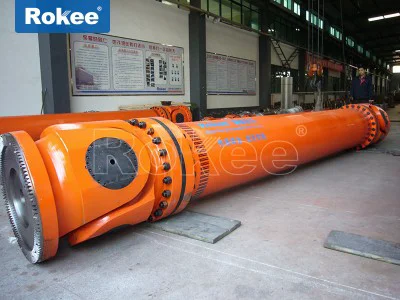
Beyond automotive use, drive shafts play a foundational role in agricultural machinery, where they power a wide range of implements and equipment. Tractors use power take-off (PTO) drive shafts to transfer engine power to attached tools such as plows, harvesters, mowers, and balers, operating in rugged, dusty outdoor conditions that demand high durability and resistance to shock loads. These agricultural drive shafts are designed to withstand uneven terrain, sudden load changes, and prolonged use, with flexible joint configurations to accommodate implement movement and alignment shifts. In the industrial sector, drive shafts are employed in manufacturing equipment, conveyor systems, pumps, compressors, and material handling machinery, facilitating reliable power transmission between motors, gearboxes, and operational components. Industrial drive shafts are engineered for continuous duty cycles, with materials and designs tailored to factory environments, including resistance to oil, chemicals, and dust, and customizable lengths and joint configurations to fit unique machinery layouts.
Marine applications rely on specialized drive shafts, often referred to as propeller shafts, to transfer power from inboard engines to underwater propellers. These shafts are constructed from corrosion-resistant materials to withstand saltwater, moisture, and marine contaminants, with sealed bearing assemblies to prevent water intrusion and maintain lubrication. Marine drive shafts must accommodate the unique alignment challenges of boat hulls and propeller systems, with robust designs to handle the high torque demands of propulsion and the stress of wave-induced movement. Small watercraft use compact, lightweight drive shafts, while large commercial ships and vessels utilize heavy-duty, multi-component drive shafts to support massive propulsion systems and long-distance operation. Additionally, drive shafts find use in aerospace support equipment, construction machinery, and renewable energy systems such as wind turbines, where they transfer rotational power from turbine blades to gearboxes and generators, operating in remote, high-wind environments with strict reliability and durability requirements.
In every application, the drive shaft’s design is meticulously engineered to align with specific operational needs, balancing structural performance, material capabilities, and environmental resilience. Whether in a compact passenger car, a heavy-duty commercial truck, a rugged agricultural tractor, or a large marine vessel, the drive shaft remains an unsung hero of mechanical power transmission, enabling seamless torque transfer and reliable operation across countless mechanical systems. The ongoing evolution of drive shaft technology, focused on advanced materials, precision manufacturing, and optimized design, continues to enhance their performance, efficiency, and durability, ensuring they remain indispensable in an ever-expanding range of industrial and transportation applications. As mechanical systems become more advanced and demand higher efficiency and reliability, the drive shaft will continue to adapt, with tailored designs and innovative engineering solutions meeting the evolving needs of modern machinery and power transmission systems worldwide.