Barrel Gear Coupling Improves Transmission Accuracy Of PU Sandwich Panel Continuous Production Line And Reduces Errors
In the field of modern industrial manufacturing, the continuous production line of PU sandwich panels plays an irreplaceable role due to its high efficiency, automation and stability, providing high-quality building materials for construction, cold chain, transportation and other industries. PU sandwich panels, with their excellent thermal insulation, fire resistance, sound insulation and light weight properties, have become an indispensable part of modern architecture and industrial facilities. However, the continuous and high-load operation characteristics of the production line put forward extremely high requirements on the transmission system, which is the core power transmission link of the entire production line. The transmission accuracy of the system directly determines the quality of PU sandwich panels, including the uniformity of thickness, the flatness of the surface, the firmness of bonding and the accuracy of cutting size. Any tiny error in the transmission process may be amplified in the continuous production process, leading to unqualified products, increased waste rate, reduced production efficiency and increased production costs. Therefore, improving the transmission accuracy of the PU sandwich panel continuous production line and reducing transmission errors have become key issues that need to be solved urgently in the industry.
As a key component in the transmission system, the coupling is responsible for connecting the motor, reducer, conveyor belt, cutting machine and other core equipment, transmitting torque and power stably, and compensating for the slight misalignment between the shafts caused by installation errors, equipment operation vibration, thermal expansion and other factors. In the traditional PU sandwich panel continuous production line, ordinary couplings such as elastic couplings and rigid couplings are often used. Although these couplings can meet the basic power transmission needs, they have obvious defects in terms of transmission accuracy, load-bearing capacity and error compensation. Elastic couplings, for example, rely on elastic components to transmit torque, which are prone to elastic deformation under high load and long-term operation, resulting in transmission lag and accuracy deviation; rigid couplings have no error compensation capacity, and even small shaft misalignment will cause severe vibration, increased wear of components, and further affect transmission accuracy. With the continuous improvement of market demand for PU sandwich panel quality and the continuous upgrading of production line automation, the defects of traditional couplings have become increasingly prominent, which can no longer meet the high-precision transmission needs of the production line. Under such background, the barrel gear coupling has gradually been widely used in the PU sandwich panel continuous production line due to its unique structural design and excellent performance, effectively solving the problems of low transmission accuracy and large errors in the traditional production line, and bringing significant improvements to the production efficiency and product quality.
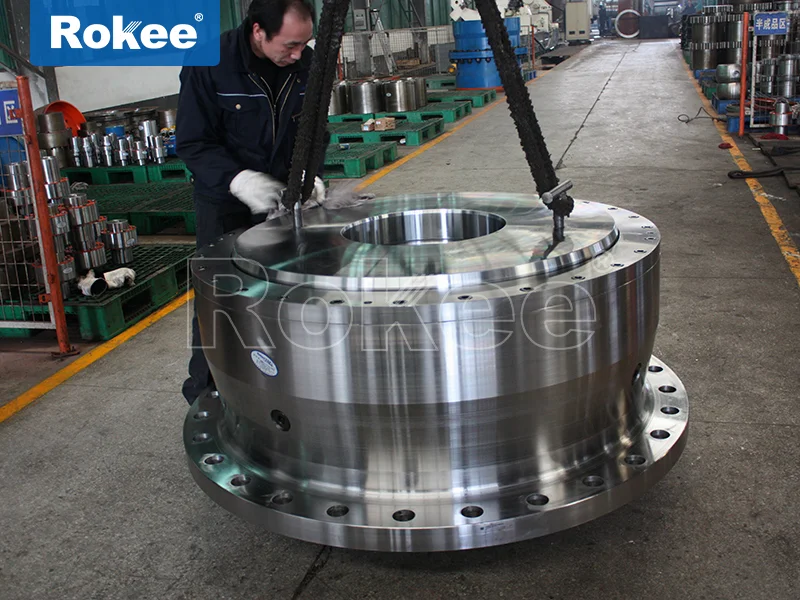
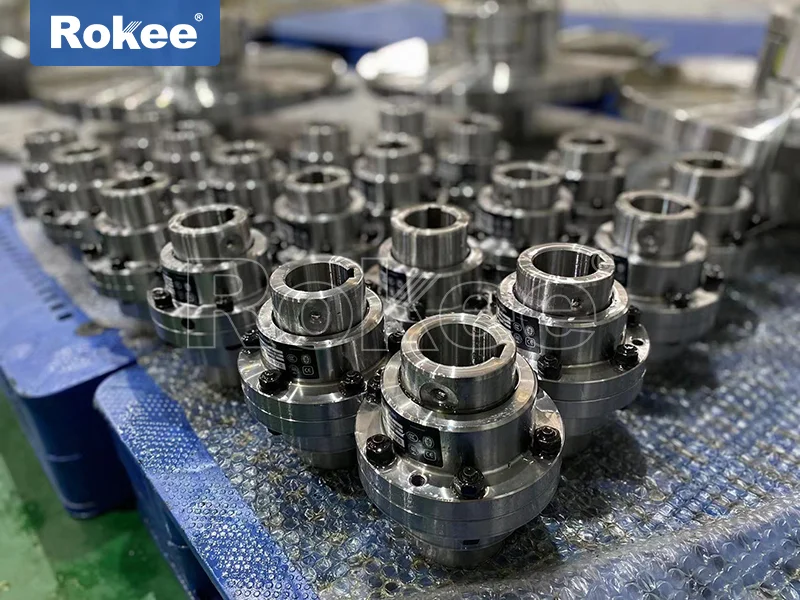
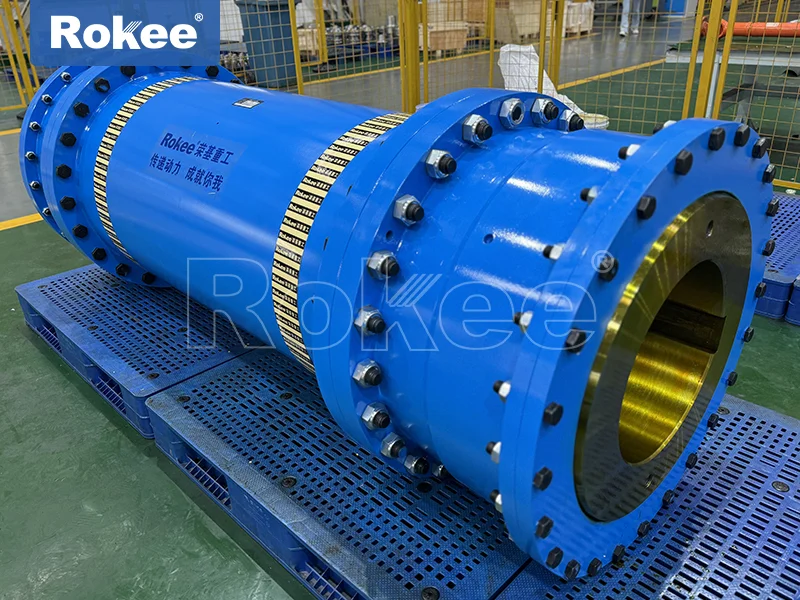
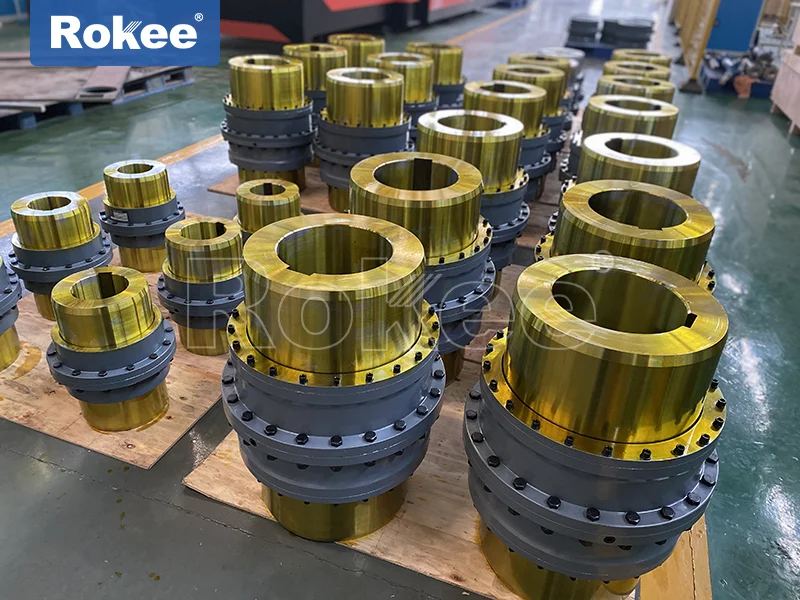
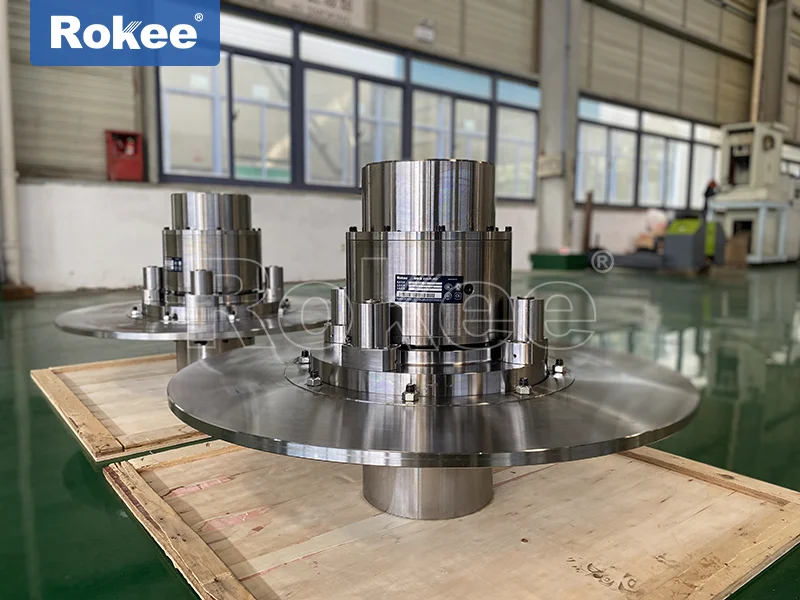
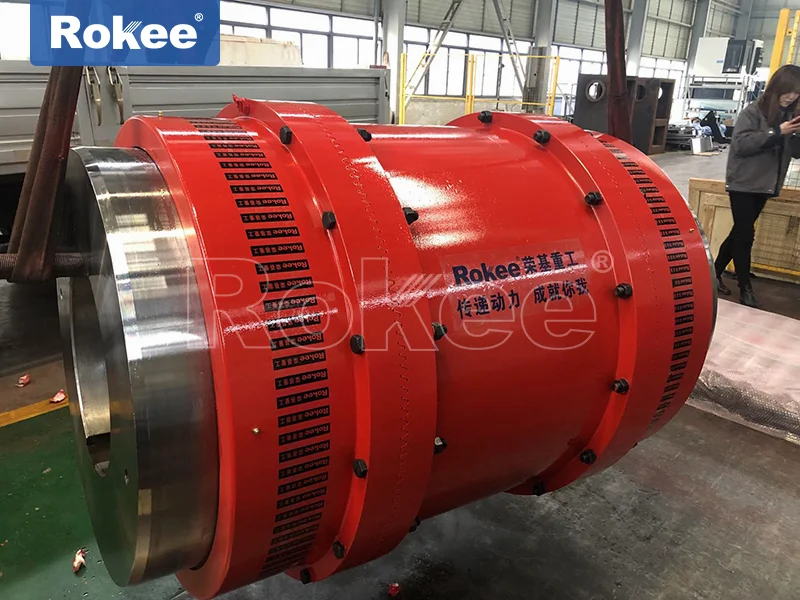
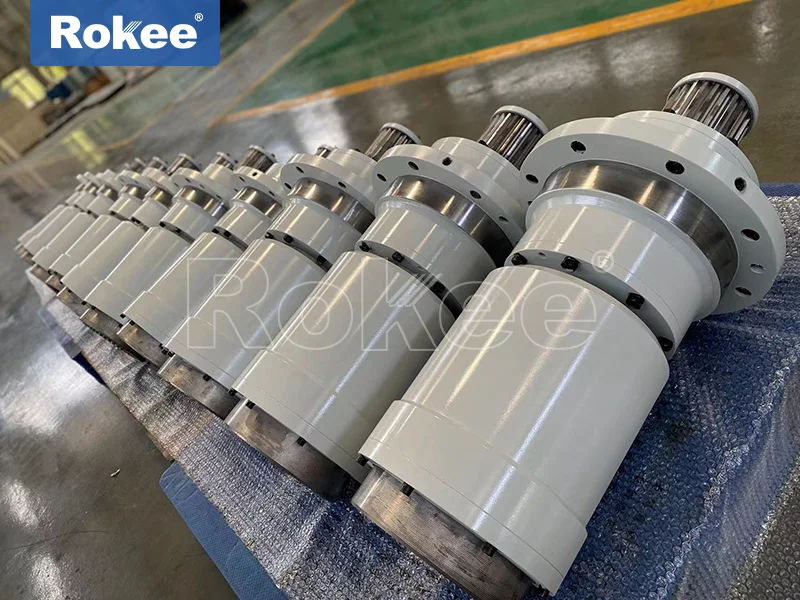
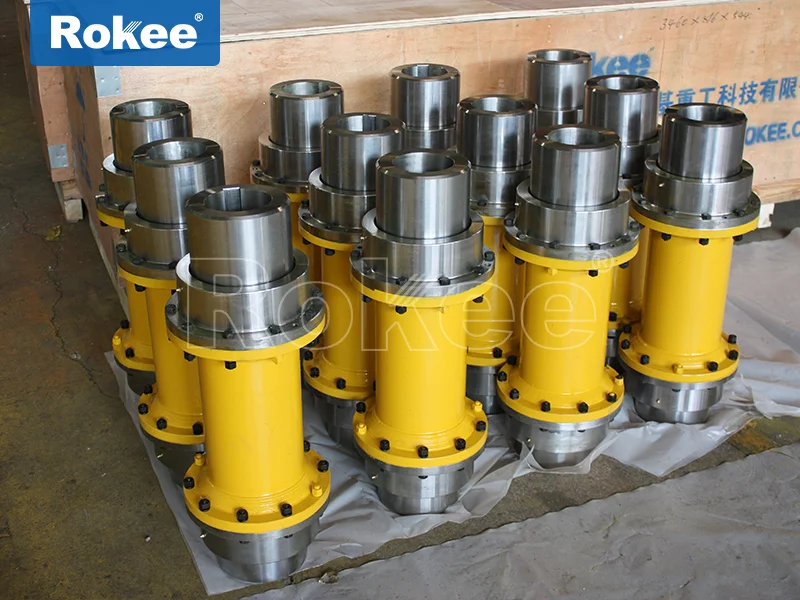
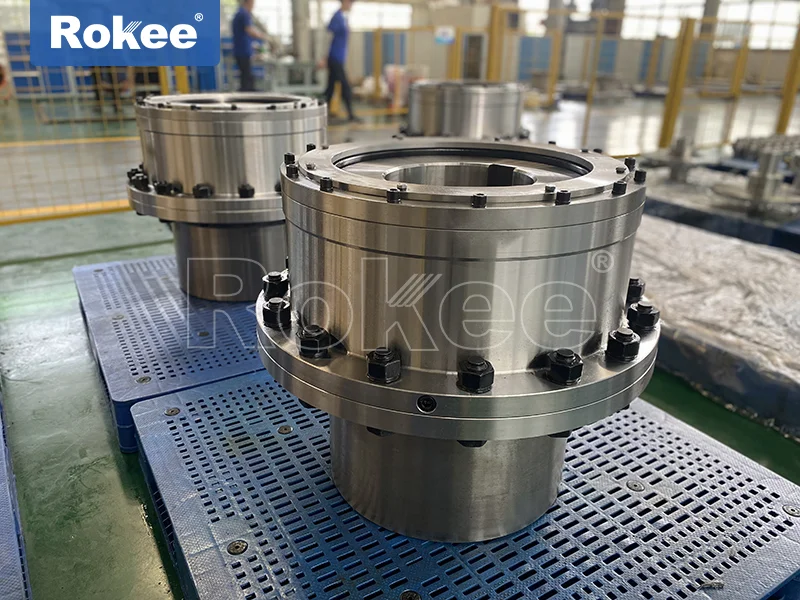
The barrel gear coupling is a kind of rigid-flexible coupling specially designed for high-torque, high-precision transmission scenarios. Its core structural feature is the barrel-shaped profile of the external teeth, which meshes with the internal teeth of the inner gear ring to realize torque transmission. Different from the straight tooth design of ordinary gear couplings, the barrel-shaped tooth profile of the barrel gear coupling has a certain curvature, which not only increases the contact area between the teeth, but also enables it to have excellent compensation capacity for radial, angular and axial deviations between the shafts. This unique structural design is the fundamental reason why it can improve the transmission accuracy of the PU sandwich panel continuous production line. In the actual operation of the PU sandwich panel continuous production line, the transmission system needs to drive multiple components to operate synchronously, including the upper and lower conveyor belts of the double-track laminating conveyor, the metering pump of the high-pressure foaming machine, the cutting saw and other equipment. The synchronous operation of these components directly affects the uniformity of the foaming material distribution, the flatness of the panel surface and the accuracy of the cutting size. The barrel gear coupling can ensure the stable transmission of torque between the shafts, minimize the transmission error caused by component wear, vibration and misalignment, and realize the high-precision synchronous operation of each component of the production line.
To understand how the barrel gear coupling improves the transmission accuracy of the PU sandwich panel continuous production line, it is necessary to first analyze the main sources of transmission errors in the traditional production line. In the continuous production process of PU sandwich panels, the transmission errors are mainly caused by the following aspects: first, the installation error of the transmission shaft. Due to the large volume of the production line and the large number of connected components, it is difficult to ensure absolute coaxiality between the shafts during installation, and even a tiny coaxiality error will lead to uneven torque transmission and generate vibration, which affects the transmission accuracy; second, the thermal expansion and contraction of the equipment during operation. The production line will generate a lot of heat during long-term high-load operation, which will cause thermal expansion of the motor, reducer, transmission shaft and other components, resulting in changes in the relative position between the shafts, leading to transmission deviation; third, the wear and deformation of the coupling. Traditional couplings are prone to wear, deformation or fatigue damage under long-term high-torque and high-frequency vibration, which will reduce the transmission accuracy and even cause equipment failure; fourth, the vibration of the production line. The operation of the motor, conveyor belt and other equipment will generate vibration, which will be transmitted along the transmission shaft, causing the coupling to vibrate, resulting in unstable torque transmission and further increasing the transmission error. These errors will be accumulated and amplified in the continuous production process, leading to problems such as uneven thickness of PU sandwich panels, surface waviness, poor bonding between the surface material and the core material, and inaccurate cutting size, which seriously affect the product quality and market competitiveness.
The barrel gear coupling can effectively solve the above problems and reduce transmission errors through its unique structural advantages and performance characteristics. First of all, its barrel-shaped tooth profile design has excellent deviation compensation capacity. The curvature of the barrel-shaped teeth enables the coupling to automatically adjust when there is radial, angular or axial deviation between the shafts, ensuring that the meshing between the teeth is always stable and uniform, avoiding the torque fluctuation caused by misalignment. For example, when the transmission shaft generates thermal expansion during operation, the barrel gear coupling can compensate for the axial displacement caused by thermal expansion through the relative movement between the barrel-shaped teeth and the inner gear ring, ensuring that the transmission system operates stably without generating additional load and transmission error. Compared with traditional rigid couplings that cannot compensate for any deviation and elastic couplings that have limited compensation capacity, the barrel gear coupling's comprehensive deviation compensation capacity can effectively reduce the transmission error caused by installation errors and thermal expansion, which is particularly important for the PU sandwich panel continuous production line that requires long-term stable operation.
Secondly, the barrel gear coupling has high transmission accuracy and stability. The barrel-shaped teeth and the inner gear ring adopt high-precision processing technology, and the tooth surface is subjected to special heat treatment, which not only improves the hardness and wear resistance of the tooth surface, but also ensures the accuracy of the tooth profile and the fit between the teeth. The large contact area between the barrel-shaped teeth and the inner gear ring makes the torque transmission more uniform, avoiding the local stress concentration caused by point contact or line contact of traditional couplings, thereby reducing the vibration and noise during transmission. In the PU sandwich panel continuous production line, the stable operation of the conveyor belt is crucial to the flatness of the panel surface. The barrel gear coupling can ensure that the conveyor belt operates at a constant speed, avoiding the speed fluctuation caused by unstable torque transmission, so that the foaming material can be evenly distributed between the upper and lower surface materials, ensuring the uniformity of the panel thickness. At the same time, the stable transmission of the cutting machine can ensure that the cutting size is accurate, reducing the waste caused by cutting errors.
In addition, the barrel gear coupling has strong load-bearing capacity and long service life, which can further ensure the long-term stability of the transmission system and reduce the transmission error caused by component wear and failure. The PU sandwich panel continuous production line usually operates continuously for 24 hours, and the transmission system needs to bear large torque and long-term fatigue load. The barrel gear coupling is made of high-strength alloy materials, and the overall structure is compact and reasonable, which can withstand large torque and overload impact. The rolling-sliding composite motion between the barrel-shaped teeth and the inner gear ring reduces the friction coefficient, reduces the wear of the tooth surface, and reduces the frictional heat generated during operation, thereby slowing down the material fatigue and extending the service life of the coupling. Compared with traditional couplings that need frequent maintenance and replacement, the barrel gear coupling has lower maintenance costs and longer service life, which can avoid the transmission error caused by the wear and failure of the coupling during operation, and ensure the continuous and stable operation of the production line.
The practical application effect of the barrel gear coupling in the PU sandwich panel continuous production line has been fully verified. In a large-scale PU sandwich panel production enterprise, after replacing the traditional elastic coupling with the barrel gear coupling in the transmission system of the continuous production line, obvious improvements have been achieved in all aspects. Before the replacement, the production line often had problems such as uneven thickness of the sandwich panel (the thickness error was up to 0.8mm), surface waviness, and inaccurate cutting size (the error was about 1.2mm), resulting in a product qualification rate of only 88% and a waste rate of 12%. After the replacement of the barrel gear coupling, the transmission accuracy of the production line was significantly improved. The thickness error of the sandwich panel was reduced to within 0.2mm, the cutting size error was controlled within 0.3mm, the surface flatness of the panel was significantly improved, and the bonding firmness between the surface material and the core material was also enhanced. The product qualification rate was increased to 99.2%, and the waste rate was reduced to 0.8%. At the same time, the vibration and noise of the production line were significantly reduced, the wear of the transmission components such as the motor and reducer was reduced, the maintenance frequency of the equipment was reduced by 60%, and the production efficiency was increased by 15%. This practical case fully shows that the barrel gear coupling can effectively improve the transmission accuracy of the PU sandwich panel continuous production line, reduce transmission errors, and bring significant economic benefits to the enterprise.
In addition to the structural advantages of the barrel gear coupling itself, the correct installation, debugging and maintenance are also important factors to ensure its ability to improve transmission accuracy and reduce errors. In the installation process of the barrel gear coupling, it is necessary to strictly control the coaxiality between the connected shafts, and adjust the installation position according to the technical requirements to ensure that the deviation between the shafts is within the allowable range of the coupling. At the same time, it is necessary to select the appropriate lubricating oil according to the working conditions of the production line, and regularly add and replace the lubricating oil to ensure that the meshing surface of the teeth is fully lubricated, reduce friction and wear, and avoid transmission errors caused by poor lubrication. In the daily operation process, it is necessary to regularly inspect the operation status of the barrel gear coupling, including the wear of the tooth surface, the tightness of the connecting bolts, and the leakage of lubricating oil. Once abnormal phenomena are found, it is necessary to stop the machine for inspection and maintenance in time to avoid further damage to the coupling and affect the transmission accuracy of the production line. In addition, the staff should be trained professionally to master the correct operation methods and maintenance skills of the barrel gear coupling, so as to ensure that the coupling can play its best performance in the production line.
With the continuous development of the PU sandwich panel industry, the market's requirements for product quality and production efficiency are getting higher and higher, which puts forward more stringent requirements on the transmission system of the continuous production line. The barrel gear coupling, with its excellent transmission accuracy, deviation compensation capacity, load-bearing capacity and long service life, has become an ideal choice for the transmission system of the PU sandwich panel continuous production line. It not only solves the problems of low transmission accuracy and large errors in the traditional production line, but also improves the product quality, reduces the waste rate, reduces the maintenance cost and improves the production efficiency. Compared with other types of couplings, the barrel gear coupling has obvious advantages in the application of PU sandwich panel continuous production lines, especially in large-scale, high-automation and high-precision production lines, its role is more prominent.
In the future, with the continuous progress of mechanical processing technology and material science, the structure and performance of the barrel gear coupling will be further optimized and improved. For example, through the application of new materials and new processing technologies, the load-bearing capacity and wear resistance of the coupling can be further improved, and the transmission accuracy can be further enhanced; through the integration of intelligent monitoring technology, the real-time monitoring of the operation status of the coupling can be realized, and the early warning of potential faults can be made, so as to ensure the safer and more stable operation of the transmission system. At the same time, with the continuous expansion of the application field of PU sandwich panels, the application scope of the barrel gear coupling will also be further expanded, bringing more help to the development of the PU sandwich panel industry.
In conclusion, the barrel gear coupling plays a crucial role in improving the transmission accuracy of the PU sandwich panel continuous production line and reducing transmission errors. Its unique barrel-shaped tooth profile design, excellent deviation compensation capacity, high transmission accuracy and stability, strong load-bearing capacity and long service life make it an indispensable key component in the transmission system of the PU sandwich panel continuous production line. The application of the barrel gear coupling not only improves the product quality and production efficiency of the PU sandwich panel, reduces the production cost and waste rate, but also promotes the technological progress and industrial upgrading of the PU sandwich panel industry. For enterprises engaged in the production of PU sandwich panels, choosing the barrel gear coupling to optimize the transmission system is an effective way to improve market competitiveness and achieve sustainable development. In the future, with the continuous innovation and development of technology, the barrel gear coupling will play a more important role in the field of PU sandwich panel production, contributing more to the high-quality development of the industry.