Geared Couplings
In the realm of mechanical power transmission, geared couplings stand as one of the most versatile and robust components, serving as a critical link between rotating shafts in countless industrial systems. Unlike rigid couplings that offer no tolerance for shaft misalignment or flexible couplings with limited torque-bearing capabilities, geared couplings strike a balance between torsional rigidity, load-bearing capacity, and moderate flexibility, making them indispensable for heavy-duty, high-torque operating environments.
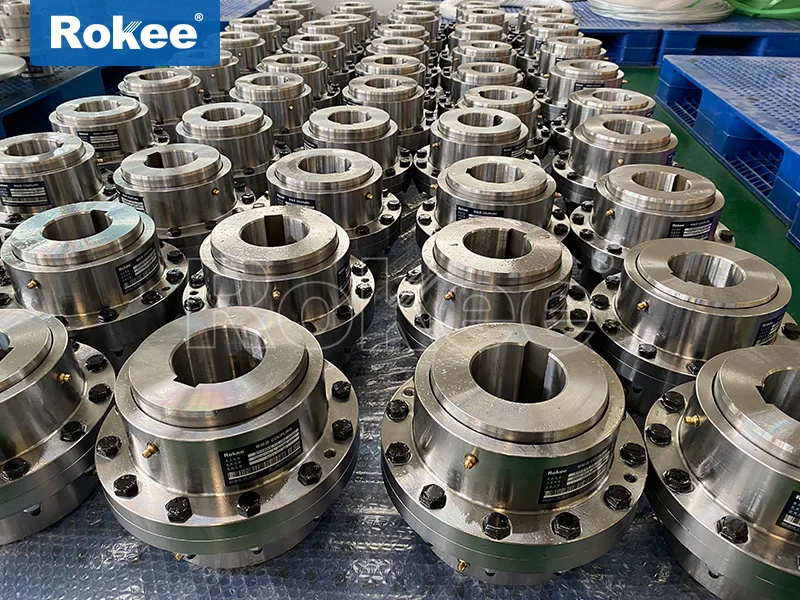
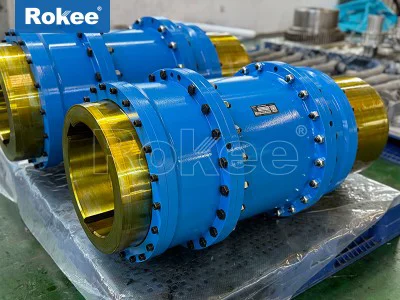
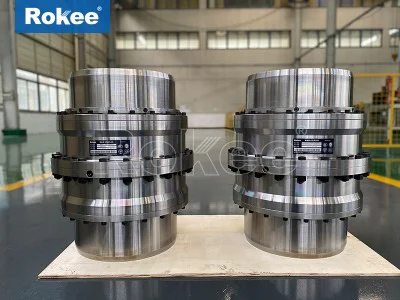
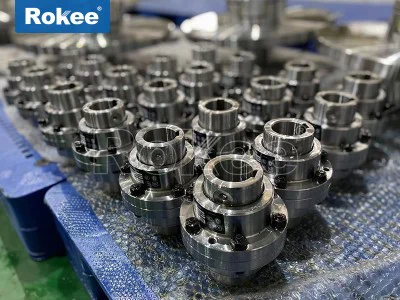
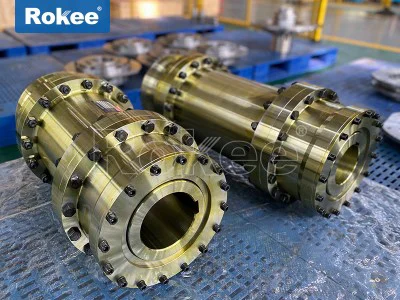
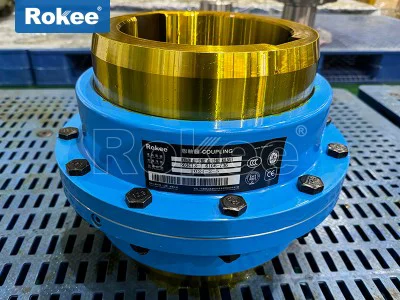
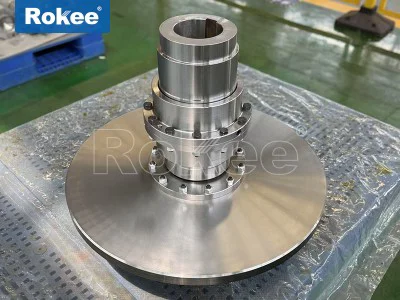
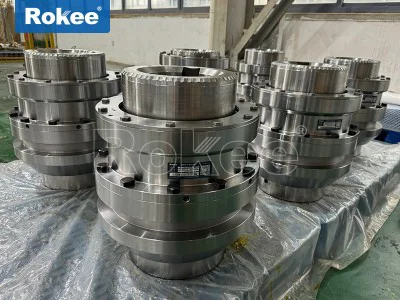
At its core, the fundamental structure of a geared coupling is engineered for efficient torque transmission and controlled misalignment accommodation, featuring a streamlined yet durable assembly of precision-machined components. The primary elements of a standard geared coupling include two hub units with external gear teeth, a sleeve or coupling shell fitted with internal gear teeth that mesh seamlessly with the external teeth on the hubs, and sealing components to retain lubrication and prevent contamination from external debris. The hubs are designed to mount securely onto the driving and driven shafts, typically via keyway connections, interference fits, or clamping mechanisms, ensuring a tight, slip-free bond that eliminates power loss during rotation. The external gear teeth on the hubs and internal teeth on the sleeve are precision-cut to strict tolerances, most commonly featuring an involute tooth profile that optimizes load distribution across the tooth surfaces; in heavy-duty variants, crowned teeth are often employed instead of straight teeth, a design modification that enhances contact area, reduces stress concentrations, and boosts the coupling’s ability to handle angular, parallel, and axial shaft misalignment without compromising performance. The sleeve, which acts as the connecting bridge between the two hubs, is usually constructed in a one-piece or split design, with split sleeves simplifying installation and maintenance procedures without sacrificing structural integrity. Sealing elements, such as gaskets, O-rings, or labyrinth seals, are integrated into the coupling assembly to seal the internal gear meshing zone, locking in lubricating grease or oil to minimize friction, wear, and heat generation between mating teeth. This cohesive structural design ensures that every component works in tandem to transfer rotational force efficiently, absorb minor operational shocks, and maintain stable performance even when shafts are not perfectly aligned—a common occurrence in real-world industrial machinery due to thermal expansion, manufacturing tolerances, or operational wear.
The performance characteristics of geared couplings are directly shaped by their structural design, material selection, and manufacturing precision, setting them apart from other coupling types and defining their suitability for specific operational scenarios. Foremost among these traits is exceptional torque transmission capacity; geared couplings are engineered to handle extremely high torque loads, even in compact form factors, making them ideal for heavy machinery where power density is a priority. The gear-tooth meshing mechanism distributes torsional loads evenly across multiple teeth, preventing premature failure and enabling the coupling to withstand peak torque spikes that often occur in start-stop operations or under sudden load changes. Unlike elastomeric flexible couplings that sacrifice torsional stiffness for flexibility, geared couplings maintain high torsional rigidity, ensuring minimal backlash and precise rotational synchronization between driving and driven shafts—an essential feature for applications requiring accurate motion control, such as industrial conveyors, milling equipment, and power generation machinery. Another key performance attribute is misalignment tolerance; while not as flexible as elastomeric or grid couplings, geared couplings can effectively accommodate moderate levels of angular misalignment, parallel offset, and axial end float, reducing stress on shafts, bearings, and adjacent equipment components. This misalignment compensation not only extends the service life of the entire drive system but also reduces maintenance needs related to realignment and component replacement. Geared couplings also exhibit excellent durability and fatigue resistance, especially when constructed from high-grade alloy steels or carbon steels that undergo heat treatment processes like quenching and carburizing to enhance surface hardness and wear resistance. This robust construction allows them to operate reliably in harsh environmental conditions, including high temperatures, dusty atmospheres, and moist or mildly corrosive settings, as long as proper sealing and lubrication are maintained. Additionally, geared couplings offer consistent performance across a wide range of rotational speeds, balancing high-speed operational stability with low-speed torque delivery, though excessive speeds may require dynamic balancing to prevent vibration and noise. It is important to note that these performance benefits are contingent on regular lubrication maintenance; without adequate lubrication, friction between gear teeth escalates, leading to accelerated wear, overheating, and eventual coupling failure, highlighting the need for routine upkeep to preserve optimal performance.
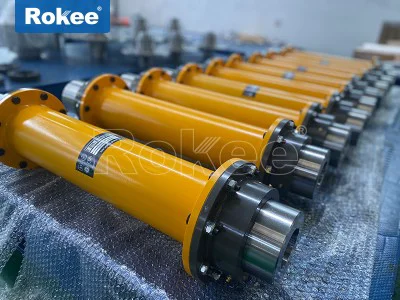
Geared couplings are categorized into distinct types based on structural design, tooth profile, flexibility characteristics, and application-specific requirements, each tailored to address unique operational challenges and shaft connection needs. The most prevalent classification is based on gear tooth design, distinguishing between straight tooth geared couplings and crowned tooth geared couplings. Straight tooth geared couplings represent the traditional design, featuring flat, parallel external and internal gear teeth; they offer high torque capacity and cost-effective manufacturing, making them suitable for applications with minimal shaft misalignment and steady operational loads. Crowned tooth geared couplings, by contrast, feature curved external teeth on the hubs that mate with internal straight teeth on the sleeve, creating a spherical contact surface that enhances misalignment tolerance, reduces edge loading, and dampens minor vibrations—this variant is preferred for heavy-duty, high-stress applications where shaft misalignment is unavoidable. Geared couplings are also classified by structural configuration, including full geared couplings, half geared couplings, and floating shaft geared couplings. Full geared couplings, the most widely used type, feature two geared hubs and a single sleeve, providing balanced flexibility on both sides of the coupling and accommodating misalignment in multiple directions; they are the go-to choice for general heavy-duty power transmission systems. Half geared couplings combine one geared hub with one rigid hub, offering limited flexibility on only one side of the connection, making them suitable for setups where one shaft is fixed and misalignment is isolated to a single component, such as certain pump and motor assemblies. Floating shaft geared couplings incorporate an extended intermediate shaft between two sets of geared hub and sleeve assemblies, designed to bridge large distances between driving and driven shafts; this type is ideal for applications where machinery components are spaced far apart, such as long conveyor systems, marine propulsion setups, and industrial processing lines. Additional specialized variants include continuous sleeve geared couplings, which feature a single, uninterrupted sleeve for enhanced contamination protection and structural rigidity, and high-speed balanced geared couplings, engineered with precision balancing to minimize vibration and noise in high-RPM applications. Each type retains the core torque-bearing strength of geared couplings while adapting specific design elements to meet the unique demands of different industrial environments, ensuring versatility across a broad spectrum of mechanical systems.
The unique combination of high torque capacity, moderate flexibility, and durable construction makes geared couplings a cornerstone component across nearly every heavy industrial sector, where reliable power transmission is non-negotiable for operational efficiency and productivity. In the mining and mineral processing industry, geared couplings are extensively used in crushers, grinders, conveyors, and hoisting equipment, where they endure extreme torque loads, continuous operation, and harsh, debris-filled environments; their ability to withstand shock loads and minor shaft misalignment ensures uninterrupted material handling and processing, critical for meeting production targets in mining operations. The steel and metal manufacturing industry relies heavily on geared couplings for rolling mills, press machines, extruders, and conveyor systems, where high torque transmission and precise rotational control are essential for shaping and processing metal materials; the torsional rigidity of geared couplings maintains accurate alignment between rolling components, ensuring consistent product quality and reducing downtime caused by equipment failure. In the power generation sector, both conventional thermal power plants and renewable energy facilities utilize geared couplings in turbines, generators, pumps, and cooling systems, where they transfer power efficiently between rotating shafts while accommodating thermal expansion-induced misalignment; their robust design ensures reliable operation under high-temperature and high-load conditions, supporting consistent energy production. The oil and gas industry depends on geared couplings for pumps, compressors, drill rigs, and pipeline transportation equipment, where they perform reliably in remote, harsh environments with minimal maintenance; their resistance to contamination and ability to handle heavy loads make them suitable for both onshore and offshore operations, where equipment reliability is paramount. Marine and shipbuilding applications also feature geared couplings prominently, used in propulsion systems, winches, and auxiliary machinery; the floating shaft variant is particularly valuable for connecting distant engine and propeller shafts, while sealed designs protect against saltwater corrosion and moisture. Beyond these heavy industries, geared couplings find use in construction machinery, paper and pulp processing equipment, textile manufacturing machinery, and automotive production lines, adapting to diverse operational needs from low-speed, high-torque heavy machinery to moderate-speed industrial processing systems. Their widespread adoption stems from their ability to deliver consistent performance, withstand operational stress, and bridge the gap between rigid and highly flexible couplings, offering a practical, long-lasting solution for power transmission challenges across industrial landscapes.
When selecting and implementing geared couplings for a specific application, several key factors must be considered to ensure optimal performance and longevity, including torque requirements, operating speed, shaft misalignment levels, environmental conditions, and installation constraints. Engineers must first calculate the maximum and operating torque loads to choose a coupling with sufficient load-bearing capacity, avoiding undersized units that risk premature failure and oversized units that add unnecessary bulk and cost. Operating speed is another critical consideration, as high-speed applications require dynamically balanced couplings to prevent vibration and noise, while low-speed, high-torque setups prioritize tooth strength and load distribution. The type and degree of shaft misalignment—angular, parallel, or axial—dictate whether a straight tooth, crowned tooth, full geared, or half geared design is most suitable, with crowned tooth and full geared variants offering greater flexibility for pronounced misalignment. Environmental factors such as temperature extremes, dust, moisture, and chemical exposure influence the choice of sealing mechanisms and construction materials, with corrosion-resistant alloys and heavy-duty seals recommended for harsh operating conditions. Proper installation and maintenance practices further enhance the performance and service life of geared couplings; precise shaft alignment during installation reduces unnecessary stress on gear teeth, while regular lubrication replenishment and seal inspections prevent wear, contamination, and overheating. Even with routine maintenance, geared couplings exhibit exceptional service life compared to many flexible coupling types, making them a cost-effective long-term investment for industrial drive systems.
In summary, geared couplings represent a pinnacle of practical mechanical engineering, merging robust structural design, exceptional torque performance, and adaptable configurations to meet the diverse power transmission needs of modern industry. Their well-engineered component assembly ensures efficient torque transfer and controlled misalignment accommodation, while their performance traits—high torsional rigidity, fatigue resistance, and environmental durability—make them uniquely suited for heavy-duty operational demands. The wide range of geared coupling types, from straight tooth to crowned tooth, full geared to floating shaft designs, offers tailored solutions for every conceivable shaft connection scenario, spanning mining, steel production, power generation, oil and gas, marine, and countless other industrial sectors. As industrial machinery continues to evolve toward higher loads, greater efficiency, and more demanding operating conditions, geared couplings will remain a vital component, providing the reliable, durable link between rotating shafts that keeps global industrial operations running smoothly. Their enduring relevance lies in their ability to balance strength and flexibility, simplicity and performance, solidifying their status as an essential element in mechanical power transmission systems for years to come.