Universal Shaft Couplings
In the realm of mechanical power transmission, the universal shaft coupling stands as a fundamental and indispensable component, serving as a critical bridge between two rotating shafts that are not perfectly aligned along a single axis. Unlike rigid couplings that demand precise coaxial positioning of connected shafts, universal shaft couplings are engineered to accommodate angular misalignment, and in some cases, limited axial and radial displacement, ensuring seamless torque transmission and rotational motion transfer even in complex operating environments. This unique adaptability has made it a staple across countless industrial, automotive, agricultural, and engineering applications, where shaft misalignment is inevitable due to manufacturing tolerances, installation errors, structural deformation under load, thermal expansion, or dynamic operational shifts.
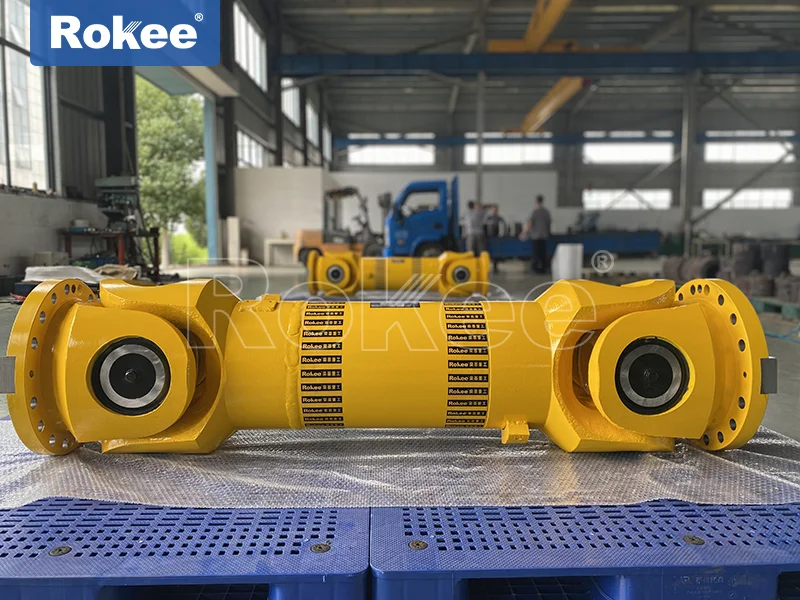
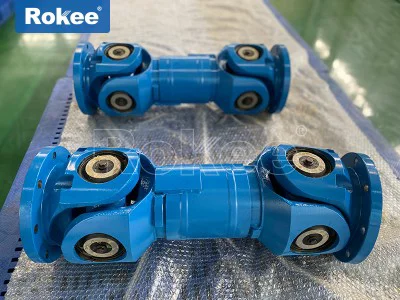
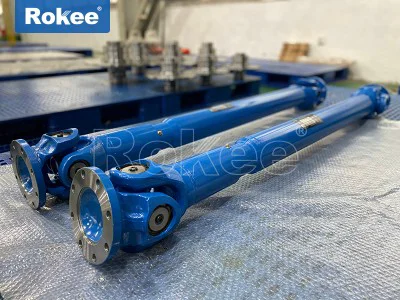
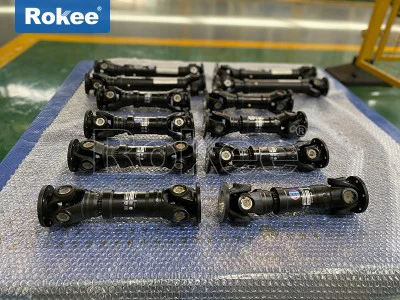
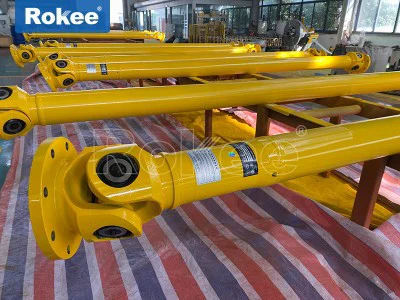
At its most basic level, the universal shaft coupling operates on the principle of spatial linkage mechanics, leveraging a specialized structural design to convert rotational force from one shaft to another while compensating for angular offsets. The foundational structure of a standard universal shaft coupling consists of several key integral parts that work in tandem to deliver reliable performance. The primary components include two yoke assemblies (also referred to as fork joints), a central pivoting element that links the two yokes, bearing sets to reduce friction and enable smooth rotation, and fastening components to secure the coupling to the input and output shafts. The yokes are typically forged or machined from high-strength metallic materials, designed with robust sockets to house the central pivoting member and connection hubs to attach firmly to the shaft ends. The central pivoting component varies across different coupling types, acting as the pivotal point that allows the yokes to move freely relative to one another, maintaining torque transmission even as the angle between the two shafts changes during operation. Bearing assemblies, usually needle roller bearings, tapered roller bearings, or ball bearings depending on the design and load requirements, are integrated into the yoke sockets and around the central pivot to minimize rotational friction, prevent premature wear, and extend the service life of the coupling. These bearings are often sealed to retain lubrication and block out dust, debris, and moisture, protecting internal components from contamination and ensuring consistent performance in harsh working conditions. Every structural element is precision-engineered to balance strength, flexibility, and durability, with material selection tailored to withstand the specific stresses, loads, and environmental factors of the intended application.
The performance of a universal shaft coupling is defined by a set of core characteristics that determine its suitability for different operational scenarios, with key attributes including torque transmission capacity, angular misalignment tolerance, rotational speed capability, vibration damping, shock resistance, and operational stability. Torque transmission capacity is arguably the most critical performance metric, referring to the maximum rotational force the coupling can transfer without structural failure, deformation, or slippage. This capacity is dictated by the material strength, cross-sectional dimensions of key components, and overall structural rigidity of the coupling, with heavy-duty models engineered to handle extremely high torque loads for large-scale industrial machinery, while lightweight variants cater to low-torque precision equipment. Angular misalignment tolerance is the defining feature that sets universal shaft couplings apart from rigid alternatives, with most designs capable of accommodating angular offsets ranging from a few degrees to over 45 degrees, depending on the type and construction. This tolerance allows the coupling to adapt to dynamic shifts in shaft positioning during operation, preventing excessive stress on shafts, bearings, and adjacent machinery components that could lead to premature failure.
Rotational speed capability is another vital performance parameter, as universal shaft couplings must maintain stable operation across varying rotational velocities without generating excessive vibration, noise, or heat. High-speed applications demand couplings with superior dynamic balance, precise machining tolerances, and low-friction bearing systems to avoid resonance and ensure smooth rotation at elevated speeds. Vibration damping and shock resistance are equally important, as the coupling not only transmits power but also absorbs minor shocks and vibrations generated during operation, reducing wear on connected equipment and minimizing noise output. This damping effect helps stabilize the entire drive system, enhancing operational smoothness and extending the lifespan of associated components. Additionally, operational stability encompasses factors such as resistance to fatigue, corrosion resistance, and low maintenance requirements. Couplings used in outdoor, corrosive, or high-temperature environments are constructed with materials that resist rust, oxidation, and thermal degradation, while designs with sealed bearings and simplified structures reduce the need for frequent lubrication and upkeep, boosting reliability and reducing downtime in continuous operation.
Universal shaft couplings are categorized into distinct types based on their structural design, operating principles, and performance characteristics, with each variant tailored to address specific application needs, load conditions, and misalignment requirements. The most prevalent and widely used classification is based on core structural design, encompassing cross shaft type (Cardan or Hooke’s joint), ball cage type (constant velocity joint), ball fork type, and other specialized variants such as three-pin type and convex block type. Each type boasts unique structural nuances and performance profiles, making them suitable for distinct operational scenarios.
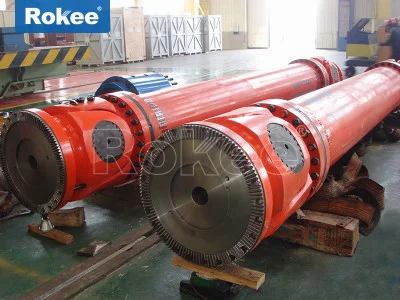
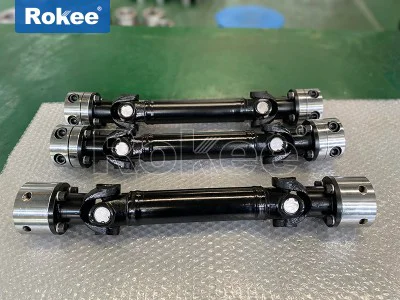
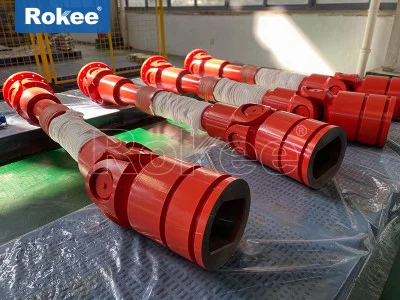
The cross shaft universal shaft coupling, also known as the Cardan joint, is the oldest and most commonly utilized type, renowned for its simple, robust construction and high load-bearing capacity. Its structure features two yoke assemblies connected by a rigid cross-shaped central pivot (spider), with four sets of needle roller bearings fitted between the cross arms and the yoke sockets to facilitate smooth articulation. This design offers exceptional torque transmission capabilities, making it ideal for heavy-duty, low-to-medium speed applications where substantial power transfer is required. While a single cross shaft coupling exhibits slight speed fluctuations during rotation due to its mechanical structure, pairing two such couplings in a double joint configuration eliminates this fluctuation, enabling constant velocity transmission for more precise applications. The cross shaft type is valued for its ease of installation, straightforward maintenance, and ability to withstand harsh operating conditions, though it typically has a more limited angular misalignment range compared to constant velocity variants, generally ranging from 15 to 25 degrees in standard operation.
Ball cage universal shaft couplings, classified as constant velocity (CV) couplings, are engineered to deliver true synchronous rotation between input and output shafts, eliminating speed variations entirely regardless of the angular offset between the shafts. This type features a more intricate structure, consisting of a spherical outer race, a star-shaped inner race, a precision cage to retain steel balls, and multiple torque-transmitting steel balls positioned between the inner and outer races. The cage ensures the steel balls remain aligned along the bisector of the shaft angle at all times, enabling constant velocity transmission even at large angular offsets, often exceeding 40 degrees and reaching up to 75 degrees in specialized designs. Ball cage couplings offer exceptional smoothness, high transmission efficiency, and suitability for high-speed operation, making them ideal for precision machinery and automotive applications where rotational consistency is paramount. However, their complex structure demands high manufacturing precision, stricter lubrication and sealing requirements, and makes them more sensitive to extreme shock loads compared to cross shaft variants.
Ball fork universal shaft couplings represent a middle-ground option between cross shaft and ball cage designs, combining simplified construction with constant velocity transmission capabilities. This type consists of two fork-shaped components and a single central torque-transmitting steel ball, creating a more compact and cost-effective structure than ball cage couplings. While it offers reliable constant velocity performance and moderate load-bearing capacity, its angular misalignment tolerance is typically lower than that of ball cage variants, and it may exhibit reduced stability at extremely high rotational speeds. Ball fork couplings are well-suited for medium-load, medium-speed applications where a balance of performance, durability, and affordability is required, bridging the gap between heavy-duty cross shaft models and high-precision ball cage designs.
Specialized universal shaft coupling variants, such as three-pin and convex block types, cater to niche operational demands that cannot be fully met by standard designs. Three-pin couplings feature three cylindrical pins linking the yoke assemblies, offering enhanced angular compensation and axial movement tolerance, making them suitable for applications requiring both angular misalignment accommodation and limited shaft extension or contraction. Convex block couplings utilize interlocking convex blocks to transmit torque, providing superior shock absorption capabilities and robust performance in applications with frequent impact loads, such as construction machinery and agricultural equipment. These specialized types demonstrate the versatility of universal shaft coupling design, allowing engineers to select a variant that precisely matches the unique operational challenges of a given system.
The versatility of universal shaft couplings, driven by their diverse structures and performance attributes, translates into an extensive range of applications across nearly every sector of mechanical engineering, from heavy industrial machinery to delicate precision equipment, and from automotive systems to agricultural implements. In the automotive industry, universal shaft couplings are integral components of drive trains, steering systems, and axle assemblies, enabling torque transmission between the engine, transmission, and wheels while accommodating the constant angular shifts caused by vehicle movement, suspension travel, and steering adjustments. Constant velocity ball cage couplings are predominantly used in passenger vehicle drive shafts, ensuring smooth power delivery and stable handling at high speeds and tight turning angles, while cross shaft couplings are employed in heavy-duty commercial vehicles, off-road equipment, and agricultural machinery to handle high torque loads and rugged operating conditions.
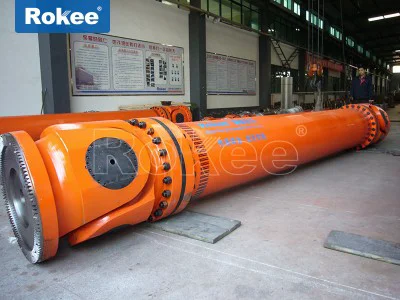
Heavy industrial sectors rely heavily on robust cross shaft universal shaft couplings for large-scale machinery, including metallurgical rolling mills, mining equipment, crushing machinery, and conveyor systems. These couplings are engineered to transmit extremely high torque loads over extended periods, withstand heavy shock loads, and operate reliably in dusty, high-temperature, and high-vibration industrial environments. They play a pivotal role in connecting drive motors to processing equipment, compensating for structural deformation and shaft misalignment caused by heavy operational loads, and ensuring uninterrupted production in industrial facilities. In the aerospace and marine industries, universal shaft couplings are used in specialized drive systems, propulsion mechanisms, and auxiliary equipment, where lightweight yet high-strength designs, precise torque transmission, and resistance to corrosive marine or extreme aerospace environments are essential. Marine applications, in particular, benefit from the coupling’s ability to compensate for shaft misalignment caused by hull flexing and wave-induced movement, maintaining reliable power transmission for propulsion and onboard machinery.
Precision engineering and manufacturing sectors utilize ball cage and other high-precision universal shaft couplings in equipment such as machine tools, textile machinery, packaging machinery, and robotic systems. These applications demand smooth, constant velocity rotation, minimal vibration, and high positional accuracy, making constant velocity couplings the ideal choice to ensure the precision and efficiency of automated and precision manufacturing processes. Agricultural machinery, including tractors, harvesters, and tillage equipment, relies heavily on durable universal shaft couplings to transmit power from the engine to various implements, adapting to the uneven terrain and dynamic load changes common in farming operations. The rugged construction of cross shaft and ball fork couplings ensures reliable performance in dusty, muddy, and high-shock agricultural environments, withstanding the rigorous demands of fieldwork.
Beyond these core sectors, universal shaft couplings find use in a multitude of other applications, including construction equipment, material handling systems, pumping and compression machinery, printing presses, and even medical and laboratory equipment. Their ability to solve the universal engineering challenge of shaft misalignment makes them a versatile solution for nearly any mechanical system requiring rotational power transmission between non-coaxial shafts. The selection of a specific universal shaft coupling type is always guided by the unique requirements of the application, including torque load, rotational speed, angular misalignment range, environmental conditions, and precision demands, ensuring optimal performance, reliability, and longevity of the entire mechanical system.
In summary, the universal shaft coupling is a masterclass in mechanical engineering simplicity and functionality, with its refined structure, diverse performance capabilities, and wide array of types making it an irreplaceable component in modern power transmission systems. From the rugged, high-torque cross shaft variants that power heavy industry to the precision-engineered constant velocity couplings that enable smooth automotive and machinery operation, each type fulfills a distinct role in addressing the challenges of shaft misalignment and power transmission. Its widespread adoption across global industries underscores its critical importance, as it continues to enable the efficient, reliable operation of countless mechanical systems that underpin daily life, industrial production, and technological advancement. As mechanical engineering evolves and equipment designs become more advanced, the universal shaft coupling will remain a vital component, adapting to new operational demands and continuing to deliver reliable power transmission solutions for years to come.