Spherical Gear Couplings
In the realm of mechanical power transmission, couplings serve as indispensable components that bridge two rotating shafts, facilitating the transfer of torque while accommodating inevitable misalignments and operational displacements. Among the diverse array of coupling designs, the spherical gear coupling stands out as a robust and versatile solution, engineered to deliver exceptional performance in demanding industrial environments where standard rigid or flexible couplings fall short. Unlike conventional straight-tooth gear couplings that struggle with significant misalignment and uneven load distribution, the spherical gear coupling leverages a uniquely contoured tooth profile and optimized structural design to balance high torque transmission capacity, flexible displacement compensation, and long-term operational reliability.
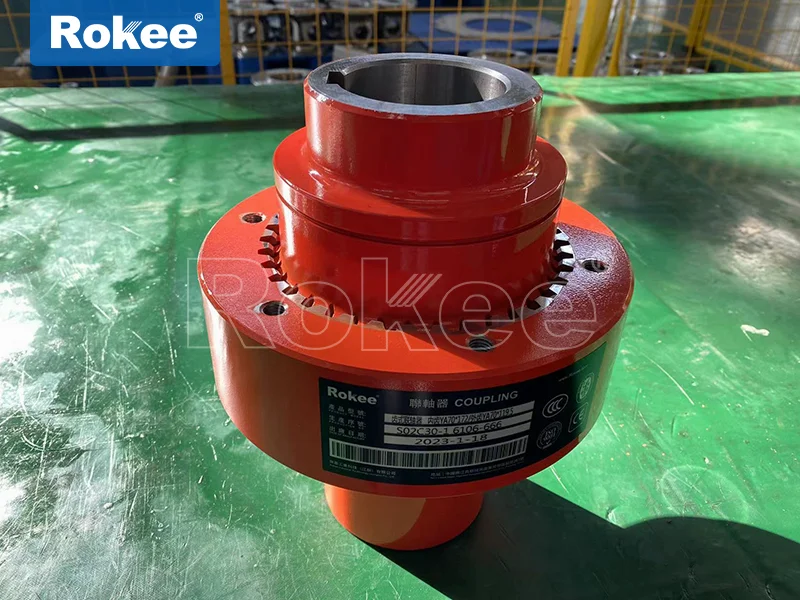
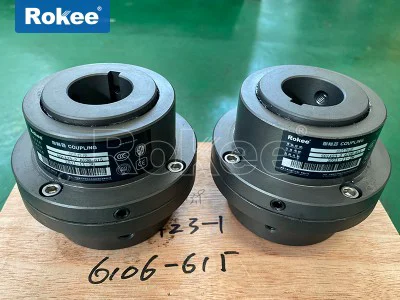
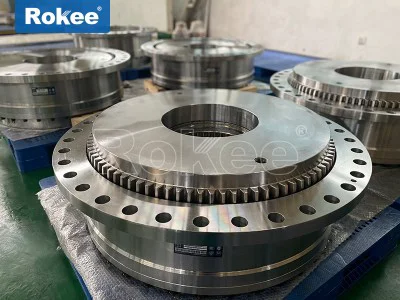
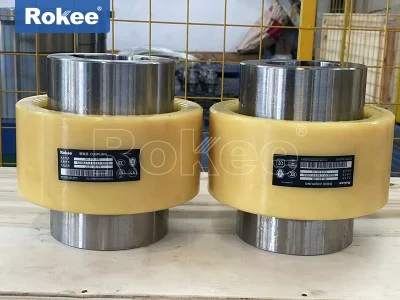
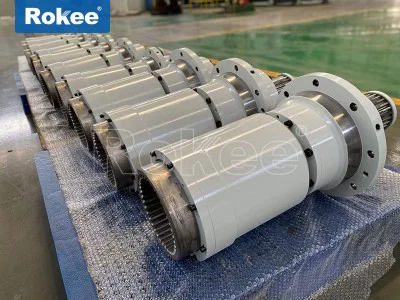
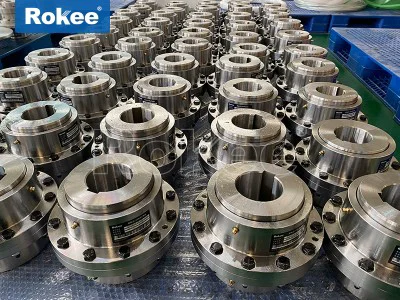
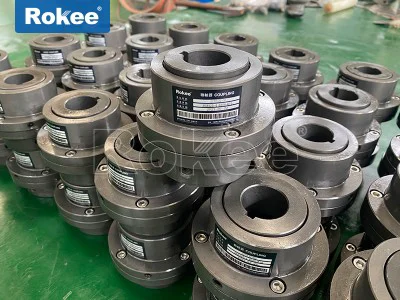
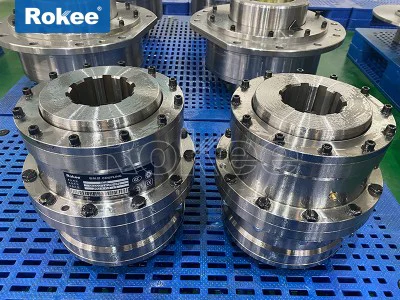
At its core, the spherical gear coupling is a type of rigid-flexible coupling, constructed around a set of precision-engineered gear meshing components that define its functional capabilities. The fundamental structure consists of two main assemblies: a pair of outer gear hubs with spherical tooth profiles and a corresponding pair of inner gear sleeves that encase the outer teeth, forming a tight yet adaptable meshing interface. The defining structural feature lies in the spherical shaping of the outer gear teeth, where the crown of each tooth is machined to a precise spherical contour with its center point aligned precisely along the central axis of the gear. This deliberate design deviates from the flat, straight tooth profile of standard gear couplings, creating a curved contact surface between the outer and inner teeth during operation. Additionally, the assembly incorporates optimized tooth flank clearances, carefully calibrated to strike a balance between smooth meshing, efficient torque transfer, and displacement accommodation, without compromising the overall rigidity needed for heavy-load transmission. Sealing components are integrated into the structural framework to retain lubrication within the meshing zone, prevent the ingress of contaminants like dust, moisture, and debris, and sustain consistent frictional conditions over extended service life. The overall construction is compact, with a streamlined profile that minimizes rotational inertia, making it suitable for both high-speed rotational systems and low-speed, high-torque heavy-duty operations alike.
The structural ingenuity of the spherical gear coupling directly translates to a suite of superior performance metrics that set it apart from competing coupling technologies. Foremost among these is its exceptional ability to compensate for multi-directional shaft misalignments, a critical advantage in real-world industrial settings where perfect shaft alignment is rarely achievable. The spherical tooth design enables the coupling to accommodate angular misalignment, radial offset, and axial displacement simultaneously, with far greater tolerance than straight-tooth gear couplings. Angular misalignment compensation typically ranges from 1.5 degrees to 2.5 degrees under normal operating conditions, and can extend to higher thresholds in specialized configurations, effectively mitigating the stress and wear that arise from shaft skew. Radial displacement tolerance is equally impressive, allowing for small parallel offsets between driving and driven shafts without inducing excessive vibration or load concentration, while axial flexibility permits limited axial movement to absorb thermal expansion and contraction of shafts during operation, a common occurrence in machinery subjected to fluctuating temperatures. This comprehensive displacement compensation eliminates the risk of premature bearing failure, shaft bending, and component fatigue that plagues less flexible coupling designs.
Beyond misalignment compensation, the spherical gear coupling boasts remarkable torque transmission capacity and load-bearing performance, underpinned by the enhanced contact characteristics of its spherical teeth. The curved tooth profile distributes transmitted torque across a larger contact area compared to straight teeth, reducing localized stress concentration on tooth flanks and roots. This even load distribution boosts the coupling’s torque-carrying capability significantly, with load capacity often exceeding that of equivalent straight-tooth gear couplings by a substantial margin, enabling it to handle heavy instantaneous impact loads and sustained high-torque demands without deformation or failure. The optimized meshing also minimizes edge wear and tooth pitting, common failure modes in standard gear couplings under misaligned conditions, thereby extending the operational lifespan of the coupling and reducing maintenance frequency. Transmission efficiency is another standout performance trait, with values consistently reaching exceptionally high levels, approaching near-perfect power transfer with minimal energy loss due to friction or meshing resistance. This high efficiency translates to reduced energy consumption for the entire transmission system, lower heat generation during operation, and improved overall mechanical efficiency, particularly in long-running industrial machinery.
Durability and adaptability to harsh operating conditions further solidify the spherical gear coupling’s performance credentials. The robust structural design, paired with high-quality material formulations tailored for wear resistance and fatigue strength, enables the coupling to operate reliably in extreme environments, including high-temperature industrial zones, high-vibration work sites, and settings with heavy dust or moisture. The sealed construction preserves lubricant integrity, ensuring consistent lubrication of meshing teeth and preventing abrasive particles from causing premature wear, even in rugged industrial applications. Maintenance requirements are relatively modest; routine lubrication replenishment and periodic inspection of tooth wear and seal integrity are sufficient to sustain optimal performance, making it a cost-effective choice for industrial operators seeking minimal downtime and low long-term maintenance costs. Unlike some flexible couplings that sacrifice rigidity for flexibility, the spherical gear coupling maintains a favorable balance between torsional rigidity and adaptive flexibility, ensuring precise torque transmission without unwanted torsional backlash, a vital attribute for precision-driven machinery where operational accuracy is paramount.
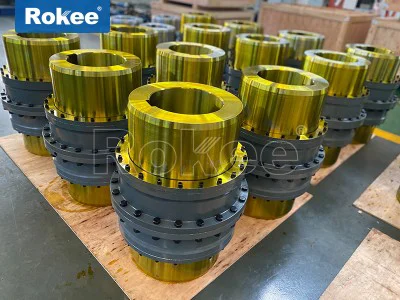
Spherical gear couplings are categorized into distinct types based on structural variations, functional adaptations, and application-specific design modifications, each tailored to address unique operational requirements and installation constraints. One primary classification axis is based on the overall structural configuration, distinguishing between integral type and split-type spherical gear couplings. Integral type models feature a unified, compact construction with seamless gear hubs and sleeves, offering exceptional torsional rigidity and balanced rotational performance, ideal for high-speed machinery and applications with limited installation space. Split-type designs, by contrast, feature a disassemblable structure that simplifies installation, removal, and maintenance without requiring disconnection of adjacent shafts or machinery, making them highly practical for large-scale industrial equipment and retrofitting projects where accessibility is limited.
Another key classification criterion is the presence and design of intermediate shaft components, differentiating between short-span direct-connected couplings and long-span intermediate shaft couplings. Short-span models are engineered for close-coupled shaft arrangements, where the distance between driving and driven shafts is minimal, prioritizing compactness and high torque density. Long-span intermediate shaft variants incorporate a dedicated intermediate shaft between the two gear meshing assemblies, extending the effective transmission distance to connect widely separated shafts, commonly deployed in scenarios where machinery components are spatially separated. These intermediate shaft designs can also integrate minor damping features to absorb subtle vibrations, enhancing operational stability in extended transmission lines.
Classification can also be based on sealing mechanisms and lubrication modes, separating grease-lubricated sealed couplings and oil-lubricated enclosed couplings. Grease-lubricated sealed models utilize high-performance lubricating grease retained by durable seals, offering maintenance simplicity and suitability for low-to-medium speed operations, with no need for complex oil circulation systems. Oil-lubricated enclosed designs feature a fully enclosed, oil-tight structure that circulates lubricating oil within the coupling, delivering superior cooling and lubrication for high-speed, high-load operations, reducing frictional heat and sustaining consistent performance under intense rotational stress. Additionally, specialized variants exist for vertical shaft transmission, engineered to counteract gravitational forces and maintain stable meshing and lubrication in vertical mounting configurations, a niche but critical adaptation for specific industrial machinery setups. Each type retains the core spherical tooth design and fundamental performance advantages, with targeted modifications to optimize functionality for distinct installation orientations, speed ranges, and load profiles.
The unique combination of structural resilience, high performance, and adaptive flexibility positions spherical gear couplings as a cornerstone component across a vast spectrum of industrial sectors, wherever reliable torque transmission and misalignment compensation are non-negotiable. In heavy industry, including metallurgy, mining, and construction machinery, these couplings are extensively employed in high-torque equipment such as rolling mills, crushers, conveyors, and excavators. These applications demand robust load-bearing capacity to handle heavy shock loads and continuous heavy-duty operation, while the misalignment compensation addresses shaft deviations caused by structural stress and thermal expansion, ensuring uninterrupted production in harsh industrial environments.
In the energy and power generation sector, spherical gear couplings play a vital role in rotating machinery including turbines, generators, compressors, and wind power transmission systems. The high transmission efficiency and precise torque transfer support optimal energy conversion, while the ability to accommodate thermal displacement and minor shaft misalignment ensures stable operation of critical power equipment, reducing the risk of costly downtime in power generation facilities. Their low vibration and high balance characteristics also align with the stringent operational standards of precision energy machinery, making them a preferred choice for both conventional and renewable power systems.
Marine and shipbuilding engineering represents another key application area, where spherical gear couplings are integrated into propulsion systems, steering mechanisms, and deck machinery. The compact, durable design withstands the harsh marine environment, including salt spray, moisture, and variable loading conditions, while the multi-directional displacement compensation adapts to hull deformation and shaft movement during navigation, ensuring reliable power transmission for marine propulsion and auxiliary equipment. In aerospace and precision manufacturing, specialized lightweight spherical gear couplings are utilized in precision transmission systems, where high accuracy, low inertia, and reliable misalignment compensation are essential for maintaining operational precision in CNC machine tools, robotic arms, and aerospace test equipment.
Beyond these core sectors, spherical gear couplings find utility in chemical processing, papermaking, textile machinery, and various heavy-duty manufacturing lines, adapting to diverse operational demands ranging from high-speed rotation to low-speed heavy hauling. Their universal applicability stems from the core design principle: harmonizing robust torque transmission with flexible adaptive performance, filling a critical niche in the mechanical transmission landscape. Unlike rigid couplings that lack misalignment tolerance or flexible couplings that sacrifice load capacity, spherical gear couplings strike an optimal balance, making them irreplaceable in machinery where reliability, durability, and efficiency are paramount.
In summary, the spherical gear coupling represents a pinnacle of practical mechanical engineering design, merging innovative spherical tooth geometry with rugged structural engineering to deliver unmatched performance in torque transmission and displacement compensation. Its well-crafted structure enables exceptional load-bearing capacity, high transmission efficiency, and superior adaptability to misalignment and harsh operating conditions, while diverse structural variants cater to the unique needs of countless industrial applications. As industrial machinery continues to evolve toward higher loads, faster speeds, and greater operational resilience, the spherical gear coupling remains a vital and evolving component, continuously refined to meet the escalating demands of modern mechanical transmission systems. Its enduring relevance across heavy industry, energy, marine, and precision manufacturing sectors underscores its status as a versatile, reliable, and indispensable solution for efficient, durable power transmission in the most demanding operational environments.