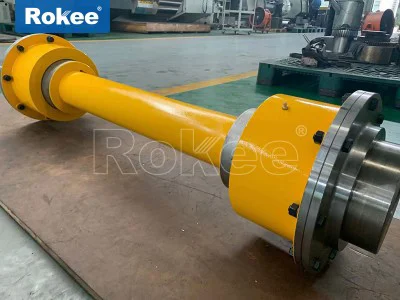
Steelflex Grid Couplings
In the realm of mechanical power transmission, grid couplings stand as one of the most versatile and reliable components, engineered to bridge rotating shafts, transfer torque efficiently, and mitigate the adverse effects of misalignment, vibration, and shock loads that plague industrial drive systems. Unlike rigid couplings that demand perfect shaft alignment and offer no flexibility, grid couplings blend robust torque-carrying capability with controlled elastic deformation, making them a staple across countless industrial sectors where smooth, durable power transfer is non-negotiable. At their core, these couplings feature a streamlined, functional structure optimized for performance and longevity, with every component crafted to withstand the rigors of continuous operation, variable loads, and harsh operating environments. The fundamental design of a grid coupling revolves around two key metallic hubs, a flexible serpentine grid element, and protective housing components, each working in tandem to deliver consistent performance without compromising on strength or adaptability.
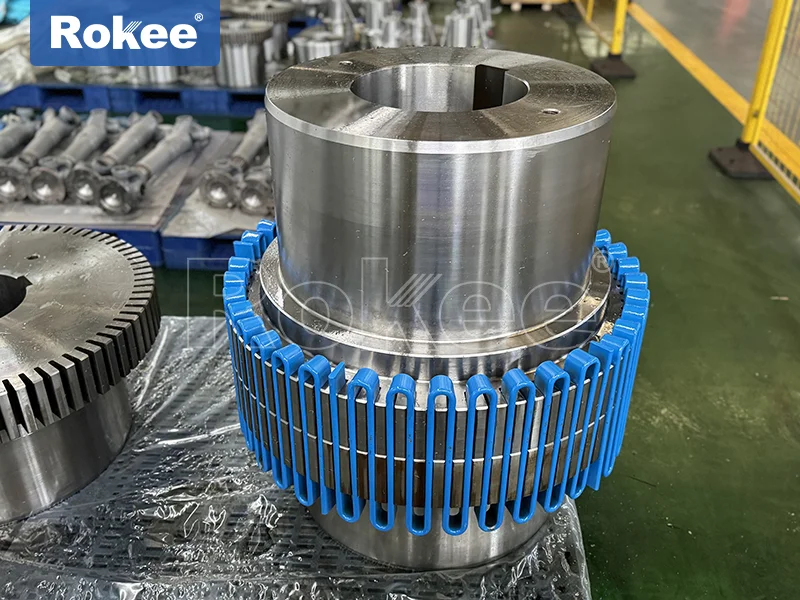
The structural composition of a grid coupling is both straightforward and ingenious, prioritizing functionality and ease of maintenance while maximizing power transmission efficiency. The two hubs, typically forged from high-grade ductile iron, carbon steel, or alloy steel, are mounted securely onto the driving and driven shafts via keyways, set screws, or tapered bushings, ensuring a tight, slip-free connection that prevents torque loss during operation. Precision-machined grooves are carved into the inner faces of each hub, shaped to cradle the flexible grid element with a precise, snug fit that enables controlled movement under load. The heart of the coupling—the grid element—is a thin, serpentine strip of high-strength alloy steel, heat-treated to achieve optimal spring hardness and subjected to specialized surface treatments like shot peening to enhance fatigue resistance and extend service life. This serpentine grid is the defining feature, as its flexible, spring-like nature allows it to bend, twist, and pivot within the hub grooves, accommodating shaft misalignment and absorbing dynamic loads without transferring excessive stress to connected machinery. Completing the structure are protective covers, often made of die-cast aluminum or stamped steel, and durable sealing elements that enclose the grid and hub assembly. These components serve a critical dual purpose: retaining lubrication within the coupling to reduce friction and wear, and blocking out external contaminants such as dust, moisture, debris, and corrosive substances that could compromise the grid’s integrity or accelerate component degradation. The housing designs vary, with split configurations—either horizontal or vertical—offering unparalleled accessibility for maintenance, allowing technicians to inspect or replace the grid element without disassembling the entire drive system or repositioning connected equipment, a key advantage that minimizes downtime and operational disruptions.
The performance attributes of grid couplings are what set them apart from other flexible coupling types, striking a rare balance between high torque capacity, torsional flexibility, and operational resilience. One of the most notable performance features is their exceptional torque-transmitting capability, with designs engineered to handle substantial torque loads relative to their compact size and weight. Unlike elastomeric couplings that may deform or fail under heavy torque, the alloy steel grid maintains structural rigidity under steady loads, ensuring efficient power transfer with minimal energy loss, even in high-inertia applications that demand sudden torque delivery. Equally impressive is their ability to accommodate multiple forms of shaft misalignment simultaneously, a critical trait in real-world industrial settings where perfect alignment is often unattainable due to manufacturing tolerances, thermal expansion, foundation settling, or mechanical wear. Grid couplings can compensate for angular misalignment, parallel offset misalignment, and axial end float, with the flexible grid bending smoothly to absorb these deviations without creating destructive side loads on shaft bearings or gear assemblies. This misalignment tolerance not only protects connected equipment but also extends the service life of bearings, seals, and other precision components, reducing long-term maintenance costs and unplanned downtime.
Beyond misalignment compensation, grid couplings excel at damping torsional vibrations and cushioning shock loads, a performance benefit that safeguards drive systems from damage during transient operating conditions. The elastic nature of the serpentine grid acts as a mechanical shock absorber, dissipating impact energy and reducing peak torque spikes that occur during startup, sudden load changes, equipment jams, or reverse operation. This vibration-damping capability is particularly valuable in machinery with reciprocating or pulsating loads, as it minimizes noise, reduces mechanical stress, and stabilizes overall system performance. Additionally, grid couplings exhibit excellent thermal stability, operating reliably across a broad range of temperatures without losing their flexible or load-bearing properties, making them suitable for both extreme cold and high-heat industrial environments. Their durable construction also translates to low maintenance requirements; when properly lubricated, the coupling can operate for extended intervals between service checks, with the grid element’s high fatigue resistance preventing premature failure even under cyclic loading conditions. Unlike more complex coupling designs, grid couplings feature a minimal number of moving parts, reducing the risk of mechanical breakdown and simplifying repair procedures—when wear does occur, only the grid element typically needs replacement, as the sturdy hubs and housing often remain intact throughout the coupling’s operational life.
Grid couplings are available in a diverse range of classifications, each tailored to specific operational requirements, space constraints, load profiles, and environmental conditions, ensuring compatibility with nearly every industrial power transmission application. The most common categorization is based on design configuration, with standard close-coupled grid couplings serving as the general-purpose workhorse for most horizontal drive systems. These compact units feature a shortened hub spacing, ideal for installations with limited axial space, and are suitable for moderate torque loads and standard misalignment conditions, commonly used in four-bearing drive setups across general manufacturing. For applications requiring additional spacing between shafts, such as pumps, compressors, or machinery where routine maintenance demands access to shaft seals or bearings, spacer-type grid couplings are the preferred choice. These models feature an extended center spacer section that can be easily removed, allowing technicians to service connected equipment without disturbing shaft alignment or disassembling the hubs, streamlining maintenance workflows in critical process systems.
Another key classification is based on housing design, with horizontally split cover couplings and vertically split cover couplings addressing different operational needs. Horizontally split couplings feature a two-piece cover that separates along the horizontal plane, providing easy access to the grid for inspection or replacement and performing exceptionally well in reversing load applications. Vertically split couplings, by contrast, have a cover that splits vertically, offering enhanced structural rigidity and higher speed capabilities, making them suitable for high-RPM drive systems where stability and balance are paramount. Additionally, grid couplings are categorized by load capacity, with standard-duty models for light to moderate industrial applications and heavy-duty, reinforced designs for extreme torque loads and harsh operating conditions. Heavy-duty grid couplings feature thicker, reinforced hubs, upgraded alloy steel grids with enhanced fatigue resistance, and robust housing structures, engineered to withstand the extreme stresses of heavy machinery operation, including shock loads, continuous cyclic stress, and abrasive environments. Specialized variants also exist for unique operational scenarios, such as vertical shaft couplings designed with anti-disengagement features to prevent grid slippage under gravity, and corrosion-resistant models with coated hubs and sealed components for use in chemical processing, marine, or wastewater treatment environments where moisture and corrosive chemicals are prevalent.
The adaptability and robust performance of grid couplings have led to their widespread adoption across a vast spectrum of industrial applications, where they serve as critical links in power transmission systems that keep global industry operational. In the manufacturing and general industrial sector, grid couplings are found in conveyor systems, fans, blowers, mixers, and machine tool drives, where they ensure smooth torque transfer, absorb vibration from cutting or processing operations, and accommodate minor misalignment caused by continuous use. Their ability to handle frequent start-stop cycles and reverse operation makes them indispensable for assembly lines, material handling equipment, and automated manufacturing systems that demand reliable, consistent performance. In the heavy machinery and mining industry, grid couplings are a cornerstone component, deployed in crushers, mills, grinders, bucket elevators, and rail car dumpers—equipment that operates under extreme shock loads, high torque, and dusty, abrasive conditions. The rugged construction and shock-absorbing properties of grid couplings protect these heavy-duty machines from catastrophic failure, reducing downtime in mining and aggregate processing operations where equipment reliability directly impacts productivity.
The oil and gas, petrochemical, and chemical processing industries rely heavily on grid couplings for pump, compressor, and agitator drives, where their corrosion resistance, misalignment tolerance, and low maintenance design are critical for safe, continuous operation. These couplings handle the pulsating loads of reciprocating compressors, compensate for thermal expansion in long pipe runs, and resist degradation from exposure to harsh chemicals, ensuring leak-free, efficient power transfer in hazardous and corrosive environments. In the power generation sector, grid couplings connect turbines, generators, and auxiliary equipment, damping torsional vibrations from turbine rotation, accommodating thermal growth in large drive shafts, and maintaining reliable performance under variable load conditions—essential for stable power output and equipment protection in both conventional and renewable power plants. The pulp and paper, forestry, and cement industries also benefit extensively from grid couplings, utilizing them in paper machines, kilns, dryers, and material processing equipment, where they withstand high temperatures, continuous operation, and heavy shock loads while minimizing wear on expensive machinery.
Beyond these core industrial sectors, grid couplings find utility in marine propulsion systems, wastewater treatment facilities, food and beverage processing plants, and automotive manufacturing, proving their versatility across every corner of modern industry. Their enduring popularity stems from their unique ability to merge high torque capacity, flexible misalignment compensation, vibration damping, and ease of maintenance into a single, cost-effective design—attributes that no other single coupling type can match as effectively. As industrial machinery continues to evolve, with demands for higher efficiency, greater durability, and reduced operational costs growing ever more stringent, grid couplings remain a timeless, reliable solution for power transmission challenges. Their simple yet effective structural design, coupled with exceptional performance across diverse operating conditions, ensures that they will continue to be a vital component in industrial drive systems for years to come, adapting to new technological advancements while maintaining the core functionality that has made them indispensable in global manufacturing and heavy industry.
In summary, grid couplings represent a pinnacle of practical mechanical engineering, combining a minimalist, robust structure with outstanding performance characteristics to meet the diverse needs of industrial power transmission. Their well-engineered design, encompassing precision hubs, flexible alloy steel grids, and protective housing, delivers unmatched torque transfer, misalignment accommodation, and shock absorption, while their varied classifications cater to every conceivable operational scenario. From light-duty manufacturing equipment to heavy-duty mining and power generation machinery, grid couplings provide consistent, reliable performance, protecting valuable equipment, reducing maintenance burdens, and enhancing overall operational efficiency. As industries continue to prioritize durability, efficiency, and cost-effectiveness, the grid coupling remains a top-tier choice, embodying the perfect balance of strength, flexibility, and practicality that defines high-quality mechanical power transmission components.