Flange Couplings
Flange coupling stands as one of the most fundamental and widely applied mechanical components in the field of power transmission, serving as a critical bridge that connects two rotating shafts to facilitate the efficient transfer of torque and rotational motion across diverse mechanical systems. Unlike other flexible or specialized couplings, its core design prioritizes stability, load-bearing capacity, and operational reliability, making it a staple in both light-duty auxiliary equipment and heavy-duty industrial machinery. At its essence, the flange coupling operates on a straightforward yet robust mechanical principle, relying on rigid or semi-rigid connection between two flanged hubs to lock shafts in place and eliminate slippage or power loss during operation. This uncomplicated structural framework not only simplifies manufacturing and assembly processes but also enhances the overall durability of the component, allowing it to withstand prolonged operational stress and harsh working conditions without compromising performance. Every aspect of its structure, from the geometric design of the flanges to the selection of connecting fasteners and auxiliary components, is meticulously engineered to align with specific performance demands, ensuring that the coupling can adapt to varying load intensities, rotational speeds, and environmental challenges in real-world applications.
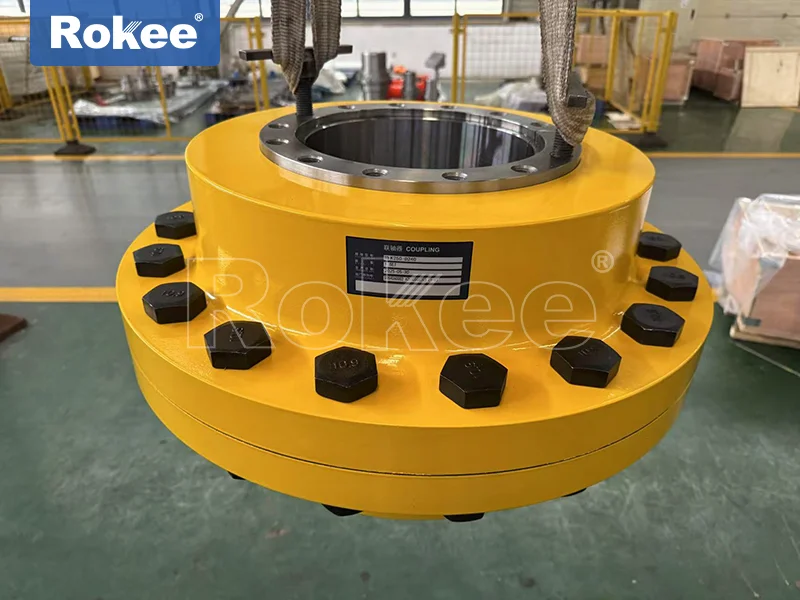
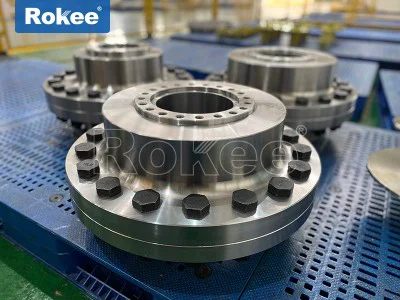
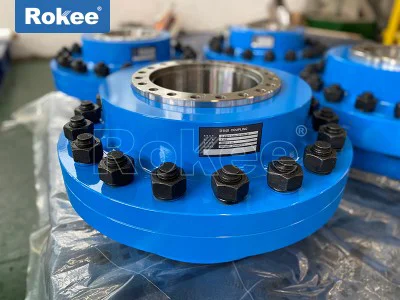
Delving into the basic structural composition of a standard flange coupling, it primarily consists of two symmetrical flanged hubs, a set of high-strength fasteners, and optional auxiliary elements such as gaskets or centering rings, each playing an irreplaceable role in the coupling’s overall functionality. The two flanged hubs are the core load-bearing parts of the coupling, each securely mounted onto the end of one of the two shafts to be connected, typically via keyway connections or interference fits to prevent relative rotation between the hub and the shaft during torque transmission. The flange portion of each hub features a series of uniformly distributed bolt holes along the circumferential direction, with the number and diameter of these holes determined by the required torque transmission capacity and the overall size of the coupling; larger flanges with more fasteners are generally deployed for heavy-load scenarios to distribute stress evenly and avoid local fatigue failure. The mating surfaces of the two flanges are precisely machined to ensure tight, gap-free fitting when fastened together, which is vital for maintaining shaft alignment and preventing eccentric rotation that could trigger vibration, noise, or accelerated wear on adjacent components like bearings and gears. High-strength bolts and nuts are used to clamp the two flanges firmly together, with the pre-tightening force of the bolts generating sufficient friction between the flange mating surfaces to transmit torque effectively. In some optimized designs, centering sleeves or positioning spigots are integrated into the flange structure to enhance alignment accuracy, simplifying on-site installation and reducing the risk of misalignment-related performance degradation. Optional gaskets, when installed between the flanges, primarily serve to seal the connection cavity, block the intrusion of dust, moisture, or corrosive media, and retain lubricating oil within the transmission system, further prolonging the service life of both the coupling and the connected shafts.
The performance characteristics of flange couplings are deeply intertwined with their structural design and material selection, presenting a unique set of advantages that distinguish them from other coupling types in targeted application scenarios. Foremost among these is exceptional torque transmission capacity, as the rigid contact between flanges and the high-strength fastener assembly enable the coupling to handle heavy, continuous loads without deformation or failure, a trait that makes it indispensable in heavy industrial settings where large torque output is required. Secondly, flange couplings boast outstanding rigidity and stability, with minimal axial, radial, or angular deformation under load, ensuring precise synchronization of rotational motion between the two connected shafts; this rigidity is particularly critical for precision mechanical systems where even minor displacement could compromise operational accuracy. Additionally, these couplings exhibit strong environmental adaptability, with appropriate material formulations enabling them to operate stably in extreme temperatures, high-humidity environments, or mildly corrosive atmospheres, while the enclosed or semi-enclosed flange structure protects internal fasteners from external impact and wear. Maintenance-wise, flange couplings are highly user-friendly: the bolted connection design allows for quick disassembly and reassembly, facilitating routine inspection, part replacement, and system maintenance without extensive disassembly of the entire transmission system, thereby reducing equipment downtime and operational costs. It is important to note, however, that standard rigid flange couplings have limited tolerance for shaft misalignment, requiring high-precision initial installation alignment to avoid additional stress on the coupling and shafts; this limitation has spurred the development of modified flange coupling designs to address misalignment challenges in practical applications.
Flange couplings are categorized into distinct types based on structural variations, functional attributes, and application-specific requirements, each tailored to solve unique transmission challenges and meet diverse operational needs. The most foundational classification divides them into rigid flange couplings and flexible flange couplings, representing the two core design philosophies of the component. Rigid flange couplings, the most traditional variant, feature a fully solid, non-elastic structure with no built-in compensation mechanisms, relying entirely on precise flange fitting and fastener clamping to achieve a fixed shaft connection. This type is characterized by maximum rigidity and zero backlash, making it ideal for systems where perfect shaft alignment is achievable and precise torque transmission is non-negotiable, such as precision machine tools, large generator sets, and fixed industrial transmission lines. In contrast, flexible flange couplings incorporate elastic elements or movable structural components between the two flanges, such as rubber gaskets, spring assemblies, or tooth-shaped meshing structures, to absorb minor shaft misalignments, dampen vibration, and reduce shock loads during operation. This flexibility makes them suitable for equipment prone to thermal expansion-induced displacement, dynamic load fluctuations, or inevitable installation misalignment, including pumps, fans, compressors, and automotive transmission systems.
Beyond the rigid-flexible classification, flange couplings can be further subdivided into specialized types based on structural details and application scenarios, each with targeted performance optimizations. Unprotected flange couplings represent a simplified, cost-effective design where the connecting bolts and nuts are fully exposed externally; this open structure streamlines installation, inspection, and fastener replacement, making it suitable for clean, low-risk working environments with minimal exposure to dust or corrosive substances. Protected flange couplings, by contrast, feature a recessed flange design that encloses bolts and nuts within a protective cavity, shielding fasteners from external damage, corrosion, and accidental contact, while also enhancing operational safety by eliminating exposed moving parts; this type is widely used in industrial workshops, construction machinery, and outdoor equipment where environmental hazards are prevalent. Marine flange couplings are engineered exclusively for harsh marine environments, constructed from corrosion-resistant alloys and featuring enhanced sealing structures to withstand saltwater spray, high humidity, and continuous vibration; they are optimized to maintain stable performance in ship propulsion systems, offshore drilling equipment, and marine auxiliary machinery, resisting corrosion and fatigue failure over extended service life. Sleeve-type flange couplings integrate a central connecting sleeve between the two flanged hubs, offering a compact, lightweight design that accommodates slight axial displacement and simplifies alignment during installation, making it ideal for small to medium-sized power transmission systems with limited installation space. Each of these specialized types retains the core advantages of flange couplings while addressing specific pain points, expanding the component’s applicability across a broad spectrum of industrial and mechanical fields.
The versatility of flange couplings is reflected in their extensive cross-industry applications, where they serve as a critical link in ensuring the stable operation of rotating mechanical systems across countless sectors. In the heavy machinery and industrial manufacturing sector, rigid flange couplings are extensively used in large-scale equipment such as crushers, mills, conveyor systems, and metal processing machinery, where their high torque-bearing capacity and rigid connection support continuous, heavy-load operation, maintaining production efficiency and reducing failure risks. In the power generation industry, both thermal power and renewable energy facilities rely on flange couplings to connect turbines, generators, and drive shafts, transmitting the rotational energy generated by steam, wind, or water power to power generation components; the component’s stability and high-temperature resistance ensure reliable energy conversion even under continuous high-load operation. The petrochemical and chemical industry also heavily utilizes flange couplings, particularly corrosion-resistant variants, in pumps, compressors, and pipeline transmission equipment; their leak-proof sealing and chemical resistance make them suitable for handling flammable, corrosive, or toxic media, ensuring operational safety and preventing environmental contamination.
In the transportation and marine engineering sectors, flange couplings play an indispensable role in vehicle and vessel transmission systems. Automotive and heavy-duty truck drivetrains use flexible flange couplings to connect engines, transmissions, and drive shafts, absorbing vibration from road conditions and engine operation to improve ride comfort and protect transmission components. Marine vessels, from small fishing boats to large cargo ships and naval vessels, deploy specialized marine flange couplings in propulsion systems, connecting engine output shafts to propeller shafts; their saltwater corrosion resistance and high shock resistance ensure reliable navigation even in rough sea conditions, withstanding the impact of waves and variable load stresses. In the aerospace and precision machinery sector, high-precision, lightweight flange couplings are used in aircraft auxiliary systems, precision instrumentation, and automated production lines, where their low backlash, high alignment accuracy, and compact design support the precise operation of sensitive equipment, meeting strict performance and space constraints.
Additionally, flange couplings find widespread use in civil engineering, water conservancy, and daily utility systems, including water supply and drainage pumps, sewage treatment equipment, HVAC systems, and agricultural machinery. In these applications, the component’s ease of installation, low maintenance requirements, and reliable performance ensure the stable operation of public infrastructure and agricultural production equipment, supporting daily life and industrial productivity. The adaptability of flange couplings is further highlighted by their ability to be customized for specialized scenarios: modified designs can be developed to meet ultra-high torque demands, extreme temperature conditions, or space-limited installations, solidifying their status as a versatile and irreplaceable component in modern mechanical engineering.
In summary, flange couplings represent a perfect fusion of simple structural design and exceptional mechanical performance, with their diverse types catering to the nuanced demands of various transmission systems and working environments. From rigid models that prioritize precision and load capacity to flexible variants that absorb misalignment and vibration, and from standard industrial designs to specialized marine and corrosion-resistant versions, each type of flange coupling fulfills a unique role in ensuring efficient, stable power transmission. Their widespread presence across heavy industry, energy, transportation, marine, precision machinery, and civil engineering sectors underscores their critical importance in the global mechanical ecosystem. As industrial technology continues to advance and equipment performance requirements evolve, the design and material science of flange couplings will continue to be optimized, further enhancing their performance, durability, and adaptability. Despite being a seemingly basic mechanical component, the flange coupling remains a cornerstone of modern power transmission systems, quietly enabling the reliable operation of countless pieces of equipment and driving the progress of industrial and technological development worldwide.
Coupling Categories

Links:
Related Articles
- Aug 10, 2026Flanged Curved Tooth Coupling
- Aug 16, 2023RLQU Improved Flange Quick Installation Diaphragm Coupling
- Aug 16, 2023RLQF Flange Type Quick Installation Diaphragm Coupling
- Aug 16, 2023RLQA No Flange Quick Installation Metal Diaphragm Coupling