Cross Cardan Shafts
In the vast landscape of mechanical power transmission systems, the cross Cardan shaft stands as one of the most fundamental and indispensable components, serving as a critical bridge for transferring rotational torque and motion between shafts that are not collinear or have varying degrees of angular misalignment. Unlike rigid couplings that demand perfect shaft alignment, this specialized transmission part leverages its unique cross-shaped core structure to accommodate angular offsets, axial displacements, and even minor radial deviations, ensuring uninterrupted power flow in diverse mechanical setups. From compact automotive drivetrains to heavy-duty industrial machinery, agricultural equipment, and marine propulsion systems, the cross Cardan shaft has earned its place as a cornerstone component due to its robust design, reliable performance, and exceptional adaptability to complex operating conditions.

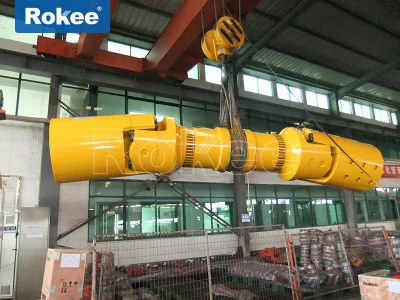
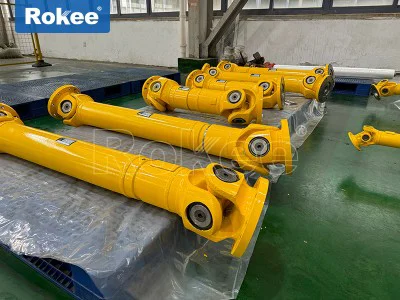
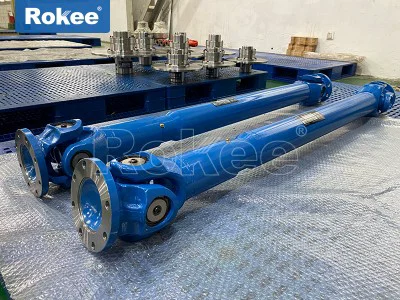
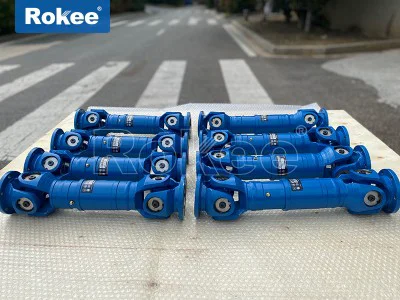
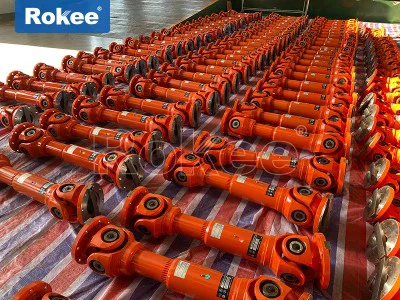
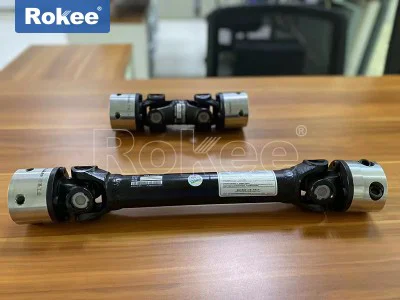
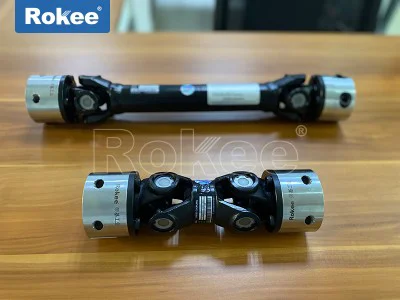
At its core, the cross Cardan shaft features a streamlined yet highly durable structural framework, with every component engineered to withstand torsional stress, cyclic loading, and frictional wear during continuous operation. The primary components include a cross-shaped journal (commonly referred to as the cross spider), two yoke assemblies (drive yoke and driven yoke), bearing sets, and sealing elements. The cross spider, the heart of the assembly, is a precision-forged metal component with four perpendicular journal ends, each designed to house a bearing unit that facilitates smooth rotational movement. This cross configuration allows the two yokes to pivot independently in two mutually perpendicular planes, creating a universal joint effect that eliminates the constraints of rigid shaft alignment. The yokes, typically crafted from high-strength alloy steel or carbon steel, are shaped to securely clamp onto the driving and driven shafts, with fork-like ends that interlock with the cross spider’s bearing journals. The bearing assemblies, most commonly needle roller bearings for high-load applications, are mounted on each end of the cross spider, reducing friction between the rotating cross and the stationary yoke forks; these bearings are selected for their high load-bearing capacity, low rotational resistance, and ability to operate efficiently under both high and low speeds. Completing the structure are protective seals, usually made from wear-resistant rubber or synthetic polymers, which encase the bearing journals to prevent the ingress of dust, moisture, debris, and contaminants while retaining lubricating grease within the joint, a vital feature for prolonging service life and maintaining consistent performance. The overall structural design prioritizes compactness, mechanical rigidity, and ease of assembly, making it suitable for integration into space-constrained mechanical systems without compromising transmission efficiency.
The performance characteristics of the cross Cardan shaft are tailored to address the core challenges of non-collinear shaft transmission, blending strength, flexibility, and efficiency to meet the demands of varied industrial and automotive environments. One of its most defining performance traits is its exceptional angular misalignment compensation capability, which allows it to transmit power smoothly even when the driving and driven shafts form a significant angle, typically ranging from a few degrees up to 45 degrees depending on the specific design and size of the shaft. This flexibility is unmatched by rigid couplings and is critical for machinery where shaft alignment shifts during operation, such as vehicles navigating uneven terrain or industrial equipment with vibrating components. Another key performance metric is its high torque transmission capacity, with the forged cross spider and robust yoke construction enabling the shaft to handle heavy torsional loads without deformation or failure; this load-bearing prowess is further enhanced by precision machining and heat treatment processes that boost the material’s tensile strength, hardness, and fatigue resistance. The cross Cardan shaft also delivers reliable transmission efficiency, with minimal power loss attributed to low-friction bearing systems and optimized component geometry, ensuring that the vast majority of input torque is transferred to the driven shaft rather than being dissipated as heat or vibration. Additionally, the component exhibits strong durability and wear resistance, capable of withstanding prolonged cyclic loading, frequent start-stop cycles, and harsh operating conditions ranging from extreme temperatures to high-vibration environments. While single cross Cardan joints may exhibit minor speed fluctuations at larger operating angles due to their mechanical design, this limitation is mitigated in advanced configurations, and the overall performance remains consistent for most standard applications. Maintenance requirements are relatively modest, with periodic lubrication and seal inspections being the primary upkeep tasks, further solidifying its status as a low-cost, high-reliability transmission solution.
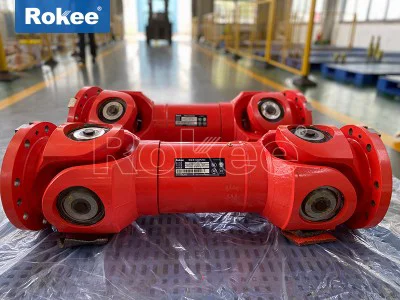
Cross Cardan shafts are classified into distinct categories based on structural design, functional features, load-bearing capacity, and application-specific requirements, with each variant engineered to excel in particular operating scenarios. The most fundamental classification distinguishes between single cross Cardan shafts and double cross Cardan shafts, a division rooted in the number of universal joint assemblies integrated into the shaft. Single cross Cardan shafts consist of a single cross spider and two yokes, representing the simplest and most widely used design; they are compact, cost-effective to manufacture, and ideal for applications with moderate angular misalignment and low-to-medium torque loads, such as light-duty automotive steering systems, small agricultural machinery, and portable power tools. Double cross Cardan shafts, by contrast, feature two interconnected single universal joints linked by an intermediate shaft or sleeve, a design that eliminates speed fluctuations and reduces vibration associated with single joints at larger operating angles. This configuration delivers smoother power transmission, higher torque capacity, and greater angular flexibility, making it suitable for heavy-duty applications where precision and stability are paramount, such as heavy commercial vehicles, construction machinery, and large industrial drive systems. Beyond this primary split, cross Cardan shafts are also categorized by load capacity, ranging from light-duty and medium-duty to heavy-duty and extra-heavy-duty variants. Light-duty models are designed for small-scale mechanical systems with low torque outputs, prioritizing compactness and affordability, while heavy-duty variants feature reinforced cross spiders, thicker yoke walls, and oversized bearings to handle extreme torsional loads and harsh industrial operating conditions, such as mining equipment, metallurgical machinery, and marine propulsion drives.
Another important classification criterion is the presence or absence of telescopic functionality, which addresses axial displacement between the driving and driven shafts. Non-telescopic cross Cardan shafts have a fixed length and are designed for applications where the distance between the two shafts remains constant throughout operation, offering maximum structural rigidity and torque transfer efficiency. Telescopic cross Cardan shafts, equipped with a splined shaft and sleeve assembly, can adjust their overall length to compensate for axial movement caused by thermal expansion, mechanical vibration, or dynamic shifting of shaft positions; this adaptability makes them indispensable in applications where shaft spacing varies, such as vehicle drivetrains, mobile construction equipment, and industrial conveyor systems. Additionally, cross Cardan shafts can be classified based on mounting style and connection type, including flange-mounted, spline-connected, and keyway-connected variants, each designed to integrate seamlessly with different shaft configurations and transmission setups. Flange-mounted models feature bolt-on flanges for secure, rigid connection to heavy-duty shafts, spline-connected variants use internal and external splines for quick, slip-resistant assembly, and keyway-connected models rely on traditional key and keyway fittings for reliable torque transfer in standard mechanical systems. Each classification is engineered to balance performance, adaptability, and practicality, ensuring that there is a cross Cardan shaft variant suitable for nearly every power transmission requirement.
The versatility of the cross Cardan shaft is reflected in its extensive range of applications across nearly every sector of mechanical engineering, spanning automotive, agricultural, industrial, marine, construction, and aerospace fields. In the automotive industry, it is a ubiquitous component, serving as the core of drive shafts, steering columns, and differential connections in passenger vehicles, commercial trucks, off-road vehicles, and agricultural tractors. In vehicle drivetrains, cross Cardan shafts transmit power from the transmission to the drive axles, accommodating the angular and axial movements that occur as the vehicle’s suspension articulates over uneven surfaces, ensuring consistent power delivery to the wheels and stable handling. In steering systems, they enable smooth transfer of steering input from the steering wheel to the steering gear, even as the steering column shifts slightly during vehicle operation, enhancing driver control and safety. For agricultural machinery, cross Cardan shafts are integral to the operation of tractors, harvesters, rotary tillers, and other farm equipment, connecting power take-off (PTO) shafts to various attachments and handling the heavy, fluctuating loads associated with soil tillage, crop harvesting, and material handling. Their ability to withstand harsh outdoor conditions, including dust, moisture, and heavy vibration, makes them ideal for the rugged agricultural operating environment.
In industrial manufacturing and heavy machinery, cross Cardan shafts play a pivotal role in power transmission systems for a wide array of equipment, including rolling mills, crushers, pumps, compressors, conveyor systems, and machine tools. In metalworking and metallurgical machinery, they transfer high torque between motors and processing units, compensating for shaft misalignment caused by thermal expansion and heavy operational loads, ensuring uninterrupted production in high-stress industrial settings. In material handling equipment, such as conveyor belts and lifting machinery, they provide reliable power transfer while accommodating dynamic shaft movements, supporting efficient material flow in factories, warehouses, and logistics facilities. For construction machinery, including excavators, bulldozers, loaders, and concrete mixers, cross Cardan shafts are essential for transmitting power to hydraulic pumps, drive systems, and working attachments, enduring the extreme loads, vibration, and harsh on-site conditions typical of construction projects. Marine applications also rely heavily on cross Cardan shafts, where they are used in propulsion systems, steering mechanisms, and auxiliary equipment on boats, ships, and offshore vessels, providing corrosion-resistant, high-performance power transmission in saltwater environments. Even in aerospace and precision engineering, specialized lightweight cross Cardan shafts are utilized in flight control systems, landing gear mechanisms, and auxiliary power units, where compact size, high reliability, and precise torque transfer are critical.
Beyond these major sectors, cross Cardan shafts find use in countless specialized applications, from railway locomotives and transit systems to textile machinery, printing presses, and renewable energy equipment such as wind turbines. Their adaptability to diverse operating conditions, coupled with their robust design and cost-effective performance, cements their role as a universal solution for non-collinear power transmission. As mechanical engineering continues to evolve, with a growing emphasis on efficiency, durability, and adaptability, the cross Cardan shaft remains a vital component, with ongoing advancements in material science, manufacturing processes, and design optimization further enhancing its performance capabilities. Modern iterations feature improved alloy materials for enhanced strength and wear resistance, advanced sealing technologies for better contamination protection, and precision-engineered bearing systems for reduced friction and higher efficiency, ensuring that the cross Cardan shaft continues to meet the evolving demands of modern machinery and equipment.
In summary, the cross Cardan shaft is a masterclass in mechanical engineering simplicity and functionality, combining a straightforward structural design with exceptional performance to solve the universal challenge of non-collinear power transmission. Its core cross-shaped structure enables unparalleled angular and axial misalignment compensation, while its robust construction delivers high torque capacity, durability, and efficiency across a wide range of operating conditions. The diverse classifications of cross Cardan shafts ensure that engineers and designers can select the perfect variant for every application, from light-duty precision equipment to heavy-duty industrial machinery. With its widespread use across automotive, agricultural, industrial, marine, and countless other sectors, the cross Cardan shaft has proven itself to be an irreplaceable component in modern mechanical systems. As technology advances and mechanical systems become more complex, the fundamental role of the cross Cardan shaft remains unchanged, continuing to provide reliable, efficient power transmission and supporting the operation of vital machinery around the world.