Teeth Couplings
In the realm of mechanical power transmission, teeth couplings stand as one of the most widely utilized and reliable coupling types, serving as a critical bridge between driving and driven shafts in countless industrial machinery systems. Unlike simple rigid couplings that offer no tolerance for shaft misalignment or flexible couplings with limited torque-carrying capacity, teeth couplings merge the advantages of robust torque transmission and effective misalignment compensation, making them indispensable for heavy-duty, high-load, and precision-demanding engineering scenarios. A deep dive into their structural composition, inherent performance traits, diverse classifications, and practical applications reveals why they remain a staple in modern mechanical design, adapting to evolving industrial needs while maintaining core functional superiority.
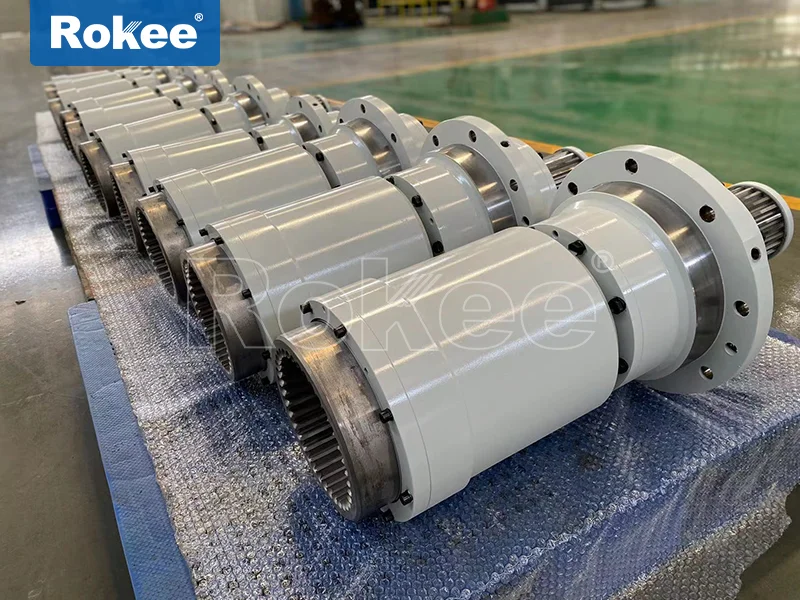
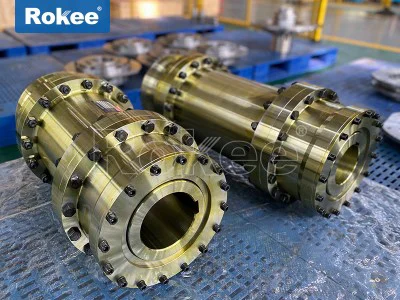
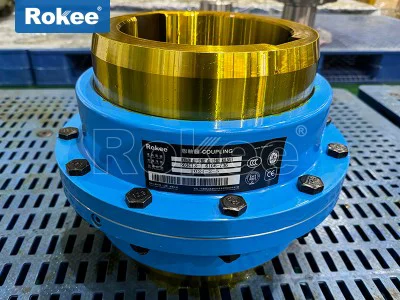
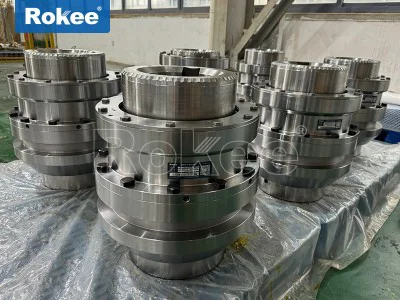
At its core, the fundamental structure of a standard teeth coupling is defined by a set of precision-machined meshing gears, typically consisting of two key subassemblies: outer gear sleeves and inner gear rings, supplemented by auxiliary components that enhance operational stability and longevity. The outer gear sleeves are securely mounted onto the ends of the two shafts to be connected, featuring external teeth that are engineered with precise profiles to ensure seamless meshing. The inner gear rings, positioned between the two outer gear sleeves, feature internal teeth that match the pitch and profile of the external teeth, creating a rigid yet adaptable meshing connection. Additional elements such as sealing assemblies, fastening hardware, and lubrication passages are integrated into the structure to protect the internal gear surfaces, secure the coupling components firmly, and maintain optimal lubrication conditions during operation. The gear meshing mechanism is the heart of the teeth coupling, as it enables the transfer of rotational motion and torque while accommodating minor positional deviations between the shafts, a design that sets it apart from non-toothed coupling alternatives.
The structural design of teeth couplings is further refined to optimize performance, with variations in tooth profile, gear geometry, and component configuration directly shaping their functional capabilities. The most common tooth profiles include straight teeth and crowned (drum-shaped) teeth, each tailored to distinct operational requirements. Straight-tooth designs feature linear tooth surfaces, offering a straightforward manufacturing process and reliable torque transmission for applications with minimal misalignment. Crowned-tooth designs, by contrast, feature a spherical, curved tooth profile with the center of the sphere aligned with the gear axis, which significantly increases the contact area between meshing teeth and reduces stress concentrations. This curved profile allows for greater angular, radial, and axial misalignment compensation compared to straight teeth, while also minimizing wear and extending service life. The overall assembly of the teeth coupling is engineered for compactness, with a high torque-to-size ratio that enables it to transmit substantial torque within a relatively small spatial footprint, a critical advantage in machinery with limited installation space.
The performance characteristics of teeth couplings are a direct product of their structural ingenuity, making them suitable for the most demanding industrial operating conditions. Foremost among these traits is exceptional torque transmission capacity, as the gear meshing design distributes load evenly across multiple tooth surfaces, enabling the coupling to handle heavy static and dynamic loads without deformation or failure. This high load-bearing capability is complemented by excellent misalignment compensation, with the ability to accommodate radial, axial, and angular deviations simultaneously—angular misalignment up to several degrees and axial displacement of several millimeters are typical for standard crowned-tooth models, depending on size and design. This flexibility prevents excessive stress on shafts, bearings, and other connected components, reducing the risk of premature equipment failure caused by thermal expansion, manufacturing tolerances, or operational vibration.
Teeth couplings also boast high transmission efficiency, typically ranging from 98% to 99.5% under optimal operating conditions, minimizing energy loss during power transfer and contributing to overall machinery energy efficiency. Their operational stability is another key performance highlight; the uniform gear meshing ensures smooth, low-vibration rotation even at varying speeds, eliminating sudden jolts or noise that can disrupt machinery operation. With proper lubrication and sealing, these couplings exhibit exceptional durability, with service lives spanning tens of thousands of operating hours in well-maintained systems. They also demonstrate strong resistance to shock loads and intermittent stress, absorbing minor impacts without compromising structural integrity, a vital trait in applications with fluctuating load conditions. It is important to note that consistent lubrication is essential to preserve these performance attributes, as it reduces friction between meshing teeth, prevents corrosion, and dissipates heat generated during operation, while effective sealing keeps out dust, debris, and contaminants that could accelerate wear.
Teeth couplings are categorized into several distinct types based on structural variations, tooth profiles, functional features, and application-specific designs, each optimized to address unique operational challenges. The primary classification is based on tooth profile, dividing couplings into straight teeth couplings and crowned (drum) teeth couplings, as previously outlined. Straight teeth couplings are cost-effective, easy to produce, and ideal for light to medium-duty applications with limited shaft misalignment, such as small-scale conveyor systems, centrifugal pumps, and general-purpose industrial motors. Crowned teeth couplings, however, dominate heavy-duty applications due to their superior misalignment tolerance, load distribution, and wear resistance, making them the preferred choice for high-torque, high-vibration scenarios.
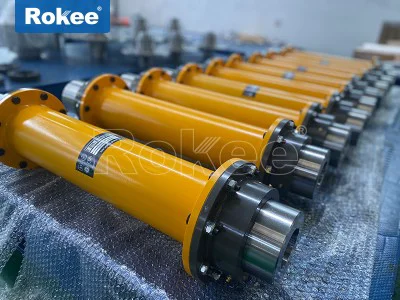
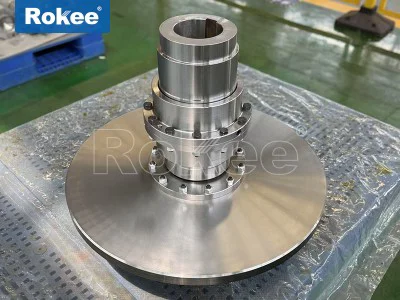
Beyond tooth profile, teeth couplings are further classified by structural configuration and auxiliary functions, expanding their versatility across diverse industrial settings. One common variant is the short, compact teeth coupling, designed for installations with strict spatial constraints, offering reduced axial length while retaining core torque and misalignment capabilities. Extended-length teeth couplings, equipped with intermediate shafts or sleeves, are engineered for applications where driving and driven shafts are separated by a significant distance, such as long conveyor lines or large-scale processing equipment. Another specialized type is the brake wheel-equipped teeth coupling, which integrates a brake wheel into the coupling assembly to enable seamless braking functionality alongside torque transmission, commonly used in lifting machinery, hoists, and material handling equipment where controlled stopping is critical.
Additional specialized variants include vertical-mount teeth couplings, designed specifically for vertical shaft arrangements such as vertical pumps, mixers, and elevators, ensuring stable torque transmission in non-horizontal orientations without compromising sealing or load-bearing performance. Torsion-limiting teeth couplings feature built-in torque protection mechanisms that disengage or slip under excessive overload conditions, safeguarding expensive machinery components such as motors, gearboxes, and drive shafts from damage caused by sudden jams or overloads. Non-lubricated teeth couplings, constructed with wear-resistant composite materials for internal gear components, eliminate the need for regular lubrication maintenance, making them suitable for applications where lubrication is impractical or undesirable, such as food processing machinery, textile equipment, or dry industrial environments. Elastic pin teeth couplings represent a hybrid design, incorporating non-metallic elastic pins between gear components to enhance shock absorption and vibration damping, bridging the gap between rigid teeth couplings and fully flexible couplings for applications requiring both torque capacity and vibration reduction.
The adaptability of teeth couplings, combined with their robust performance, has led to their widespread adoption across nearly every major industrial sector, with each sector leveraging specific coupling types to meet unique operational demands. In the metallurgical and steelmaking industry, teeth couplings are integral to core production equipment, including rolling mills, continuous casting machines, and heating furnace conveyor systems. These applications involve extreme heavy loads, high impact forces, and significant thermal expansion-induced shaft misalignment, making the high torque capacity and misalignment compensation of crowned teeth couplings indispensable for reliable, uninterrupted operation.
Mining and quarrying operations rely heavily on teeth couplings for rugged equipment such as crushers, ball mills, belt conveyors, and ore processing machinery. These environments are characterized by heavy dust, high vibration, and continuous heavy-duty operation, requiring couplings that can withstand harsh conditions while maintaining consistent performance. Sealed, heavy-duty crowned teeth couplings are the standard here, with robust sealing systems preventing dust and particulate ingress and durable construction resisting mechanical wear and impact. The lifting and transportation sector, including cranes, winches, elevators, and port handling equipment, utilizes brake wheel-equipped and torsion-limiting teeth couplings to ensure safe, controlled torque transmission and reliable braking, critical for preventing accidents and protecting both equipment and personnel in material handling operations.
In the petrochemical and chemical processing industry, teeth couplings are employed in pumps, compressors, mixers, and rotary machinery, where operational reliability and resistance to corrosive environments are paramount. Specialized corrosion-resistant coatings and sealed designs protect the coupling components from chemical contaminants, while their high efficiency ensures optimal performance in continuous production processes. Power generation facilities, including thermal power plants, hydropower stations, and wind turbine systems, use teeth couplings in turbine drives, generator shafts, and auxiliary power equipment, where precision torque transmission, high-speed operation, and long-term durability are non-negotiable. The compact design and high load capacity of teeth couplings make them ideal for the constrained spaces within power generation machinery, while their misalignment compensation accommodates minor shaft deviations caused by operational stress and thermal changes.
General manufacturing and industrial machinery represent another vast application area for teeth couplings, spanning machine tools, textile machinery, printing equipment, plastic molding machines, and conveyor systems. Standard straight teeth and compact crowned teeth couplings are widely used here, balancing cost-effectiveness, reliability, and performance for medium-duty, general-purpose applications. Elastic pin teeth couplings find favor in machinery with frequent start-stop cycles or vibration issues, such as punch presses, centrifuges, and agitators, where their shock-absorbing properties reduce equipment fatigue and noise. Even in precision engineering and automotive manufacturing, teeth couplings play a vital role in assembly line equipment, test rigs, and production machinery, delivering precise, stable torque transmission for high-precision operations.
The enduring popularity of teeth couplings in industrial engineering stems from their unique ability to balance strength, flexibility, and efficiency, a combination that few other coupling types can match. As industrial machinery continues to evolve toward higher loads, faster speeds, and more compact designs, the structural and performance advantages of teeth couplings ensure their continued relevance. Ongoing advancements in material science, gear machining technology, and sealing systems further enhance their capabilities, improving wear resistance, reducing maintenance requirements, and expanding their operational range. Whether in heavy industrial processing, precision manufacturing, or specialized machinery applications, teeth couplings remain a cornerstone of reliable power transmission, adapting to diverse operational needs while upholding the core principles of efficient, durable, and adaptable mechanical connection.
In summary, teeth couplings are defined by their precision gear-based structure, exceptional torque and misalignment performance, diverse type variations, and extensive industrial applicability. Their design has been refined over decades of engineering practice to address the most pressing challenges in power transmission, offering a dependable solution for applications ranging from light-duty auxiliary equipment to heavy-duty industrial main drives. By understanding the structural nuances, performance capabilities, and specialized uses of different teeth coupling types, engineers and equipment designers can select the optimal coupling solution to enhance machinery reliability, efficiency, and service life, solidifying the teeth coupling’s status as an essential component in modern mechanical engineering.
Coupling Categories
Links:
Related Articles
- Oct 8, 2026Teeth Coupling For Fan Blower Drive
- Aug 19, 2026Teeth Coupling Vertical Installation Application
- Aug 19, 2026Teeth Coupling For Conveyor Equipment
- Aug 10, 2026Teeth Coupling Working Principle
- Aug 10, 2026Teeth Coupling Heavy Duty Industrial Use
- Aug 10, 2026Teeth Coupling For Hydraulic Oil Pump
- Aug 4, 2026Teeth Coupling High Torque Transmission
- Aug 4, 2026Teeth Coupling Flexible Shaft Connection
- Jul 30, 2026Teeth Coupling Factory Direct Supply
- Jul 30, 2026Teeth Coupling For Electric Motor
- Jul 22, 2026High Torque Steel Teeth Coupling
- Jul 7, 2026Maintenance Skills Of Teeth Coupling For Transmission Parts Of PU Sandwich Panel Line
- Jul 7, 2026Influence And Countermeasures Of Teeth Coupling Faults On PU Sandwich Panel Line
- Jul 7, 2026Key Points Of Teeth Coupling For Heavy Load Working Conditions Of Polyurethane Sandwich Panel Production Line
- Apr 27, 2026Polyurethane Sandwich Panel Manufacturing Machine Maintenance Is More Worry-free With Teeth Coupling