Gear Couplings
In the realm of mechanical power transmission, gear couplings stand as one of the most versatile and robust components, engineered to bridge the gap between driving and driven shafts while facilitating efficient torque transfer and accommodating operational misalignments. Unlike rigid couplings that demand perfect shaft alignment and offer no flexibility, gear couplings combine the strength of gear meshing with a degree of adaptive movement, making them indispensable across countless industrial settings where heavy loads, variable operating conditions, and minor shaft displacements are commonplace. Their design is rooted in fundamental gear mechanics, optimized to balance load-bearing capacity, durability, and operational flexibility, with structural variations tailored to address diverse performance needs and application scenarios.
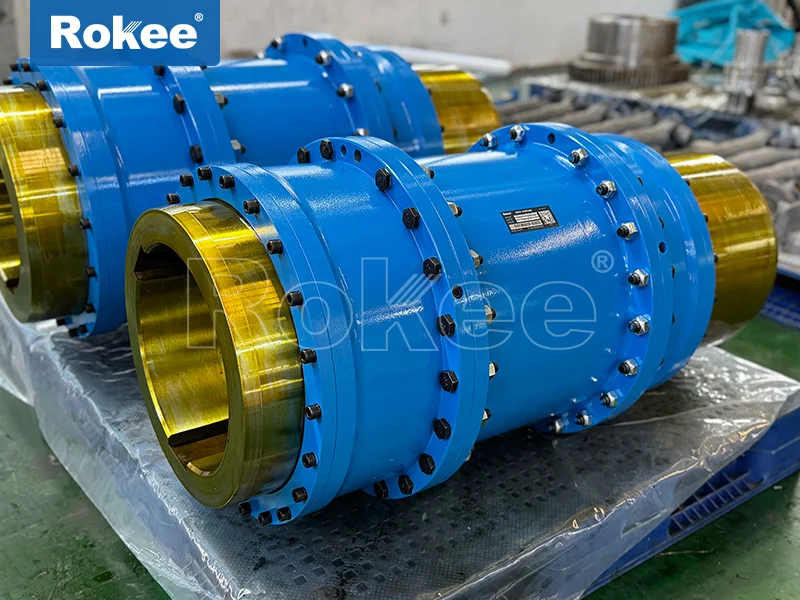
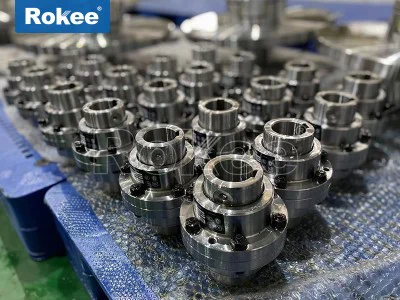
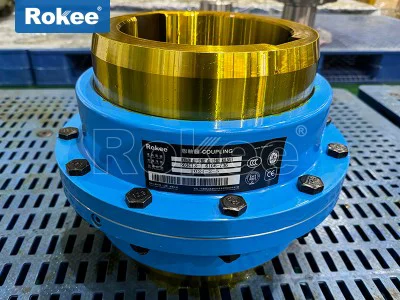
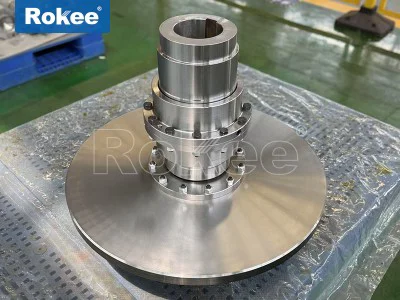
At its most basic level, a standard gear coupling is constructed from a set of precision-engineered components that work in tandem to transmit rotational force and manage shaft misalignment. The primary elements include two external toothed hubs, one attached to each shaft end, and an internal toothed sleeve that encases and meshes with both external hubs. This dual gear meshing setup forms the core power transmission pathway, with the tooth profiles and clearances calibrated to enable controlled movement while maintaining consistent torque delivery. Additional supporting components typically include fastening hardware to secure the hubs to the shafts, sealing mechanisms to retain lubrication and prevent contamination from dust, debris, or moisture, and in some configurations, spacer elements or intermediate shafts to adjust the distance between coupled shafts. The external teeth on the hubs are crafted with meticulous precision, with two dominant profile designs dominating the market: straight spur teeth and curved drum teeth. Straight tooth gear couplings represent a simpler, more traditional design, with cylindrical tooth profiles that offer reliable torque transmission but limited misalignment compensation. In contrast, drum tooth gear couplings feature a spherical, curved tooth profile that centers on the coupling’s axis, a design innovation that drastically enhances angular and radial misalignment tolerance, reduces contact stress on tooth surfaces, and extends service life by minimizing edge wear and friction during operation. The internal sleeve, often paired with flanged connections for secure assembly, houses the matching internal teeth that engage seamlessly with the external hub teeth, creating a rigid yet flexible linkage that distributes load evenly across the meshing surfaces to prevent localized stress concentrations.
The performance characteristics of gear couplings are what set them apart from other flexible coupling variants, making them ideal for harsh and demanding operational conditions. Foremost among these traits is exceptional torque transmission capacity, as the meshing gear teeth provide a large contact area for force transfer, enabling gear couplings to handle extremely high torque loads relative to their compact physical size. This high torque density makes them suitable for heavy machinery where space constraints coexist with substantial power requirements. Another key performance attribute is superior misalignment compensation; gear couplings can effectively accommodate three primary types of shaft misalignment: angular misalignment, where the two shaft axes intersect at a slight angle; radial misalignment, where the axes run parallel but are offset; and axial misalignment, involving slight back-and-forth movement of the shafts along their central axis. While straight tooth models handle moderate misalignments, drum tooth variants excel at managing larger combined misalignments without compromising power transmission efficiency or accelerating wear. Gear couplings also exhibit broad speed adaptability, functioning reliably across low, medium, and high rotational speeds; precision-balanced units are even suitable for high-speed rotating equipment, provided they are properly lubricated and maintained. Durability and longevity are further hallmarks, as the robust gear construction and high-strength metallic materials resist fatigue, shock loads, and repetitive stress, ensuring consistent performance over extended operational lifespans. Additionally, these couplings offer stable operational consistency, with minimal backlash in well-maintained units, reducing vibration and noise during operation and supporting smooth, uninterrupted power flow. It is important to note that optimal performance relies heavily on proper lubrication, as the relative sliding motion between meshing teeth generates friction; adequate lubrication mitigates wear, dissipates heat, and prevents premature failure, making sealed, lubricated designs the standard for most industrial applications.
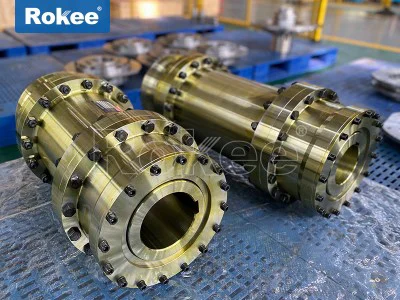
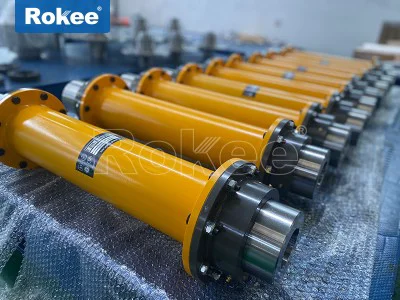
Gear couplings are categorized into distinct types based on structural design, tooth profile, functional features, and application-specific adaptations, each engineered to address unique operational challenges and performance demands. The most fundamental classification is based on tooth profile, dividing gear couplings into straight tooth gear couplings and drum tooth gear couplings. Straight tooth gear couplings are characterized by simple manufacturing, lower production costs, and suitability for applications with minimal shaft misalignment and steady, moderate loads; they are often used in less demanding industrial setups where alignment can be closely controlled. Drum tooth gear couplings, by contrast, are the preferred choice for heavy-duty, high-misalignment scenarios, offering enhanced load distribution, reduced tooth wear, and greater flexibility, making them the dominant design in modern industrial practice. Beyond tooth profile, gear couplings are classified by structural configuration, including full gear couplings, half gear half rigid couplings, and telescopic or extended spacer couplings. Full gear couplings feature geared hubs on both shafts and a fully toothed internal sleeve, providing maximum flexibility and misalignment compensation for applications where both shafts may exhibit movement. Half gear half rigid couplings combine a geared hub on one shaft with a rigid, non-geared hub on the other, ideal for setups where one shaft is fixed and only minor misalignment needs to be accommodated, striking a balance between rigidity and flexibility. Telescopic or extended spacer couplings incorporate an elongated intermediate sleeve or shaft between the two geared hubs, designed to bridge larger gaps between driving and driven equipment, common in applications where machinery components are spaced apart or require thermal expansion accommodation. Additional specialized variants include gear couplings with integrated brake drums or brake discs, tailored for equipment requiring braking functionality alongside power transmission, and compact low-profile gear couplings designed for space-restricted installations where standard-sized couplings cannot fit. Each type retains the core gear meshing principle but is modified to prioritize specific performance metrics, whether that is maximum flexibility, space efficiency, extended reach, or integrated auxiliary functionality.
The versatility of gear couplings, paired with their robust performance, translates to a vast array of industrial applications across diverse sectors, wherever reliable high-torque transmission and misalignment tolerance are critical. In heavy manufacturing and metallurgical industries, gear couplings are widely employed in rolling mills, forging presses, extrusion machines, and metal processing equipment, where they endure extreme torque loads, shock vibrations, and frequent thermal fluctuations that cause shaft misalignment. Their ability to withstand harsh operating conditions and maintain consistent power delivery makes them irreplaceable in these high-stress environments. The mining and quarrying sector relies heavily on gear couplings for conveyor systems, crushing machines, grinding mills, and hoisting equipment, where continuous operation, heavy load-bearing, and resistance to dust and abrasive contaminants are non-negotiable. The sealed, rugged construction of gear couplings ensures reliable performance in these rugged, outdoor, and often remote settings, minimizing downtime and maintenance needs. In the marine and offshore industry, gear couplings are integrated into propulsion systems, pump drives, winches, and deck machinery, adapting to the slight shaft movements caused by vessel motion, wave impact, and structural flexing, while resisting corrosion and moisture ingress to maintain operational integrity in marine environments. Power generation facilities, including thermal power plants, hydroelectric stations, and wind turbine drivetrains, utilize gear couplings to connect turbines, generators, compressors, and auxiliary equipment, where efficient power transmission, high-speed operation, and misalignment compensation are essential for stable energy production. The chemical, oil, and gas sectors also depend on gear couplings for pumps, fans, mixers, and compressor drives, as they can handle corrosive atmospheres, high-pressure operational conditions, and the shaft misalignment common in large-scale processing plants. Additionally, gear couplings find use in transportation equipment, heavy construction machinery, paper and pulp processing equipment, textile manufacturing machinery, and various other industrial applications where standard flexible couplings lack the torque capacity or durability to perform reliably. Across all these sectors, the core value of gear couplings remains consistent: they provide a durable, efficient, and adaptable connection between shafts, ensuring seamless power transmission even when operational conditions are less than ideal.
While gear couplings offer exceptional performance, their effectiveness is contingent on proper selection, installation, and ongoing maintenance to maximize service life and avoid premature failure. Selecting the appropriate gear coupling type requires careful assessment of operational parameters, including torque load magnitude, rotational speed, degree and type of shaft misalignment, shaft spacing, and environmental conditions such as temperature, moisture, and contamination. Choosing a coupling with insufficient torque capacity or misalignment tolerance can lead to rapid wear, tooth breakage, or catastrophic failure, while an oversized coupling adds unnecessary weight and cost without functional benefit. Proper installation involves precise alignment of shafts (to minimize excessive stress on the coupling), secure fastening of hubs to shafts, and correct assembly of the internal sleeve and sealing components to prevent lubricant leakage. Regular maintenance routines are equally vital, including periodic lubricant checks and replacements to ensure adequate lubrication of meshing teeth, inspection of tooth surfaces for wear, pitting, or damage, assessment of sealing integrity, and tightening of fasteners to maintain structural stability. Even with these maintenance requirements, gear couplings remain a cost-effective choice for heavy-duty applications, as their long service life and minimal downtime offset routine upkeep costs. As mechanical engineering continues to evolve, gear coupling designs are also advancing, with improvements in material science, tooth profile optimization, and sealing technology enhancing their performance, durability, and adaptability further. These advancements ensure that gear couplings will continue to be a cornerstone of mechanical power transmission, meeting the evolving demands of modern industry for reliable, high-performance shaft connection solutions.
In summary, gear couplings represent a pinnacle of practical mechanical design, merging the strength of gear technology with the flexibility needed to accommodate real-world operational imperfections. Their well-engineered structural components deliver exceptional torque transmission, misalignment compensation, and durability, while diverse type variations cater to a wide spectrum of industrial needs. From heavy manufacturing and mining to marine operations and power generation, gear couplings play a silent yet critical role in keeping global industrial machinery running efficiently and reliably. Their enduring popularity stems from a unique balance of performance, versatility, and resilience, making them a timeless and essential component in the landscape of mechanical power transmission systems. As industrial operations continue to push the boundaries of load capacity, speed, and environmental resilience, gear couplings will remain a go-to solution, adapting and evolving to meet the ever-growing demands of modern engineering and manufacturing.
Coupling Categories
Links:
Related Articles
- Oct 8, 2026Industrial Full Gear Coupling
- Oct 8, 2026Flexible Gear Coupling For Industrial Machinery
- Oct 8, 2026Heavy Duty Flexible Gear Coupling
- Oct 8, 2026Flexible Gear Coupling For Electric Motor
- Oct 8, 2026Crown Gear Coupling For Crane Hoist
- Oct 8, 2026Drum Gear Coupling For Mining
- Oct 8, 2026Non Standard Barrel Gear Coupling
- Oct 8, 2026Gear Coupling With Brake Drum
- Oct 8, 2026Gear Coupling For Machine Tool
- Oct 8, 2026Gear Coupling For Steel Mill
- Oct 8, 2026Gear Coupling For Mill
- Oct 8, 2026Gear Coupling For Mixer
- Oct 8, 2026Gear Coupling For Conveyor
- Oct 8, 2026Gear Coupling For Crusher
- Oct 8, 2026Gear Coupling For Fan
- Oct 8, 2026Gear Coupling For Compressor
- Oct 8, 2026Gear Coupling For Pump
- Oct 8, 2026Gear Coupling For Motor
- Aug 19, 2026Drum Gear Coupling For Pump
- Aug 19, 2026High Speed Drum Gear Coupling