Motor Couplings
In the realm of mechanical power transmission, motor couplings stand as indispensable components that bridge the gap between motor shafts and driven equipment shafts, serving as the critical link for efficient torque transfer, motion synchronization, and operational stability across countless industrial and commercial systems. These components are not mere connecting pieces; their structural design, material composition, and inherent performance traits directly dictate the reliability, efficiency, and service life of entire drive systems, making their selection and application a core consideration for engineers, maintenance professionals, and system designers alike. A motor coupling’s primary role extends far beyond simple shaft connection—it compensates for unavoidable misalignments, absorbs mechanical shocks and vibrations, reduces stress on bearings and seals, and in some cases, provides overload protection to safeguard both the motor and connected machinery from catastrophic damage.
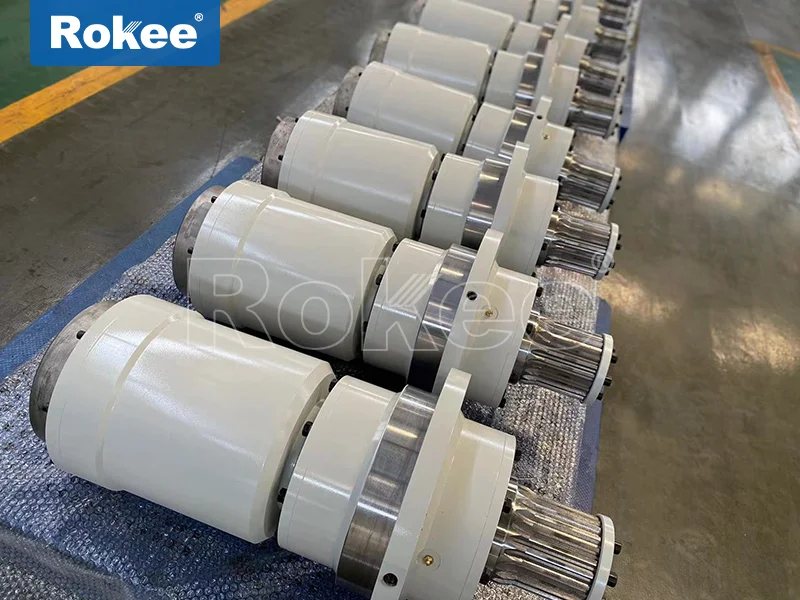
To begin with the fundamental structural classification, motor couplings are broadly divided into two overarching categories: rigid couplings and flexible couplings, each with distinct structural features that define their performance boundaries and suitable use cases. Rigid couplings feature a solid, one-piece or two-piece inflexible structure, designed to create a fixed, non-movable connection between two precisely aligned shafts. Their construction is inherently straightforward, typically consisting of a solid sleeve, flanged hubs, or clamped bodies with no flexible elements or moving parts, relying on tight mechanical fastening to ensure zero relative movement between the connected shafts. This rigid structure delivers exceptional torsional stiffness and maximum torque transmission efficiency, with no backlash, slippage, or energy loss during operation. The materials used for rigid couplings are predominantly high-strength metals such as carbon steel, alloy steel, and cast iron, chosen for their exceptional load-bearing capacity, durability, and resistance to deformation under heavy torque loads. Due to their lack of flexibility, rigid couplings demand perfect shaft alignment during installation; even minor angular, parallel, or axial misalignment will translate directly into excessive mechanical stress, vibration, and premature wear on shafts, bearings, and the coupling itself, limiting their applicability to systems where shaft positioning remains fixed and unchanging over time.
In contrast, flexible couplings are engineered with integrated flexible components—either metallic or non-metallic—that enable controlled movement between shafts, making them the more versatile and widely adopted option across most real-world applications. The structural design of flexible couplings varies significantly by subtype, but all share the core feature of accommodating misalignment while maintaining reliable torque transmission. These flexible elements act as a buffer, absorbing the stresses caused by manufacturing tolerances, thermal expansion, mechanical vibration, and dynamic load fluctuations that are common in nearly all operational drive systems. Flexible couplings can be further segmented based on the type of flexible element, construction mechanism, and performance attributes, with each subtype tailored to address specific operational challenges, from high-precision motion control to heavy-duty shock absorption. Unlike rigid couplings, their structural complexity is purposeful, balancing torque capacity, misalignment tolerance, vibration damping, and durability to meet the diverse demands of different industries and equipment types.
Delving deeper into the performance characteristics that distinguish motor couplings, key metrics include torque capacity, misalignment compensation ability, torsional stiffness, vibration and shock absorption, rotational speed limits, maintenance requirements, and environmental adaptability—all of which are directly shaped by the coupling’s structural design and material selection. Torque capacity refers to the maximum rotational force a coupling can transmit continuously without failure, a critical parameter determined by the coupling’s size, material strength, and structural integrity. Rigid couplings boast the highest torque capacity for their size, as their solid structure distributes load evenly across the entire component, while flexible couplings’ torque capacity is constrained by the strength and durability of their flexible elements. Misalignment compensation is a defining performance trait for flexible couplings, with different types offering varying degrees of tolerance for angular misalignment (shafts intersecting at an angle), parallel misalignment (shafts offset radially), and axial misalignment (shafts moving end-to-end). Some flexible couplings excel at handling one type of misalignment, while others are engineered to manage combined misalignment, a common occurrence in practical installations.
Torsional stiffness, a measure of a coupling’s resistance to twisting under load, is another vital performance factor. High torsional stiffness is essential for precision applications where positional accuracy and motion synchronization are paramount, as it prevents torsional windup and ensures immediate response to motor speed and torque changes. Conversely, lower torsional stiffness paired with high elasticity is preferable for systems prone to heavy shocks and vibrations, as it allows for controlled deformation that dissipates harmful energy and protects downstream equipment. Vibration and shock absorption capabilities are closely tied to the flexible element’s material and design; elastomeric flexible elements, such as rubber or polyurethane, excel at dampening vibration and cushioning sudden impact loads, while metallic flexible elements offer greater stiffness and heat resistance but reduced damping properties. Rotational speed limits are dictated by the coupling’s balance, weight, and structural stability; lightweight, precision-balanced couplings can operate at high RPM without generating excessive vibration, while heavier, bulkier designs are limited to lower speed applications. Maintenance requirements also vary widely, with some flexible couplings needing periodic lubrication, flexible element replacement, or alignment checks, while rigid couplings and certain maintenance-free flexible designs demand minimal upkeep under ideal conditions. Environmental adaptability, including resistance to temperature extremes, moisture, chemicals, and abrasive contaminants, is determined by material choice, with metallic couplings offering better durability in harsh environments and non-metallic elements being susceptible to degradation under extreme conditions.
Among the most prevalent types of flexible motor couplings, jaw couplings are widely recognized for their simple, robust structure and balanced performance, making them a staple in general industrial applications. A typical jaw coupling consists of two metallic hubs with interlocking curved jaws and a central elastomeric spider insert positioned between the jaws. The spider insert, usually made of polyurethane, rubber, or nylon, acts as the flexible component, providing excellent vibration damping, moderate misalignment tolerance, and electrical isolation between shafts. This structure allows the coupling to handle small to moderate angular, parallel, and axial misalignments while transmitting medium torque loads efficiently. Jaw couplings are valued for their ease of installation and maintenance, as the spider insert can be replaced without disassembling the entire drive system, reducing downtime. Their performance strikes a practical balance between stiffness and flexibility, making them suitable for equipment such as pumps, fans, compressors, conveyors, and small to medium-sized motor-driven machinery where consistent torque transfer and basic vibration control are needed. However, their torque capacity is limited compared to heavy-duty flexible couplings, and the elastomeric spider can degrade over time when exposed to high temperatures, oils, or chemicals, requiring periodic inspection and replacement.
Disc couplings represent a high-performance flexible coupling subtype, engineered for precision, high torsional stiffness, and zero-backlash operation, making them ideal for demanding applications requiring accurate motion control. Structurally, disc couplings feature two metallic hubs connected by one or more thin, flexible stainless steel or alloy discs, with no elastomeric components or lubrication needed. The thin metal discs flex slightly to accommodate limited angular and axial misalignment, while maintaining exceptional torsional rigidity and precise rotational synchronization between shafts. This design eliminates backlash, ensuring immediate and accurate response to motor input, a critical feature for high-speed and high-precision systems. Disc couplings offer high torque density, meaning they can transmit substantial torque relative to their compact size, and operate reliably at high rotational speeds with minimal vibration. They are highly durable, resistant to temperature fluctuations and most industrial chemicals, and require little to no regular maintenance, as there are no wearable elastomeric parts. Their primary limitation is a lower tolerance for parallel misalignment compared to other flexible couplings, making them best suited for systems with controlled misalignment and a focus on precision, such as CNC machinery, servo motor systems, robotics, turbine drives, and precision test equipment where positional accuracy and operational stability are non-negotiable.
Oldham couplings are another specialized flexible coupling type, uniquely designed to handle significant parallel misalignment while maintaining zero backlash and consistent torque transmission. Their structure comprises two outer metallic hubs and a central sliding disc, typically made of engineering plastic or phenolic material, with perpendicular tongues that fit into matching grooves on the hubs. This sliding mechanism allows for substantial radial offset between shafts without inducing excessive bearing stress, a key advantage over other flexible couplings. Oldham couplings offer smooth, constant-velocity motion transfer, making them perfect for applications where parallel misalignment is unavoidable and precision is required. They are lightweight, compact, and electrically isolating, with no lubrication needs and relatively simple maintenance, though the central sliding disc can wear over time with continuous use, requiring occasional replacement. While they excel at parallel misalignment compensation, they have limited capacity for angular and axial misalignment, restricting their use to systems where radial offset is the primary alignment concern. Common applications include linear motion systems, 3D printers, small robotics, encoding devices, and light-duty precision machinery where clean, accurate motion transfer and high parallel misalignment tolerance are essential.
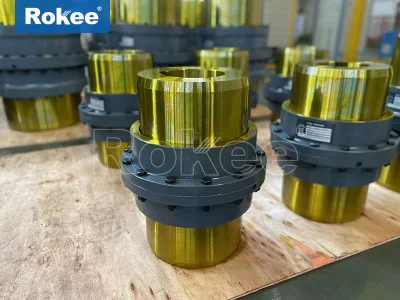
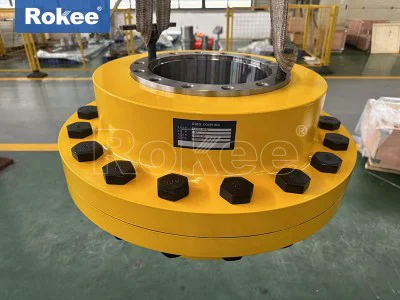
Gear couplings fall into the category of heavy-duty flexible couplings, built to transmit extremely high torque loads while accommodating moderate misalignment, making them suitable for rugged industrial environments. Structurally, gear couplings consist of two hubs with external gear teeth that mesh with internal gear teeth on a floating sleeve or cover, with a small amount of clearance between the teeth that allows for limited angular and parallel misalignment. The gear-tooth design provides exceptional torque-carrying capacity, far exceeding that of standard elastomeric or disc couplings, making them ideal for heavy machinery and high-load drive systems. Most gear couplings require lubrication to reduce friction between the meshing teeth and prevent wear, and they are often enclosed in a protective housing to retain lubricant and block out contaminants. While they offer robust performance and durability under heavy loads, they have limited vibration damping capabilities compared to elastomeric couplings and can generate more noise during operation. Gear couplings are commonly deployed in heavy industrial settings, including mining equipment, steel manufacturing machinery, large pumps and compressors, marine propulsion systems, and heavy conveyor systems where high torque transmission and reliable operation under harsh conditions are critical.
Beam couplings, also known as helical beam couplings, are a lightweight, compact flexible coupling variant designed for high-speed, low-to-medium torque applications, particularly in precision motion control systems. Constructed from a single piece of aluminum, stainless steel, or engineering plastic, beam couplings feature one or more helical cuts along their length, creating a flexible beam structure that can bend to accommodate angular, parallel, and axial misalignment. This one-piece design eliminates backlash and ensures smooth, consistent motion transfer, with low inertia that supports rapid acceleration and deceleration without compromising responsiveness. Beam couplings are highly resistant to corrosion, require no lubrication, and offer excellent torsional flexibility while maintaining moderate stiffness. Their lightweight nature reduces rotational mass, minimizing stress on motor bearings and improving system efficiency at high speeds. They are well-suited for small precision motors, encoders, instrumentation equipment, medical devices, and light-duty automation systems where space is limited, speed is high, and precision is prioritized over maximum torque capacity.
Beyond these common flexible and rigid couplings, there are specialized subtypes tailored for unique operational demands, such as grid couplings, bellows couplings, and fluid couplings, each with distinct structural and performance attributes. Grid couplings feature a flexible metal grid insert that connects two hubs, offering high shock absorption and moderate misalignment tolerance, ideal for systems with frequent load fluctuations. Bellows couplings, constructed with a thin metallic bellows element, provide ultra-high precision, zero backlash, and excellent misalignment compensation, perfect for high-end precision machinery. Fluid couplings transmit torque via hydraulic fluid, delivering smooth startup, overload protection, and vibration damping for high-inertia systems, though they are bulkier and less energy-efficient than mechanical couplings. Each specialized type fills a niche in the motor coupling landscape, addressing specific performance gaps that standard designs cannot meet.
The practical applications of motor couplings span nearly every industry that relies on motor-driven equipment, with selection driven by the unique performance requirements of each system. In general manufacturing and industrial settings, jaw couplings and gear couplings dominate, powering conveyor belts, material handling equipment, pumps, fans, and compressors, where reliable torque transfer, moderate misalignment tolerance, and ease of maintenance are key. In the realm of precision automation and robotics, disc couplings, Oldham couplings, and beam couplings are the preferred choices, delivering the zero-backlash, high-precision motion control needed for CNC machines, robotic arms, assembly lines, and linear positioning systems. High-speed drive systems, such as turbines, blowers, and high-speed motors, rely on disc couplings and beam couplings for their balanced stiffness, low vibration, and high-speed capabilities. Heavy-duty industries including mining, construction, marine, and steel production depend on gear couplings and grid couplings to withstand extreme torque loads, harsh operating conditions, and frequent shock loads. Specialized sectors like medical equipment, aerospace, and laboratory instrumentation utilize compact, lightweight beam couplings and bellows couplings to meet strict precision, space, and cleanliness requirements. Even in commercial applications such as HVAC systems, water treatment facilities, and food processing plants, motor couplings play a vital role, with elastomeric jaw couplings being a popular choice for their vibration damping and quiet operation.
When selecting the appropriate motor coupling for a specific application, engineers must evaluate a comprehensive set of factors to ensure optimal performance and longevity. These factors include the required torque capacity (both continuous and peak), the type and degree of shaft misalignment, operating rotational speed, environmental conditions (temperature, moisture, chemicals), vibration and shock loads, precision requirements, maintenance capabilities, and spatial constraints. A mismatch between coupling performance and application demands can lead to reduced efficiency, premature component failure, increased downtime, and costly system repairs. For example, using a rigid coupling in a system with unavoidable misalignment will result in rapid wear and mechanical failure, while using a low-torque jaw coupling in a heavy-duty industrial application will lead to overload and breakage. Conversely, selecting an overly robust or specialized coupling for a light-duty, low-precision application adds unnecessary cost and complexity without tangible benefits.
In summary, motor couplings are far more than passive connecting components; they are precision-engineered mechanical elements that define the efficiency, reliability, and durability of motor-driven drive systems. The diverse structural designs of rigid and flexible couplings, each with unique performance profiles, enable them to address the full spectrum of industrial and commercial power transmission needs, from high-precision micro-machinery to heavy-duty industrial equipment. Rigid couplings offer unmatched torque efficiency for perfectly aligned systems, while flexible couplings provide the versatility to handle misalignment, vibration, and dynamic loads that define real-world operating conditions. By understanding the structural nuances, performance capabilities, and practical applications of each motor coupling type, professionals can make informed selection decisions that optimize system performance, reduce maintenance costs, and extend the service life of both motors and connected equipment. As industrial technology continues to advance and drive systems become more efficient and precise, the role of motor couplings will only grow in importance, with ongoing design innovations enhancing their performance, durability, and adaptability to meet the evolving demands of modern power transmission.
Coupling Categories
Links:
Related Articles
- Oct 8, 2026Flexible Gear Coupling For Electric Motor
- Oct 8, 2026Gear Coupling For Motor
- Jul 30, 2026Teeth Coupling For Electric Motor