Toothed Couplings
In the realm of mechanical power transmission, toothed couplings stand as one of the most widely utilized and reliable coupling solutions, bridging rotating shafts to transfer torque and rotational motion while accommodating inevitable misalignments that arise during equipment operation. Unlike rigid couplings that demand perfect shaft alignment and offer no tolerance for positional deviations, toothed couplings blend the rigidity of gear-based engagement with a degree of flexibility, making them indispensable across heavy-duty and precision-driven industrial machinery alike. Their design is rooted in the fundamental principle of gear meshing, where precision-machined teeth on two mating components interlock to transmit power efficiently, with structural refinements tailored to enhance load-bearing capacity, misalignment compensation, wear resistance, and operational longevity.
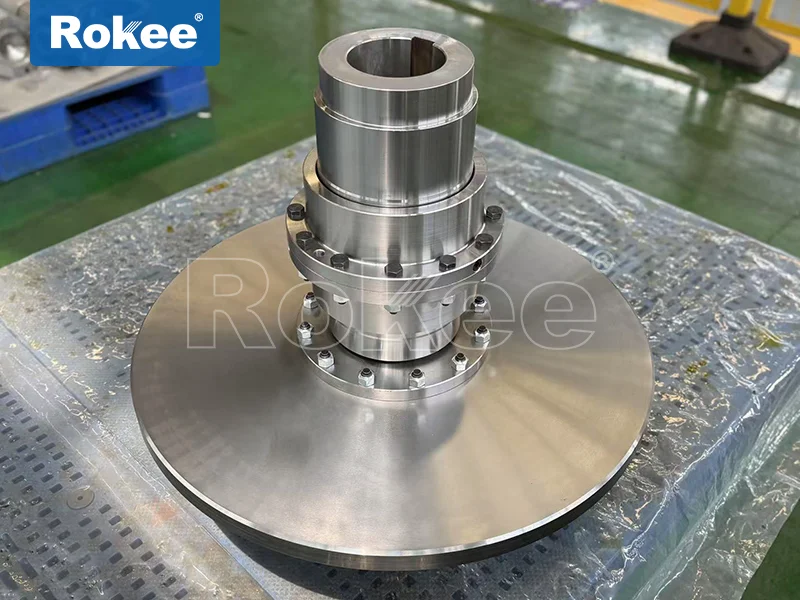
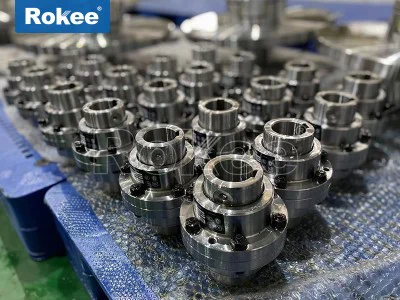
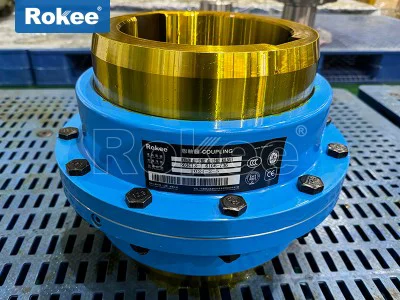
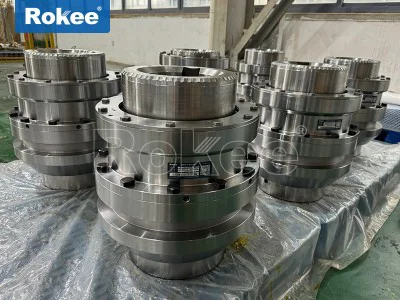
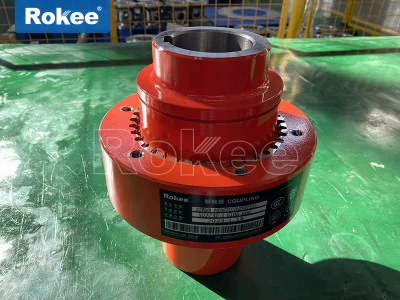
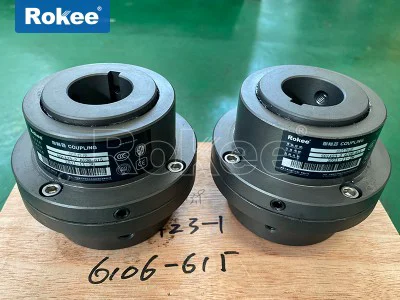
At its core, the structure of a standard toothed coupling is engineered for simplicity, durability, and efficient power transfer, consisting of a set of key components that work in seamless harmony. The primary elements include two external toothed hubs, also referred to as flange half-couplings, and one or two internal toothed sleeves that encase the external teeth, forming a meshed gear assembly. Each external hub is securely mounted onto the respective driving and driven shafts, typically via keyways, interference fits, or clamping mechanisms, ensuring a tight, slip-free connection that prevents torque loss during operation. The internal sleeves feature precision-cut internal teeth that match the tooth count and profile of the external hubs, creating a uniform meshing interface across the entire tooth surface. Complementary components such as end covers, sealing gaskets, and lubrication passages are integrated into the design to protect the internal gear meshing from external contaminants like dust, moisture, and debris, while retaining lubricants within the coupling cavity to minimize friction and wear. In some compact or lightweight variants, the end covers may be fused with the internal sleeves to streamline the structure, reducing the number of individual parts and enhancing overall structural integrity without compromising performance. The tooth profile itself is a defining structural feature, with meticulous machining ensuring consistent tooth geometry, proper backlash, and optimal contact patterns—all critical to the coupling’s ability to handle high torque loads and compensate for shaft misalignments simultaneously.
The structural design of toothed couplings directly dictates their standout performance characteristics, which set them apart from other coupling types such as elastic, chain, or disc couplings. Foremost among these is exceptional torque-carrying capacity; the gear-based meshing distributes applied torque evenly across multiple tooth surfaces, enabling toothed couplings to transmit extremely high torque values even in compact form factors, making them ideal for heavy-duty machinery where space is limited but power transmission demands are intense. Unlike flexible couplings that rely on elastic elements to absorb shock and misalignment, toothed couplings offer a balanced combination of rigidity and compliance, allowing them to maintain precise rotational synchronization between shafts while accommodating radial, axial, and angular misalignments that occur due to manufacturing tolerances, thermal expansion, mechanical vibration, or operational wear. This misalignment compensation is a pivotal performance trait, as it reduces stress on shafts, bearings, and adjacent equipment components, minimizing premature failure and extending the service life of the entire drive system. Additionally, toothed couplings exhibit high torsional stiffness, meaning they resist twisting under load and deliver consistent, responsive power transfer without lag, a crucial attribute for precision machinery requiring synchronized motion. They also boast exceptional durability and resistance to shock loads and intermittent vibrations, with robust metallic construction (predominantly high-grade alloy steels or carbon steels) enabling them to withstand harsh operating conditions, including fluctuating temperatures, heavy cyclic loads, and continuous high-speed rotation. Operational efficiency is another key performance highlight; with proper lubrication, the meshing teeth generate minimal friction loss, resulting in high transmission efficiency that optimizes energy usage and reduces heat buildup during prolonged operation. Maintenance requirements are relatively modest as well, with routine lubrication and periodic inspection of tooth wear and sealing integrity being the primary upkeep tasks, further enhancing their practicality in industrial settings.
Toothed couplings are categorized into distinct types based on variations in tooth profile, structural configuration, material composition, and functional specialization, each engineered to address specific operational requirements and environmental conditions. The most fundamental classification is based on external tooth profile, distinguishing between straight-tooth and drum-tooth toothed couplings, the two dominant variants in industrial use. Straight-tooth toothed couplings feature linear, cylindrical external teeth with flat flank profiles, a simpler design that is easier and more cost-effective to machine. While they offer basic torque transmission and limited misalignment compensation, their straight tooth geometry leads to concentrated contact stress at the tooth edges when angular misalignment occurs, increasing wear and reducing load-bearing efficiency; as a result, they are typically reserved for low-speed, light-load applications with minimal shaft deviation. Drum-tooth toothed couplings, by contrast, feature curved, spherical external teeth with a crown profile, where the center of the spherical curve aligns with the gear axis. This innovative tooth design significantly increases tooth flank clearance, distributes contact stress evenly across the entire tooth surface, and eliminates edge loading even under moderate to high angular misalignment. Drum-tooth couplings deliver substantially higher torque capacity, greater misalignment tolerance—often double that of straight-tooth models—and extended service life, making them the preferred choice for heavy-duty, high-performance applications across most industrial sectors.
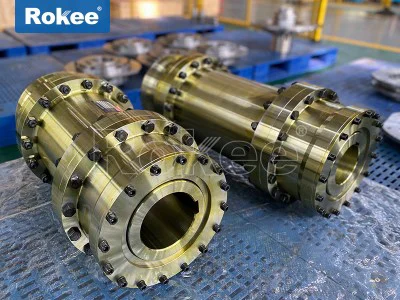
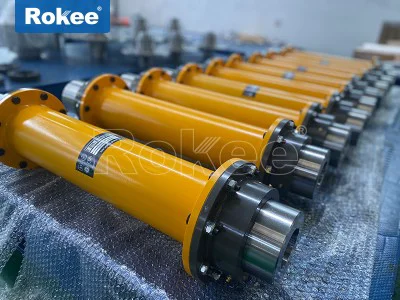
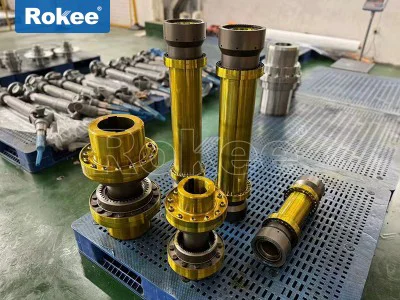
Beyond tooth profile, toothed couplings are further classified by structural design to meet diverse installation and operational needs. Standard single-sleeve toothed couplings consist of one internal sleeve mating with two external hubs, offering a compact, space-efficient solution for close-coupled shafts where misalignment is moderate. Double-sleeve toothed couplings feature two separate internal sleeves, enhancing flexibility and misalignment compensation, particularly for shafts with larger radial or angular deviations. Extended-length toothed couplings incorporate an intermediate shaft or connecting pipe between the two external hubs, designed to bridge greater distances between driving and driven shafts, a common requirement in industrial systems where components are physically separated. Floating-shaft toothed couplings are a specialized variant of extended-length models, featuring a floating intermediate shaft that accommodates substantial combined misalignments (radial, axial, and angular simultaneously), making them suitable for large-scale machinery with significant shaft separation and inherent positional variability. Material-based classifications further diversify the product range: standard metallic toothed couplings, crafted from hardened carbon or alloy steels, dominate heavy-duty applications due to their strength and durability; non-metallic or composite toothed couplings, using reinforced engineering polymers for internal sleeves or tooth inserts, offer lightweight, corrosion-resistant, and lubrication-free operation, ideal for light to medium-duty applications in environments prone to rust or chemical exposure, such as water treatment, food processing, or light manufacturing. Additionally, some toothed couplings are designed with integrated elastic elements, blending gear-based torque transmission with limited shock absorption, bridging the gap between rigid toothed designs and fully flexible couplings for applications requiring both high torque capacity and mild vibration damping.
The versatility of toothed couplings, stemming from their robust structure, exceptional performance, and varied classifications, translates to an extensive range of industrial applications across nearly every sector of manufacturing, processing, and heavy engineering. In the metallurgical and mining industries, where equipment operates under extreme loads, continuous vibration, and harsh environmental conditions, drum-tooth toothed couplings are the go-to choice for rolling mills, crushers, conveyors, and hoisting machinery. Their ability to transmit massive torque and withstand severe misalignment ensures reliable operation in these high-stress environments, where downtime equates to significant production losses. In the energy sector, including conventional power generation, renewable energy systems, and oil and gas processing, toothed couplings are integral to turbines, pumps, compressors, fans, and drive trains, providing dependable power transmission in both stationary and mobile energy equipment. Their high efficiency and torsional stability are critical for maintaining consistent performance in power generation and fluid handling systems, where operational reliability is paramount. Heavy machinery used in construction, such as excavators, bulldozers, and concrete mixers, relies on toothed couplings to transfer power from engines to working components, enduring shock loads, frequent direction changes, and substantial shaft misalignment inherent to construction site operations.
In marine and offshore engineering, toothed couplings are employed in ship propulsion systems, deck machinery, and offshore drilling equipment, where they must withstand saltwater exposure, mechanical stress, and dynamic operational conditions while maintaining consistent performance. The marine-grade variants, often crafted from corrosion-resistant alloys, offer the durability and reliability required for the demanding marine environment. For general manufacturing and industrial machinery, including machine tools, textile equipment, printing presses, and material handling systems, toothed couplings provide the perfect balance of precision, torque capacity, and misalignment tolerance. Straight-tooth and lightweight composite toothed couplings serve light to medium-duty machinery, while drum-tooth models power heavy manufacturing equipment, ensuring smooth and accurate motion control for production processes. Transportation-related industries, including automotive manufacturing, rail systems, and aerospace ground support equipment, also utilize toothed couplings for various drive applications, leveraging their compact design, high load capacity, and long service life to optimize vehicle and equipment performance. Even in precision engineering and automation, where rotational accuracy is critical, specialized high-precision toothed couplings deliver tight synchronization and minimal backlash, supporting the smooth operation of automated assembly lines, robotic systems, and precision machining tools.
The enduring relevance of toothed couplings in modern engineering stems from their ability to adapt to evolving industrial demands while retaining core advantages of reliability, efficiency, and durability. Ongoing advancements in material science, precision machining, and surface treatment technologies continue to refine their design, enhancing wear resistance, reducing friction, and expanding their operational capabilities. For instance, advanced heat treatment processes improve tooth hardness and fatigue resistance, while precision CNC machining ensures tighter tooth tolerances and better meshing performance, further boosting torque capacity and misalignment compensation. Modern lubrication technologies, including high-performance synthetic lubricants and sealed-for-life designs, minimize maintenance needs and extend service intervals, making toothed couplings even more cost-effective for industrial users. Despite the emergence of newer coupling technologies, toothed couplings remain a cornerstone of power transmission systems due to their unmatched combination of high torque density, misalignment tolerance, and operational robustness. Their universal adaptability means they will continue to play a vital role in both existing industrial infrastructure and next-generation machinery, supporting the seamless transfer of power across countless applications that keep global industry moving forward.
In summary, toothed couplings represent a pinnacle of practical mechanical design, merging simple structural principles with high-performance engineering to deliver a solution that excels in the most demanding operational scenarios. Their well-defined structure, centered on precision gear meshing, enables exceptional torque transmission, misalignment compensation, and torsional stability, while diverse classifications cater to every conceivable industrial requirement—from light-duty precision equipment to heavy-duty mining and metallurgical machinery. The widespread adoption of toothed couplings across every major industrial sector underscores their irreplaceable value in mechanical power transmission, proving that time-tested design and reliable performance will always remain essential in the ever-evolving landscape of industrial engineering. As machinery continues to grow more powerful, compact, and efficient, toothed couplings will evolve alongside them, retaining their status as a critical component that ensures the smooth, reliable, and efficient operation of rotating equipment worldwide.