Crown Gear Couplings
In the complex landscape of mechanical power transmission systems, couplings serve as critical connecting components that bridge two rotating shafts, enabling the transfer of torque while addressing operational challenges such as misalignment, vibration, and thermal expansion. Among the diverse array of coupling types available, the crown gear coupling stands out as a robust and versatile solution, renowned for its exceptional load-bearing capacity, misalignment tolerance, and durable performance in heavy-duty industrial environments. Unlike lightweight or specialized flexible couplings, the crown gear coupling is engineered to balance rigidity and flexibility, making it a staple in machinery that demands reliable power transmission under extreme operating conditions.
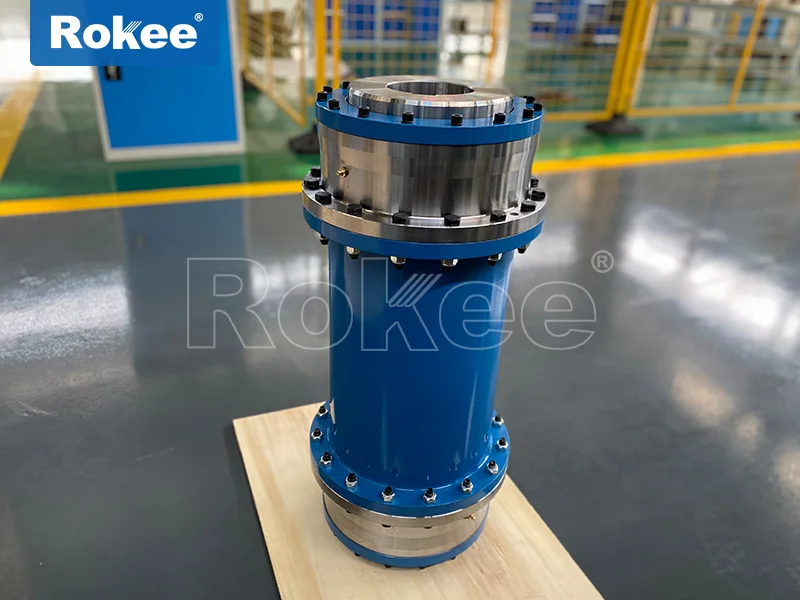
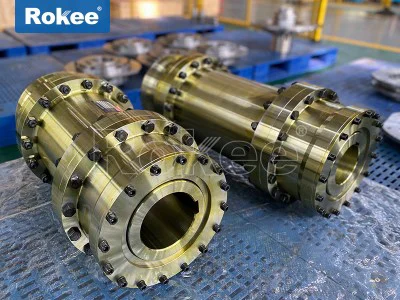
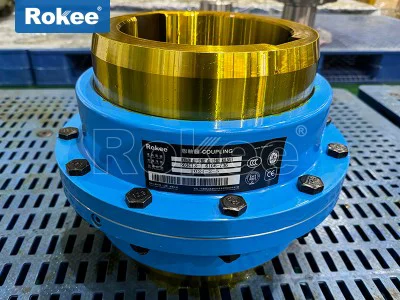
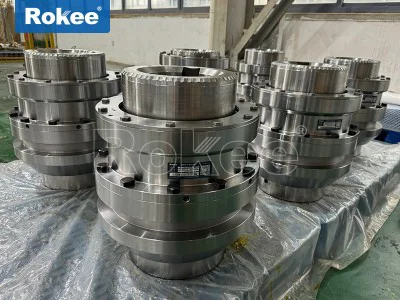
At its core, the crown gear coupling features a meticulously crafted structural design that integrates gear mechanics with coupling functionality, optimized for efficient torque transfer and misalignment compensation. The fundamental configuration of a standard crown gear coupling consists of two key assembly groups: a pair of crowned external gear hubs and two internal gear sleeves, complemented by fastening components that secure the unit to the driving and driven shafts. The defining structural characteristic lies in the crowned profile of the external gear teeth, which are machined into a spherical contour with the center of the sphere aligned precisely along the gear’s central axis. This curved tooth design differentiates it from conventional straight-tooth gear couplings, as it creates a larger, more uniform contact surface between meshing gears, eliminating the concentrated stress points that plague straight-tooth designs under misaligned conditions. The internal gear sleeves, which encase the crowned external gears, feature precision-machined internal teeth that mesh seamlessly with the external crowned teeth, forming a tight yet adaptable torque-transmitting interface.
Beyond the core gear components, the structural integrity of the crown gear coupling is reinforced by carefully selected materials and precision manufacturing processes. High-strength alloy steels are the predominant material choice for the gear hubs and sleeves, as they offer superior tensile strength, fatigue resistance, and wear durability—essential properties for withstanding heavy torque loads and prolonged operational stress. Many crown gear couplings undergo specialized surface hardening treatments, such as carburizing or nitriding, to enhance the hardness and wear resistance of the gear teeth, further extending the service life of the coupling and reducing the risk of premature tooth failure. The hubs are designed with precision bore diameters to ensure a tight, secure fit with the connected shafts, often utilizing keyways or tapered fits to prevent slippage during high-torque operation. Additionally, most crown gear couplings incorporate a sealed enclosure that houses the meshing gear components, serving two vital purposes: retaining lubrication to minimize friction and wear, and shielding the gear teeth from external contaminants such as dust, debris, moisture, and corrosive substances that are prevalent in industrial settings. This sealed structure not only preserves operational efficiency but also reduces maintenance requirements by protecting critical internal components from environmental damage.
The structural design of the crown gear coupling directly translates to its exceptional performance characteristics, which set it apart from other coupling variants in demanding industrial applications. One of the most prominent performance advantages is its extraordinary torque transmission capacity. The spherical crowned tooth profile distributes applied torque evenly across the entire contact area of the meshing teeth, maximizing load distribution and enabling the coupling to handle significantly higher torque loads than comparably sized straight-tooth gear couplings or flexible elastomeric couplings. This high torque density makes the crown gear coupling suitable for heavy machinery that generates and transfers substantial rotational force, where inferior coupling designs would fail under the stress. Even with its impressive load-bearing capabilities, the crown gear coupling maintains a compact physical footprint, allowing for seamless integration into machinery with limited installation space—a key benefit in densely packed industrial equipment setups.
Equally noteworthy is the crown gear coupling’s superior misalignment compensation ability, a critical performance metric for real-world mechanical systems where perfect shaft alignment is often unattainable. The curved crowned teeth enable the coupling to accommodate three primary forms of shaft misalignment: angular misalignment, where the two shafts intersect at a slight angle; parallel misalignment, where the shafts are offset horizontally without intersecting; and axial misalignment, where the shafts shift longitudinally along their central axes. Unlike rigid couplings that cannot tolerate any misalignment, leading to excessive stress, vibration, and component failure, the crown gear coupling flexes slightly at the gear meshing interface to absorb these deviations without compromising torque transmission. This misalignment tolerance not only prevents damage to the coupling itself but also protects connected components such as bearings, gears, and motor shafts from premature wear and tear, reducing overall equipment maintenance costs and downtime. Furthermore, the crown gear coupling exhibits effective vibration damping and shock absorption properties, mitigating the impact of sudden load fluctuations, mechanical shocks, and operational vibrations that are common in heavy industrial machinery. This damping effect enhances the stability of the entire power transmission system, ensuring smooth and consistent operation even under fluctuating load conditions.
Additional performance benefits of crown gear couplings include high operational efficiency and long service life. The precision-machined gear teeth and optimized meshing interface minimize energy loss due to friction, resulting in high torque transmission efficiency that maximizes the overall energy utilization of the machinery. The combination of high-strength materials, surface hardening treatments, and sealed lubrication systems reduces wear and tear on critical components, allowing the coupling to operate reliably for extended periods with minimal maintenance. While crown gear couplings require periodic lubrication replenishment to maintain optimal performance, their robust construction means they are far less prone to breakdowns than more fragile coupling types, making them a cost-effective long-term solution for industrial applications. Unlike some flexible couplings that rely on elastomeric elements prone to degradation, the all-metal construction of crown gear couplings ensures resistance to high temperatures, oil exposure, and harsh environmental conditions, further enhancing their versatility and durability.
Crown gear couplings are classified into distinct types based on structural modifications, functional adaptations, and application-specific requirements, each tailored to address unique operational needs in diverse industrial settings. The most basic and widely used variant is the standard crown gear coupling, which features a compact, integrated design with no additional auxiliary components. This type is ideal for general heavy-duty applications where shaft spacing is minimal, and the primary requirements are high torque transmission and moderate misalignment compensation. It serves as the foundational design upon which other specialized variants are built, offering a reliable and cost-effective solution for common power transmission scenarios.
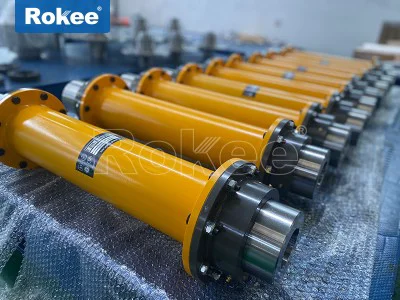
For applications where the driving and driven shafts are separated by a significant distance, the extended shaft crown gear coupling is the preferred choice. This variant incorporates an intermediate shaft section between the two gear coupling halves, increasing the overall length of the coupling to bridge large shaft gaps while retaining the core crowned gear design and performance attributes. The intermediate shaft is engineered to maintain torsional rigidity and misalignment tolerance, ensuring efficient torque transfer across extended distances without compromising operational stability. This type is commonly deployed in machinery where spatial constraints separate the prime mover from the driven equipment, such as long conveyor systems or large-scale processing machinery.
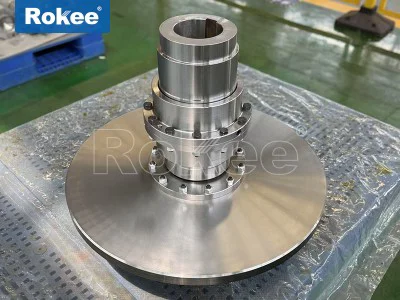
Another specialized classification is the brake wheel-equipped crown gear coupling, which integrates a brake wheel or brake disc into one of the gear hubs. This design combines the torque transmission function of the coupling with the braking functionality required for machinery that needs rapid deceleration or emergency stopping. The integrated brake wheel provides a dedicated surface for brake pads to engage, eliminating the need for separate braking components and streamlining the overall mechanical design. This variant is particularly valuable in heavy lifting equipment, material handling machinery, and industrial processing lines where precise braking control is essential for operational safety and efficiency.
Vertical shaft crown gear couplings represent a further specialized category, engineered specifically for power transmission systems where shafts are oriented vertically rather than horizontally. These couplings feature modified structural designs to withstand the unique load forces associated with vertical rotation, including axial thrust loads and gravitational stresses that are absent in horizontal applications. The gear meshing and hub fastening systems are reinforced to maintain stable connection and torque transfer under vertical operating conditions, making them suitable for vertical pumps, mixers, and other vertically oriented industrial machinery. Additionally, some crown gear couplings are designed with enhanced sealing systems or corrosion-resistant materials for operation in extreme environments, such as high-temperature facilities, marine applications, or chemical processing plants, where standard couplings would succumb to corrosion or thermal degradation.
The exceptional structural design and performance profile of crown gear couplings have led to their widespread adoption across a vast spectrum of heavy-duty industrial sectors, where reliable power transmission is non-negotiable. One of the primary application areas is the metallurgical and steel manufacturing industry, where crown gear couplings are integral to the operation of rolling mills, forging presses, extruders, and other steel processing equipment. These machines operate under extreme loads, high temperatures, and constant vibration, and the crown gear coupling’s high torque capacity and misalignment tolerance ensure uninterrupted power transmission despite the harsh operating conditions. In the mining and mineral processing industry, crown gear couplings are used in crushers, grinding mills, conveyors, and hoisting equipment, where they withstand heavy loads, abrasive dust, and continuous operation, providing reliable performance in the rugged mining environment.
The power generation sector also relies heavily on crown gear couplings for critical equipment operation. They are widely used in steam turbines, gas turbines, hydroelectric generators, and thermal power plants, connecting turbine shafts to generator shafts to transfer large amounts of rotational power efficiently. The coupling’s ability to accommodate thermal expansion-induced misalignment and dampen operational vibrations is crucial for maintaining the stability and efficiency of power generation equipment, ensuring consistent energy production. In the marine and shipbuilding industry, crown gear couplings are employed in propulsion systems, connecting ship engines to propeller shafts, as well as in auxiliary marine machinery such as pumps and compressors. Their robust, sealed construction resists saltwater corrosion and withstands the dynamic motion of marine vessels, making them ideal for maritime applications.
Beyond these core industries, crown gear couplings find extensive use in heavy machinery manufacturing, cement production, paper and pulp processing, and chemical processing. They are integrated into large pumps, fans, blowers, compressors, and material handling equipment across these sectors, delivering reliable performance in diverse operational scenarios. From large-scale industrial manufacturing plants to remote mining operations and marine vessels, crown gear couplings serve as indispensable components that keep critical machinery running smoothly. Their adaptability to different operational requirements, combined with their durable and high-performance design, solidifies their position as a go-to coupling solution for engineers and designers working with heavy-duty mechanical systems.
In summary, the crown gear coupling is a masterclass in mechanical engineering design, merging robust structural integrity, exceptional performance, and versatile functionality to meet the demands of modern heavy-duty industrial applications. Its unique crowned tooth design addresses the inherent challenges of torque transmission and shaft misalignment, while its high-strength construction and durable materials ensure long-lasting performance in harsh operating environments. The diverse classification of crown gear couplings allows for tailored solutions to specific operational needs, from standard short-shaft applications to extended-distance, vertical, and braking-integrated systems. Across industries ranging from steel manufacturing and mining to power generation and marine engineering, the crown gear coupling remains a critical component that enables reliable, efficient, and stable power transmission. As industrial machinery continues to evolve toward higher loads, greater efficiency, and more demanding operating conditions, the crown gear coupling will retain its status as an essential and irreplaceable element in mechanical power transmission systems, continuing to deliver reliable performance and value across global industrial operations.
Coupling Categories
Links:
Related Articles
- Oct 8, 2026Crown Gear Coupling For Crane Hoist
- Aug 19, 2026Crown Gear Coupling Misalignment Compensation
- Aug 19, 2026Heavy Load Crown Gear Coupling
- Aug 19, 2026Crown Gear Coupling Manufacturer
- Aug 19, 2026Custom Crown Gear Coupling
- Aug 10, 2026Double Engagement Crown Gear Coupling
- Aug 4, 2026Vertical Installation Crown Gear Coupling
- Aug 4, 2026Crown Gear Coupling For Steel Mill
- Jul 30, 2026Crown Gear Coupling For Heavy Duty
- Jul 30, 2026Crown Gear Coupling With Brake Disc
- Jul 7, 2026Crown Gear Coupling Improves Operation Stability Of PIR Sandwich Panel Production Line
- Apr 27, 2026Crown Gear Coupling Adapts To Polyurethane Sandwich Panel Machine to Extending Equipment Life
- Apr 20, 2026Crown Gear Coupling Adapts To PU Sandwich Panel Machine For Precision Upgrade
- Apr 20, 2026Crown Gear Coupling With Efficient Transmission Solution For PU Sandwich Panel Line