Single Diaphragm Couplings
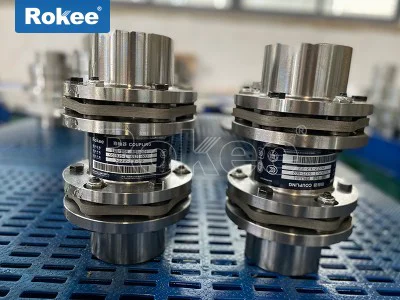
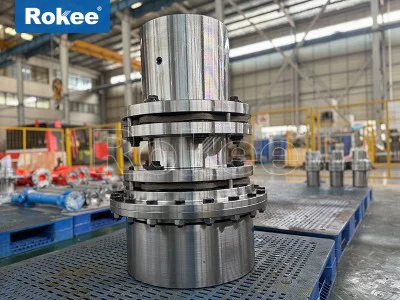
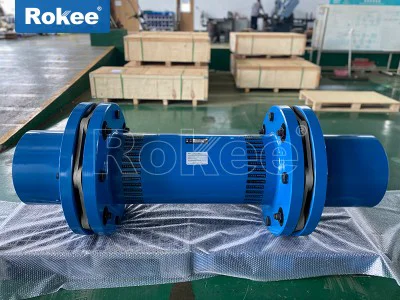
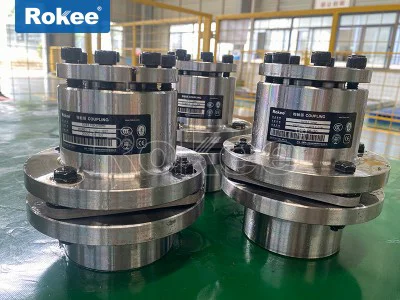
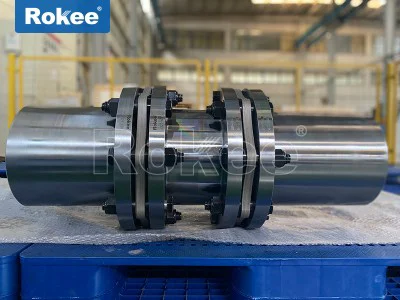
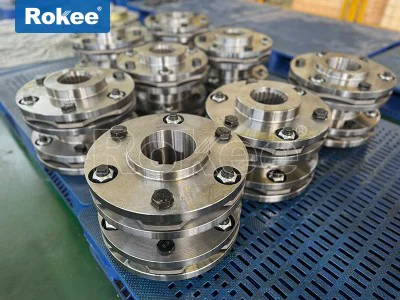
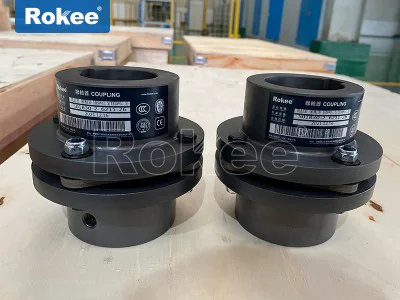
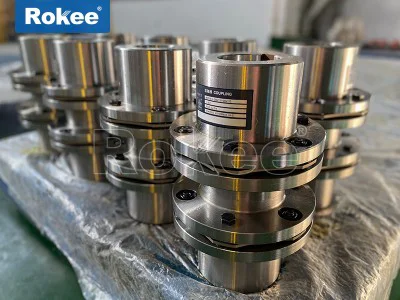
In the realm of modern mechanical power transmission, the single diaphragm coupling stands out as a precision-engineered flexible coupling that balances torsional rigidity, misalignment compensation, and operational durability. Unlike conventional coupling designs that rely on friction, lubrication, or elastomeric materials for flexibility, the single diaphragm coupling leverages the elastic deformation of a thin, high-strength metal diaphragm to transmit torque while accommodating shaft misalignments, making it a staple in precision and heavy-duty industrial drive systems alike. At its core, this coupling is defined by a streamlined structural composition that eliminates complex moving parts, reducing wear and maintenance requirements while enhancing overall transmission efficiency. The fundamental structure of a single diaphragm coupling consists of two robust hubs—each designed to mount securely onto the driving and driven shafts—and a single, precision-machined metal diaphragm that serves as the critical flexible link between these hubs. The hubs are typically crafted from high-grade alloy steel or aluminum alloy, chosen for their exceptional mechanical strength, fatigue resistance, and ability to maintain dimensional stability under varying operational loads; aluminum hubs are favored for lightweight, high-speed applications, while steel hubs are selected for heavy-duty torque transmission scenarios. The central diaphragm, the heart of the coupling, is manufactured from thin sheets of high-strength stainless steel or nickel alloy, materials that offer an optimal blend of elasticity, tensile strength, and resistance to fatigue and corrosion. This diaphragm is precisely fastened to the two hubs using a set of high-precision bolts, arranged in a staggered or concentric pattern to ensure uniform load distribution across the diaphragm’s surface during torque transmission and misalignment compensation. The assembly process prioritizes tight tolerances and balanced machining, as even minor imperfections in the diaphragm or hub alignment can compromise performance, induce vibration, or shorten the component’s service life. Notably, the single diaphragm design features a compact axial profile, a key structural advantage that makes it ideal for installation in confined spaces where shaft spacing is limited, a common constraint in precision machinery and compact industrial equipment.

The performance characteristics of the single diaphragm coupling are directly shaped by its minimalist structural design, setting it apart from other flexible coupling variants and defining its suitability for specialized operational environments. One of its most prominent performance attributes is its exceptional torsional stiffness with zero backlash, a critical trait for precision transmission applications where accurate speed and torque transfer are non-negotiable. This zero-backlash operation ensures that there is no lost motion between the driving and driven shafts, making the coupling indispensable for high-precision machinery that demands consistent, repeatable motion control. In terms of misalignment compensation, the single diaphragm coupling excels at accommodating axial and angular misalignments through the elastic bending and stretching of the metal diaphragm; axial misalignment, which occurs when shafts move along their central axis, and angular misalignment, where shafts are tilted relative to one another, are both effectively absorbed without generating excessive reaction loads on connected equipment bearings. It is important to note, however, that this design has limited capacity for radial misalignment—parallel offset between shafts—compared to multi-diaphragm couplings, meaning it performs optimally in systems where radial shaft displacement is minimal or tightly controlled. Another key performance feature is its maintenance-free operation, a stark contrast to gear couplings or elastomeric couplings that require regular lubrication, replacement of worn parts, or periodic adjustments. The absence of sliding or rubbing components in the single diaphragm design eliminates friction wear, meaning the coupling can operate reliably for extended periods without intervention, reducing downtime and long-term operational costs. Additionally, this coupling exhibits excellent high-speed performance and dynamic balance, capable of sustaining consistent operation at elevated rotational speeds without generating excessive vibration or centrifugal force-induced stress. Its all-metal construction also grants it superior environmental resistance, enabling it to operate reliably across a wide range of temperatures, from extreme cold to high heat, and withstand exposure to dust, moisture, and mild corrosive agents without degradation. The fatigue life of the single diaphragm coupling is equally impressive, as the precision-engineered diaphragm is designed to endure millions of load cycles without cracking or deforming, provided it is installed correctly and operated within its specified load and misalignment limits. Transmission efficiency is another standout performance metric, with the single diaphragm coupling achieving near-perfect power transfer rates, minimizing energy loss during operation and contributing to the overall energy efficiency of the drive system.
While the single diaphragm coupling adheres to a core structural framework, it is available in several distinct subtypes, each tailored to address specific installation constraints, shaft mounting requirements, and operational demands within industrial drive systems. These variants are differentiated primarily by their hub design, mounting configuration, and diaphragm integration, ensuring compatibility with diverse shaft sizes, connection types, and spatial limitations. The most common type is the standard keyed single diaphragm coupling, featuring hubs with precision-machined keyways that mate with corresponding keys on the drive and driven shafts. This design relies on the keyed connection to transmit torque securely, preventing slippage between the hub and shaft even under moderate to high loads, and is widely adopted across general industrial machinery due to its straightforward installation and reliable torque transfer. A second prevalent variant is the keyless clamping single diaphragm coupling, which replaces keyway connections with a clamping mechanism that uses high-torque bolts to compress the hub onto the shaft surface. This keyless design eliminates the stress concentrations and potential imbalance associated with keyways, providing a more uniform grip on the shaft and enhancing precision and balance—making it the preferred choice for high-speed, high-precision equipment such as servo motor drives and precision spindle systems. For applications involving shafts of significantly different diameters, the stepped-hub single diaphragm coupling is engineered with hubs of varying outer and inner diameters, ensuring a secure fit on mismatched shafts without compromising the coupling’s structural integrity or flexibility. This variant addresses the common industrial challenge of connecting disparate shaft sizes while retaining the core performance benefits of the single diaphragm design. Another specialized subtype is the reverse-mount single diaphragm coupling, designed with a unique hub configuration that allows for installation in tight axial spaces where standard mounting is unfeasible. This design optimizes space utilization by repositioning the diaphragm and hub assembly, making it ideal for compact machinery, portable equipment, and systems with restricted access for installation and maintenance. Additionally, there are miniature single diaphragm couplings, scaled down to accommodate small-diameter shafts and low-torque applications, such as those found in laboratory instrumentation, optical equipment, and small-scale automation systems. Despite their reduced size, these miniature couplings maintain the same zero-backlash, high-precision performance as their full-sized counterparts, proving the versatility of the single diaphragm design across scale and load ranges. Each subtype retains the core advantages of the single diaphragm configuration—compactness, maintenance-free operation, and torsional rigidity—while adapting to unique operational and installation needs, expanding the coupling’s applicability across a broad spectrum of mechanical systems.
The unique combination of structural simplicity, high precision, durable performance, and versatile design variants positions the single diaphragm coupling as a critical component across a vast array of industrial sectors, where it serves to connect drive shafts, protect connected equipment, and ensure reliable power transmission. One of the primary application areas is precision manufacturing machinery, where the coupling’s zero-backlash operation and high torsional rigidity are indispensable for maintaining the accuracy of CNC machine tools, grinding machines, milling machines, and lathes. In these applications, the coupling ensures that rotational motion and torque are transferred with pinpoint accuracy from the motor to the cutting or machining spindle, enabling tight tolerances, smooth surface finishes, and consistent part production—even during high-speed, continuous operation. The automation and robotics industry also relies heavily on single diaphragm couplings, integrating them into servo motor drives, linear motion systems, and robotic arm assemblies. Here, the coupling’s ability to compensate for minor shaft misalignments, its lightweight construction, and its maintenance-free design support the precise, repetitive movements required in assembly lines, pick-and-place systems, and automated packaging equipment, enhancing operational efficiency and reducing downtime for maintenance. In the realm of power transmission equipment, including pumps, fans, compressors, and blowers, single diaphragm couplings are favored for their durability and environmental resistance. They effectively absorb shaft misalignments caused by thermal expansion, foundation settling, or manufacturing tolerances, reducing stress on pump and motor bearings and extending the service life of the entire drive system; their ability to operate without lubrication also makes them suitable for cleanroom environments or applications where lubricant contamination must be avoided, such as in water treatment systems and chemical processing equipment. The aerospace and aviation support industries utilize single diaphragm couplings in ground support equipment, test benches, and auxiliary power units, leveraging their high-speed performance, fatigue resistance, and reliability in demanding operational conditions. These couplings withstand the rigorous cycles of start-stop operation and variable loads common in aerospace testing and ground handling, ensuring consistent performance without failure. Additionally, single diaphragm couplings find extensive use in medical and laboratory equipment, where precision, cleanliness, and quiet operation are paramount. From diagnostic machinery to analytical instruments and small-scale laboratory drives, the coupling’s zero-backlash precision, non-contaminating all-metal design, and smooth operation meet the stringent requirements of medical and scientific applications, where even minor vibration or inaccuracy can compromise test results or equipment functionality. Other notable applications include textile machinery, printing presses, and food processing equipment, where the coupling’s wear-free operation, resistance to industrial contaminants, and ability to maintain performance over long service lives contribute to uninterrupted production and reduced maintenance costs. Across all these sectors, the single diaphragm coupling’s core value lies in its ability to bridge the gap between rigid torque transmission and flexible misalignment compensation, delivering reliable, high-performance operation that enhances the efficiency, durability, and precision of diverse mechanical drive systems.
As industrial technology continues to advance toward higher precision, greater efficiency, and more compact machinery designs, the single diaphragm coupling remains a vital and evolving component in power transmission engineering. Ongoing refinements in material science, such as the development of advanced high-strength alloys and composite metal diaphragms, are further enhancing its fatigue life, load-bearing capacity, and environmental resistance, expanding its potential use in even more demanding applications. Precision manufacturing techniques, including CNC machining and finite element analysis, are also optimizing the diaphragm’s geometry and load distribution, pushing the boundaries of its misalignment compensation and high-speed capabilities. Despite the emergence of more complex coupling designs, the single diaphragm coupling endures as a preferred choice for engineers and designers worldwide, thanks to its unwavering combination of simplicity, reliability, and performance. Its ability to meet the diverse needs of precision, heavy-duty, high-speed, and compact mechanical systems solidifies its status as a cornerstone component in modern industrial power transmission, with its relevance and utility continuing to grow alongside advancements in mechanical engineering and automation technology. Whether in small-scale precision instrumentation or large-scale industrial production equipment, the single diaphragm coupling consistently delivers the performance and durability required to keep critical drive systems operating smoothly and efficiently.