Gear Coupling For Fan
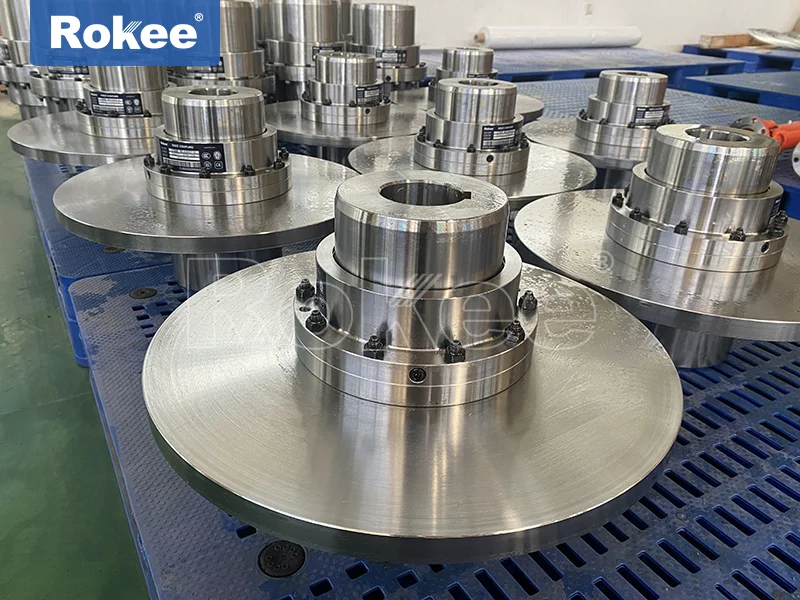
Gear couplings serve as core transmission components specially optimized for fan operating systems, undertaking the critical task of stable torque transmission between fan drive motors and fan impeller shafts. As flexible mechanical transmission parts, they stand out among various coupling types due to their high load resistance, excellent misalignment compensation capability and durable structural performance, perfectly matching the long-term, continuous and variable-load operating characteristics of industrial fans. Fan equipment often faces complex operating conditions including shaft position deviation, mechanical vibration and intermittent impact loads during operation, and rigid transmission parts are prone to accelerated wear, transmission jitter and even equipment failure under such scenarios. Gear couplings effectively solve these problems through precise gear meshing structures and flexible mechanical design. They not only ensure efficient and loss-free power transmission, but also buffer operating vibration, compensate for tiny shaft misalignments, and protect fan and motor equipment from excessive mechanical stress, becoming an indispensable key component for stable and long-term operation of various industrial and civil fan systems.
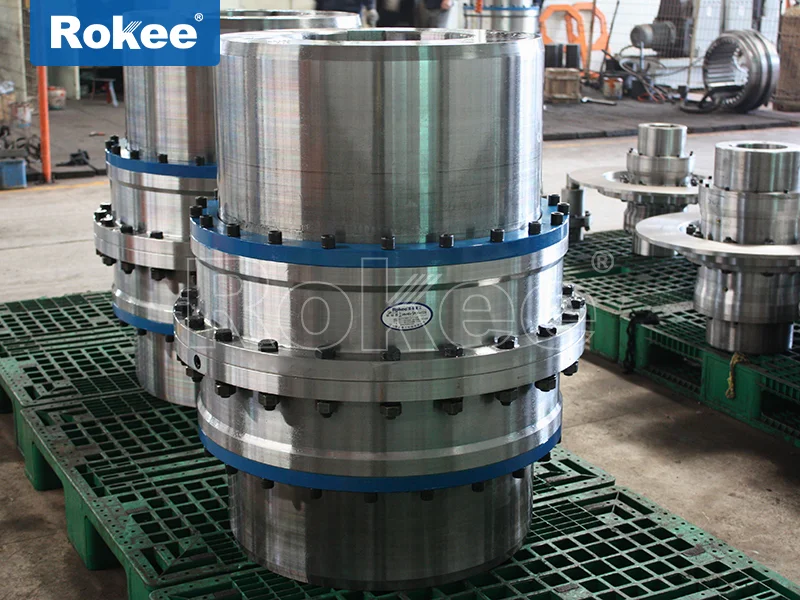
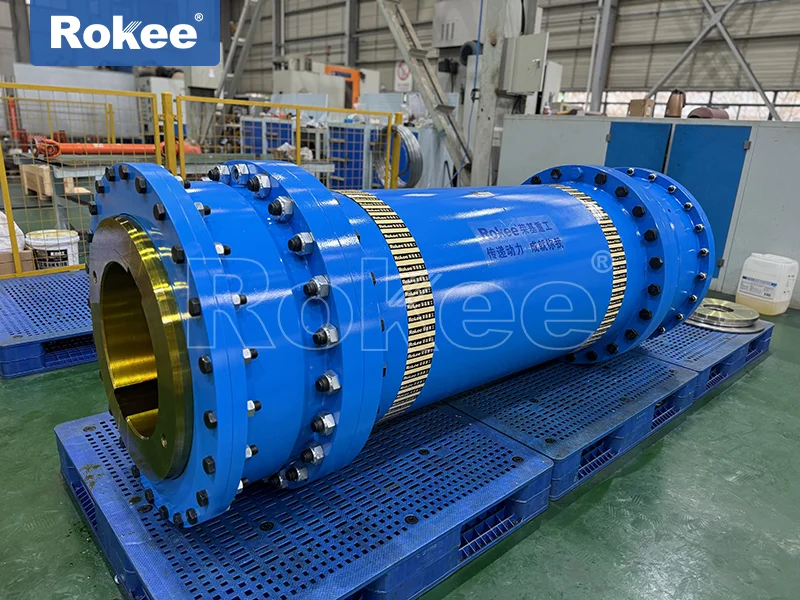
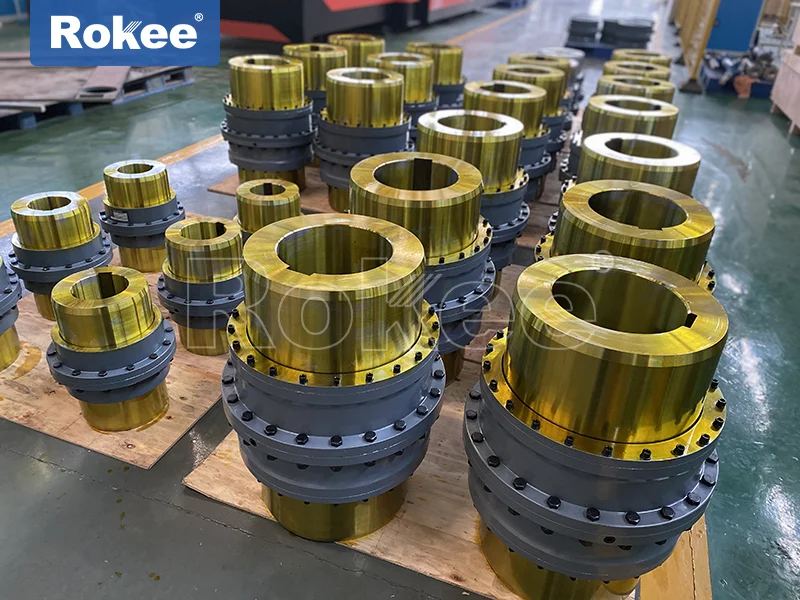
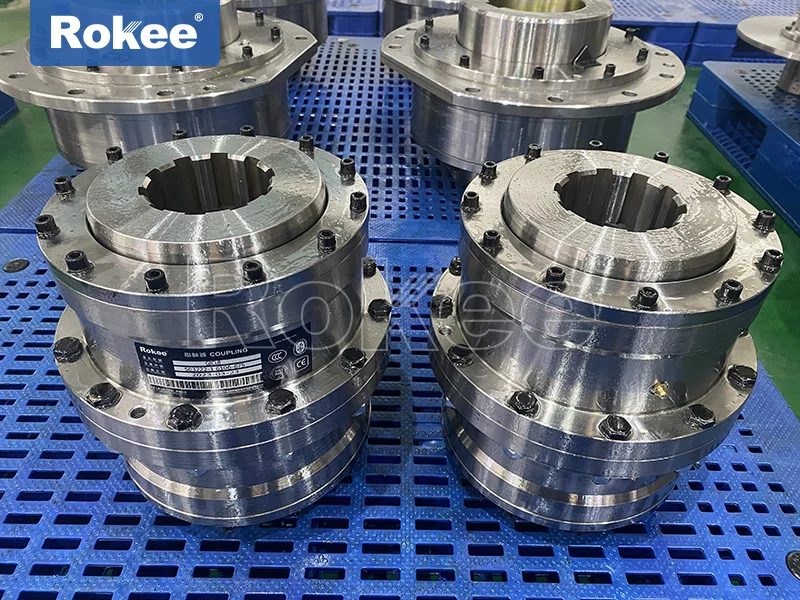
The basic working principle of gear couplings for fan equipment relies on the precise meshing cooperation between internal and external gear structures to realize synchronous power transmission between driving and driven shafts. The overall structure consists of two gear hubs installed on the motor shaft and fan shaft respectively, and a closed outer sleeve with internal gear teeth. When the motor starts to operate, the driving gear hub rotates synchronously, and the external gear teeth on the hub mesh tightly with the internal gear teeth of the outer sleeve, stably transmitting rotational torque and power to the driven shaft connected to the fan impeller. Different from rigid couplings that pursue absolute shaft alignment, the involute tooth profile design of fan gear couplings reserves reasonable tooth backlash and flexible meshing space. This structural feature allows the coupling to adapt to slight parallel deviation, angular deflection and axial displacement between the two shafts generated during fan operation. In the continuous rotating state of the fan, the composite rolling and sliding motion of gear teeth during meshing effectively reduces rigid friction, maintains high transmission efficiency, and avoids power loss caused by transmission stuck, ensuring that the fan can obtain stable power output under different operating speeds and load states.
The unique structural design of gear couplings endows them with outstanding performance advantages that perfectly fit the operating demands of fan equipment, especially in terms of load bearing and operational stability. Fans, especially large industrial ventilation and dust removal fans, often need to operate continuously for a long time and bear fluctuating impact loads caused by unstable air volume and wind pressure changes. The multi-tooth simultaneous meshing structure of gear couplings can evenly disperse transmission torque on each gear tooth surface, effectively avoiding local stress concentration and tooth surface overload damage, thus realizing stable bearing of high torque and variable impact loads. Meanwhile, the compact and robust integral structure enables the coupling to maintain excellent torsional rigidity while retaining flexible compensation capacity. This balance of rigidity and flexibility ensures that the coupling will not produce excessive torsional deformation during high-speed operation of the fan, nor will it transmit strong vibration and impact from the fan impeller side to the motor shaft. Compared with elastic couplings, gear couplings have stronger structural durability and lower fatigue loss under long-term cyclic load, and can adapt to high-frequency start-stop and continuous operation modes of fan equipment in various production scenarios.
Gear couplings show extremely high environmental adaptability and scene applicability in fan system applications, covering almost all types of fan operating scenarios from civil ventilation to heavy industrial ventilation. Many fan equipment is arranged in harsh working environments such as factory workshops, outdoor open spaces and dust-intensive production areas, where transmission components are easily affected by dust, temperature change and humid air. The fully enclosed structural design of gear couplings can effectively isolate external dust, debris and moist air, preventing internal gear tooth meshing surfaces from being contaminated and corroded, and maintaining stable transmission performance for a long time. For high-speed centrifugal fans and large axial flow fans with high power and large air volume, the high torque density characteristic of gear couplings can realize efficient power transmission in a small installation space, meeting the compact layout requirements of fan transmission systems. For low-speed and high-torque industrial exhaust fans and ventilation fans, their excellent overload resistance can cope with sudden load changes caused by pipeline blockage and air resistance fluctuation, effectively reducing the failure rate of fan transmission systems and improving the overall operational reliability of equipment.
Misalignment compensation is one of the most core functional values of gear couplings for fan equipment, and it is also the key to extending the service life of fan transmission systems. In the actual installation and operation of fan equipment, it is difficult to achieve absolute coaxial alignment between the motor shaft and the fan shaft due to installation errors, equipment foundation settlement, long-term operation vibration and thermal expansion and contraction of components. Slight shaft misalignment that cannot be eliminated will cause additional bending stress and friction loss on the transmission shaft, leading to shaft body wear, bearing heating and fan operating noise increase over time. The special tooth profile and reserved meshing gap of gear couplings can flexibly compensate for multiple forms of shaft misalignment, including parallel offset, angular deviation and axial displacement generated during fan operation. This flexible compensation mechanism completely avoids rigid stress transmission caused by shaft misalignment, disperses abnormal mechanical stress on the shaft system, protects the motor and fan bearing components from eccentric wear, and effectively reduces equipment vibration and operating noise, making the whole fan system run more smoothly and quietly in long-term operation.
Lubrication maintenance is a key link to ensure the long-term stable operation and performance retention of gear couplings for fans, and standardized lubrication management can maximize the service life of the coupling. The gear meshing operation of the coupling belongs to composite motion of rolling and sliding, and sufficient lubricating oil film must be formed on the tooth surface to reduce friction and wear. In the continuous operation state of the fan, high-speed meshing of gear teeth will generate tiny friction heat, and good lubrication can timely dissipate heat, avoid tooth surface high-temperature oxidation and abrasion, and prevent dry friction from causing tooth surface scratch and gear tooth fatigue damage. The fully enclosed structure of fan gear couplings can lock lubricating grease inside the meshing area, reduce lubricant volatilization and leakage, and maintain long-term lubrication effect. In daily use, regular inspection of lubricant status and timely replacement of deteriorated and contaminated lubricants can avoid abrasive wear caused by mixed dust and impurities. Scientific lubrication maintenance not only reduces the friction coefficient of gear meshing and improves transmission efficiency, but also effectively delays the aging and fatigue damage of structural parts, ensuring that the coupling always maintains excellent transmission performance during the whole service cycle of fan equipment.
Compared with other types of flexible couplings applied to fan systems, gear couplings have comprehensive comprehensive performance advantages in durability and operational economy, and have become the preferred transmission component for medium and large fan equipment. Elastic couplings rely on elastic deformation of rubber or polymer materials to realize vibration damping and misalignment compensation, but they are prone to aging, deformation and fatigue damage under long-term high-load and high-temperature operating conditions of fans, requiring frequent replacement and increasing equipment maintenance costs. In contrast, gear couplings are made of high-strength metal materials, with strong structural wear resistance, high temperature resistance and aging resistance, and can adapt to long-term uninterrupted operation of fans in harsh environments. Although the initial assembly and debugging of gear couplings is more precise, their ultra-long service cycle and stable performance greatly reduce the frequency of equipment shutdown maintenance and part replacement, effectively improving the continuous operation rate of fan equipment. In addition, their high transmission efficiency avoids long-term power loss in the fan transmission process, reducing the energy consumption cost of fan operation, and bringing significant economic benefits to the long-term operation of mechanical ventilation systems.
With the continuous upgrading of industrial fan equipment towards high power, high speed and intelligent operation, the application value and technical optimization space of gear couplings for fans are constantly expanding. Modern fan systems put forward higher requirements for transmission stability, energy-saving performance and fault tolerance of supporting components, and gear couplings are gradually optimized in tooth profile design, structural sealing and surface treatment processes to adapt to new fan operating characteristics. Optimized involute tooth profile design further reduces meshing friction and vibration, improving the smoothness of fan operation; upgraded sealing structure enhances the ability of the coupling to resist harsh environmental interference, suitable for more complex industrial ventilation scenarios; precision surface strengthening treatment improves the wear resistance and fatigue strength of gear teeth, further extending the service life of components. As a key basic transmission component of fan equipment, gear couplings will continue to rely on structural advantages and technical optimization to provide reliable transmission guarantee for the stable, efficient and long-term operation of various fan systems, and support the efficient operation of industrial ventilation, environmental protection exhaust and civil air circulation systems.