Universal Joints
A universal joint, often referred to as a U-joint, stands as one of the most fundamental and indispensable mechanical components in modern engineering, designed to transmit rotational torque and motion between two shafts that are not collinear or aligned in a straight path. This unique mechanical coupling solves a pervasive challenge in mechanical systems: the need to maintain consistent power transfer despite angular misalignment, positional shifts, or dynamic movement between connected shafts. Without universal joints, countless mechanical assemblies—from vehicle drivetrains to industrial machinery and precision automation systems—would fail to operate efficiently, as rigid shaft connections cannot accommodate the inevitable misalignment caused by movement, vibration, or spatial constraints. The versatility of universal joints stems from their streamlined structural design, adaptable performance profiles, and diverse classifications tailored to distinct operational demands, making them a cornerstone of power transmission technology across countless industrial, automotive, aerospace, and agricultural sectors.
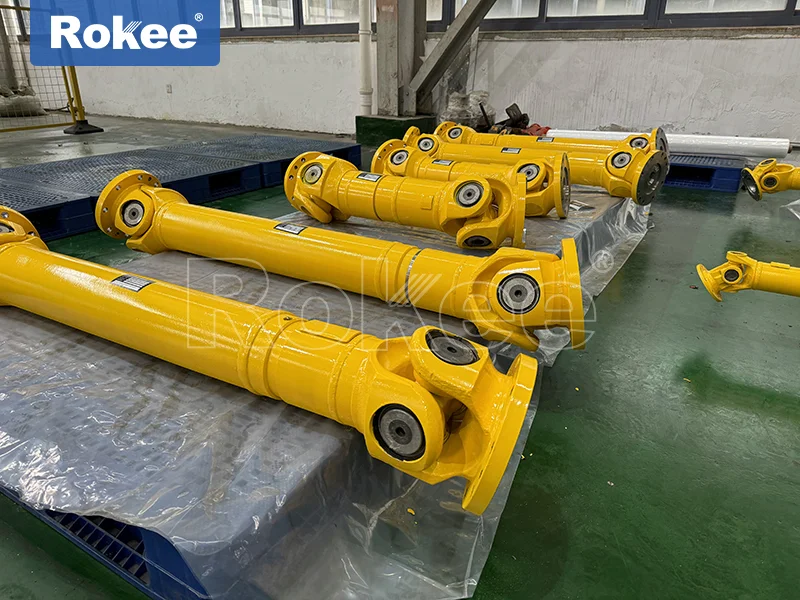
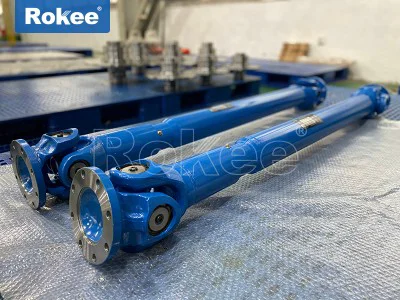
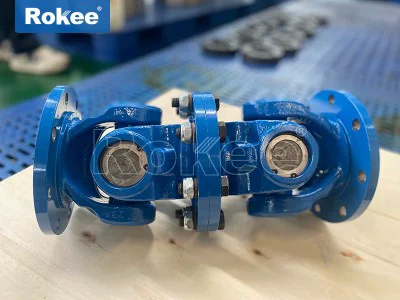
At its core, the structural composition of a standard universal joint is elegantly simple yet mechanically robust, optimized for reliable torque transmission and flexible articulation. The most prevalent design, known as the cross-type or Hooke’s joint, consists of four primary interconnected parts: a central cross-shaped spindle (commonly called a spider), two yoke assemblies (one driving yoke and one driven yoke), precision bearings, and protective sealing components. The central cross serves as the pivotal connection point, with its four perpendicular arms fitting into the corresponding sockets on the driving and driven yokes; this configuration allows the yokes to pivot freely relative to one another, enabling angular deflection between the input and output shafts. The bearings, typically needle roller bearings for high-load applications, are installed between the cross arms and yoke sockets to minimize friction, reduce wear, and enhance rotational efficiency during operation. Unlike plain bearings, needle roller bearings distribute load evenly across a larger contact area, boosting the joint’s load-bearing capacity and extending its service life under continuous or heavy-duty use. Completing the structure are protective seals and dust boots, which shield the internal bearing surfaces and lubricants from external contaminants such as dirt, moisture, debris, and corrosive substances, while also preventing lubricant leakage to maintain consistent friction reduction. This basic structural framework forms the foundation for all universal joint variants, with modifications made to materials, bearing types, and yoke designs to tailor performance for specific operating conditions, load requirements, and angular deflection limits.
The performance attributes of universal joints are defined by several key metrics that dictate their suitability for different applications, including angular flexibility, torque capacity, rotational efficiency, vibration resistance, and durability. Angular flexibility, or the maximum angle at which a joint can operate without binding or sacrificing power transfer, varies significantly across designs; standard cross-type joints typically handle angular deflections ranging from 15 to 30 degrees, with optimal performance occurring at angles below 20 degrees to minimize speed fluctuations and mechanical stress. Torque capacity, another critical performance parameter, refers to the maximum rotational force a joint can transmit without deformation or failure, and it is heavily influenced by material strength, bearing design, and overall structural rigidity. Joints constructed from hardened alloy steels offer far higher torque capacity than those made from lightweight alloys or polymers, making them ideal for heavy-duty industrial and automotive use. Rotational efficiency is closely tied to friction levels within the joint; precision-machined components and high-quality bearings minimize energy loss due to friction, ensuring that nearly all input power is transferred to the output shaft. Vibration and speed consistency are also vital performance considerations, as standard universal joints exhibit minor speed fluctuations at higher operating angles due to their mechanical design, a trait that can impact system smoothness in high-precision or high-speed applications. Durability is shaped by material selection, heat treatment processes, and sealing quality; joints engineered for harsh environments feature corrosion-resistant materials, reinforced seals, and enhanced wear resistance to withstand extreme temperatures, heavy loads, and prolonged operation without premature failure. Collectively, these performance traits determine the operational limits and functional suitability of each universal joint type, guiding engineers in selecting the optimal component for a given system.
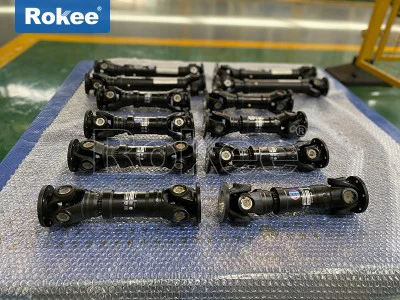
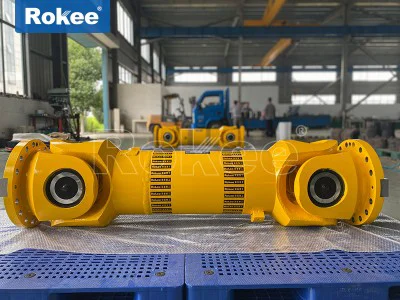
Universal joints are categorized into distinct types based on structural design, operational functionality, and performance capabilities, each engineered to address specific mechanical challenges and application needs. The most common classification includes single universal joints, double universal joints, constant velocity (CV) joints, flexible universal joints, and spherical ball-and-socket joints, each with unique structural nuances and performance advantages. Single universal joints, the simplest and most widely used variant, feature the classic cross-and-yoke design and are optimized for moderate angular misalignment and moderate torque loads. Their straightforward construction makes them cost-effective, easy to install and maintain, and suitable for a broad range of light to medium-duty applications, though they are prone to minor speed variation at larger operating angles. Double universal joints, also known as double Cardan joints, consist of two single joints linked by an intermediate shaft, a design that cancels out speed fluctuations and enables smooth power transfer at significantly higher angular deflections. This configuration eliminates the non-uniform rotational output of single joints, making them ideal for heavy-duty systems that require consistent speed and reduced vibration, such as long driveshaft assemblies and heavy machinery. Constant velocity joints represent a specialized category designed to deliver perfectly uniform rotational speed regardless of operating angle, even at deflections exceeding 40 degrees. Unlike cross-type joints, CV joints use a ball-and-cage or tripod design to maintain constant velocity transmission, eliminating vibration and speed variation entirely; this makes them indispensable for high-speed, high-precision applications where smooth motion is critical. Flexible universal joints incorporate elastomeric or compliant materials between the yoke and cross components, offering limited angular flexibility while absorbing shock loads, vibration, and minor misalignment. These joints prioritize vibration damping and stress reduction over maximum torque capacity, making them suitable for light-duty systems with frequent dynamic movement. Spherical ball-and-socket joints feature a spherical inner component encased in a socketed yoke, enabling multi-axis angular deflection in all planes rather than just a single plane. This omnidirectional flexibility makes them ideal for compact, complex mechanical systems that require multi-directional articulation, such as robotic arms and aerospace control mechanisms.
Beyond these primary classifications, universal joints can also be grouped by material composition, which directly impacts their performance in specific environmental and operational conditions. Carbon steel universal joints are the most common, offering a balanced blend of strength, durability, and affordability for general-purpose applications; heat-treated carbon steel variants further enhance hardness and load-bearing capacity for medium to heavy-duty use. Alloy steel joints, often reinforced with chromium, molybdenum, or nickel, deliver exceptional tensile strength, fatigue resistance, and durability under extreme loads and high temperatures, making them the preferred choice for heavy industrial machinery, off-road equipment, and high-performance automotive systems. Stainless steel joints provide superior corrosion resistance, making them suitable for harsh environments with exposure to moisture, salt, chemicals, or humidity, such as marine equipment, food processing machinery, and chemical processing systems. Lightweight aluminum alloy joints offer a high strength-to-weight ratio, reducing overall system mass for weight-sensitive applications like aerospace components, portable machinery, and robotic systems. Polymer and composite joints, made from engineering plastics such as PEEK, nylon, or UHMWPE, provide excellent chemical resistance, electrical insulation, and low friction, though they are limited to low-torque, light-duty applications due to lower structural strength. Each material variant is engineered to balance key performance traits, ensuring that the joint can withstand the unique stresses of its intended operating environment while delivering reliable power transmission.
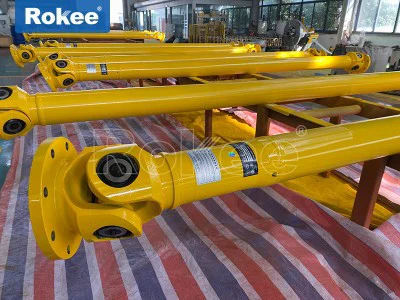
The practical applications of universal joints span nearly every industry that relies on rotational power transmission and flexible shaft connections, with each type of joint tailored to meet the unique demands of its specific use case. In the automotive industry, universal joints are integral to vehicle drivetrains, connecting the transmission to the driveshaft and differential to transmit power to the wheels while accommodating suspension movement and angular shifts caused by uneven terrain. Single cross-type joints are commonly used in rear-wheel-drive and four-wheel-drive vehicles for standard drivetrain applications, while constant velocity joints are essential for front-wheel-drive vehicles, where they enable smooth power transfer during steering and suspension movement. Double universal joints are employed in heavy-duty trucks, commercial vehicles, and off-road equipment to handle larger angular deflections and higher torque loads, ensuring reliable performance under rigorous driving conditions. In the agricultural sector, universal joints are critical components of power take-off (PTO) shafts, which transfer engine power from tractors to attached implements such as mowers, balers, plows, and seeders. These joints must withstand rugged outdoor conditions, heavy shock loads, and frequent angular changes as equipment moves across uneven farmland, making hardened steel cross-type joints the preferred choice for their durability and high torque capacity.
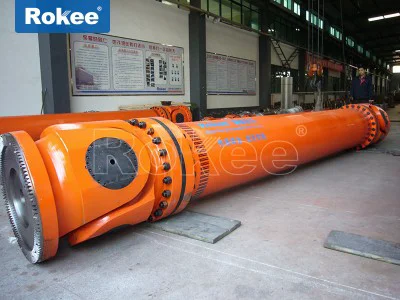
Industrial machinery relies heavily on universal joints for a wide range of applications, including conveyor systems, manufacturing equipment, pumps, mixers, and rolling mills. In conveyor systems, universal joints connect drive motors to conveyor rollers across non-linear paths, accommodating misalignment and ensuring consistent material transport. In heavy industrial machinery such as steel mills and manufacturing presses, double universal joints and heavy-duty cross-type joints transmit high torque levels while compensating for mechanical misalignment and vibration, reducing wear on adjacent components and extending overall system life. Precision industrial equipment, such as printing presses and textile machinery, uses constant velocity joints to maintain smooth, uniform rotation, preventing defects and ensuring operational accuracy. The aerospace industry utilizes lightweight, high-strength universal joints in flight control systems, landing gear mechanisms, and auxiliary power units, where they transmit motion between control surfaces and cockpit controls while withstanding extreme altitudes, temperature fluctuations, and structural flexing. These joints are typically made from titanium or high-grade stainless steel to meet strict weight and durability requirements, ensuring reliable performance in mission-critical aerospace applications.
Marine and maritime applications depend on corrosion-resistant universal joints to withstand the harsh saltwater environment, with stainless steel or bronze joints used in propulsion systems, steering linkages, and winch assemblies. These joints transmit power between boat engines and propeller shafts while accommodating hull flexing and misalignment, with sealed designs preventing water intrusion and corrosion. In robotics and automation, universal joints enable multi-axis articulation in robotic arms, manipulators, and automated guided vehicles, allowing for precise, flexible movement in confined spaces. Miniature universal joints are used in small-scale robotic systems and medical devices, where compact size, precision, and smooth motion are paramount. Additionally, universal joints find use in construction equipment, such as excavators, loaders, and cranes, where they transmit power to hydraulic systems and moving components while handling heavy loads and extreme vibration. Even in consumer goods and small-scale machinery, such as power tools and household appliances, lightweight universal joints facilitate flexible power transmission in compact designs, demonstrating the component’s unparalleled versatility across scales and industries.
The enduring relevance of universal joints in modern engineering stems from their ability to balance simplicity, versatility, and reliability, addressing a core mechanical challenge with elegant design and adaptable performance. As technology advances and engineering demands evolve, universal joint designs continue to be refined, with improvements in materials, bearing technology, and manufacturing processes enhancing their performance, durability, and efficiency. Modern innovations focus on reducing maintenance requirements, increasing torque capacity, expanding angular flexibility, and optimizing weight-to-strength ratios to meet the needs of emerging industries such as electric vehicles, advanced robotics, and renewable energy systems. Despite their long-standing presence in mechanical engineering, universal joints remain a vital and irreplaceable component, proving that even the most basic mechanical designs can deliver enduring value across countless applications. Whether in heavy industrial machinery, precision aerospace systems, consumer vehicles, or agricultural equipment, the universal joint’s ability to transmit power across misaligned shafts ensures its place as a foundational element of mechanical engineering for years to come, adapting to new challenges while retaining the core structural and functional principles that have made it indispensable.