Disc Membrane Couplings
In the realm of mechanical power transmission, disc membrane couplings stand out as high-performance flexible coupling components that bridge the gap between driving and driven shafts, addressing critical challenges related to torque transmission, shaft misalignment, and operational stability across diverse industrial scenarios. Unlike conventional rigid couplings that offer no tolerance for shaft deviations or elastic couplings that rely on polymer materials with limited durability, disc membrane couplings leverage the elastic deformation of precision-engineered metal membranes to fulfill their core functions, combining rigidity for torque delivery and flexibility for misalignment compensation. This unique design philosophy has made them indispensable in modern mechanical systems, where precision, reliability, and longevity are non-negotiable requirements.
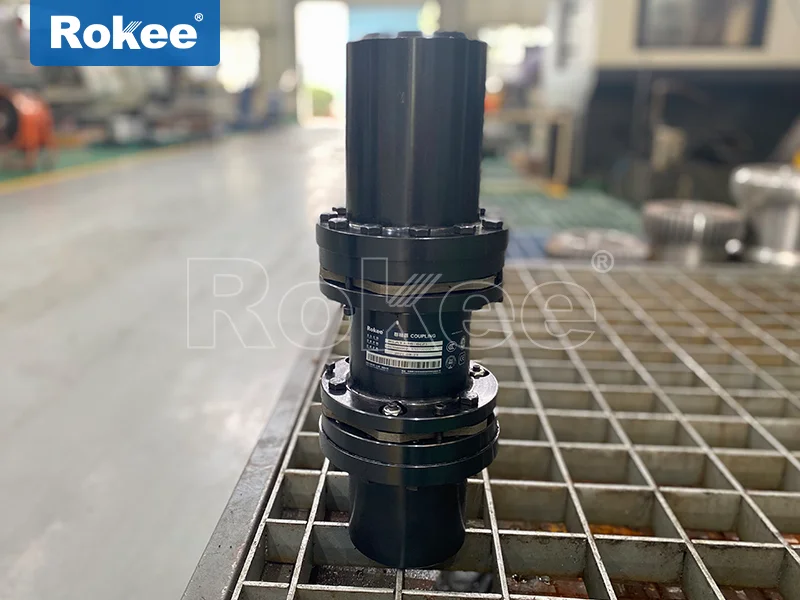
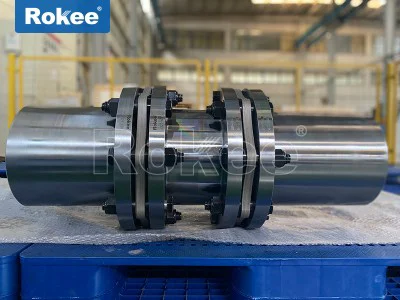
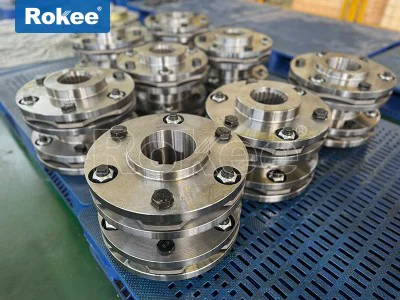
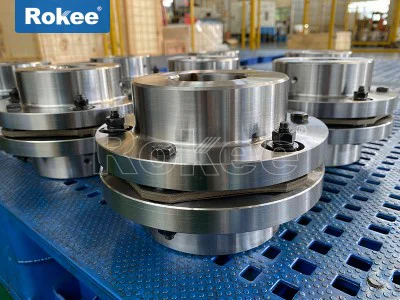
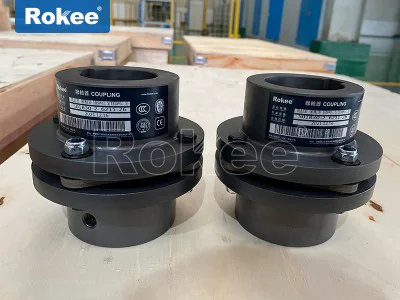
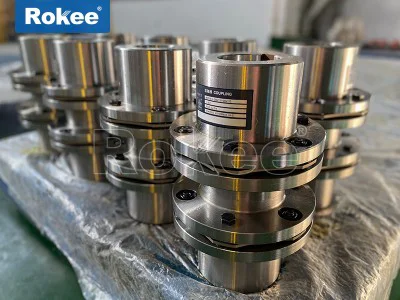
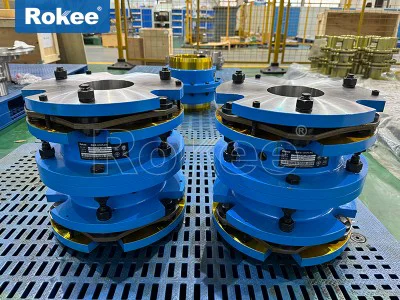
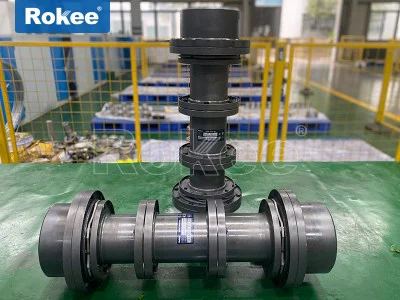
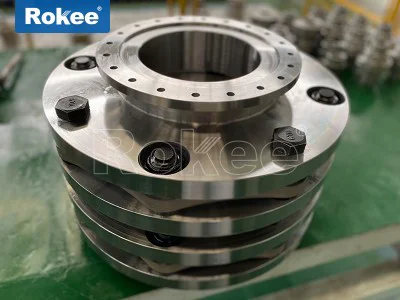
At its core, the structure of a disc membrane coupling is elegantly engineered yet mechanically robust, consisting of several key modular components that work in seamless harmony to transmit power efficiently. The primary elements include two rigid hubs, a set of thin, flexible metal disc membranes, and optional intermediate spacer components or fasteners that secure the assembly. The hubs are typically machined from high-strength alloy steel or stainless steel, designed with precision bore diameters to fit tightly onto the shaft ends of the driving and driven equipment, ensuring a secure, backlash-free connection that prevents slippage during torque transmission. The disc membranes, the heart of the coupling, are fabricated from high-performance spring steel or corrosion-resistant alloy sheets, processed through precision stamping and heat treatment to achieve optimal elasticity, tensile strength, and fatigue resistance. These membranes are not solid plates; they feature carefully calibrated contour patterns and bolt holes that distribute stress evenly across their surface, enabling controlled elastic deformation without permanent damage when subjected to misalignment forces. In standard configurations, the disc membranes are clamped between the two hubs via high-strength bolts or rivets, creating a rigid torque transmission path while retaining the ability to flex dynamically. For applications requiring greater misalignment tolerance or extended shaft spacing, an intermediate spacer is integrated between two sets of disc membranes, separating the hub assemblies and enhancing the coupling’s capacity to accommodate parallel, angular, and axial shaft deviations simultaneously. This modular, all-metal construction eliminates the need for internal moving parts or lubrication, setting the foundation for the coupling’s exceptional performance characteristics.
The performance of disc membrane couplings is defined by a unique blend of mechanical properties that address the most demanding operational conditions in power transmission systems, distinguishing them from other coupling types and solidifying their status as a premium transmission solution. One of the most prominent performance features is zero backlash operation, a critical attribute for high-precision machinery where positional accuracy and rotational synchrony are paramount. The tight, rigid connection between the hubs and disc membranes ensures that torque is transmitted instantaneously without any play or lag, eliminating rotational errors that could compromise the quality of output in precision-driven processes. Torsional rigidity is another standout trait; despite their flexible nature, the metal disc membranes maintain high torsional stiffness, allowing the coupling to transmit substantial torque loads efficiently while resisting torsional deformation under heavy operational stress. This balance of flexibility and rigidity is a hallmark of disc membrane couplings, as it enables them to compensate for shaft misalignment without sacrificing torque transmission efficiency.
Misalignment compensation capability further elevates the performance of disc membrane couplings, as they can accommodate three primary types of shaft deviations: angular misalignment, parallel misalignment, and axial displacement. Angular misalignment, caused by the non-collinear central axes of the driving and driven shafts, is absorbed by the bending deformation of the disc membranes, which flex to match the angular offset without transmitting excessive stress to the shaft bearings. Parallel misalignment, where the shafts run parallel but offset horizontally, is managed effectively by configurations with intermediate spacers, which allow the membranes to shear slightly and neutralize the offset. Axial displacement, stemming from thermal expansion or mechanical movement of the shafts during operation, is compensated by the axial elasticity of the disc membranes, preventing axial thrust loads from damaging connected equipment. Beyond these core capabilities, disc membrane couplings exhibit exceptional durability and low maintenance requirements. The all-metal, non-wearing construction means there are no friction components or elastomeric parts that degrade over time, eliminating the need for routine lubrication, part replacements, or frequent maintenance interventions. This translates to extended service life, reduced downtime, and lower long-term operational costs for industrial systems.
Additional performance advantages include broad environmental adaptability and high-speed operational suitability. The metal construction of disc membrane couplings makes them resistant to extreme temperatures, oil contamination, chemical corrosion, and dust exposure, allowing them to perform reliably in harsh industrial environments where other couplings would fail rapidly. They also boast low moment of inertia, a key benefit for high-speed rotational systems, as it minimizes energy loss, reduces vibration, and enhances the dynamic balance of the shaft assembly. This low inertia, paired with excellent fatigue resistance, enables them to operate consistently at high rotational speeds without developing cracks or structural failures, even under continuous cyclic loading. Collectively, these performance traits make disc membrane couplings a versatile choice for applications that demand precision, durability, and adaptability, rather than being limited to narrow operational parameters.
Disc membrane couplings are classified into distinct categories based on structural design, misalignment compensation capacity, and application-specific configurations, with each type tailored to meet unique operational requirements and shaft connection scenarios. The most fundamental classification is based on the number of disc membrane groups, dividing couplings into single-disc membrane types and double-disc membrane types, which differ significantly in structure and performance. Single-disc membrane couplings feature a single set of disc membranes connecting the two hubs directly, resulting in a compact, lightweight design with a shorter axial length. This simplicity makes them ideal for applications with limited installation space and low-to-moderate torque loads, though their misalignment compensation is primarily limited to angular and axial deviations, with minimal ability to handle parallel misalignment. They are favored for small-scale precision equipment where space efficiency and minimal weight are critical, and shaft misalignment is relatively minor.
Double-disc membrane couplings, by contrast, incorporate two separate sets of disc membranes with an intermediate spacer between them, creating a symmetrical, dual-flexure structure. This design drastically enhances the coupling’s ability to accommodate parallel misalignment, in addition to angular and axial deviations, making it suitable for applications with more significant shaft offsets and higher torque demands. The intermediate spacer not only boosts misalignment tolerance but also isolates vibration and reduces the transfer of axial forces between the driving and driven equipment, improving overall system stability. Double-disc configurations are more robust and versatile than single-disc variants, making them the preferred choice for medium-to-heavy duty applications where comprehensive misalignment compensation is essential.
Further classification can be based on shaft connection methods, including clamp-type couplings, set-screw couplings, and keyless locking device couplings, each designed to suit different shaft mounting requirements. Clamp-type disc membrane couplings use a radial clamping mechanism to secure the hub to the shaft, providing uniform pressure distribution and preventing damage to the shaft surface, ideal for high-precision shafts that cannot tolerate marring. Set-screw couplings rely on set screws to lock the hub in place, offering a simple, cost-effective installation process suitable for general-purpose applications with moderate torque loads. Keyless locking device couplings use friction-based locking assemblies to create a rigid, zero-backlash connection between the hub and shaft, eliminating the need for keyways and ensuring even load distribution, perfect for high-torque, high-speed applications where keyway stress could lead to shaft failure. Additionally, disc membrane couplings can be categorized by application-specific designs, such as short-coupled versions for close shaft spacing, long-spacer versions for distant shaft connections, and high-speed balanced versions for ultra-high rotational speed systems, each optimized to address specific operational constraints.
The versatility of disc membrane couplings, rooted in their robust structure and exceptional performance, has led to their widespread adoption across a vast spectrum of industrial and manufacturing sectors, where they serve as critical components in ensuring smooth, reliable power transmission. In the field of precision manufacturing and machine tools, they are a staple in CNC machining centers, lathes, milling machines, and grinding equipment, where zero backlash and high torsional rigidity are essential for maintaining machining accuracy, surface finish quality, and positional repeatability. Their ability to compensate for minor shaft misalignment caused by thermal expansion or mechanical loading prevents tool wear and workpiece defects, making them indispensable for high-precision machining operations.
In the power and energy industry, disc membrane couplings play a vital role in rotating equipment such as centrifugal pumps, fans, compressors, generators, and turbine systems. These applications often involve high torque loads, high rotational speeds, and harsh operating environments with extreme temperatures and vibration, and the all-metal, maintenance-free design of disc membrane couplings ensures reliable operation over extended periods. They absorb shaft misalignment caused by thermal expansion of pump and turbine casings, reducing stress on bearings and seals, and minimizing the risk of equipment failure that could lead to costly power outages or production disruptions. Their corrosion resistance also makes them suitable for energy systems handling corrosive fluids or operating in aggressive environmental conditions.
The automation and robotics sector relies heavily on disc membrane couplings for servo motor drives, robotic arm joints, linear motion systems, and precision positioning stages. In automated production lines and robotic assemblies, rapid acceleration, deceleration, and precise positional control are standard requirements, and the zero backlash, low inertia, and high dynamic response of disc membrane couplings enable smooth, accurate movement without lag or vibration. They withstand the cyclic loading inherent to robotic operations, ensuring consistent performance and extending the service life of servo motors and transmission components. Additionally, their compact design fits seamlessly into the space-constrained assemblies of industrial robots and automated machinery.
Disc membrane couplings also find extensive use in the aerospace, marine, and automotive industries, where reliability, lightweight construction, and high performance are non-negotiable. In aerospace applications, they are used in aircraft engine accessories, flight control actuators, and ground support equipment, where their high strength-to-weight ratio and ability to operate in variable temperature and pressure conditions are critical. Marine propulsion systems, including shipboard pumps, winches, and propulsion shafts, utilize disc membrane couplings to resist saltwater corrosion and absorb shaft misalignment caused by hull flexing. In automotive manufacturing and testing equipment, they support high-speed test benches, transmission systems, and engine dynamometers, delivering consistent torque transmission and withstanding the rigorous demands of automotive testing and production processes.
Beyond these core sectors, disc membrane couplings are employed in textile machinery, printing equipment, food and beverage processing machinery, and pharmaceutical manufacturing equipment, addressing the unique transmission needs of each industry. In textile and printing machinery, they ensure smooth, synchronized rotation to prevent material breakage and print defects; in food and pharmaceutical processing, their hygienic, non-lubricated design complies with strict cleanliness standards, avoiding contamination of products. Across every application, the core value of disc membrane couplings remains consistent: to provide a reliable, high-precision connection between shafts, mitigate the impact of misalignment and vibration, and enhance the overall efficiency, durability, and performance of mechanical systems.
In summary, disc membrane couplings represent a pinnacle of mechanical transmission engineering, merging a streamlined, robust structure with a comprehensive suite of performance advantages that cater to the most demanding industrial applications. Their precision-engineered metal membrane design delivers zero backlash, high torsional rigidity, exceptional misalignment compensation, and long-term durability, while their diverse classifications ensure adaptability to a wide range of torque loads, shaft configurations, and installation constraints. From small-scale precision robotics to heavy-duty industrial turbines, disc membrane couplings continue to be a cornerstone of reliable power transmission, enabling seamless operation across countless mechanical systems. As industrial technology advances toward higher precision, greater efficiency, and more extreme operating conditions, the demand for disc membrane couplings is poised to grow, driven by their unmatched ability to balance flexibility and rigidity, minimize maintenance, and sustain peak performance in even the most challenging environments. Their enduring relevance in mechanical engineering underscores the importance of specialized, high-performance transmission components in building robust, efficient, and reliable industrial machinery.