NL Nylon Sleeve Gear Couplings
In the realm of mechanical power transmission, flexible couplings serve as indispensable components that bridge rotating shafts, transfer torque, and mitigate operational stresses within diverse machinery systems. Among the wide array of coupling variants, the NL nylon sleeve gear coupling stands out as a highly practical and widely adopted solution, blending the robust torque-bearing capabilities of traditional gear couplings with the elastic damping and misalignment compensation traits of flexible couplings. Engineered for reliability, ease of use, and long-term durability, this type of coupling has carved out a significant niche in both light-duty general machinery and heavy-duty industrial equipment, addressing core transmission challenges across countless operational scenarios. Unlike rigid couplings that demand flawless shaft alignment and offer no tolerance for mechanical deviations, the NL nylon sleeve gear coupling is purpose-built to adapt to real-world operating conditions, where minor shaft misalignments, vibration, and shock loads are commonplace, making it a cornerstone component in modern mechanical engineering.
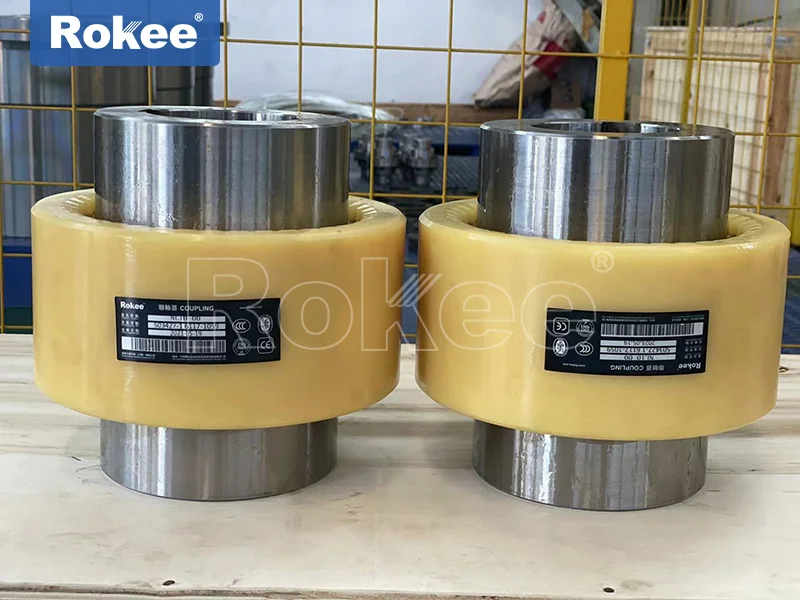
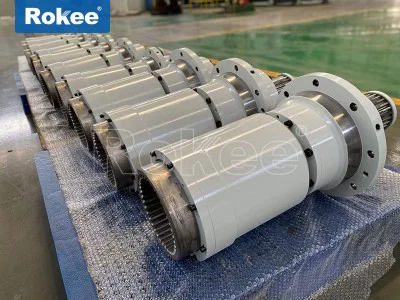
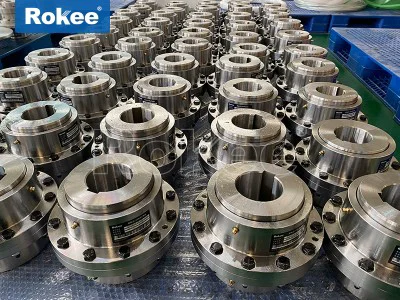
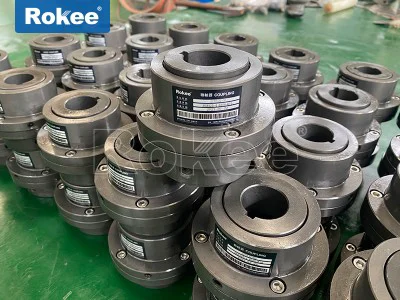
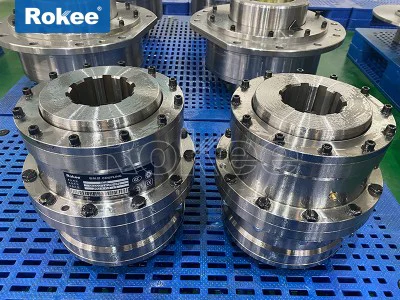
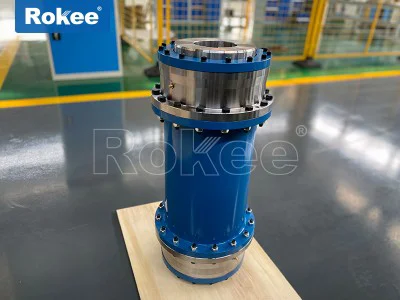
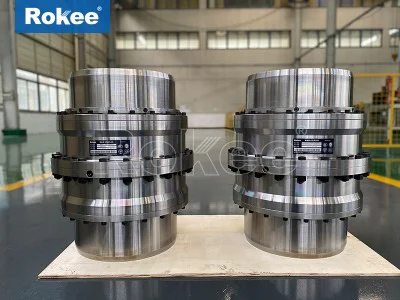
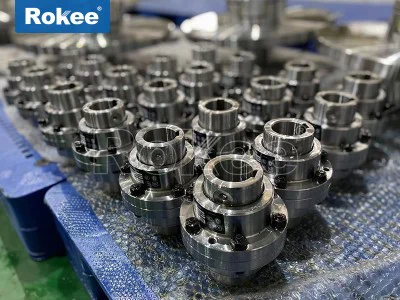
To fully grasp the value and functionality of the NL nylon sleeve gear coupling, it is critical to dissect its fundamental structural composition, which is streamlined yet meticulously engineered to balance strength, flexibility, and operational efficiency. At its core, the coupling consists of two primary metal hub assemblies, a precision-molded nylon sleeve, and supplementary fastening components that ensure secure assembly and stable operation. The metal hubs, typically forged or cast from high-grade carbon steel or alloy steel, are the load-bearing backbone of the coupling, designed with external gear teeth that are precision machined to tight tolerances. These hubs are mounted onto the driving and driven shafts respectively, secured via keyway connections or interference fits to prevent slippage during torque transmission and ensure synchronous rotation with the connected shafts. The gear teeth on the hubs are crafted with optimized profiles—often involute or curved tooth designs—to enhance meshing stability, distribute contact stress evenly, and reduce wear over extended operation, a design choice that elevates both load capacity and service life.
The defining element of the NL nylon sleeve gear coupling is the nylon sleeve, a high-performance polymer component that serves as the intermediary between the two metal hub gears. Manufactured from premium engineering nylon materials such as reinforced nylon 66, MC nylon, or glass-fiber modified nylon, this sleeve features internal gear teeth that precisely mesh with the external teeth of the metal hubs. The selection of high-grade nylon is not arbitrary; it is chosen for its unique combination of mechanical properties, including exceptional wear resistance, self-lubricating characteristics, moderate elasticity, and mechanical toughness. The sleeve acts as both a torque transfer medium and a flexible buffer, enabling the coupling to accommodate shaft misalignments while absorbing transient shocks and vibrations. Unlike metal gear couplings that require continuous lubrication to prevent friction and wear, the nylon sleeve’s inherent self-lubricating properties eliminate the need for regular oiling or greasing, drastically reducing maintenance requirements and operational downtime. Additional components such as retaining rings or locking fasteners may be integrated to secure the nylon sleeve in place, preventing axial displacement during high-speed rotation or heavy-load operation and maintaining consistent meshing between the nylon and metal gear teeth.
The operational principle of the NL nylon sleeve gear coupling is straightforward yet highly effective, leveraging the synergistic interaction between rigid metal hubs and a flexible nylon sleeve to deliver reliable power transmission. When the driving shaft rotates, torque is transferred from the driving hub to the nylon sleeve via meshed gear teeth, which then passes the torque onward to the driven hub and ultimately the driven shaft. During this process, the nylon sleeve’s elastic properties come into play: it undergoes minor elastic deformation to compensate for axial, radial, and angular misalignments between the two shafts, deviations that are inevitable in practical installations due to manufacturing tolerances, thermal expansion, foundation settling, or mechanical wear. This misalignment compensation capability prevents the transmission of excessive stress to the shafts, bearings, and other connected components, which would otherwise lead to premature wear, noise escalation, and even catastrophic equipment failure. Furthermore, the nylon material’s damping effect absorbs vibrational energy generated during operation, dampening resonance and reducing noise levels, creating a smoother and quieter operating environment for the entire transmission system. In cases of sudden overload or impact loads, the nylon sleeve also acts as a sacrificial component; it will deform or fail before the more costly metal hubs, shafts, or core machinery parts are damaged, providing a vital layer of overload protection that safeguards critical equipment assets.
The performance attributes of the NL nylon sleeve gear coupling are tailored to meet the diverse demands of industrial transmission systems, combining functional versatility with operational resilience. One of its most prominent advantages is its exceptional misalignment tolerance, capable of accommodating moderate axial displacement, limited radial offset, and small angular misalignment between shafts without compromising transmission efficiency. This flexibility simplifies installation procedures significantly, as technicians do not need to achieve perfect shaft alignment, reducing installation time and labor costs while minimizing the risk of installation-related damage. The self-lubricating nature of the nylon sleeve eliminates the need for complex lubrication systems and routine maintenance tasks associated with lubricant upkeep, making the coupling ideal for hard-to-reach installation spaces, enclosed equipment, or applications where regular maintenance is impractical. Additionally, the nylon material offers excellent electrical insulation properties, preventing stray electrical currents from passing between shafts and protecting sensitive electronic components or control systems within the machinery from electrical interference or damage.
In terms of mechanical performance, the NL nylon sleeve gear coupling delivers stable torque transmission across a broad range of rotational speeds, with low rotational inertia that minimizes energy loss during startup, shutdown, and speed regulation. The coupling exhibits high mechanical efficiency, with minimal power dissipation even under continuous heavy-load operation, contributing to overall energy savings for the equipment. It also boasts strong environmental adaptability, performing reliably within a wide temperature range and resisting degradation from common industrial contaminants such as dust, moisture, and mild chemical exposure. While it is not designed for extreme high-temperature or highly corrosive environments, it performs exceptionally well in standard industrial settings, offering a long service life with minimal wear. The lightweight and compact design of the coupling further enhances its appeal, reducing the overall weight of the transmission system without sacrificing load-bearing capacity, and it features simple assembly and disassembly processes, facilitating quick replacement of worn nylon sleeves or routine maintenance checks.
NL nylon sleeve gear couplings are categorized into distinct variants based on structural design, load-bearing capacity, and application-specific requirements, each optimized to serve different operational needs. The primary classification revolves around sleeve design and load rating, with the two most prevalent types being single-sleeve standard configurations and reinforced heavy-duty configurations. Standard single-sleeve NL couplings are engineered for light to medium torque loads and moderate operating speeds, featuring a single integrated nylon sleeve that connects the two metal hubs. These models are characterized by a compact footprint, lightweight construction, and cost-effective performance, making them suitable for general-purpose machinery where space is limited and operational loads are consistent. They excel in applications that demand basic misalignment compensation and vibration damping, offering a balance of performance and affordability for everyday industrial use.
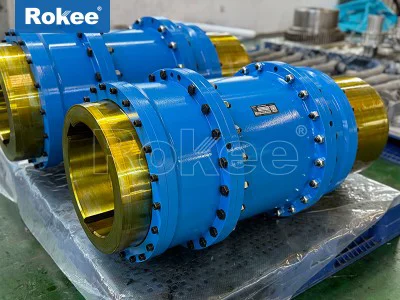
Reinforced heavy-duty NL nylon sleeve gear couplings, by contrast, are designed to withstand higher torque loads, greater shock forces, and more demanding operating conditions. These variants often feature thicker, high-strength reinforced nylon sleeves, upgraded metal hubs with enhanced heat treatment and tooth hardness, and reinforced fastening mechanisms to boost overall structural rigidity and load capacity. Some heavy-duty models may also incorporate dual-sleeve designs or modified tooth profiles to improve torque distribution and wear resistance, extending service life in harsh operational environments. Beyond these core classifications, NL couplings are also differentiated by torque rating, spanning small-scale models for light industrial tools and precision machinery to large-scale models for heavy industrial equipment. Shaft connection designs also vary, with options including cylindrical shaft holes, tapered shaft holes, and short cylindrical shaft holes to accommodate different shaft sizes and connection types, ensuring compatibility with a vast range of rotating machinery.
Another notable classification is based on operational adaptability, including standard general-purpose models and specialized environmental-resistant models. General-purpose variants are engineered for typical indoor industrial environments, prioritizing all-around performance and ease of use. Environmental-resistant models, meanwhile, are crafted with modified nylon materials and corrosion-resistant metal hubs to withstand harsher conditions, such as low-temperature settings, high-humidity environments, or areas with exposure to mild oils and chemicals. This diverse classification system ensures that there is an NL nylon sleeve gear coupling variant suitable for nearly every mechanical transmission scenario, allowing engineers to select the optimal model based on torque requirements, speed parameters, environmental conditions, and installation constraints.
The versatility of the NL nylon sleeve gear coupling is reflected in its extensive range of applications across numerous industrial sectors, where it fulfills critical torque transmission roles in diverse rotating machinery. In the general manufacturing and machinery sector, it is widely integrated into pumps, fans, compressors, conveyors, and mixers, delivering reliable power transmission while dampening vibration and reducing noise in daily production operations. Its easy installation and low maintenance needs make it a preferred choice for assembly line machinery and small to medium-scale production equipment, supporting seamless and efficient manufacturing workflows.
In the mining and metallurgical industry, heavy-duty NL nylon sleeve gear couplings are employed in rugged equipment such as crushers, ball mills, rolling mills, and continuous casting machines, where they endure heavy shock loads, continuous operation, and harsh onsite conditions. The coupling’s robust load-bearing capacity and overload protection features prevent equipment damage in high-intensity mining and metallurgical processes, enhancing operational stability and reducing unplanned downtime. In the power generation sector, both conventional and renewable power facilities rely on these couplings in water turbines, generator sets, cooling systems, and auxiliary transmission equipment, leveraging their electrical insulation properties and reliable performance to support stable power production.
The textile, food and beverage, and light industrial sectors also benefit extensively from NL nylon sleeve gear couplings, utilizing them in textile looms, printing machinery, packaging equipment, and food processing machinery. Here, the coupling’s clean, lubrication-free operation is particularly valuable, as it eliminates the risk of lubricant contamination that could compromise product quality, while its smooth torque transmission preserves the precision required for delicate manufacturing processes. In the construction machinery field, these couplings are integrated into cranes, excavators, concrete mixers, and other heavy construction equipment, providing the flexibility and durability needed to withstand the variable loads and harsh job site conditions typical of construction operations.
Beyond these core sectors, NL nylon sleeve gear couplings find utility in marine deck machinery, agricultural equipment, material handling systems, and a host of other mechanical applications, solidifying their status as a universal transmission solution. Their widespread adoption stems from their ability to address key pain points in mechanical transmission: balancing rigidity and flexibility, reducing maintenance burdens, enhancing equipment longevity, and optimizing operational efficiency. As industrial machinery continues to evolve toward higher efficiency, greater automation, and more resilient design, the NL nylon sleeve gear coupling remains a relevant and essential component, with ongoing advancements in nylon polymer materials and gear design further elevating its performance, expanding its application potential, and reinforcing its position as a reliable workhorse in the global mechanical transmission industry.
In summary, the NL nylon sleeve gear coupling represents a masterful fusion of metal strength and polymer flexibility, with a well-engineered structure that delivers exceptional performance characteristics, a diverse range of variants to suit specific needs, and a vast scope of practical applications across industrial landscapes. Its ability to transmit torque reliably, compensate for shaft misalignments, absorb vibration, and minimize maintenance has made it an indispensable part of modern mechanical design. Whether in small-scale precision equipment or large heavy-duty industrial systems, this coupling continues to provide stable, efficient, and cost-effective transmission solutions, highlighting its enduring value and adaptability in an ever-evolving industrial world. As material science and engineering design progress, the NL nylon sleeve gear coupling will undoubtedly continue to evolve, refining its performance metrics and expanding its reach to meet the emerging demands of next-generation mechanical transmission systems.