Membrane Couplings
In the realm of modern mechanical power transmission, membrane couplings stand as one of the most widely utilized and high-performance flexible coupling components, playing an irreplaceable role in connecting driving shafts and driven shafts, transmitting torque, and compensating for shaft misalignment. Unlike traditional rigid couplings that lack flexibility or elastomer couplings that rely on non-metallic materials for buffering, membrane couplings adopt thin, high-strength metal membranes as the core elastic elements, integrating the advantages of high torque transmission capacity, zero backlash, excellent durability, and wide environmental adaptability. This unique design makes them a preferred choice for precision machinery, heavy-duty industrial equipment, high-speed transmission systems, and harsh working condition applications, gradually replacing many traditional coupling types in various industrial sectors.
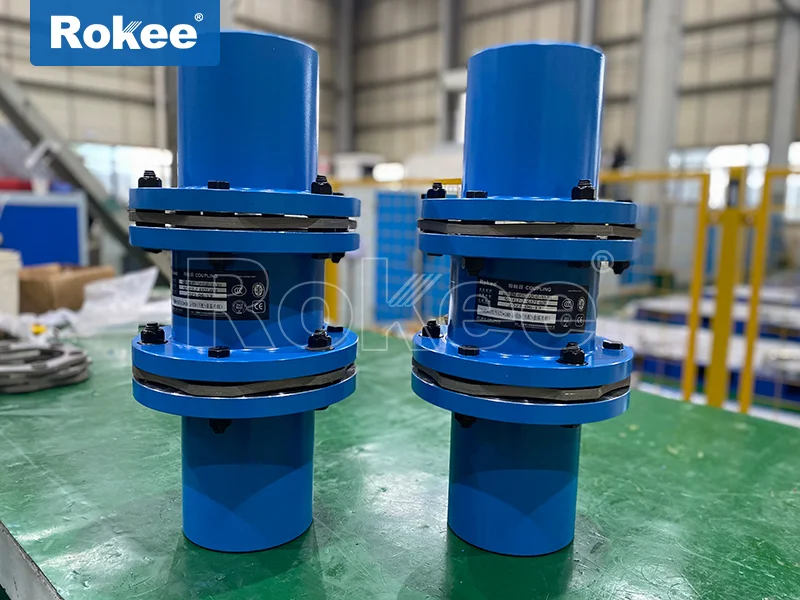
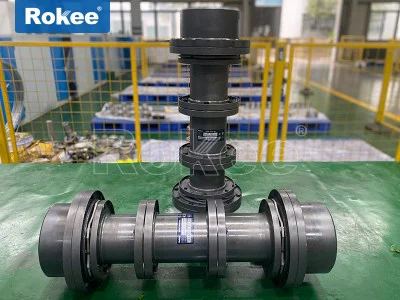
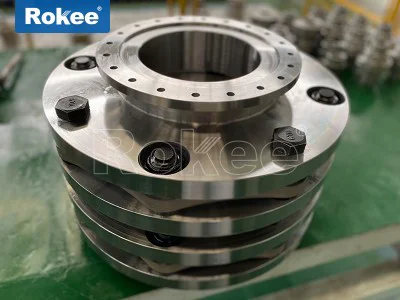
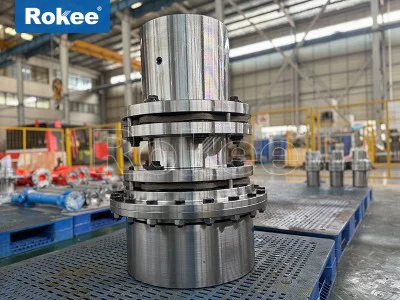
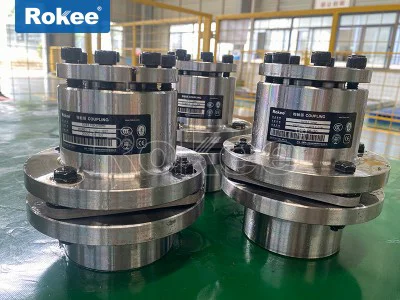
The fundamental structure of a membrane coupling is relatively simple yet meticulously engineered, consisting of three core components: two hub halves (also known as coupling flanges), a set of flexible metal membranes, and high-precision connecting fasteners. The hub halves are typically forged from high-strength alloy steel or stainless steel, featuring a compact and rigid structure with shaft holes designed to match the diameter of the connected shafts, and they can be fixed to the shaft ends through keyway connections, expansion sleeve clamp connections, or other locking mechanisms to ensure stable torque transmission without relative slippage. The metal membrane, as the heart of the entire coupling, is usually fabricated from high-quality stainless steel or nickel-based alloy sheets with exceptional fatigue resistance, tensile strength, and elastic deformation properties; these sheets are processed into thin, circular or polygonal membrane groups through precision stamping, cutting, and surface treatment, with most standard membrane groups comprising multiple stacked thin sheets to balance flexibility and torsional rigidity. The connecting fasteners, including high-strength bolts and nuts, are used to securely fasten the metal membrane groups between the two hub halves in a staggered or symmetrical manner, ensuring uniform stress distribution across the membrane during operation and avoiding localized stress concentration that could lead to premature failure. There are no sliding friction parts or lubrication-requiring components inside the membrane coupling, which fundamentally eliminates wear caused by relative movement and reduces maintenance requirements, a structural advantage that distinguishes it from gear couplings and chain couplings.
The working principle of membrane couplings relies on the controllable elastic deformation of the metal membrane groups. When torque is transmitted from the driving shaft to the coupling, the hub half on the driving side transfers the rotational force to the metal membrane via the fasteners, and the membrane then transmits the torque to the driven hub half and the driven shaft, achieving seamless power transmission. During this process, if there is axial, radial, angular, or composite misalignment between the two shafts—caused by manufacturing errors, installation deviations, thermal expansion and contraction, load-induced shaft deformation, or foundation settlement—the metal membrane undergoes slight elastic bending, stretching, or compression deformation to absorb and compensate for these misalignments. This deformation is reversible and does not compromise the coupling’s torque transmission performance or service life, as long as the misalignment remains within the design allowable range. Unlike elastomer couplings that may experience aging, hardening, or cracking under long-term use or extreme temperatures, the metal membrane maintains stable mechanical properties, ensuring consistent transmission accuracy and operational stability throughout the coupling’s service life.
The performance characteristics of membrane couplings are highly prominent, making them suitable for a broad spectrum of demanding transmission scenarios. First and foremost is their exceptional torque transmission capacity and torsional rigidity, with the ability to transmit large torques even in compact structural dimensions, avoiding excessive radial or axial space occupation, which is critical for equipment with limited installation space. The all-metal construction endows them with high torsional stiffness, minimizing torsional deformation during torque transmission and ensuring precise rotational speed synchronization between the driving and driven shafts, a trait that is indispensable for precision machinery requiring high positioning accuracy and motion consistency. Secondly, membrane couplings feature zero backlash operation, a key performance indicator in precision transmission systems; the tight fit between the membrane, hubs, and fasteners eliminates any clearance during forward and reverse rotation, preventing motion lag, positioning errors, or impact loads caused by backlash, thus enhancing the overall control accuracy and dynamic response speed of the equipment.
Another core performance advantage is their strong misalignment compensation capability, which can effectively handle axial, radial, angular, and composite misalignments. The specific compensation range varies with structural design, but generally, standard membrane couplings can accommodate moderate to large misalignments without generating excessive additional loads on the shaft ends, bearings, or other connected components, thereby reducing equipment wear and extending the service life of key transmission parts. In terms of environmental adaptability, membrane couplings outperform most other coupling types: they can operate stably in extreme temperature environments, ranging from ultra-low cryogenic conditions to high-temperature industrial settings, without performance degradation. They also exhibit excellent resistance to corrosion, oil contamination, dust, and moisture, making them suitable for harsh working environments such as petrochemical plants, marine engineering, metallurgical workshops, and food processing facilities. Additionally, membrane couplings offer outstanding vibration and noise reduction performance, as the elastic deformation of the metal membrane can absorb partial vibration energy generated during equipment operation, dampen rotational fluctuations, and reduce operational noise, creating a more stable and quiet working environment for mechanical systems.
Durability and maintenance-free performance are also vital performance highlights of membrane couplings. The absence of wearing parts and lubrication points means there is no need for regular oil injection, grease replacement, or worn parts replacement, significantly reducing equipment maintenance costs and downtime. The high-fatigue-resistance metal membrane ensures a long service life under normal operating conditions, withstanding millions of rotational cycles without failure, providing reliable long-term operation for continuous production equipment. Furthermore, membrane couplings boast high operational speed limits, making them applicable to high-speed rotating machinery such as turbines, high-speed motors, and centrifugal compressors, as their balanced structural design and lightweight components minimize centrifugal force effects at high speeds, avoiding vibration or structural damage.
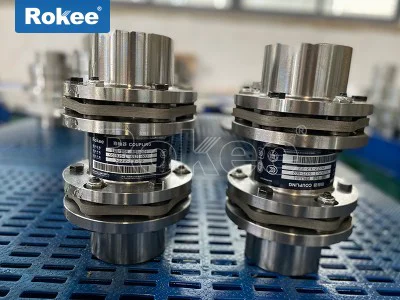
Membrane couplings are classified into various types based on structural design, membrane configuration, connection methods, and application scenarios, each with unique performance traits and targeted application fields. The most common classification is based on the number of membrane groups, dividing them into single membrane couplings and double membrane couplings, which represent the two most mainstream structural forms. Single membrane couplings feature a single set of metal membranes connecting the two hub halves, with a more compact structure, smaller axial size, and lighter weight. This design offers high torsional rigidity and efficient torque transmission, with strong axial misalignment compensation ability but relatively limited radial and angular misalignment compensation. They are ideal for applications with high installation accuracy, small shaft misalignment, limited installation space, and moderate torque requirements, such as small precision instruments, servo motor drive systems, CNC machine tool feed shafts, and light-duty industrial pumps.
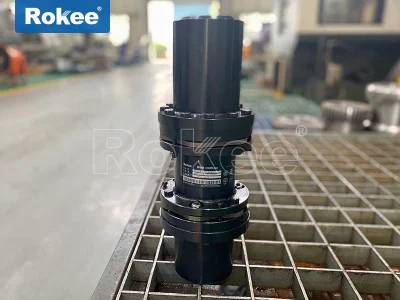
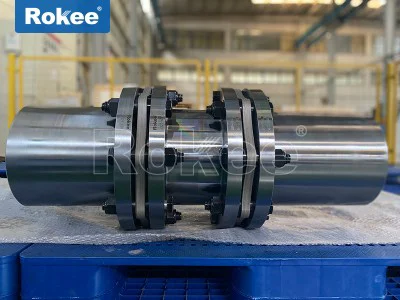
Double membrane couplings, by contrast, incorporate two separate sets of metal membranes with a rigid intermediate spacer or hub connecting them, forming a symmetrical dual-membrane structure. This design greatly enhances the coupling’s misalignment compensation capacity, especially for radial and angular misalignments, enabling it to handle larger composite misalignments without increasing additional loads on shaft components. Double membrane couplings retain high torque transmission capacity and torsional rigidity while offering greater flexibility, making them suitable for scenarios with poor shaft centering, large thermal deformation, or heavy-duty transmission requirements. Common applications include large-scale industrial pumps, fans, compressors, metallurgical machinery, marine propulsion systems, and medium-to-large CNC machine tool spindle drives, where they balance rigidity and flexibility to meet complex working condition demands.
Based on shaft connection methods, membrane couplings can be categorized into keyed membrane couplings and keyless clamp membrane couplings. Keyed membrane couplings feature hub shaft holes with standard keyways, transmitting torque through the cooperation of keys and keyways; this is a traditional, mature connection method with high torque transmission reliability, easy installation, and wide compatibility with standard shaft designs, making it suitable for most general industrial equipment with conventional shaft structures. Keyless clamp membrane couplings use an expansion sleeve or clamping hub design, where high-strength bolts tighten the hub to create an interference fit with the shaft end, eliminating the need for keyways. This keyless design avoids stress concentration caused by keyway machining, prevents shaft surface damage, ensures uniform torque distribution, and enables higher concentricity and disassembly convenience. It is particularly suitable for high-precision, high-speed, or heavy-load equipment such as precision servo systems, packaging machinery, textile machinery, and high-end machine tools, where installation accuracy and shaft integrity are critical.
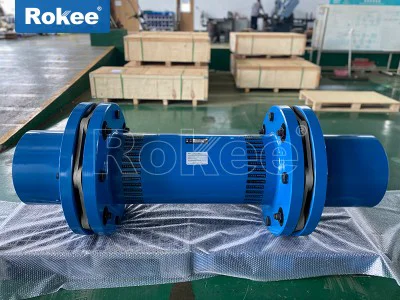
In terms of structural specialization, there are also long-span intermediate shaft membrane couplings, micro membrane couplings, and heavy-duty reinforced membrane couplings. Long-span intermediate shaft membrane couplings are equipped with a lengthened rigid intermediate shaft between the two membrane groups, designed for transmission systems where the distance between the driving and driven shafts is large; they maintain excellent misalignment compensation and torque transmission performance over long distances, commonly used in water pumps, fans, and conveyor systems in chemical, water treatment, and mining industries. Micro membrane couplings feature miniaturized, lightweight designs with small outer diameters and low moment of inertia, tailored for micro-precision equipment such as small encoders, medical instruments, laboratory testing machinery, and micro motor drives, where they deliver zero-backlash precision transmission in compact spaces. Heavy-duty reinforced membrane couplings adopt thicker high-strength membranes, reinforced hubs, and oversized fasteners to withstand ultra-high torque loads, serving heavy industrial machinery like crushers, rolling mills, large compressors, and marine power equipment.
The versatile performance and diverse types of membrane couplings enable their widespread application across nearly all industrial sectors involving mechanical power transmission. In the field of precision manufacturing and machine tools, membrane couplings are core components of CNC machine tools, machining centers, laser cutting machines, and grinding machines, leveraging their zero backlash, high precision, and high rigidity to ensure precise tool positioning, smooth spindle operation, and high-precision machining quality, directly impacting the dimensional accuracy and surface finish of machined parts. In the automation and servo drive industry, they are widely used in servo motors, stepper motors, robotic arms, and automated assembly lines, where their fast dynamic response, misalignment compensation, and vibration damping properties enhance the stability and accuracy of automated production equipment, supporting efficient and reliable intelligent manufacturing.
In general heavy-duty industry, membrane couplings are extensively applied in pumps, fans, compressors, and conveyors in petrochemical, metallurgical, electric power, and coal mining industries. Their corrosion resistance, high temperature resistance, and heavy-load capacity enable stable operation in harsh environments with high temperatures, dust, and corrosive media, reducing equipment failure rates and ensuring continuous industrial production. For example, in oil refineries, they connect drive motors and centrifugal pumps to transport corrosive media; in steel mills, they drive rolling mill equipment to withstand heavy impact loads and thermal deformation. In the transportation and marine engineering sector, double membrane and heavy-duty membrane couplings are used in vehicle transmission systems, ship propulsion devices, and offshore drilling equipment, providing reliable torque transmission and misalignment compensation under vibration and variable load conditions, adapting to the complex operating environments of transportation and marine machinery.
In emerging high-end equipment and special industries, membrane couplings also play a pivotal role. In wind power generation equipment, they connect wind turbine generators and gearboxes, enduring alternating loads, extreme weather, and large shaft misalignments to ensure stable power output. In medical equipment and food processing machinery, their maintenance-free, non-lubricating design prevents oil contamination, meeting strict hygiene and cleanliness standards for medical testing instruments, food filling machines, and packaging equipment. In aerospace and high-speed machinery, lightweight, high-strength membrane couplings support high-speed rotating systems such as aviation ground test equipment and turbochargers, delivering efficient torque transmission with minimal inertia loss. Additionally, in textile, printing, and packaging machinery, their precision transmission and vibration reduction capabilities ensure stable operation of high-speed rotating components, improving production efficiency and product quality while reducing equipment wear and maintenance frequency.
When selecting and applying membrane couplings, it is essential to match the type and specification to the actual working conditions, considering factors such as transmitted torque magnitude, operating speed, shaft misalignment type and range, installation space constraints, and environmental conditions. For high-precision, small-load scenarios, single membrane or micro keyless couplings are optimal; for heavy-load, large-misalignment environments, double membrane or heavy-duty reinforced couplings are more suitable. Proper installation and alignment are also critical to maximize performance: ensuring accurate shaft centering, controlling misalignment within allowable limits, and correctly fastening connecting fasteners can prevent premature membrane fatigue failure and extend service life. With the continuous advancement of mechanical manufacturing technology and the increasing demand for high-performance, maintenance-free transmission components, membrane couplings are undergoing iterative upgrades in material technology, structural optimization, and processing technology, further expanding their application boundaries and enhancing their performance. Their unique structural advantages and comprehensive performance traits will continue to solidify their status as a core component in modern mechanical power transmission systems, providing reliable support for the development of various industrial sectors towards high precision, high efficiency, and high reliability.