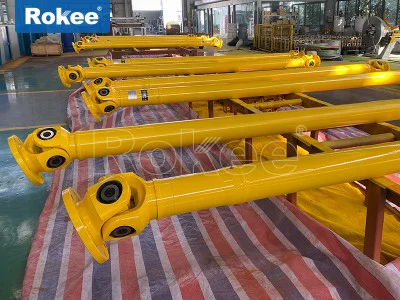
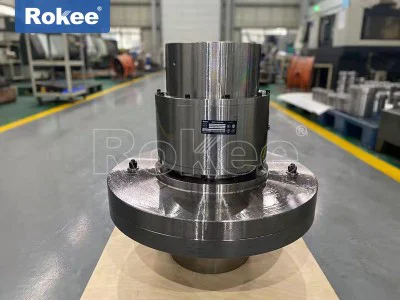
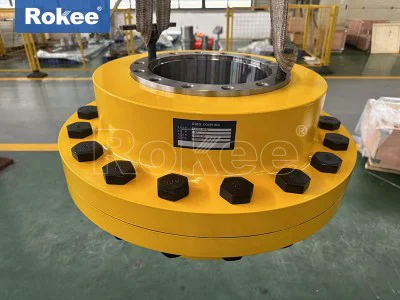
Expansion Couplings
In the intricate landscape of mechanical engineering and industrial system construction, expansion couplings stand as indispensable connecting components, engineered to resolve persistent challenges related to thermal expansion and contraction, shaft misalignment, torque transmission, and mechanical stress mitigation across diverse operating scenarios. Unlike rigid connection fixtures that lack adaptive flexibility, these components integrate specialized structural designs and material properties to strike a delicate balance between robust connection stability and adaptive movement accommodation, making them foundational to the reliable operation of everything from compact precision machinery to large-scale industrial pipeline networks and heavy-duty transmission systems. Every aspect of an expansion coupling, from its internal structural composition to material selection and functional design, is tailored to enhance operational efficiency, extend service life, and reduce wear on interconnected equipment, solidifying their role as critical elements in modern industrial infrastructure.
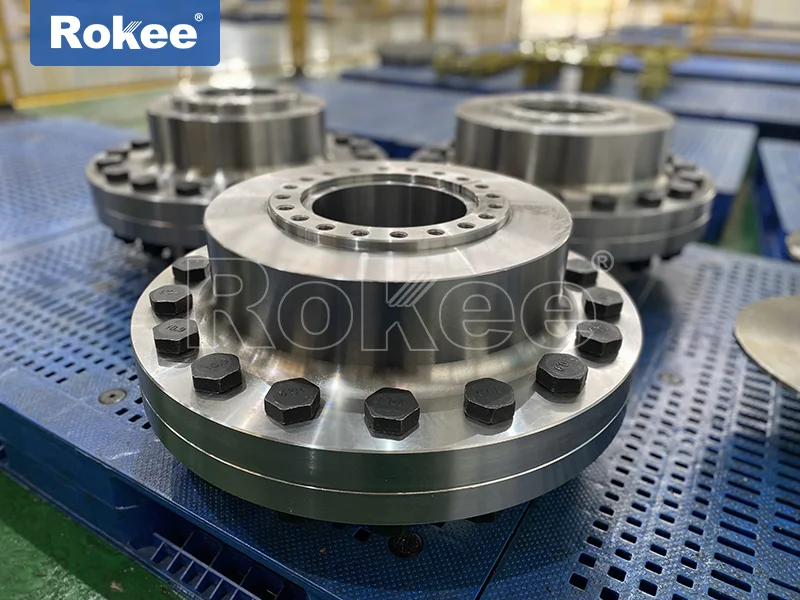
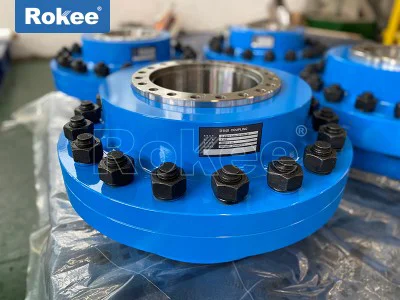
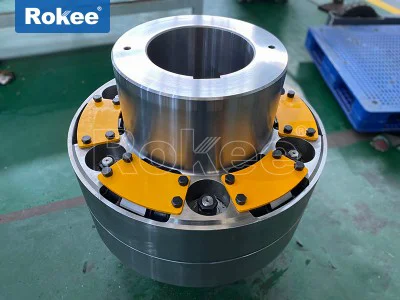
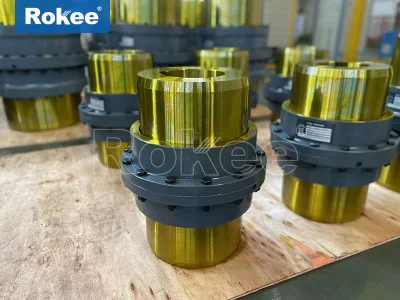
At its core, the structural design of an expansion coupling is engineered to fulfill dual core functions: secure, stable connection between adjacent components and controlled accommodation of dimensional shifts or positional deviations caused by external factors. While precise structural configurations vary across different types to suit distinct applications, most standard expansion couplings feature a set of universal core components that work in tandem to deliver consistent performance. The primary flexible element, often referred to as an expansion sleeve, bellows, or elastic intermediate piece, serves as the heart of the coupling, responsible for absorbing axial, lateral, or angular movement generated by thermal fluctuations, mechanical vibration, or assembly inaccuracies. This flexible component is meticulously crafted from materials with exceptional elasticity, fatigue resistance, and mechanical strength, ensuring it can withstand repeated cycles of expansion, compression, and bending without permanent deformation or failure. Surrounding this central flexible element are rigid connecting hubs or end fittings, designed to create a tight, secure bond with the shafts, pipe ends, or mechanical hubs they link. These connecting components are typically machined to tight tolerances, featuring smooth contact surfaces or specialized clamping mechanisms to eliminate rotational backlash and ensure efficient torque or force transmission between connected parts. Many expansion couplings also incorporate auxiliary sealing or protective elements, such as gaskets, dust covers, or lubrication-free lining layers, to shield internal structures from environmental contaminants like dust, moisture, or corrosive particles, while preventing fluid leakage in pipeline applications and reducing friction-induced wear during operation. Advanced structural variants may further include guide sleeves, damping inserts, or reinforced support rings to enhance movement control, boost load-bearing capacity, and dampen excess vibration, refining overall performance for high-demand operating conditions.
The performance of an expansion coupling is defined by a suite of interrelated attributes that dictate its suitability for specific operational environments, with each characteristic shaped by structural design, material composition, and manufacturing precision. Foremost among these is movement accommodation capacity, the critical ability to absorb axial elongation or contraction, radial offset, and angular deflection without compromising connection integrity. This parameter is governed by the flexibility and geometric design of the core elastic component; for instance, corrugated bellows structures offer greater axial and lateral movement range than solid sleeve designs, making them ideal for systems with significant thermal fluctuations. Torque transmission capability is another pivotal performance metric, especially for couplings used in mechanical transmission systems, referring to the maximum rotational force the component can transfer reliably without slippage, structural distortion, or failure. High-performance couplings achieve this through optimized contact pressure between the elastic sleeve and connected shafts, leveraging friction-based force transmission to eliminate the need for keyed connections and reduce stress concentration. Precision and operational stability are equally vital, particularly in precision engineering applications: top-tier expansion couplings deliver minimal rotational backlash, exceptional coaxiality, and consistent positioning accuracy, ensuring smooth, steady operation even at high rotational speeds or under variable load conditions. Durability and environmental resilience further define long-term performance, with premium couplings engineered to resist extreme temperatures, corrosive substances, mechanical fatigue, and heavy impact loads. Materials selected for these components are chosen to match operational hazards—heat-resistant alloys for high-temperature settings, corrosion-resistant metals for chemical environments, and wear-resistant composites for high-friction applications. Additional performance advantages include ease of installation and disassembly, maintenance-free operation, and vibration damping; many modern expansion couplings are designed for tool-light setup, require no regular lubrication, and absorb mechanical vibration to reduce noise pollution and prevent premature wear on connected equipment. Collectively, these performance traits ensure that expansion couplings can adapt to the rigorous demands of diverse industrial settings, from delicate automated machinery to heavy-duty processing equipment.
Expansion couplings are categorized into distinct types based on structural design, operating principles, and functional specialties, each engineered to address unique operational challenges and application requirements, eliminating the need for a one-size-fits-all solution. One of the most prevalent categories is mechanical expansion sleeve couplings, which operate on the principle of elastic deformation and frictional connection. These couplings feature tapered inner and outer sleeves that, when axially tightened, expand radially to create a tight interference fit between the coupling and connected shafts. Subcategories within this group include single-cone and double-cone designs: single-cone expansion sleeve couplings boast a simplified, compact structure, making them cost-effective and easy to install for general-purpose light to medium-duty applications, while double-cone variants offer enhanced disassembly ease, reduced installation force, and higher torque transmission capacity, suitable for systems requiring frequent maintenance or component replacement. A second major category is metal bellows expansion couplings, distinguished by their thin-walled, corrugated metal bellows as the core flexible element. This design enables exceptional flexibility, allowing the coupling to accommodate axial, lateral, and angular movement simultaneously, while maintaining high structural rigidity and pressure resistance. Metal bellows couplings excel in extreme environments, including high-temperature, high-pressure, and corrosive settings, as the bellows can be fabricated from specialized alloys to withstand harsh conditions without degradation. A third widely used category is elastomeric or rubber expansion couplings, which utilize high-grade rubber or polymer-based elastic sleeves as the central component. These couplings are prized for their superior vibration damping and noise reduction properties, along with the ability to tolerate significant misalignment and resist corrosion from water, oils, and mild chemicals. They are lightweight, cost-efficient, and ideal for low-pressure, low-to-medium load applications where vibration control is a priority. Diaphragm-type expansion couplings represent a fourth specialized category, merging the precision of rigid transmission with the flexibility of expansion components via thin, flexible metal diaphragms. These couplings deliver zero backlash, exceptional torsional rigidity, and precise movement control, making them perfect for high-precision equipment such as automation systems, servo drives, and machine tool spindles. Additional niche categories include hydraulic expansion couplings, which use controlled hydraulic pressure to achieve uniform radial expansion for heavy-duty, high-torque applications, and universal expansion couplings, designed with dual flexible elements to handle complex multi-directional movement in large-scale pipeline and transmission systems. Each type is refined to prioritize specific performance traits, ensuring engineers can select the optimal coupling for every unique operational scenario.
The versatility of expansion couplings is reflected in their extensive cross-industry applications, where they address critical connectivity and movement challenges across manufacturing, energy, construction, automotive, aerospace, and marine sectors, among others. In the manufacturing and machinery industry, expansion couplings are integral to the operation of CNC machine tools, industrial robots, conveyor systems, pumps, compressors, and textile machinery. In machine tool spindles and robotic joints, they enable precise torque transmission while compensating for minor assembly misalignments and thermal expansion, preserving machining accuracy and extending equipment service life. In conveyor and pumping systems, they absorb vibration and movement to reduce mechanical wear, prevent material jams, and maintain continuous operational flow. The energy sector relies heavily on expansion couplings for both conventional and renewable power generation systems: thermal power plants use metal bellows expansion couplings in high-temperature steam pipelines to accommodate extreme thermal expansion and prevent pipeline rupture, while wind turbine assemblies utilize heavy-duty expansion couplings to connect gearboxes and generators, absorbing wind-induced vibration and shaft misalignment to protect critical internal components. Solar power systems also employ these couplings in heat transfer pipelines to manage dimensional changes from fluctuating temperatures, ensuring stable fluid circulation and energy conversion efficiency. In the oil and gas industry, expansion couplings are deployed across upstream drilling operations, midstream transportation pipelines, and downstream refining facilities, where they withstand high-pressure, corrosive crude oil and natural gas environments, prevent pipeline leaks, and mitigate stress from thermal and mechanical fluctuations. Offshore drilling platforms further depend on corrosion-resistant expansion couplings to endure harsh marine conditions, including saltwater exposure and wave-induced structural movement.
The construction and building services sector leverages expansion couplings extensively in HVAC systems, plumbing networks, and fire protection infrastructure. In HVAC ductwork and piping, these couplings accommodate thermal expansion and contraction from heated or cooled air and fluids, preventing structural damage to ducts and pipes while maintaining efficient air and water distribution. In plumbing and fire sprinkler systems, they absorb minor shifts in building foundations and temperature-induced dimensional changes, reducing the risk of pipe leaks and ensuring uninterrupted system functionality. The automotive industry integrates expansion couplings into powertrain assemblies, exhaust systems, and suspension components: exhaust systems use flexible expansion couplings to handle extreme heat from exhaust gases, reducing thermal stress on exhaust manifolds and mufflers, while powertrain applications use precision couplings to transmit torque smoothly and dampen engine vibration for improved vehicle performance and ride comfort. In the aerospace sector, lightweight, high-precision expansion couplings are used in aircraft engines, landing gear systems, and avionics equipment, where they meet stringent requirements for low weight, exceptional precision, and resistance to extreme altitude-related temperature fluctuations and mechanical stress. Marine engineering applications include ship propulsion systems, onboard piping networks, and port machinery, where expansion couplings resist saltwater corrosion, absorb hull movement-induced stress, and maintain reliable connectivity in rough sea conditions. Beyond these core industries, expansion couplings find use in medical diagnostic equipment, agricultural machinery, packaging lines, and consumer appliances, wherever secure connection, movement accommodation, and vibration control are essential to operational reliability.
As industrial technology continues to advance toward higher precision, greater automation, and more extreme operating conditions, the design and performance of expansion couplings are evolving in tandem, with ongoing innovations in material science and structural engineering enhancing their functionality and adaptability. Modern research focuses on developing high-strength, lightweight composite materials to boost load-bearing capacity while reducing component weight, optimizing structural geometries to maximize movement accommodation and torque transmission, and refining manufacturing processes to achieve tighter tolerances and more consistent performance. Despite the diversity in types and applications, the core purpose of expansion couplings remains unchanged: to bridge mechanical components seamlessly, protect equipment from stress-induced damage, and sustain stable, efficient operation across variable and often harsh environments. Their widespread adoption across nearly every industrial sector underscores their irreplaceable role in modern engineering, as they continue to provide practical, reliable solutions to the universal challenges of thermal movement, misalignment, and mechanical stress. Whether in a precision medical device, a heavy-duty industrial mill, a cross-country pipeline, or a high-performance aerospace system, expansion couplings play a silent yet vital role in ensuring operational continuity, safety, and longevity, making them an enduring cornerstone of global industrial development.