Cardan Joints
The Cardan joint, also widely referred to as a universal joint, stands as one of the most fundamental and indispensable mechanical components in modern engineering and industrial systems, dedicated to transmitting rotational torque and motion between two shafts that are non-collinear, intersecting at a fixed or variable angle. Since its inception, this ingenious mechanical structure has undergone continuous optimization and evolution, adapting to diverse operational scenarios with varying load demands, speed requirements, and angular misalignment tolerances. Unlike rigid shaft couplings that demand perfect axial alignment, the Cardan joint introduces a flexible articulated connection, solving the longstanding challenge of power transmission in systems where shaft displacement, angular deviation, or mechanical vibration is inevitable. Its core value lies in balancing efficient torque delivery, structural durability, and adaptive flexibility, making it a cornerstone component across automotive, industrial machinery, aerospace, marine, and precision equipment sectors.
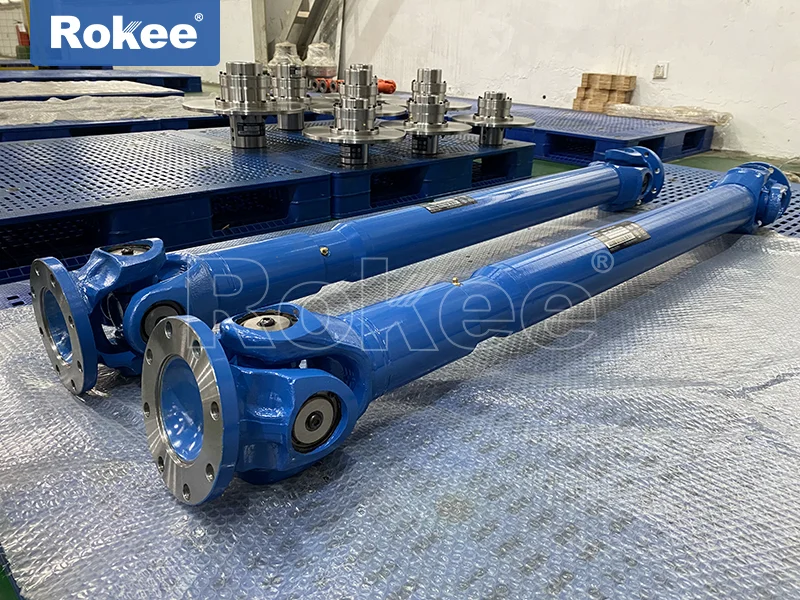
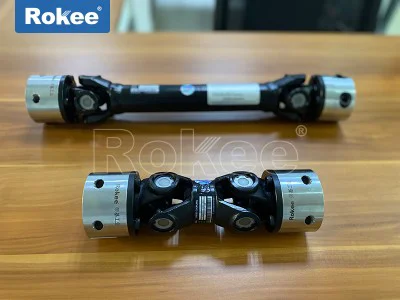
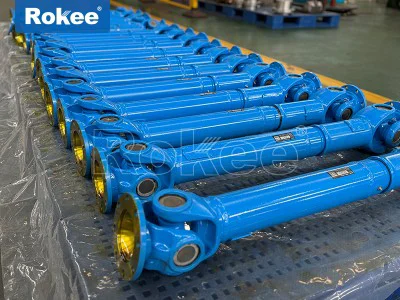
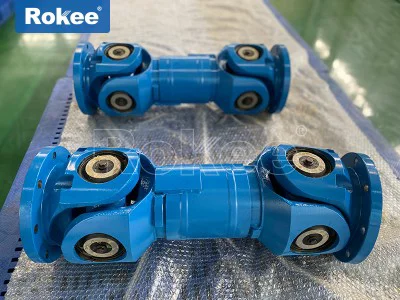
At its most basic level, the standard Cardan joint features a minimalist yet robust structural configuration, centered on a cross-shaped intermediate component commonly known as a spider, paired with two yoke-shaped end fittings attached to the driving and driven shafts respectively. Each end of the cross spider integrates precision bearings—typically needle roller bearings, chosen for their high load-bearing capacity, compact size, and low friction characteristics—that enable smooth articulation between the spider and the yokes. This design allows the two connected shafts to pivot relative to one another within a defined angular range, facilitating uninterrupted torque transmission even when the shafts are not perfectly aligned. The structural integrity of the joint relies heavily on the material selection and machining precision of its core parts; high-strength alloy steel is the predominant material for heavy-duty variants, offering exceptional tensile strength, wear resistance, and fatigue life, while lightweight thermoplastic or aluminum alloys are utilized for low-load, high-speed applications to reduce rotational inertia and minimize energy loss. The geometric design of the yokes and spider is meticulously engineered to prevent mechanical interference during operation, ensuring the joint can move freely within its rated angular limit without binding, jamming, or premature wear. Critical structural details, such as the diameter of the spider journals, the thickness of the yoke arms, and the tolerance of bearing fits, directly shape the joint’s overall performance, including maximum torque capacity, permissible operating angle, and rotational smoothness.
The performance attributes of Cardan joints are defined by a set of quantifiable and functional parameters that govern their suitability for specific operational environments, with angular misalignment tolerance, torque transmission capacity, rotational speed capability, and transmission efficiency standing as the most pivotal metrics. Angular misalignment tolerance represents the maximum angle between the driving and driven shafts that the joint can accommodate while maintaining stable operation; standard single Cardan joints typically handle angles ranging from 15° to 30°, while specialized heavy-duty or modified designs can extend this range up to 45° without compromising performance. Exceeding this rated angle not only increases friction and wear but also amplifies velocity fluctuations and mechanical vibration, shortening the joint’s service life and disrupting system stability. Torque transmission capacity is determined by the joint’s structural dimensions, material strength, and bearing performance, spanning a wide spectrum from small-scale precision joints handling minimal torque for instrumentation to heavy-duty industrial joints capable of transferring massive torque for large machinery and heavy vehicles. Rotational speed capability is closely tied to the joint’s dynamic balance and bearing quality; high-precision, dynamically balanced variants can operate at extremely high speeds with minimal vibration, while standard models are better suited for moderate to low-speed operations to avoid centrifugal force-induced damage and noise. Transmission efficiency is another key performance indicator, with well-designed Cardan joints boasting high efficiency rates, as the low-friction bearing systems minimize power loss during torque transfer. However, efficiency gradually declines as the operating angle increases, due to heightened friction and slight angular velocity fluctuations inherent to the single Cardan joint design.
Beyond these core metrics, the Cardan joint’s performance is further shaped by its durability, maintenance requirements, and resistance to harsh operating conditions. High-quality joints engineered with wear-resistant materials and effective lubrication systems exhibit extended service life, even under continuous heavy-duty operation, while joints deployed in dusty, humid, or corrosive environments require enhanced sealing mechanisms to protect internal bearings and moving parts from contamination and degradation. Maintenance demands vary across designs: some joints feature sealed, lubricated-for-life construction, eliminating the need for regular upkeep, while others require periodic lubrication to sustain smooth operation and prevent premature wear. The joint’s ability to withstand shock loads and torsional stress is also a critical performance trait, as many applications involve intermittent load spikes, vibration, or sudden starts and stops that can compromise weaker structural designs. A robust Cardan joint can absorb these transient stresses without deformation or failure, ensuring consistent power transmission and safeguarding the entire mechanical system from damage.
Cardan joints are categorized into distinct types based on structural design, functional capabilities, and operational characteristics, each tailored to address specific limitations of the basic single joint and meet diverse application needs. The most common classification includes single Cardan joints, double Cardan joints, heavy-duty Cardan joints, and precision miniature Cardan joints, each with unique structural nuances and performance advantages. The single Cardan joint, the simplest and most widely used variant, consists of the classic spider-yoke-bearing assembly, offering cost-effective production, easy installation, and reliable performance for moderate load and angular misalignment scenarios. Its primary drawback is the inherent non-uniform rotational velocity output at larger operating angles, leading to minor vibration and noise, which makes it ideal for applications where smoothness is not the paramount requirement, such as light industrial machinery and basic automotive drive systems. Despite this limitation, its simplicity and versatility ensure it remains the go-to choice for countless general-purpose applications where moderate performance meets operational demands.
The double Cardan joint, also recognized as a constant velocity joint in some engineering contexts, represents an advanced refinement of the single joint, engineered to eliminate the velocity fluctuation and vibration issues of the basic design. Structurally, it integrates two single Cardan joints connected by a short intermediate shaft or a centralized yoke assembly, positioned in a phased arrangement that counteracts the angular velocity variations of each individual joint. This synchronized design ensures the input and output shafts rotate at a constant, uniform velocity, even at relatively large operating angles, significantly reducing vibration, noise, and mechanical stress. Double Cardan joints offer higher torque capacity, smoother operation, and enhanced durability compared to single joints, making them suitable for high-performance, high-speed applications where rotational uniformity is critical. While their more complex structure increases manufacturing complexity, the performance benefits far outweigh this drawback for demanding operational scenarios, solidifying their role in systems requiring precision and smooth power delivery.
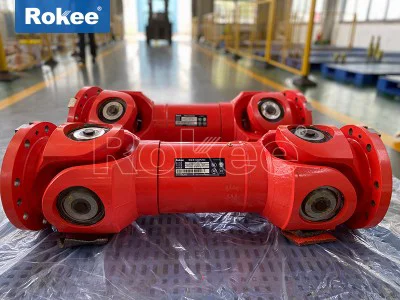
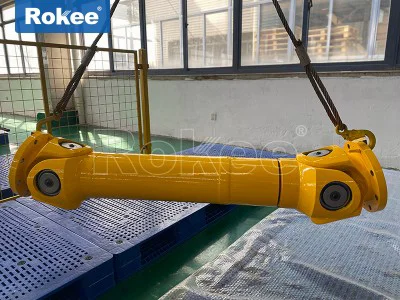
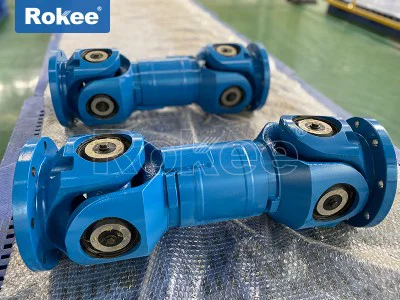
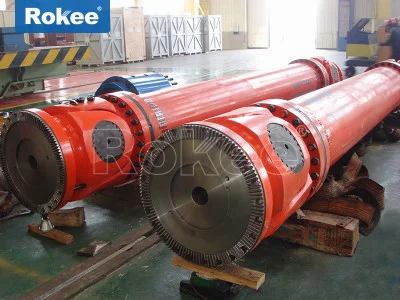
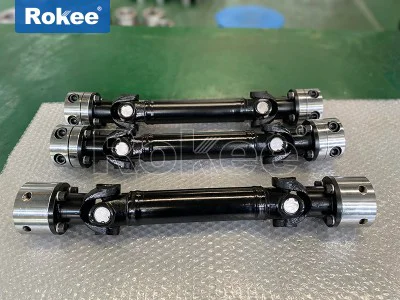
Heavy-duty Cardan joints are purpose-built for extreme operational conditions involving high torque loads, large angular misalignment, and harsh environmental stressors. These joints feature reinforced structural components, including thicker yoke arms, larger diameter spider journals, heavy-duty roller bearings, and ruggedized sealing systems, all constructed from ultra-high-strength alloy steel to withstand extreme torsional stress, shock loads, and wear. They are engineered to handle significantly larger operating angles and transmit massive torque without compromising structural integrity, making them indispensable for heavy industrial machinery, large-scale construction equipment, agricultural machinery, and heavy commercial vehicles. Unlike standard joints, heavy-duty variants prioritize durability and load capacity over compactness, often featuring larger physical dimensions to accommodate reinforced components and enhanced bearing systems. Precision miniature Cardan joints, in contrast, are designed for compact, low-load, high-precision applications, featuring miniaturized components, tight machining tolerances, and lightweight materials. These joints deliver smooth, accurate torque transmission for small-scale equipment, ensuring minimal backlash and precise motion control, even in confined spaces.
Additional specialized Cardan joint variants include flexible Cardan joints and adjustable Cardan joints, each addressing niche operational needs. Flexible Cardan joints incorporate elastic elements or modified articulation designs to absorb minor parallel misalignment, dampen vibration, and reduce shock transmission between shafts, offering greater flexibility than standard rigid joints. Adjustable Cardan joints feature modular or telescopic designs that allow for minor length adjustments alongside angular misalignment compensation, adapting to dynamic system changes or installation tolerances. These specialized variants expand the versatility of Cardan joints, enabling their deployment in even more specialized mechanical systems where standard designs fall short.
The adaptability and reliable performance of Cardan joints drive their extensive utilization across a vast array of industries, with each sector leveraging specific joint types to address unique operational challenges. In the automotive industry, Cardan joints serve as integral components of drive shaft assemblies, transmitting power from the transmission to the wheels while accommodating suspension movement and wheel steering, which creates constant angular misalignment between shafts. Single Cardan joints are commonly used in light passenger vehicles for basic drive systems, while double Cardan joints are employed in high-performance cars, commercial vehicles, and off-road vehicles to ensure smooth power delivery at varying angles, enhancing driving stability and reducing driveline vibration. Heavy-duty Cardan joints are a staple in heavy trucks, buses, and off-road construction vehicles, enduring the high torque and harsh operating conditions of heavy-duty transportation and terrain navigation.
The industrial machinery sector relies heavily on Cardan joints for diverse power transmission applications, ranging from manufacturing equipment and conveyor systems to rolling mills, pumps, compressors, and machine tools. In heavy industrial settings, heavy-duty Cardan joints facilitate torque transmission between misaligned shafts in large processing machinery, maintaining operational continuity despite structural displacement or thermal expansion. In precision manufacturing equipment, miniature and precision Cardan joints enable accurate motion control in automated assembly lines, robotic arms, and precision machining tools, ensuring consistent production quality and operational precision. Cardan joints also play a vital role in agricultural machinery, including tractors, harvesters, and tillers, transmitting power to various attachments while accommodating the uneven terrain and dynamic movement of farm equipment, withstanding exposure to dust, moisture, and debris typical of agricultural environments.
Aerospace and marine sectors utilize specialized Cardan joints engineered to meet stringent performance and reliability standards, with designs optimized for lightweight performance, corrosion resistance, and high-precision operation. In aerospace systems, these joints are integrated into flight control mechanisms, navigation equipment, and auxiliary power systems, delivering reliable torque transmission in demanding airborne conditions where weight, precision, and durability are non-negotiable. Marine applications, including ship propulsion systems, steering mechanisms, and onboard machinery, rely on corrosion-resistant Cardan joints to withstand saltwater exposure, humidity, and mechanical stress, ensuring consistent performance in harsh marine environments. Precision Cardan joints also find critical use in medical devices, optical equipment, and scientific instrumentation, where miniature size, smooth operation, and precise motion transmission are essential for diagnostic tools, imaging equipment, and laboratory machinery.
Beyond these core industries, Cardan joints are embedded in countless everyday and specialized mechanical systems, from household appliances and power tools to material handling equipment and renewable energy systems. In wind turbines and solar tracking systems, they facilitate the transmission of rotational motion while accommodating structural movement and misalignment, supporting efficient energy capture. In power tools and small garden equipment, they enable flexible power delivery, enhancing user maneuverability and equipment functionality. The widespread deployment of Cardan joints across such diverse sectors underscores their status as a universal mechanical solution, with each type tailored to deliver optimal performance for specific load, speed, and environmental requirements.
In summary, the Cardan joint’s enduring relevance in mechanical engineering stems from its innovative structural design, adaptable performance characteristics, and diverse typology that caters to every conceivable power transmission need. From the simple, cost-effective single joint for general-purpose use to the sophisticated double joint for smooth high-speed operation, and the rugged heavy-duty variant for extreme industrial conditions, each iteration of the Cardan joint addresses distinct engineering challenges. Its ability to transmit torque efficiently across misaligned shafts, withstand varied operational stresses, and adapt to diverse environmental conditions cements its role as an irreplaceable component in modern machinery. As engineering technology continues to advance, the design and material optimization of Cardan joints will persist, enhancing their performance, durability, and versatility to meet the evolving demands of emerging industrial and technological applications, ensuring this classic mechanical component remains a vital part of global engineering systems for years to come.