Cardan Couplings
In the intricate landscape of mechanical power transmission, the Cardan coupling, widely recognized as a universal joint coupling, stands as a foundational and versatile component that bridges the gap between misaligned rotating shafts. Unlike rigid couplings that demand perfect shaft alignment for efficient operation, the Cardan coupling is engineered to transmit torque and rotational motion consistently even when the axes of the driving and driven shafts intersect at an angle, experience parallel offset, or undergo dynamic displacement during operation. This unique adaptability has cemented its role across countless industrial, automotive, agricultural, and aerospace systems, where shaft misalignment is an unavoidable reality due to installation tolerances, thermal expansion, mechanical vibration, or operational movement. Delving into its structural design, performance attributes, diverse classifications, and practical applications reveals the engineering ingenuity behind this seemingly simple yet indispensable mechanical part, highlighting why it remains a staple in modern machinery design despite centuries of technological evolution.
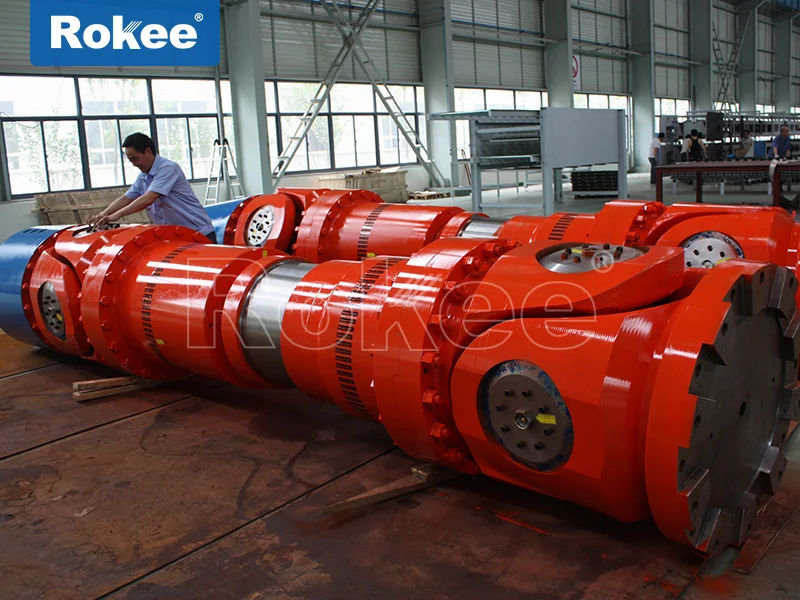
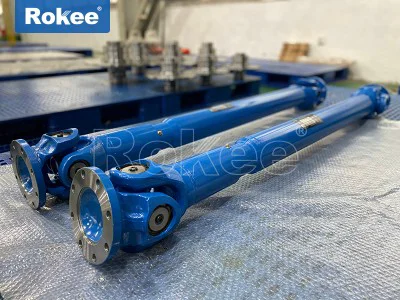
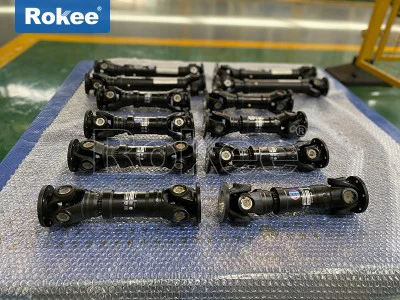
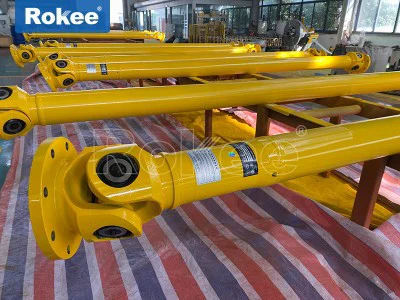
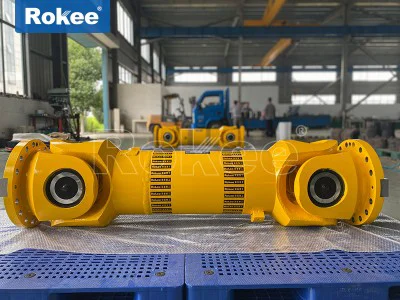
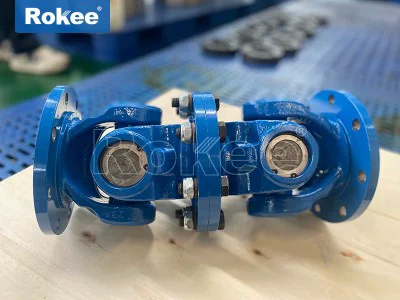
At its most fundamental level, the core structure of a standard Cardan coupling is defined by a compact, articulated assembly that prioritizes flexibility and load-bearing capability. The classic single Cardan coupling consists of two primary fork-shaped components, commonly referred to as yokes, which are securely attached to the ends of the driving and driven shafts respectively. Positioned between these two yokes is a central cross-shaped member, often called a spider or cross shaft, which serves as the pivotal connecting element. Each end of the cross shaft features a trunnion, a cylindrical projection that fits precisely into corresponding bearing housings within the yokes. These bearings, typically needle roller bearings or plain sliding bearings, are critical to the coupling’s functionality, as they reduce friction between the cross shaft and yokes, enabling smooth pivoting and rotational movement while bearing radial and axial loads. This basic articulated design allows the two shafts to move independently within a defined angular range, ensuring uninterrupted power transfer without imposing excessive stress on the connected shafts or adjacent machinery components. Many advanced iterations of the Cardan coupling also integrate a telescopic spline section into one of the shaft extensions, which accommodates axial displacement—such as that caused by thermal expansion or mechanical shifting—further enhancing the coupling’s ability to adapt to dynamic operating conditions without compromising transmission efficiency.
The performance characteristics of Cardan couplings are directly shaped by their structural design, making them suitable for a broad spectrum of operating conditions while presenting distinct tradeoffs that guide their application selection. One of the most prominent performance traits is their exceptional angular misalignment compensation capacity; standard single Cardan couplings can typically accommodate operating angles ranging from 5 degrees to 20 degrees, while specialized heavy-duty or high-flexibility models can handle angles up to 45 degrees in extreme scenarios. This flexibility eliminates the need for ultra-precise shaft alignment during installation, reducing assembly complexity and maintenance requirements for mechanical systems. In terms of torque transmission, Cardan couplings exhibit high torsional rigidity, enabling them to transfer substantial torque loads efficiently, from light-duty precision equipment to heavy-duty industrial machinery. They also boast high mechanical efficiency, with minimal power loss during operation, as the low-friction bearing design and streamlined articulation minimize energy dissipation through friction or vibration. However, it is crucial to note the inherent performance limitation of single Cardan couplings: non-uniform velocity transmission. When operating at any angle greater than zero, a single Cardan coupling causes the output shaft to rotate with periodic fluctuations in angular velocity, even when the input shaft runs at a constant speed. This velocity variation generates dynamic vibration, noise, and additional cyclic loads on the transmission system, which can accelerate wear on bearings, gears, and other components over time. Despite this limitation, the coupling’s overall performance profile—including compact dimensions, simple maintenance, and robust durability—makes it highly adaptable, with targeted design modifications effectively mitigating its drawbacks for specific use cases.
Cardan couplings are categorized into distinct types based on structural variations, performance enhancements, and intended operational purposes, each tailored to address unique mechanical transmission challenges. The most prevalent and widely used variant is the cross-shaft Cardan coupling, which adheres to the classic yoke-and-cross-shaft design. This type is favored for its straightforward construction, cost-effective manufacturing, and exceptional load-bearing capacity, making it ideal for heavy-duty, low-to-medium speed applications where torque transmission takes priority over perfectly uniform rotation. Cross-shaft couplings are further subdivided based on bearing housing designs and fork head configurations, including integral fork head models, partial bearing seat models, and small-scale double cross-shaft models, each optimized for specific load capacities and installation spaces. A second major category is the constant velocity (CV) Cardan coupling, engineered to eliminate the non-uniform velocity issue plaguing single cross-shaft designs. CV couplings feature a refined internal structure with spherical grooves, precision steel balls, and a retaining cage that ensures the contact points of the torque-transmitting elements remain symmetrically positioned relative to the shaft axes. This geometric symmetry guarantees that the input and output shafts rotate at identical speeds at all operating angles, delivering smooth, vibration-free power transmission even at high speeds and large misalignment angles. Common subtypes of CV Cardan couplings include ball cage types, ball pin types, and three-ball pin types, each offering unique advantages in terms of angular flexibility, load capacity, and compactness.
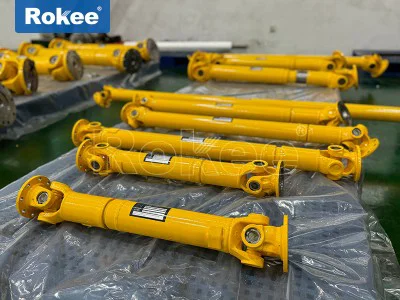
Additional specialized types of Cardan couplings expand the component’s versatility further. Double Cardan couplings, also known as double universal joints, consist of two single cross-shaft couplings connected by a short intermediate shaft. When properly phased and aligned, the velocity fluctuations from the first coupling are counteracted by those from the second, resulting in near-uniform rotational output without the complexity of full CV designs. This makes double Cardan couplings a practical choice for long-distance shaft connections and medium-speed applications where vibration reduction is necessary but full constant velocity functionality is not critical. Flexible Cardan couplings integrate elastic elements, such as rubber or composite polymer inserts, into the articulation assembly, adding shock absorption and vibration damping capabilities to the standard Cardan design. These elastic components not only compensate for minor angular and radial misalignment but also cushion impact loads, reducing noise and protecting sensitive transmission components from mechanical stress. Other niche variants include ball fork couplings, convex block couplings, and trident rod couplings, each developed to meet highly specific operational demands—such as extreme compactness, corrosion resistance, or high-temperature stability—for specialized industrial and aerospace environments. Each type retains the core advantage of angular misalignment compensation while fine-tuning performance metrics like speed uniformity, load capacity, vibration resistance, and durability to suit distinct application needs.
The material selection for Cardan couplings plays a pivotal role in defining their performance and service life, with materials chosen based on torque requirements, operating speeds, environmental conditions, and weight constraints. For standard industrial and automotive applications, high-quality carbon steels are the go-to choice for yokes and cross shafts, as they offer a balanced blend of strength, toughness, and cost-efficiency, especially when heat-treated to enhance hardness and wear resistance. For heavy-duty applications involving extreme torque loads, such as metallurgical machinery and construction equipment, alloy steels—including chromium-molybdenum and manganese-titanium alloys—are preferred; these materials undergo specialized heat treatments like carburizing and quenching to boost surface hardness while maintaining a tough core, enabling them to withstand heavy cyclic loads and impact without fracturing. In corrosive environments, such as marine equipment, chemical processing machinery, and food processing systems, stainless steel grades are utilized to resist rust and chemical degradation, preserving structural integrity and performance in humid, acidic, or alkaline conditions. For lightweight-sensitive applications, such as aerospace components and high-speed precision machinery, aluminum alloys or advanced composite materials are employed to reduce the coupling’s mass, minimizing inertial loads and improving overall system efficiency without sacrificing mechanical strength. The bearings within Cardan couplings are equally critical, with high-carbon chromium bearing steel being the standard for optimal wear resistance and fatigue life, while sealed bearing designs prevent contamination from dust, moisture, and debris, extending maintenance intervals and enhancing durability in harsh operating environments.
The adaptability and reliable performance of Cardan couplings translate to an extensive range of real-world applications across nearly every sector of mechanical engineering, with each industry leveraging the component’s unique strengths to solve specific transmission challenges. In the automotive industry, Cardan couplings are integral to vehicle drivetrain systems; rear-wheel-drive and four-wheel-drive vehicles rely on cross-shaft Cardan couplings to connect the transmission to the drive shaft and the drive shaft to the differential, accommodating the angular shifts caused by suspension movement during travel. Front-wheel-drive vehicles utilize constant velocity Cardan couplings to transmit power from the transaxle to the front wheels, enabling smooth rotation even as the wheels steer and the suspension compresses. Heavy-duty commercial vehicles, off-road equipment, and agricultural machinery depend on robust cross-shaft and double Cardan couplings to handle high torque loads and extreme angular misalignment, ensuring consistent power delivery in rugged operating conditions. In the agricultural sector, Cardan couplings are ubiquitous in tractors, harvesters, and farm implements, connecting power take-off (PTO) shafts to attachments like plows, mowers, and seeders, and adapting to the uneven terrain that defines farming operations.
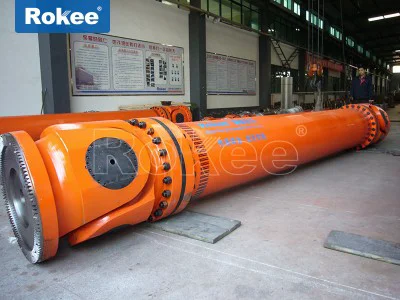
Industrial machinery represents another major application area for Cardan couplings, where they facilitate reliable power transmission in diverse manufacturing and processing systems. Metallurgical equipment, including rolling mills and metal forming machinery, uses heavy-duty Cardan couplings to transmit torque between drive motors and working rolls, compensating for shaft displacement caused by roll adjustment and thermal expansion during high-load operation. Conveyor systems, pumps, compressors, and machine tools in manufacturing facilities rely on standard and flexible Cardan couplings to connect motor shafts to working components, accommodating installation misalignment and reducing vibration that could disrupt production precision. Construction machinery, such as excavators, loaders, and bulldozers, utilizes compact, high-strength Cardan couplings in hydraulic drive systems and rotational mechanisms, withstanding the heavy loads, shock impacts, and harsh environmental conditions common on construction sites. Material handling equipment, including cranes and hoists, also incorporates Cardan couplings to ensure smooth power transfer in lifting and positioning systems, where reliable operation is critical for workplace safety.
Beyond mainstream industrial and automotive uses, Cardan couplings find specialized applications in high-precision and high-performance sectors, showcasing their engineering versatility. In aerospace engineering, lightweight, high-precision Cardan couplings are employed in aircraft landing gear systems, rotor drive mechanisms for helicopters, and engine accessory drives, where they must operate reliably under extreme temperatures, high speeds, and variable loads while maintaining minimal weight and maximum durability. Marine engineering relies on corrosion-resistant Cardan couplings to connect ship engines to propeller shafts, compensating for shaft misalignment caused by wave motion and hull flexing, ensuring efficient power transfer in saltwater environments. Precision medical equipment, testing instruments, and robotic systems utilize miniature, low-friction Cardan couplings to transmit motion with high accuracy, where uniform rotation and minimal backlash are essential for precise operation. Even in renewable energy systems, such as wind turbines and solar tracking mechanisms, Cardan couplings play a vital role, accommodating dynamic shaft misalignment caused by wind gusts or solar panel movement, ensuring consistent power generation and equipment longevity.
As mechanical engineering continues to evolve with trends toward electrification, automation, and sustainability, the Cardan coupling remains a relevant and evolving component, with ongoing design advancements enhancing its performance and expanding its application potential. Modern engineering efforts focus on refining internal geometries to reduce friction and velocity fluctuations further, developing advanced materials to boost strength-to-weight ratios, and integrating sealed, maintenance-free bearing designs to enhance durability in harsh conditions. The rise of electric vehicles and automated industrial systems has spurred demand for compact, high-torque, low-vibration Cardan couplings tailored to the unique operational characteristics of electric motors, which deliver instant torque and operate at higher speeds than traditional internal combustion engines. Additionally, precision manufacturing technologies like CNC machining and additive manufacturing enable the production of complex, custom Cardan coupling designs with tighter tolerances, optimizing performance for specialized applications. Despite these advancements, the core principle of the Cardan coupling—providing a flexible, reliable connection between misaligned shafts—remains unchanged, a testament to the timeless effectiveness of its fundamental design.
In summary, the Cardan coupling is far more than a simple mechanical fitting; it is a critical engineering solution that addresses the universal challenge of shaft misalignment in power transmission systems. Its well-engineered structure, adaptable performance characteristics, diverse range of specialized types, and broad cross-industry applications make it an indispensable part of modern machinery. From heavy-duty industrial equipment to precision aerospace components, from automotive drivetrains to agricultural implements, the Cardan coupling delivers consistent, efficient torque transmission while withstanding the rigors of real-world operating conditions. While it has inherent limitations, such as velocity fluctuations in single joint designs, targeted structural modifications and material advancements have mitigated these drawbacks, solidifying its place in contemporary engineering. As technology progresses and mechanical systems become more advanced, the Cardan coupling will continue to evolve alongside them, retaining its status as a foundational component that enables the reliable, efficient operation of the machinery that drives global industry and daily life.