Laminated Membrane Couplings
In the realm of mechanical power transmission, the laminated membrane coupling stands out as a high-performance flexible coupling that has become indispensable across countless industrial sectors. Unlike rigid couplings that offer no tolerance for shaft misalignment or traditional flexible couplings that rely on friction-prone, lubrication-dependent components, this coupling leverages the elastic deformation of precision-engineered laminated metal membranes to fulfill dual core functions: efficient torque transmission and reliable compensation for various shaft deviations. Engineered with a focus on durability, precision, and adaptability, it has redefined the standards for power transmission systems, addressing the limitations of conventional coupling designs and catering to the evolving demands of modern machinery operating under diverse and often harsh working conditions. Its widespread adoption stems from a unique blend of structural simplicity, exceptional mechanical properties, and versatile applicability, making it a cornerstone component in systems that require consistent performance, minimal maintenance, and long service life.
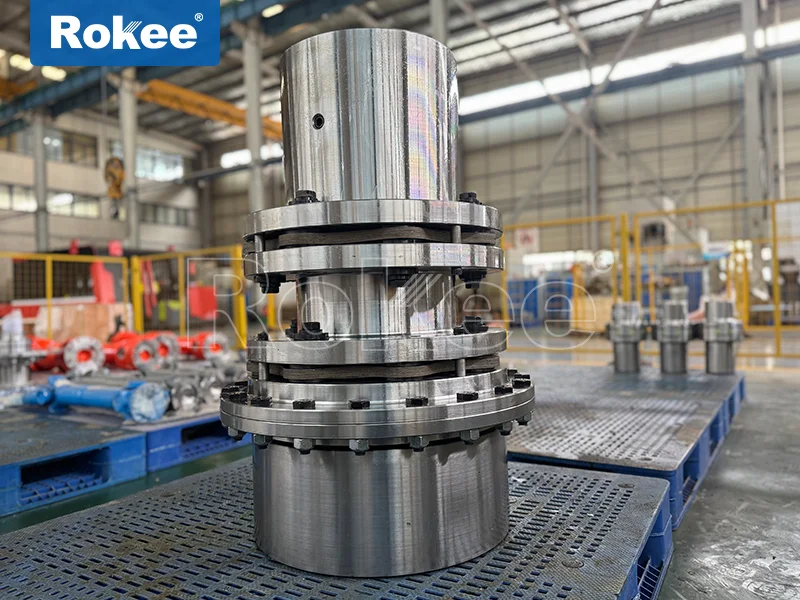
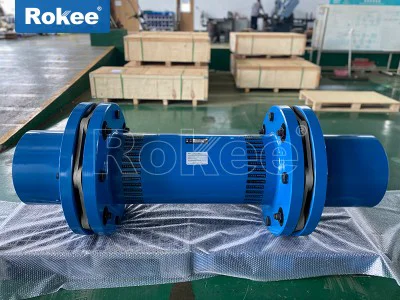
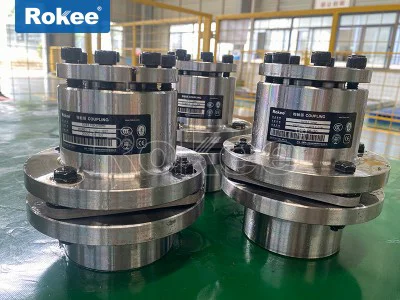
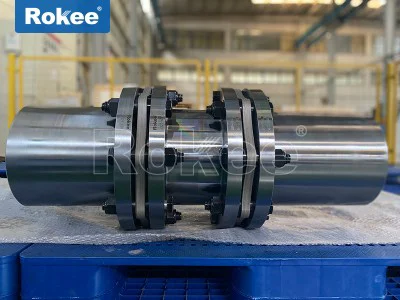
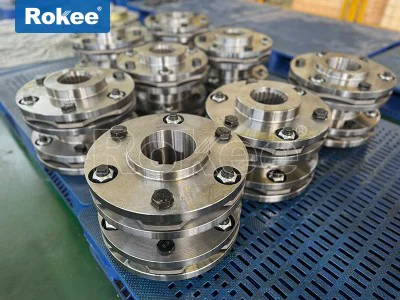
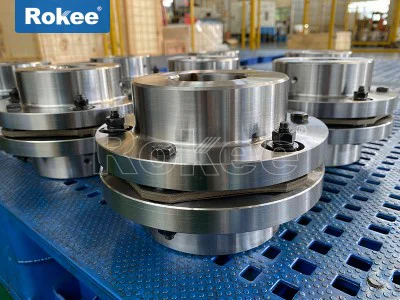
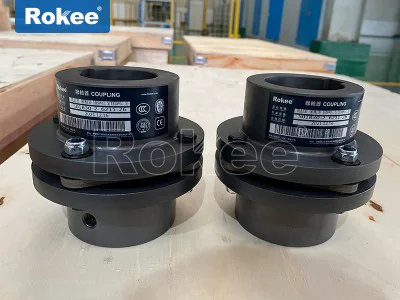
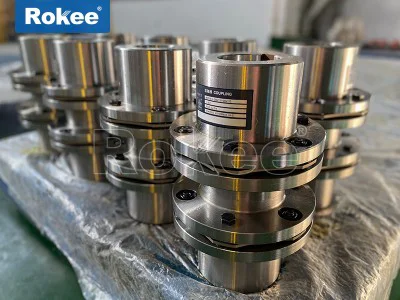
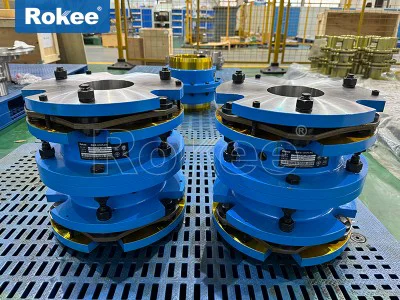
At its core, the structure of a laminated membrane coupling is elegantly designed, consisting of several key modular components that work in seamless harmony. The primary elements include two hub halves that attach to the driving and driven shafts, a set of thin, high-strength metal laminated membranes (also referred to as diaphragms), and precision fasteners that secure the membranes to the hubs. The laminated membranes are the heart of the coupling, typically fabricated from high-grade alloy steel or stainless steel sheets, layered together to form a flexible yet robust assembly. These membranes are engineered with precise contouring—often featuring circular, polygonal, or contoured profiles—to optimize stress distribution and elastic deformation capabilities. The hubs are machined to tight tolerances to ensure a secure, interference or keyed fit with the shaft ends, preventing slippage during torque transmission and maintaining concentricity. Unlike gear couplings or rubber elastomer couplings, the laminated membrane coupling has no sliding parts, no gear teeth, and no elastomeric materials that degrade over time, eliminating the need for lubrication and reducing wear-related failures. The fasteners, usually high-strength bolts or rivets, are installed with controlled torque to ensure uniform clamping of the membrane stacks, avoiding localized stress concentrations that could compromise structural integrity. This streamlined structural design not only enhances reliability but also simplifies installation and disassembly, allowing for efficient maintenance and replacement without extensive downtime.
The performance characteristics of laminated membrane couplings are what set them apart from other power transmission components, combining rigidity for precise torque delivery with flexibility for misalignment compensation. One of the most notable performance traits is its zero-backlash operation, a critical feature for high-precision machinery where positional accuracy and rotational synchronization are paramount. The absence of backlash ensures that there is no lost motion between the driving and driven shafts, making it ideal for applications requiring consistent speed ratios and precise positioning, such as automated manufacturing equipment and precision machining tools. Torsional stiffness is another key performance metric; the laminated membranes provide high torsional rigidity, enabling efficient torque transmission with minimal torsional deflection, even under heavy load conditions. This rigidity ensures that power is transferred smoothly and efficiently, with minimal energy loss, contributing to overall system efficiency and reducing operational energy consumption.
Equally impressive is the coupling’s ability to compensate for multiple forms of shaft misalignment, a common challenge in industrial machinery caused by installation errors, thermal expansion, mechanical vibration, or structural settling. Laminated membrane couplings can effectively accommodate axial misalignment, radial misalignment, angular misalignment, and combined misalignment simultaneously, without imposing excessive radial or axial loads on the connected shafts and bearings. This misalignment compensation capability protects adjacent components from premature wear and fatigue, extending the service life of the entire drive system. The elastic deformation of the laminated membranes also delivers effective vibration damping and noise reduction properties. By absorbing and dissipating vibrational energy generated during operation, the coupling minimizes noise emissions and reduces the transmission of shock loads between shafts, creating a smoother, quieter operating environment and enhancing the stability of the entire mechanical system.
Durability and environmental adaptability further elevate the performance of laminated membrane couplings. Constructed from high-quality corrosion-resistant and fatigue-resistant metals, these couplings can withstand prolonged operation in extreme conditions, including high and low temperatures, humid environments, and exposure to oils, chemicals, and abrasive particles. Unlike elastomer-based couplings that harden, crack, or deteriorate in harsh settings, the metal membrane construction maintains its mechanical properties over extended periods, resisting fatigue failure even under cyclic loading and high-frequency operation. This inherent durability translates to an exceptionally long service life, with many units operating reliably for years without significant degradation. Additionally, the coupling is maintenance-free by design, as it requires no lubrication, no periodic adjustments, and no replacement of wearable components, reducing long-term maintenance costs and minimizing production interruptions— a major advantage in continuous-operation industrial settings where downtime is costly.
Laminated membrane couplings are available in a diverse range of types, each tailored to specific operational requirements, load capacities, and misalignment compensation needs, with classifications primarily based on structural configuration, membrane design, and application scope. The most fundamental categorization is based on the number of membrane sets, distinguishing between single membrane couplings and double membrane couplings. Single membrane couplings feature a single set of laminated membranes connecting the two hubs, offering a compact, lightweight design with high torsional stiffness. This type is optimized for applications with minimal shaft misalignment, short shaft spans, and moderate torque loads, where space constraints are a primary consideration. While their misalignment compensation capacity is relatively limited compared to double membrane variants, they excel in high-speed, low-load scenarios where compactness and precision are prioritized.
Double membrane couplings, by contrast, incorporate two separate sets of laminated membranes linked by an intermediate spacer or sleeve, creating a dual-flexure design that significantly enhances misalignment compensation capabilities. This structure allows for greater angular, radial, and axial misalignment tolerance, making it suitable for applications with larger shaft separations, higher misalignment levels, and heavier torque loads. The intermediate spacer also helps to isolate vibration and reduce bearing loads, further protecting the drive system. Double membrane couplings are the most widely used variant in general industrial applications, striking an optimal balance between performance, versatility, and cost-effectiveness, and are capable of meeting the demands of most standard power transmission systems.
Beyond these primary classifications, laminated membrane couplings are further differentiated by specialized structural designs to meet niche industrial needs. Multi-membrane couplings feature three or more stacked membrane sets, engineered to handle extremely high torque loads while maintaining superior misalignment compensation and fatigue resistance; these are reserved for heavy-duty applications such as large-scale industrial machinery, power generation equipment, and marine propulsion systems. Intermediate shaft couplings integrate an extended intermediate shaft between the two membrane sets, designed specifically for long-distance power transmission where the driving and driven shafts are separated by a significant gap, a common requirement in conveyor systems, large pump units, and industrial processing lines. Compact miniature laminated membrane couplings are scaled down for precision instruments, small-scale automation equipment, and medical devices, offering the same high-precision, zero-backlash performance in a miniature form factor suitable for low-torque, high-precision applications.
Additionally, variations in hub design further expand the versatility of laminated membrane couplings, with options including keyed hubs, keyless clamping hubs, and flanged hubs. Keyed hubs provide a secure, traditional connection for heavy torque transmission, preventing rotational slippage between the hub and shaft. Keyless clamping hubs use friction-based locking to attach to shafts, eliminating the need for keyways and reducing stress concentrations on the shaft, while also enabling quick installation and removal without damaging the shaft surface. Flanged hubs offer a robust, rigid connection for heavy-duty industrial applications, enhancing the coupling’s ability to handle high shock loads and torsional forces. Each hub design is engineered to complement the coupling’s core performance, ensuring compatibility with diverse shaft configurations and installation requirements.
The exceptional structural and performance attributes of laminated membrane couplings have led to their extensive adoption across a vast spectrum of industrial and commercial applications, spanning precision manufacturing, heavy industry, energy production, aerospace, marine engineering, and automation. In the field of precision machining and industrial automation, these couplings are a staple in machine tools, robotic arms, servo motor drives, and CNC equipment, where zero-backlash operation, high positional accuracy, and consistent torque transmission are critical for achieving tight tolerances and high-quality production outputs. Their ability to maintain precision even under dynamic operating conditions ensures the smooth operation of automated assembly lines, laser cutting machines, and grinding equipment, enhancing production efficiency and product quality.
In heavy industrial sectors, including metallurgy, mining, chemical processing, and cement manufacturing, laminated membrane couplings are integrated into heavy machinery such as crushers, conveyors, mixers, and large pump and fan systems. Their high torque capacity, exceptional durability, and resistance to harsh industrial environments make them well-suited for continuous heavy-duty operation, withstanding shock loads, vibration, and exposure to dust, chemicals, and extreme temperatures. The maintenance-free design is particularly valuable in these sectors, where equipment operates around the clock and unscheduled maintenance can disrupt entire production processes.
The energy industry relies heavily on laminated membrane couplings for critical power generation and transmission equipment, including gas turbines, steam turbines, generators, compressors, and wind turbine drive systems. These couplings excel in high-speed, high-temperature operating conditions, delivering efficient power transmission while compensating for thermal expansion-induced shaft misalignment— a common challenge in turbine and generator systems. Their fatigue resistance and long service life ensure reliable operation in power generation facilities, where equipment failure can lead to widespread power outages and significant financial losses.
Aerospace and marine engineering represent other key application areas, where lightweight design, high reliability, and resistance to extreme environmental conditions are non-negotiable. In aerospace systems, laminated membrane couplings are used in aircraft engine accessories, flight control mechanisms, and ground support equipment, offering a lightweight yet robust solution for precision power transmission in space-constrained, high-performance environments. In marine applications, they are integrated into ship propulsion systems, pump drives, and deck machinery, withstanding the corrosive effects of saltwater, high humidity, and constant vibration, ensuring reliable operation in demanding marine conditions.
Beyond these core sectors, laminated membrane couplings find utility in transportation equipment, food and beverage processing machinery, pharmaceutical production equipment, and various other specialized fields. In food and pharmaceutical processing, their hygienic, easy-to-clean design and resistance to sanitizing chemicals make them ideal for equipment that requires strict adherence to cleanliness standards. In transportation, they are used in railway traction systems, automotive test equipment, and heavy-duty vehicle drives, offering reliable performance under variable load and vibration conditions. The adaptability of laminated membrane couplings stems from their ability to be customized to meet specific operational parameters, from low-torque precision applications to high-load heavy-duty systems, making them a versatile solution for nearly every power transmission need.
As industrial technology continues to advance and machinery demands become increasingly stringent, the role of laminated membrane couplings in power transmission systems is set to grow even more prominent. Ongoing advancements in material science, such as the development of high-strength, lightweight alloy membranes, and precision manufacturing techniques, such as laser cutting and CNC machining, are further enhancing the performance, durability, and customization capabilities of these couplings. Engineers and designers continue to refine structural designs to optimize stress distribution, increase misalignment tolerance, and reduce weight, pushing the boundaries of what laminated membrane couplings can achieve. Their unique combination of precision, flexibility, durability, and low maintenance makes them a future-proof solution for the next generation of mechanical systems, from smart factory automation equipment to sustainable energy generation machinery.
In summary, the laminated membrane coupling is a masterclass in mechanical engineering, blending simple structural design with exceptional performance to address the most pressing challenges in power transmission. Its core structure, centered on elastic laminated metal membranes, enables zero-backlash torque transmission, multi-directional misalignment compensation, and effective vibration damping, while its durable, maintenance-free construction ensures long-term reliability in diverse operating environments. The wide range of types, from compact single membrane units to heavy-duty multi-membrane assemblies, caters to every conceivable application, from precision micro-mechanisms to large-scale industrial plants. As a critical component in modern mechanical systems, the laminated membrane coupling not only enhances the performance and efficiency of connected equipment but also reduces operational costs and extends the service life of entire drive systems, solidifying its status as an essential and irreplaceable element in the global industrial landscape.