Universal Couplings
A universal coupling, also widely referred to as a universal joint, is a fundamental and indispensable mechanical component designed to transmit torque and rotational motion between two shafts that are not collinear, with a certain angular deviation between their central axes. Unlike rigid couplings that demand strict shaft alignment, universal couplings offer exceptional angular flexibility, enabling reliable power transfer even when the connected shafts are inclined relative to one another, or when dynamic positional shifts occur during operation. This unique functional advantage has made universal couplings a cornerstone in countless mechanical transmission systems across industrial, automotive, agricultural, aerospace, and precision engineering sectors. By delving into their internal structure, core performance attributes, diverse structural varieties, and wide-ranging applications, we can fully grasp the critical role these components play in optimizing mechanical transmission efficiency, enhancing system adaptability, and ensuring operational stability under complex working conditions.
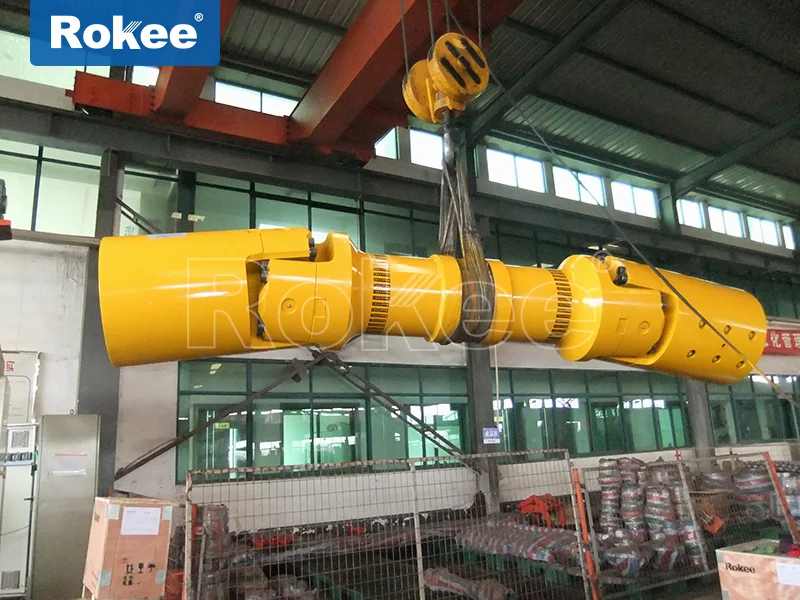
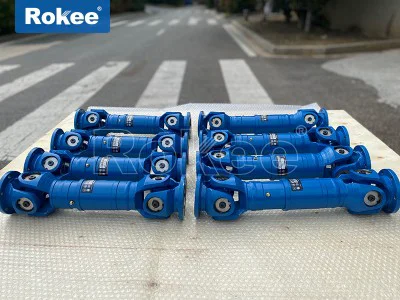
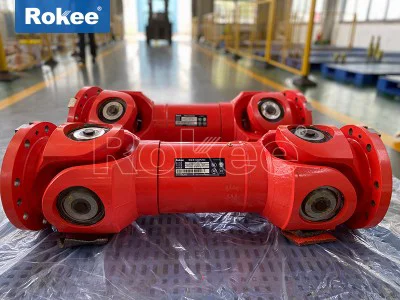
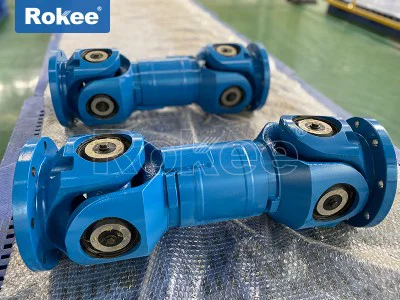
At its core, the basic structural design of a universal coupling is engineered to balance flexibility, load-bearing capacity, and transmission stability, with most conventional models sharing a set of standardized core components that work in tandem to deliver consistent performance. The most prevalent structure, the cross-shaft universal coupling, consists of two yoke assemblies, a central cross-shaped spider, and multiple sets of bearing units integrated into the spider’s four radial arms. The yokes are firmly attached to the driving and driven shafts respectively, serving as the connection points between the coupling and the transmission system, while the cross spider acts as the pivotal intermediate component that transfers rotational force between the two yokes. The bearing units, typically needle roller bearings or precision roller bearings, are mounted on each arm of the cross spider to minimize friction between the spider and the yokes during angular deflection and rotation, reducing wear and energy loss while extending the service life of the entire assembly. This straightforward yet robust structural configuration eliminates the need for complex auxiliary components, making the coupling easy to install, disassemble, and maintain in most operational settings. For more demanding applications involving larger angular offsets or higher rotational speeds, the structure is often refined with enhanced sealing mechanisms to prevent lubricant leakage and block external contaminants like dust, moisture, and debris, which is crucial for preserving internal lubrication and sustaining stable performance in harsh environments. Advanced universal couplings may also feature optimized material selection and precision machining for the cross spider and yokes, improving structural rigidity and resistance to deformation under heavy loads, ensuring the coupling can withstand repeated stress cycles without compromising functionality.
The performance characteristics of universal couplings are defined by a set of key metrics that determine their suitability for specific operating scenarios, including angular compensation capability, torque transmission capacity, rotational efficiency, fatigue resistance, and operational stability. Angular compensation capacity stands as the most distinctive performance trait, referring to the maximum allowable angle between the driving and driven shafts while maintaining uninterrupted power transmission. Different universal coupling designs offer varying angular deflection ranges, with standard models accommodating moderate angles suitable for general industrial use, and specialized designs supporting significantly larger angles for applications with extreme shaft misalignment. Torque transmission capacity is another vital performance indicator, reflecting the maximum torque the coupling can reliably transfer without structural failure or excessive deformation. This metric is closely tied to the coupling’s structural size, material strength, and bearing design; heavy-duty variants boast reinforced components and larger cross-section dimensions to handle high-torque loads in heavy machinery, while compact models are tailored for light-duty, low-torque applications in precision equipment. Rotational efficiency is equally critical, as high efficiency minimizes energy loss during transmission, reduces heat generation, and lowers operational energy consumption. Top-performing universal couplings achieve exceptional rotational efficiency by leveraging precision-machined contact surfaces and low-friction bearing systems, ensuring nearly full transfer of input power to the driven shaft.
Fatigue resistance is a key performance factor for universal couplings operating under continuous or cyclic loading conditions, as it determines the component’s service life and resistance to crack formation or structural failure under repeated stress. Couplings with superior fatigue resistance are crafted from high-strength alloy materials subjected to specialized heat treatment, refining the internal grain structure to enhance toughness and durability. Operational stability, meanwhile, relates to the smoothness of rotation and the degree of vibration and noise generated during use. Single universal couplings may exhibit minor speed fluctuations at larger deflection angles, leading to slight vibration, while optimized designs such as double universal couplings mitigate this issue by offsetting speed variations, delivering smoother rotation and reduced noise even at higher speeds and larger angles. Additionally, universal couplings vary in maintenance requirements based on their performance positioning; some feature sealed, pre-lubricated structures for minimal upkeep in hard-to-reach or low-maintenance applications, while others are designed for regular lubrication to sustain peak performance in heavy-duty, high-wear environments. Collectively, these performance attributes are not isolated but interconnected, requiring careful balancing during the design and manufacturing process to meet the unique demands of each application scenario.
Universal couplings are categorized into distinct varieties based on structural design, transmission principles, and functional characteristics, each tailored to specific operational needs and working conditions, with the most common classifications including cross-shaft universal couplings, constant-velocity universal couplings, double universal couplings, and specialized flexible universal couplings. The cross-shaft universal coupling, also known as the Hooke joint, is the most widely adopted type, celebrated for its simple structure, high load-bearing capacity, and cost-effective production. Its core cross-spider and yoke design enables reliable torque transmission for moderate angular offsets, making it ideal for heavy-duty industrial machinery, agricultural equipment, and automotive drive systems where robust performance and ease of maintenance are prioritized. While it may produce minor speed fluctuations at larger angles, this limitation is easily managed in applications where strict rotational uniformity is not a critical requirement, solidifying its status as the go-to choice for general-purpose heavy-load transmission.
Constant-velocity universal couplings represent a premium category engineered to eliminate speed fluctuations entirely, ensuring the driving and driven shafts rotate at identical speeds regardless of the angular deflection between them. This is achieved through a precision internal structure featuring a spherical raceway, steel ball transmission elements, and a specialized cage that positions the steel balls along the bisector of the shaft angle at all times, enabling uniform power delivery. This design delivers exceptionally smooth transmission, minimal vibration, and high rotational efficiency, making it perfect for high-speed, high-precision applications such as automotive front-wheel drive systems, precision machine tools, aerospace control mechanisms, and optical equipment where consistent rotational speed is paramount. While constant-velocity universal couplings demand higher manufacturing precision and come with more complex assembly requirements, their unparalleled transmission stability justifies their use in critical, high-performance systems where even minor speed variations could compromise operational accuracy.
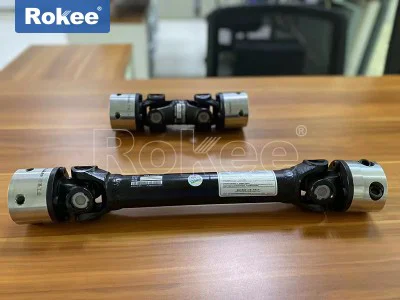
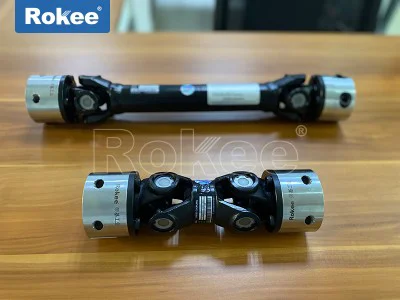
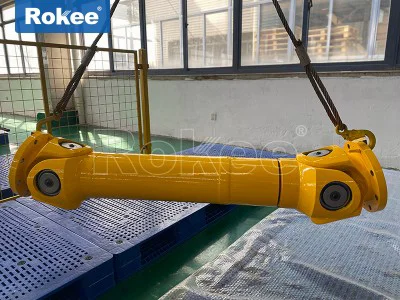
Double universal couplings, constructed by pairing two single universal couplings with an intermediate shaft, are designed to address the speed fluctuation limitation of single cross-shaft couplings while retaining exceptional load-bearing capacity. The geometric arrangement of the two single joints counteracts rotational unevenness, resulting in near-constant velocity transmission and enhanced angular flexibility compared to single units. This design excels in applications requiring large shaft angles, extended transmission distances, and smooth high-torque delivery, such as heavy commercial vehicles, construction machinery, marine propulsion systems, and large industrial rolling mills. The intermediate shaft can also be designed with telescopic functionality to accommodate axial displacement between shafts, further boosting the coupling’s adaptability to dynamic operating conditions and installation deviations. Specialized flexible universal couplings, on the other hand, integrate elastic elements such as high-performance elastomers or flexible metal components into the structure, combining angular compensation with vibration and shock absorption capabilities. These couplings are engineered to dampen mechanical shocks generated during startup, shutdown, or load fluctuations, protecting connected equipment from damage and reducing noise levels. They are particularly well-suited for applications involving frequent speed changes, intermittent loads, or high vibration, such as pump sets, conveyor systems, textile machinery, and small-scale automated equipment.
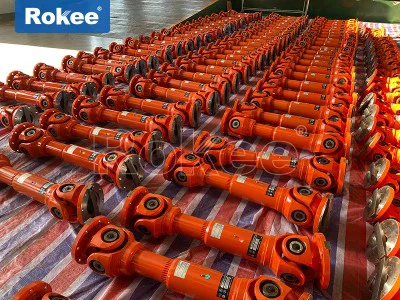
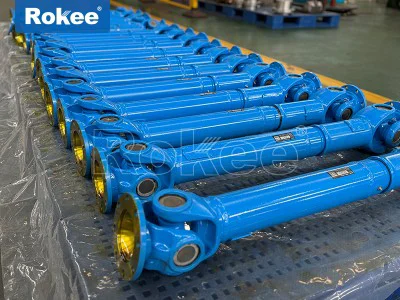
Beyond these primary classifications, universal couplings are further subdivided by size, load rating, and structural refinement into heavy-duty, medium-duty, light-duty, and miniature variants, each optimized for specific torque ranges and spatial constraints. Heavy-duty universal couplings feature oversized, reinforced components and high-strength alloy construction to handle extreme torque loads in large industrial machinery, mining equipment, and metallurgical rolling systems. Medium-duty models strike a balance between load capacity and compactness, catering to general industrial machinery, automotive components, and agricultural processing equipment. Light-duty and miniature universal couplings are designed with compact dimensions and low-weight materials, ideal for precision instruments, portable mechanical devices, small automated systems, and medical equipment where space is limited and load demands are minimal. This extensive range of varieties ensures that a suitable universal coupling exists for nearly every mechanical transmission scenario, from heavy industrial operations to delicate precision applications.
The versatility of universal couplings is reflected in their extensive applications across nearly every sector of mechanical engineering, where their ability to compensate for shaft misalignment and transmit power reliably drives operational efficiency and system durability. In the automotive industry, universal couplings are integral components of drive trains, steering systems, and suspension assemblies, facilitating power transfer from the transmission to the wheels while accommodating the angular shifts caused by road unevenness and steering movements. Constant-velocity universal couplings are widely used in passenger vehicles for smooth, responsive power delivery, while heavy-duty cross-shaft couplings are employed in trucks, off-road vehicles, and agricultural tractors to withstand rugged terrain and high-load operation. In industrial manufacturing, universal couplings are ubiquitous in conveyor systems, mixing equipment, pumping units, and machine tool drives, where they compensate for installation errors, thermal expansion-induced shaft displacement, and dynamic load shifts, ensuring uninterrupted production flow. Heavy-duty universal couplings are indispensable in metallurgical mills, mining machinery, and material handling equipment, enduring extreme loads, continuous operation, and harsh industrial environments to maintain reliable torque transmission.
Agricultural machinery relies heavily on universal couplings for power take-off (PTO) systems, harvesters, plows, and tillers, where they enable flexible power transmission between the tractor engine and attached implements, adapting to uneven field conditions and variable implement angles. Their robust construction and resistance to dust, mud, and moisture make them uniquely suited for the demanding agricultural operating environment. In the aerospace and aviation sectors, universal couplings are used in flight control systems, landing gear mechanisms, and auxiliary power units, where lightweight design, high precision, and exceptional reliability are non-negotiable. These specialized couplings are crafted from high-strength, low-density alloys to meet strict weight and performance standards, ensuring flawless operation under extreme temperature fluctuations and mechanical stress. Precision engineering and medical equipment utilize miniature and light-duty universal couplings for their compact size, smooth operation, and accurate motion transmission, supporting applications such as robotic arms, diagnostic devices, surgical equipment, and optical systems where precise rotational control is critical.
As mechanical engineering technology continues to advance, the design and performance of universal couplings are evolving to meet increasingly stringent industry demands, with ongoing innovations focused on material science, structural optimization, and intelligent integration. New high-strength, wear-resistant alloys and composite materials are being deployed to enhance load capacity, reduce weight, and extend service life, while refined structural designs are improving angular flexibility and rotational efficiency. The development of maintenance-free, sealed universal couplings is reducing operational costs and enhancing reliability in hard-to-service applications, while customized designs are being tailored to meet the unique requirements of emerging industries such as automated robotics, renewable energy systems, and electric vehicles. Despite their simple outward appearance, universal couplings remain a vital link in modern mechanical transmission systems, embodying the perfect balance of simplicity, functionality, and adaptability. Their ability to solve the universal engineering challenge of non-collinear shaft power transmission ensures that they will continue to be a foundational component across diverse industrial and technological fields, supporting innovation and efficiency in mechanical systems for years to come.