Full Gear Couplings
In the realm of mechanical power transmission, full gear couplings stand as indispensable components that bridge the gap between driving and driven shafts, enabling efficient torque transfer while accommodating operational misalignments. Unlike rigid couplings that demand perfect shaft alignment and offer no flexibility, full gear couplings blend robust structural design with controlled flexibility, making them a staple in heavy-duty industrial systems where reliability, load-bearing capacity and adaptability are non-negotiable.
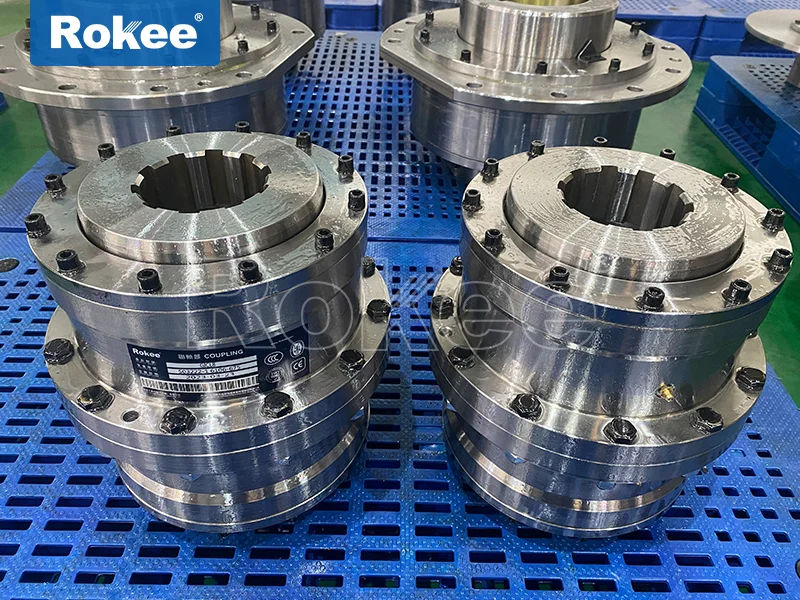
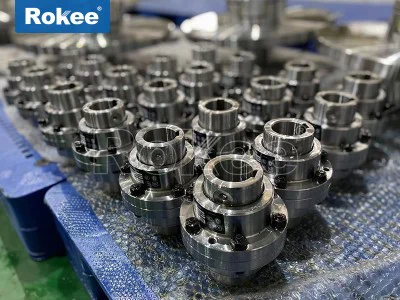
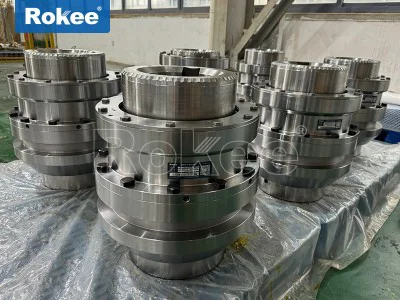
At its core, the full gear coupling features a streamlined yet high-strength structural composition, engineered to withstand extreme mechanical stresses and maintain consistent performance under demanding conditions. The fundamental structure consists of two key components: toothed hubs and an internal gear sleeve, with each part crafted to work in seamless harmony. The two hubs are precision-machined with external gear teeth, designed to be securely mounted onto the driving and driven shafts respectively via interference fits, keyways or splined connections, ensuring zero slippage during torque transmission. These external teeth are typically crafted with a crowned profile, a critical design detail that sets full gear couplings apart from standard gear mechanisms; the curved tooth surface enhances meshing contact, reduces stress concentration and allows for limited angular, parallel and axial misalignment between shafts without compromising power transfer efficiency.
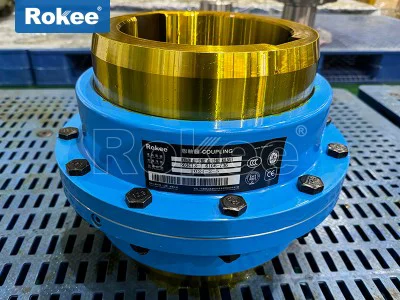
Encasing the two toothed hubs is the internal gear sleeve, a cylindrical component fitted with internal gear teeth that mesh perfectly with the external teeth of the hubs. This meshing interface is the heart of the coupling’s functionality, as it distributes torque evenly across all engaged teeth, minimizing localized wear and maximizing load-carrying potential. The sleeve is often constructed as a single unified piece or a two-part bolted assembly, with the bolted variant simplifying installation, maintenance and replacement without requiring disassembly of connected machinery. Additionally, most full gear couplings incorporate sealing elements at the junction between the hubs and sleeve, creating a closed internal cavity that retains lubricant and blocks out contaminants such as dust, moisture, debris and corrosive substances. This sealed design not only prolongs the service life of gear teeth but also reduces friction-related energy loss, a vital advantage in continuous industrial operations.
The structural integrity of full gear couplings is further reinforced by material selection, with high-quality alloy steels being the predominant choice due to their exceptional tensile strength, toughness, wear resistance and fatigue durability. These materials undergo specialized heat treatment processes, including quenching and tempering, to refine their mechanical properties, ensuring the coupling can endure repeated shock loads, variable torque fluctuations and prolonged cyclic stress without deformation, cracking or premature failure. The precision machining of gear teeth, often achieved through hobbing, shaping and grinding techniques, guarantees tight tolerances and smooth meshing, which directly translates to reduced noise, vibration and backlash during operation—all critical factors for maintaining the stability of connected equipment and extending the operational lifespan of entire transmission systems.
The performance characteristics of full gear couplings are tailored to address the most challenging requirements of industrial power transmission, making them superior to many other flexible coupling types in heavy-load scenarios. Foremost among these attributes is their exceptional torque-transmission capacity, which far exceeds that of elastomeric or grid couplings. The full-tooth meshing design distributes dynamic loads across a large contact area, enabling the coupling to handle extremely high torque values even in compact physical dimensions, a key benefit for applications where space is limited but power transfer demands are intense. This high torque density ensures that full gear couplings can operate efficiently in systems ranging from low-speed, heavy-duty machinery to moderate-speed industrial drives, without sacrificing performance or structural stability.
Another defining performance trait is the coupling’s ability to compensate for multiple forms of shaft misalignment, a common occurrence in real-world industrial setups due to installation errors, thermal expansion, mechanical wear or foundation settlement. Full gear couplings can effectively accommodate angular misalignment, where the two shafts intersect at a slight angle; parallel misalignment, where shafts run parallel but are offset radially; and limited axial misalignment, where shafts experience minor endplay. Unlike rigid couplings that transfer misalignment-induced stress directly to shafts, bearings and gearboxes, full gear couplings absorb these discrepancies through the articulated meshing of crowned teeth, preventing premature damage to connected components and reducing maintenance frequency. This misalignment compensation capability is particularly valuable in large-scale industrial systems where perfect shaft alignment is impractical or impossible to maintain consistently.
Durability and operational resilience further solidify the performance credentials of full gear couplings. When properly lubricated and sealed, these couplings exhibit minimal wear even under continuous heavy-duty operation, offering long service life with minimal downtime. They are engineered to perform reliably in extreme environmental conditions, including high-temperature industrial environments, humid or damp settings, and areas exposed to moderate chemical exposure, provided the sealing and material specifications are matched to the operating context. Additionally, full gear couplings boast high transmission efficiency, typically exceeding 99% under optimal operating conditions, as the direct mechanical meshing of gear teeth minimizes energy loss—an essential feature for reducing power consumption and improving overall system efficiency in large industrial plants.
While full gear couplings share a core structural design, they are classified into distinct variants based on structural modifications, functional adaptations and application-specific requirements, each engineered to excel in unique operational scenarios. The most common classification is based on sleeve design and auxiliary features, with each type offering tailored benefits to suit diverse transmission needs.
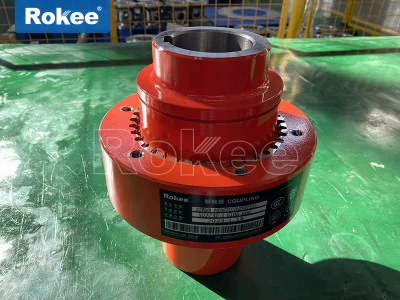
The standard single-sleeve full gear coupling is the most widely used variant, featuring a single internal gear sleeve that connects the two toothed hubs. This design offers a compact footprint, simple installation and reliable performance for general heavy-duty applications where shaft spacing is moderate and misalignment levels fall within standard ranges. It is the go-to choice for most industrial drives that require robust torque transmission and basic misalignment compensation, valued for its cost-effectiveness and versatility across multiple sectors.
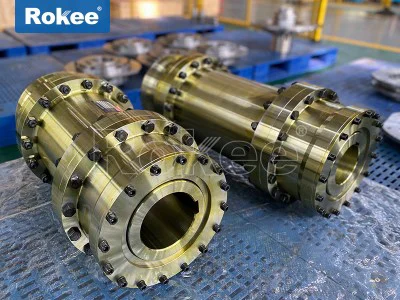
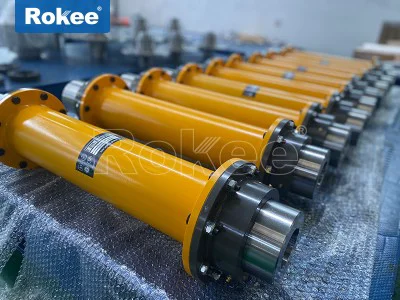
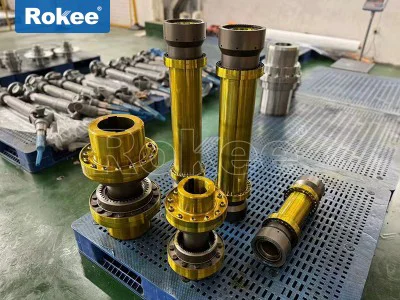
For applications involving larger shaft separations, the floating-shaft full gear coupling is the preferred option. This variant incorporates an intermediate floating shaft between two sets of hub-sleeve assemblies, effectively bridging significant distances between driving and driven machinery while retaining the full torque capacity and misalignment compensation of standard full gear couplings. It is specifically designed for systems where the driver and driven units are physically separated by a considerable gap, such as long-distance conveyor drives, large-scale pumping systems and remote industrial machinery setups, eliminating the need for overly long and rigid shafts that are prone to bending and vibration.
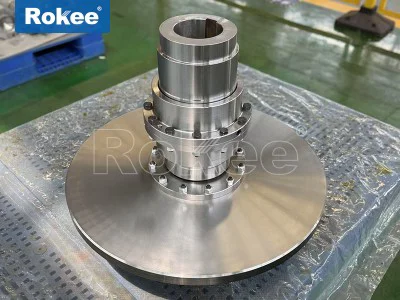
The brake-drum integrated full gear coupling is a specialized variant engineered for applications requiring emergency stopping or speed regulation. This design integrates a precision-machined brake drum directly onto one of the toothed hubs or the external surface of the gear sleeve, creating a unified component that combines torque transmission and braking functionality in a single assembly. This eliminates the need for separate mounting brackets and additional components, streamlining the drive system design and ensuring reliable braking performance in heavy machinery such as cranes, hoists, rolling mills and material handling equipment where sudden stops are critical for operational safety.
Additionally, full gear couplings can be categorized based on tooth profile and sealing design. Crowned tooth full gear couplings are the standard, offering superior misalignment compensation and reduced tooth wear compared to straight-tooth variants, which are limited to minimal misalignment and lower load applications. Sealing-wise, couplings can feature radial lip seals, end-face seals or labyrinth seals, with each sealing type selected based on environmental severity; labyrinth seals are ideal for extremely dusty or abrasive environments, while radial lip seals suffice for general industrial settings with moderate contamination risks.
The versatility of full gear couplings, combined with their robust performance and structural adaptability, makes them ubiquitous across a vast spectrum of industrial sectors, wherever heavy-duty torque transmission and reliable misalignment compensation are required. In the mining and mineral processing industry, full gear couplings are extensively used in crushers, grinders, conveyor systems, drilling rigs and ore handling machinery, where they endure constant heavy loads, shock impacts and harsh dust-laden environments. Their ability to transmit high torque and absorb operational misalignments ensures uninterrupted operation in these rugged settings, minimizing downtime and maintenance costs.
In the steel and metallurgy industry, full gear couplings play a pivotal role in rolling mills, continuous casting machines, strip processing lines and furnace transfer systems. These applications involve extreme thermal fluctuations, heavy dynamic loads and high operational speeds, demanding couplings that can maintain stability and efficiency under severe stress. The high torque capacity and heat-resistant material properties of full gear couplings make them perfectly suited for these harsh conditions, supporting the seamless production of steel products while withstanding the mechanical and thermal stresses inherent to metal processing.
The power generation sector relies heavily on full gear couplings for both conventional and renewable energy systems. They are used in turbine drives, generator sets, boiler feed pumps, cooling tower fans and conveyor systems in thermal power plants, as well as in wind turbine gearboxes and hydroelectric power generation equipment. In these applications, the coupling’s high efficiency, durability and ability to compensate for shaft misalignment caused by foundation movement or thermal expansion are critical for maintaining reliable power output and preventing costly equipment failures.
The marine and shipbuilding industry also utilizes full gear couplings extensively, integrating them into ship propulsion systems, deck machinery, winches, rudder assemblies and auxiliary pump drives. Marine-grade full gear couplings are constructed with corrosion-resistant materials and enhanced sealing to withstand saltwater exposure, high humidity and variable load conditions, ensuring reliable performance in offshore and onboard marine environments. Their compact design and high load capacity make them ideal for the limited space constraints of shipboard machinery.
Beyond these core sectors, full gear couplings find applications in oil and gas processing equipment, including pumps, compressors and drilling machinery; chemical and petrochemical plant drive systems; paper and pulp manufacturing machinery; cement production equipment; heavy-duty material handling systems; and various general industrial machine tools. In every application, the core value of full gear couplings remains consistent: delivering reliable, efficient torque transmission while mitigating the challenges of shaft misalignment and heavy operational loads, serving as a critical link in ensuring the smooth and safe operation of industrial machinery.
To maximize the performance and service life of full gear couplings, proper selection, installation and routine maintenance are essential. Selection criteria must align with operational parameters, including torque requirements, rotational speed, shaft diameter, misalignment magnitude, environmental conditions and space constraints; choosing an undersized or ill-suited coupling can lead to premature failure and system downtime. During installation, careful attention must be paid to shaft alignment within the coupling’s rated limits, secure fastening of hubs and sleeves, and proper sealing to prevent lubricant leakage and contamination ingress.
Routine maintenance primarily involves regular lubrication with the appropriate grease or oil, tailored to the coupling’s operating speed, temperature and load; insufficient or degraded lubrication is the leading cause of tooth wear, overheating and coupling failure. Additionally, periodic inspections for signs of wear, tooth pitting, seal damage or excessive vibration are crucial to detect potential issues early and prevent catastrophic failure. By adhering to proper maintenance protocols, full gear couplings can deliver decades of reliable service, making them a cost-effective and dependable solution for industrial power transmission needs.
In summary, full gear couplings represent a pinnacle of flexible mechanical coupling design, merging robust structural engineering, exceptional torque-transmission performance, adaptive misalignment compensation and versatile functional variants to meet the diverse demands of modern industry. Their unique combination of strength, efficiency and durability cements their status as a foundational component in heavy-duty power transmission systems, spanning mining, steel, power generation, marine, oil and gas and countless other industrial sectors. As industrial machinery continues to evolve toward higher loads, greater efficiency and more demanding operating conditions, the role of full gear couplings will only grow in importance, continuing to provide the reliable, high-performance connection that keeps critical industrial operations running smoothly.