Universal Cross Joints
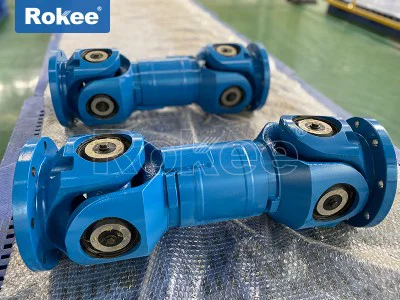
The universal cross joint, also widely referred to as a Cardan joint or Hooke’s joint, stands as one of the most fundamental and indispensable mechanical transmission components in modern engineering systems, designed to transmit torque and rotational motion between two shafts that are not collinear or exhibit angular misalignment. Unlike rigid shaft couplings that demand perfect axial alignment, this versatile joint accommodates variable angular offsets between driving and driven shafts, making it a cornerstone of mechanical power transmission across countless industrial, automotive, agricultural, and heavy machinery applications. At its core, the universal cross joint features a compact, robust structural design that balances simplicity with functional efficiency, consisting of four primary interconnected components that work in tandem to enable smooth rotational transfer even under offset conditions. The central element is a cross-shaped shaft, commonly called a spider, which features four orthogonal journal ends that serve as pivot points; this cross shaft is typically forged from high-strength alloy steel and subjected to specialized heat treatments such as carburizing and quenching to enhance hardness, wear resistance, and load-bearing capacity, ensuring it can withstand sustained torque, bending stress, and repetitive mechanical stress during operation. Flanking the cross shaft are two yoke assemblies, one attached to the input driving shaft and the other to the output driven shaft, each crafted with precision-machined fork ends that mate with the cross shaft’s journals. To minimize friction and enable free pivoting between the cross shaft and yokes, high-precision needle roller bearings are fitted onto each journal of the cross shaft, enclosed within protective bearing caps that seal out contaminants like dust, moisture, and debris while retaining lubrication to prevent premature wear and corrosion. Completing the assembly are retaining clips or snap rings that secure the bearing caps and cross shaft in place, preventing disassembly under dynamic loads and maintaining structural integrity even during high-speed or heavy-duty operation. This streamlined structural configuration eliminates the need for complex internal mechanisms, allowing the joint to operate reliably with minimal maintenance while delivering consistent torque transmission across a defined range of angular misalignments.
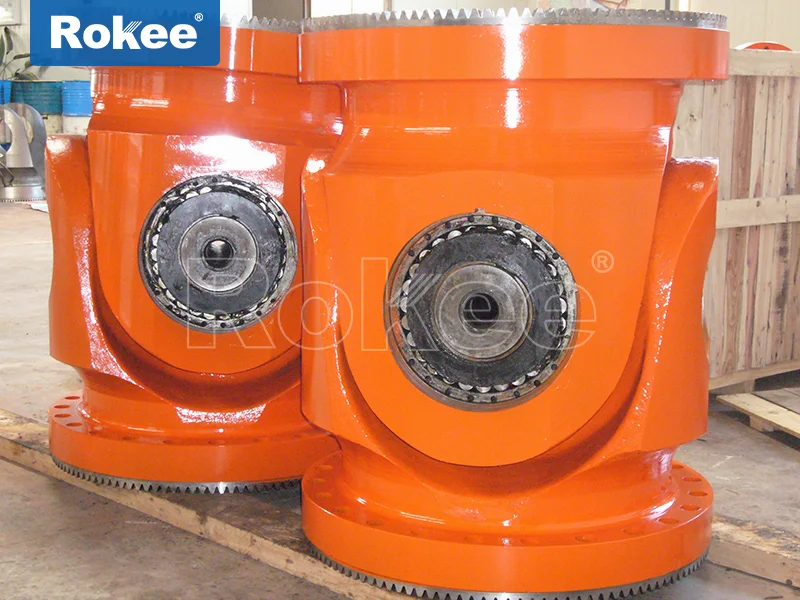
The performance attributes of universal cross joints are defined by their ability to address key operational challenges in mechanical transmission systems, with core performance metrics encompassing angular compensation capacity, torque transmission capability, rotational speed tolerance, wear resistance, and operational stability. One of the most critical performance features is angular misalignment accommodation, with standard universal cross joints capable of compensating for shaft angles ranging from 5 degrees to 25 degrees, while specialized heavy-duty or high-angle variants can handle offsets up to 45 degrees without compromising torque transfer efficiency. This flexibility makes them ideal for systems where shaft alignment shifts during operation, such as vehicles navigating uneven terrain or industrial machinery subject to thermal expansion and mechanical vibration. In terms of torque handling, these joints exhibit exceptional load-bearing performance, with designs scaled to support everything from low-torque precision machinery to high-torque heavy equipment, thanks to the robust cross shaft and reinforced yoke construction that distributes stress evenly across the assembly to prevent fatigue failure. Rotational speed performance is another key consideration, with standard models engineered to operate efficiently at speeds between 1000 and 5000 revolutions per minute (rpm), while precision-balanced variants optimized for high-speed applications can sustain speeds exceeding 10000 rpm with minimal vibration and noise. Wear resistance and durability are further enhanced by the use of hardened alloy steels, precision-machined bearing surfaces, and effective sealing systems, which extend service life by reducing friction-induced wear and protecting internal components from harsh operating environments. Additionally, universal cross joints offer limited axial displacement compensation, typically ranging from ±10mm to ±50mm in models equipped with spline integrations, allowing for minor shaft movement without imposing excessive stress on the joint or connected machinery. It is important to note that while single universal cross joints may introduce minor velocity fluctuations at larger misalignment angles due to their inherent mechanical design, this limitation is mitigated in specialized dual-joint configurations, which maintain more consistent rotational velocity and reduce vibration for smooth operation in precision-sensitive applications.
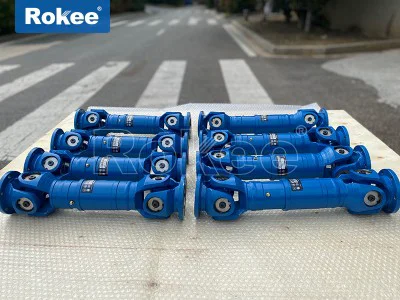
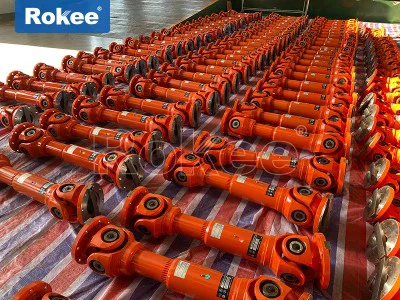
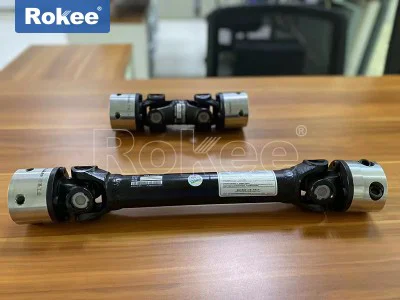
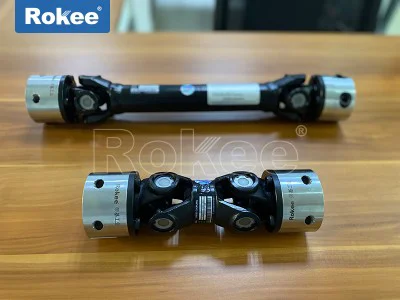
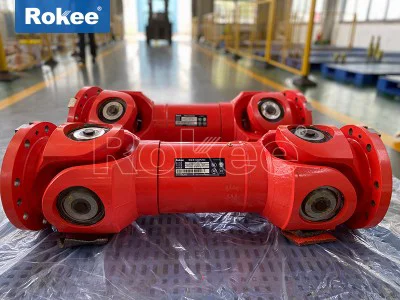
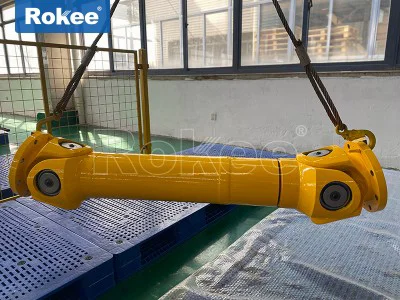
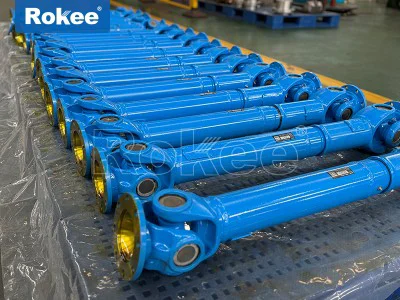
Universal cross joints are categorized into distinct types based on structural design, operational performance, load capacity, and intended application, each engineered to meet specific transmission requirements and operating conditions, with the most prevalent classifications including single universal cross joints, double universal cross joints, heavy-duty universal cross joints, high-angle universal cross joints, and compact precision universal cross joints. The single universal cross joint represents the most basic and widely used variant, featuring a single cross shaft, two yokes, and four needle roller bearings in a minimalist assembly; this type is prized for its simple manufacturing, easy installation, and cost-effective performance, making it suitable for light to moderate load applications with small to medium angular misalignments and moderate operating speeds. Double universal cross joints, also known as constant velocity (CV) cross joints in some configurations, consist of two single cross joints linked by an intermediate shaft or sleeve, designed to counteract the velocity variations inherent in single joints and deliver near-uniform rotational speed between input and output shafts; this design excels in applications requiring smooth, vibration-free power transfer at larger misalignment angles, offering enhanced stability and precision compared to single joints. Heavy-duty universal cross joints are engineered for extreme load-bearing scenarios, featuring reinforced cross shafts with increased diameter, thicker yoke constructions, and heavy-duty needle bearings to withstand exceptionally high torque, impact loads, and prolonged heavy operation; these joints are typically used in large-scale industrial machinery, heavy construction equipment, and commercial vehicles where standard-duty joints would fail under excessive stress. High-angle universal cross joints are a specialized variant optimized for extreme angular misalignment, featuring modified cross shaft geometry, extended bearing surfaces, and flexible yoke designs that maintain reliable torque transmission even at angles approaching 45 degrees, far exceeding the compensation range of standard models; they are ideal for applications where shaft alignment varies dramatically during operation, such as articulated vehicles and agricultural machinery operating on uneven ground. Compact precision universal cross joints are designed for space-constrained environments and precision-driven equipment, featuring a miniaturized, lightweight structure without compromising load capacity or angular compensation; these joints are machined to tight tolerances to ensure precise rotational transfer, making them suitable for precision instruments, robotic systems, automotive steering mechanisms, and small-scale industrial automation equipment. Beyond these primary classifications, universal cross joints can also be differentiated by connection type, including flange-mounted, spline-connected, and welded variants, each tailored to specific shaft attachment methods and installation constraints, further expanding their adaptability across diverse mechanical systems.
The unparalleled versatility, robust performance, and adaptable design of universal cross joints have led to their widespread adoption across an extensive range of industries and mechanical applications, serving as critical transmission components in nearly every sector that relies on rotational power transfer between misaligned shafts. In the automotive industry, universal cross joints are integral to vehicle drivetrain systems, including drive shafts, rear axles, and steering linkages, where they accommodate angular shifts caused by suspension movement, road unevenness, and chassis flex, ensuring consistent power delivery from the engine to the wheels regardless of terrain or driving conditions; they are equally essential in passenger vehicles, commercial trucks, off-road vehicles, and agricultural tractors, providing reliable torque transmission in both light-duty and heavy-duty automotive setups. The agricultural machinery sector relies heavily on universal cross joints for power transmission in tractors, harvesters, plows, and other farm equipment, where they withstand harsh outdoor conditions, heavy loads, and frequent angular shifts caused by uneven farmland; their durability and low maintenance requirements make them ideal for agricultural operations that demand uninterrupted performance in rugged environments. In the realm of heavy construction and engineering machinery, these joints play a vital role in excavators, cranes, bulldozers, concrete mixers, and conveyor systems, transmitting high torque across large angular misalignments while enduring constant vibration, impact loads, and exposure to dust, dirt, and moisture; heavy-duty variants are specifically engineered to withstand the extreme operating conditions of construction sites, ensuring reliable performance under sustained heavy use. Industrial manufacturing and processing sectors, including metallurgy, mining, petrochemicals, and material handling, utilize universal cross joints in rolling mills, mining equipment, pumps, compressors, and conveyor belts, where they enable efficient power transmission in large-scale industrial machinery that operates continuously for extended periods; their ability to compensate for thermal expansion-induced shaft misalignment and maintain consistent torque delivery makes them indispensable for industrial production lines. Additionally, universal cross joints find critical applications in marine and rail transit systems, powering propulsion systems, axle assemblies, and transmission mechanisms in ships, locomotives, and rail cars, where they deliver reliable performance in demanding, high-vibration environments with strict reliability requirements. In the field of precision engineering and automation, compact precision universal cross joints are integrated into robotic arms, CNC machine tools, automated guided vehicles (AGVs), and various precision instruments, enabling smooth, accurate multi-axis movement and rotational transfer in space-constrained, precision-sensitive setups. Even in aerospace and small-scale mechanical devices, specialized lightweight universal cross joints are employed to transmit motion in control systems and mechanical actuators, highlighting their adaptability across applications of all scales and performance demands.
Beyond their core functional applications, the ongoing evolution of universal cross joint design and manufacturing has further expanded their utility and performance, with advancements in materials science, precision machining, and lubrication technology enhancing their durability, efficiency, and service life. Modern manufacturing processes employ computer numerical control (CNC) machining to ensure tight tolerances and perfect component mating, while advanced alloy materials and surface coating technologies improve wear resistance, corrosion resistance, and load-bearing capacity, allowing universal cross joints to operate reliably in even more extreme environments. Engineers continue to refine joint designs to minimize friction, reduce energy loss during torque transmission, and lower vibration and noise levels, making them more efficient and user-friendly across all applications. When selecting a universal cross joint for a specific application, key considerations include required torque capacity, operating speed range, angular misalignment compensation needs, environmental conditions, installation space constraints, and maintenance accessibility; choosing the appropriate type ensures optimal performance, minimizes wear and tear, and extends the operational lifespan of both the joint and the entire mechanical system. As a timeless and irreplaceable mechanical component, the universal cross joint remains a staple of modern engineering, adapting to evolving technological demands while retaining its core design principles of simplicity, reliability, and versatility. Its ability to solve the fundamental challenge of transmitting rotational motion across misaligned shafts has solidified its role as a critical building block in mechanical systems worldwide, supporting the operation of countless pieces of equipment and machinery that drive industrial production, transportation, agriculture, and technological innovation forward.