Crown Gear Coupling Misalignment Compensation
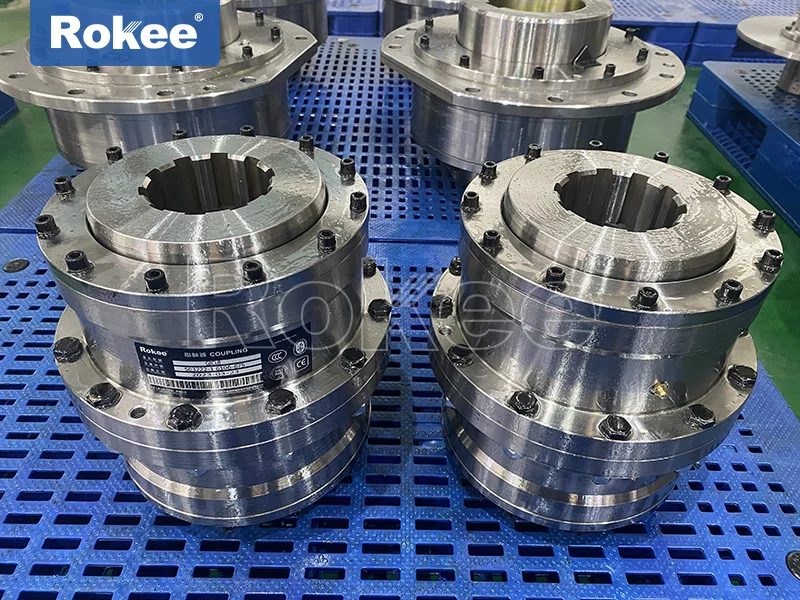
In modern mechanical transmission systems, precise shaft alignment is theoretically essential for stable power transmission, but minor installation errors, operational vibration, thermal deformation and mechanical wear inevitably cause various shaft misalignments during long-term equipment operation. Crown gear couplings stand out among traditional transmission components due to their unique curved tooth profile design and excellent misalignment compensation performance, effectively solving the operational defects caused by angular, radial and axial shaft misalignments. Unlike straight-tooth gear couplings that are prone to edge stress concentration and severe tooth wear under misalignment conditions, crown gear couplings adopt spherically crowned external teeth structures, which can maintain uniform tooth surface contact and stable torque transmission within a certain deviation range.
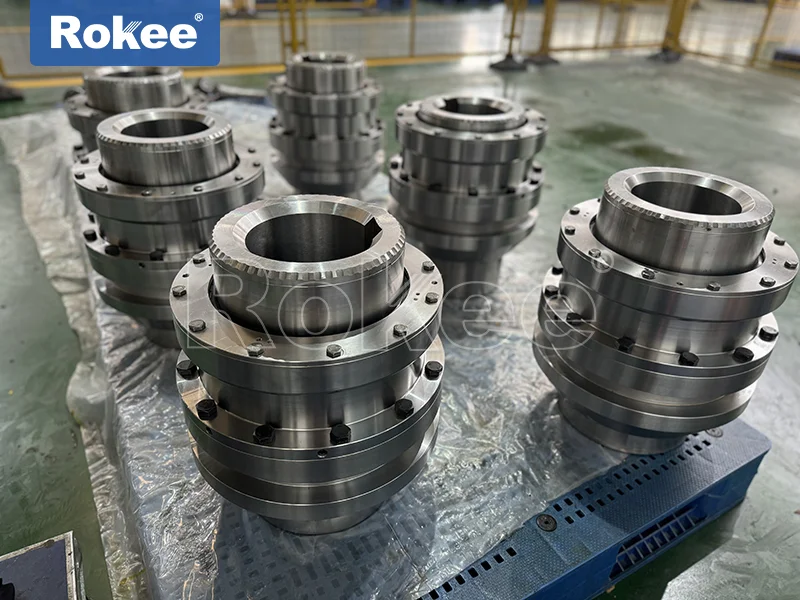
The core capability of crown gear coupling misalignment compensation originates from its innovative crown tooth profile structure, which fundamentally optimizes the meshing state of gear teeth under misalignment conditions. Traditional straight-tooth gear couplings rely on linear tooth surface contact for power transmission, and any slight shaft deviation will lead to uneven stress distribution, forming sharp edge contact at the tooth end. This localized overloading not only intensifies tooth surface friction and wear but also generates periodic impact force during high-speed rotation, triggering mechanical vibration and noise. In contrast, the external teeth of crown gear couplings are processed into a smooth spherical curved surface along the tooth width direction, forming an omnidirectional flexible meshing structure. When misalignment occurs between the driving shaft and the driven shaft, the curved tooth surface can adaptively adjust the meshing contact position, realizing smooth rolling and micro-sliding between tooth pairs without producing concentrated local pressure. The reserved reasonable tooth side clearance further provides sufficient movable space for shaft displacement, enabling the coupling to simultaneously adapt to and compensate for compound misalignment including angular deflection, radial offset and axial displacement, which is the basic structural guarantee for its reliable compensation performance in complex working environments.
Crown gear couplings achieve targeted compensation for three typical forms of shaft misalignment through structural coordination, with distinct working characteristics for different deviation types. Angular misalignment, the most common deviation in mechanical operation, refers to the deflection angle between the center lines of two connected shafts. The spherical crown design of the gear teeth allows the meshing tooth pairs to deflect synchronously with the shaft angle, keeping the contact area concentrated in the middle of the tooth surface rather than the edge. This synchronous deflection meshing mode eliminates rigid extrusion between teeth and ensures continuous and stable torque transmission. Radial misalignment caused by shaft centerline offset is compensated by the matching clearance between internal and external gear teeth. The flexible tooth meshing state can offset the radial displacement of the shaft body through slight sliding between tooth surfaces, avoiding rigid stress on the shaft and bearings. For axial misalignment generated by thermal expansion and mechanical stretching of the shaft during operation, the longitudinal movable space of gear tooth meshing fully absorbs axial displacement, preventing axial tension and compression force from damaging the transmission system. The collaborative compensation for multiple misalignment types enables the coupling to adapt to non-ideal installation and operation states that are ubiquitous in industrial scenarios.
Compared with conventional rigid and flexible couplings, crown gear couplings show unique advantages in misalignment compensation efficiency and operational stability. Rigid couplings completely rely on precise shaft alignment to work normally, with almost no misalignment compensation capability. Once shaft deviation occurs, the vibration and stress generated will be directly transmitted to the shaft, bearings and equipment shell, accelerating the aging and damage of core components. Ordinary flexible couplings such as elastic sleeve couplings rely on elastic deformation to compensate for misalignment, but their compensation range is limited, and elastic parts are prone to fatigue aging under long-term alternating load, leading to reduced compensation performance. Crown gear couplings combine the high rigidity of gear transmission and the flexible adaptability of curved tooth structures. While ensuring high-precision and high-torque power transmission, they maintain a larger allowable misalignment range. Even under long-term continuous deviation operation, the uniform tooth surface contact state can be stably maintained, with low friction loss and small vibration amplitude. This balanced performance of rigidity and flexibility makes its misalignment compensation effect far more durable and reliable than other types of couplings.
The misalignment compensation performance of crown gear couplings directly affects the overall operating state and service life of mechanical equipment. In the absence of effective misalignment compensation, continuous shaft deviation will cause periodic alternating stress on gear teeth, shaft bodies and bearing parts. Long-term accumulation of this stress will lead to tooth surface pitting, abrasive wear and even tooth fracture, while bearings will suffer from accelerated fatigue damage due to eccentric load operation, increasing equipment failure rates. The effective compensation function of crown gear couplings can buffer and eliminate most stress concentration caused by shaft misalignment, evenly distributing the transmission load on each meshing tooth pair. This uniform load distribution reduces the wear rate of gear teeth and bearing components, maintains the coaxial stability of the transmission system, and greatly weakens mechanical vibration and running noise. In addition, stable meshing contact reduces additional power loss caused by friction and impact, improving the overall transmission efficiency of the equipment. Therefore, reasonable application of crown gear coupling misalignment compensation capability can effectively reduce equipment maintenance frequency and extend the service cycle of transmission components.
Several key structural and operational factors influence the misalignment compensation effect of crown gear couplings, determining their adaptive performance in different working conditions. The crown curvature of external gear teeth is the core structural factor. A reasonable curvature design can balance the contact uniformity and compensation range of tooth surfaces. Excessively small curvature will reduce the flexible adjustment ability of tooth surfaces and limit the misalignment compensation range, while excessively large curvature will reduce the effective meshing area and weaken the torque transmission capacity. The matching clearance between internal and external teeth also plays a vital role. Appropriate tooth side clearance provides movable space for shaft displacement compensation, while excessive clearance will cause transmission impact and vibration, and too small clearance will restrict the flexible adjustment of gear teeth. Operational factors such as running speed and load also affect the compensation effect. Under high-speed and heavy-load conditions, the thermal deformation and mechanical displacement of the shaft increase, requiring the coupling’s compensation structure to have stronger adaptive stability. Regular lubrication maintenance is also essential. Good lubrication reduces sliding friction between tooth surfaces during misalignment compensation, avoiding dry friction damage and ensuring long-term stable compensation performance.
Crown gear couplings with reliable misalignment compensation capability have been widely applied in various high-load and high-stability mechanical transmission scenarios. In industrial transmission equipment such as fans, pumps and reducers, long-term continuous operation will inevitably produce shaft deviation due to vibration and thermal deformation. The misalignment compensation function of crown gear couplings can ensure stable power output of the equipment and avoid operational failure caused by shaft deviation. In heavy machinery and metallurgical equipment, which bear large alternating loads and impact loads, the compound misalignment of shafts is more prominent. The flexible meshing and adaptive compensation characteristics of crown gear teeth can effectively buffer impact load and offset shaft displacement, protecting the core transmission structure. In precision mechanical transmission systems, tiny shaft misalignment will affect the operation accuracy of equipment. The uniform contact compensation mode of crown gear couplings can maintain the precision and stability of transmission motion, ensuring the processing and operation accuracy of precision equipment. Its strong environmental adaptability and stable compensation performance make it a preferred transmission component in complex industrial scenarios.
With the continuous upgrading of industrial mechanical equipment towards high speed, high load and high precision, the misalignment compensation performance of crown gear couplings has become an important guarantee for the efficient and stable operation of modern transmission systems. The unique curved tooth profile design breaks through the performance limitations of traditional couplings, realizing efficient and durable compensation for various shaft misalignments, and solving many practical pain points in mechanical operation such as easy wear, large vibration and low transmission efficiency caused by installation and operation deviation. By optimizing tooth profile structure, matching clearance and lubrication conditions, the misalignment compensation accuracy and load adaptability of crown gear couplings can be further improved, enabling them to adapt to more extreme and complex working conditions. In the future, with the continuous innovation of mechanical processing technology and structural optimization design, crown gear couplings will exert greater value in industrial transmission, providing more reliable technical support for the long-term stable and efficient operation of various mechanical equipment.